Trying to find your Toyota’s chassis number but coming up empty? Whether you’re buying used, running a recall check, or just trying to fill out some paperwork, knowing exactly where to look saves you a headache. This guide covers every location — obvious and hidden — across Toyota’s full lineup.
What’s the Difference Between a Chassis Number and a VIN?
People use these terms interchangeably, but they’re not quite the same thing.
The chassis number is physically stamped into your Toyota’s steel structure — the actual metal frame or floor pan. The VIN (Vehicle Identification Number) is the full 17-character code that appears on plates, stickers, and documents.
Here’s the key thing: on every modern Toyota, the chassis stamping and the VIN match perfectly. Same number, different locations.
Before 1981, manufacturers used their own proprietary codes. Then the NHTSA stepped in and standardized everything — 17 characters, no letters O, I, or Q (too easy to confuse with 0 and 1), mandatory on every vehicle sold in the US.
The Primary Toyota Chassis Number Locations
1. Dashboard Plate (Through the Windshield)
This is your first stop. Stand outside the car on the driver’s side and look through the lower left corner of the windshield. You’ll see a small metal or heavy-duty plastic plate with the VIN printed or embossed on it.
Federal regulations require this placement so law enforcement and insurance adjusters can read it without opening the car. On models like the Camry, Corolla, RAV4, and Tacoma, this tag is riveted to the cowl structure beneath the dashboard padding.
Removing it without shattering the windshield or gutting the dashboard is nearly impossible — which is exactly the point.
2. Driver’s Side Door Jamb Sticker
Open the driver’s door and look at the B-pillar (the vertical column between the front and rear doors) or the door latch area. You’ll find the Federal Safety Certification Label here.
This sticker does a lot more than just show the Toyota chassis number location. It also tells you:
- Gross Vehicle Weight Rating (GVWR) — maximum safe loaded weight
- Recommended cold tire pressure for the original tires
- Month and year of manufacture
- Factory paint and interior trim codes
The label uses specialized adhesives designed to self-destruct if anyone tries to peel it off. If you spot a torn or voided sticker, that’s a red flag worth investigating.
3. Under the Front Passenger Seat (Floorboard Stamp)
This is the true chassis number — the permanent structural identifier stamped directly into the steel floor pan.
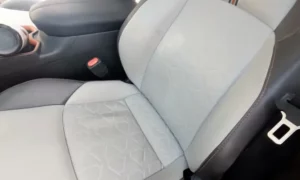
On unibody Toyotas (Corolla, Camry, RAV4, Highlander, Prius, Sienna), slide the front passenger seat all the way back or forward. Look for a small rectangular cut-out or plastic flap in the carpet. Lift it, and you’ll see the bare metal with the number stamped deep into the steel.
Why does this matter? Because while a thief might swap a dashboard plate or forge a door sticker, modifying the under-seat floor stamping requires cutting steel, welding in new metal, grinding welds smooth, and matching factory paint. That kind of work leaves obvious evidence for any trained inspector.
Quick Reference: Primary Location Guide
| Vehicle Type | Primary Chassis Stamp Location | Examples |
|---|---|---|
| Unibody sedans/SUVs | Under front passenger seat floorboard | Corolla, Camry, RAV4, Prius |
| Body-on-frame trucks/SUVs | Passenger side frame rail | Tacoma, Tundra, 4Runner |
| All Toyota vehicles | Dashboard (driver’s side, through windshield) | Every modern model |
| All Toyota vehicles | Driver’s side door jamb sticker | Every modern model |
Engine Compartment Locations
Firewall Stamping
Pop the hood and look at the metal wall separating the engine bay from the passenger cabin. Toyota often stamps the VIN into the upper metal lip of the firewall, typically on the driver’s side near the windshield wiper motor.
This location survives frontal collisions, interior fires, and complete interior strip-outs. It’s a key identification point for collision repair technicians assessing front-end damage.
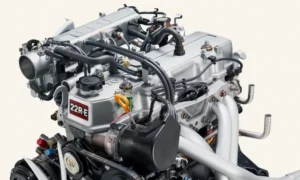
Engine Block
Toyota stamps the VIN — separate from the engine’s own serial number — onto a flat pad on the engine block. It’s also applied to the transmission housing to deter the trade of stolen components.
Finding it isn’t always easy. Modern Toyota engine bays are packed tight. You might need a flashlight, an inspection mirror, or removal of plastic engine covers to see it clearly. If the engine block number doesn’t match the dashboard plate, the engine was replaced at some point in the vehicle’s life.
Strut Towers and Inner Fender Aprons
On some Toyota models, the VIN appears on an identification tag riveted to the inner fender aprons or the front radiator core support. Some performance or sport variants also feature a stamp on the suspension strut towers.
Body-on-Frame Toyotas: Frame Rail Locations
Trucks and heavy-duty SUVs use a different structural architecture. The ladder frame runs the full length of the vehicle, and that frame is the chassis. The VIN stamped into it is the definitive identity of the vehicle.
This applies to:
- Toyota Tacoma
- Toyota Tundra
- Toyota 4Runner
- Toyota Sequoia
- Toyota FJ Cruiser
- Toyota Land Cruiser
Passenger Side Frame Rail
On the Tacoma and Tundra, look through the front passenger-side wheel well. Peer over the top of the front right tire and examine the visible section of the steel frame. The stamped sequence is on the outer vertical face or upper horizontal lip of the rail.
On longer wheelbase configurations, the stamp may be further back — check through the rear wheel well too.
Driver Side Frame Rail
Depending on the generation and assembly plant, some Toyotas carry the stamping on the driver’s side instead. Same inspection method applies — look through the front or rear wheel well.
Important: Frame rails on older Tacomas, Tundras, and Sequoias are notorious for rust. Toyota ran major frame replacement recall campaigns on affected models. If the frame is crusty, clean the area with a wire brush and solvent before trying to read the stamped numbers.
Frame Replacements and Identity Transfer
When Toyota replaces a corroded frame under a recall, the original chassis number gets transferred to the new frame. Dealers either re-stamp the new frame or apply factory-certified tamper-resistant placards. The vehicle keeps its legal identity — no gaps in its title history.
Secondary and Hidden Identification Points
Body Panel and Glass Etchings
Toyota applies additional identification labels to inner hood edges, door frames, fender lips, and trunk lids. These labels tear into fragments if removal is attempted and fluoresce under UV light.
The VIN (or a shortened version) is also acid-etched or laser-engraved onto window glass corners. To successfully “chop” a stolen Toyota for parts, a thief would need to track down and remove every single hidden label AND replace all the safety glass. Economically? Not worth it.
Trunk Pan and Spare Tire Well
On sedans like the Corolla and Camry, check under the trunk carpet and around the spare tire well. Toyota stamps the VIN into the rear structural steel here. If the front of the car is destroyed or burned, investigators can still confirm the vehicle’s identity from the rear.
Infotainment System and OBD-II Port
Modern Toyotas with touchscreen displays store the VIN digitally. Navigate to System Information or Vehicle Settings in the menu and it’s right there.
Professional diagnostic tools plugged into the OBD-II port (under the steering column) pull the VIN directly from the Engine Control Module or Body Control Module. State emissions testing uses this electronic verification to confirm the physical car matches its digital profile.
Documents That Always Carry the VIN
When you can’t access the physical vehicle:
- Title and registration — your state DMV records it as the primary identifier
- Insurance declaration pages and wallet cards — your insurer uses it to underwrite your specific vehicle’s coverage
- Toyota dealer service records — logged on every work order and maintenance invoice
- Original Monroney sticker — displayed on new vehicles alongside MSRP and fuel economy ratings
How to Decode Your Toyota’s 17-Character VIN
The VIN isn’t random. Every character means something specific.
Characters 1–3: World Manufacturer Identifier (WMI)
These tell you where and by whom the car was built.
| WMI Code | Country | Plant/Entity | Vehicle Type |
|---|---|---|---|
| 4T1 | USA | Toyota Kentucky | Passenger Car |
| 5TF | USA | Toyota Texas | Truck (Tundra, Tacoma) |
| 5TD | USA | Toyota Indiana | SUV/MPV (Highlander, Sienna) |
| JTD | Japan | Toyota Motor Corp | Passenger Car |
| 3TM | Mexico | Toyota Baja California | Truck (Tacoma) |
| 2T1 | Canada | Toyota Motor Canada | Passenger Car |
Full WMI tables are publicly available through NHTSA’s vehicle identification portal.
Characters 4–8: Vehicle Descriptor Section (VDS)
- Position 4: Body style and drive configuration (2WD vs 4WD, sedan vs wagon)
- Position 5: Engine family or powertrain type
- Position 7: Restraint system configuration (airbags, seatbelt types)
- Position 8: Specific trim level or car line
Character 9: The Check Digit
This one’s pure math. The US Department of Transportation mandates a specific algorithm that assigns weighted values to all other 16 characters. The result sets character 9 — a digit from 0–9, or the letter X.
Change any other character to cover up a stolen vehicle history? The math breaks. Every database and diagnostic tool immediately flags it as fraudulent.
Character 10: Model Year Code
The codes run in a 30-year repeating cycle:
| Code | Model Year | Code | Model Year |
|---|---|---|---|
| A | 1980 / 2010 | N | 1992 / 2022 |
| B | 1981 / 2011 | P | 1993 / 2023 |
| K | 1989 / 2019 | R | 1994 / 2024 |
| L | 1990 / 2020 | S | 1995 / 2025 |
| M | 1991 / 2021 | 1–9 | 2001–2009 |
Character 11: Assembly Plant
- U = Georgetown, Kentucky (TMMK)
- X = San Antonio, Texas (TMMTX)
- S = Princeton, Indiana (TMMI)
- C = Cambridge, Ontario, Canada
- M = Baja California, Mexico
Characters 12–17: Sequential Production Number
The final six digits are your car’s place in line on the assembly floor. No two vehicles with matching first 11 characters share these digits — guaranteed uniqueness for every Toyota ever built.
Why Checking All Locations Matters
When buying a used Toyota, cross-check every accessible location. The dashboard plate, door jamb sticker, and under-seat or frame stamping all need to match.
Mismatches point to:
- VIN cloning — stolen vehicle wearing the identity of a legally registered one
- Salvage washing — a totaled car rebuilt and re-titled to hide its history
- Stolen component assembly — parts from multiple vehicles welded together
Once you have the full 17-character sequence, run it through Toyota’s own recall database or NHTSA’s public recall portal to check for any open safety campaigns. Outstanding recalls get missed constantly — a quick search takes 30 seconds and can flag a genuinely dangerous mechanical issue.