Picking up the wrong oil for your Corolla? You’re about to find out why that shiny 0W-8 bottle at the parts store might not be the hero your engine needs. The truth about Toyota Corolla oil type isn’t simple—it’s a tale of two specifications, where your location matters just as much as your model year.
What Makes Toyota Corolla Oil Specs So Confusing?
Here’s the thing: there’s no single “correct” oil for all Corollas. Your neighbor’s 2024 Corolla in Phoenix and your cousin’s identical model in Dubai need completely different oils—and both are following official Toyota specs.
The confusion stems from Toyota’s “two-track” system. In the U.S., fuel economy regulations push manufacturers toward ultra-thin oils. In hot climates like the Middle East, durability takes priority over saving a fraction of a gallon per tank.
You can’t just grab any bottle labeled “Toyota approved.” The oil type depends on:
- Your exact model year
- Which engine you’ve got
- Where you actually drive the car
- What your regional manual says
The 2023-2025 Revolution: Welcome to 0W-8 Territory
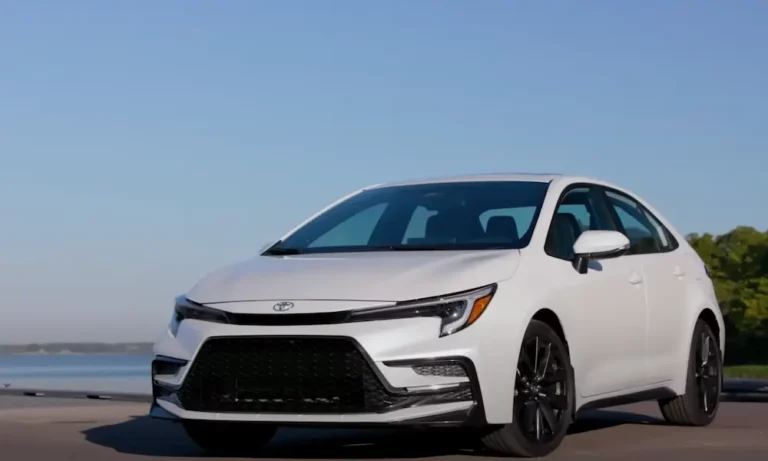
Toyota dropped a bombshell with the latest Corollas. From 2023 onward, U.S.-market Corollas (both the 2.0L and 1.8L hybrid) require SAE 0W-8 oil meeting the JASO GLV-1 specification.
Yes, you read that right. 0W-8. It’s so thin that the ILSAC standards couldn’t even certify it, so Japanese automakers created their own JASO GLV-1 standard.
Can you use 0W-16 instead? Only if you’re desperate. The manual allows 0W-16 as a temporary fill, but you must switch back to 0W-8 at your next oil change. It’s an emergency backup, not an alternative.
Why so thin? Corporate Average Fuel Economy (CAFE) standards. Toyota needs every fraction of improved MPG to avoid penalties. Thinner oil means less internal friction, which means better fuel economy numbers on paper.
But here’s what Toyota won’t tell you in their marketing: this ultra-thin oil is optimized for passing government tests, not necessarily for maximum engine life in all conditions.
The 2020-2022 Models: The 0W-16 Era
If you’ve got a 2020-2022 Corolla, your spec is different. These models use SAE 0W-16 meeting the ILSAC GF-6B standard.
The “B” in GF-6B is critical. It’s a special designation created exclusively for 0W-16 viscosity and it’s not backward-compatible. You can’t pour GF-6B oil into an older Corolla that needs 5W-30—the formulations are completely different.
For the 2020-2022 hybrid models with the 1.8L engine, Toyota “back-specified” this thinner oil even though the engine design carried over from the previous generation. They’re making older engines run thinner oil to boost the fleet-wide fuel economy average.
Oil capacity quirk: If you’ve got a 2024 model with the 2.0L engine, you need 4.4 quarts with a filter change. But 2023 and earlier 2.0L models hold 4.9 quarts. Toyota changed something mid-generation—probably the oil pan design. Don’t overfill based on outdated guides.
The GR Corolla Exception: When Toyota Admits Thicker Is Better
Want proof that Toyota knows thinner isn’t always better? Check the GR Corolla.
The turbocharged GR Corolla (2023-2025) requires SAE 0W-20 meeting API SP/ILSAC GF-6A specifications. Not 0W-8. Not 0W-16. A “thicker” 0W-20.
Why? Because when an engine faces extreme heat, pressure, and shear forces from turbocharging, it needs oil with better film strength. The “20” grade provides higher high-temperature, high-shear (HTHS) viscosity than wimpy 0W-8.
This is Toyota’s internal admission: when engine protection under severe conditions is the priority—not fuel economy numbers—you need more robust oil.
Older Corollas: The Stability Years
Before 2020, Toyota Corolla oil type recommendations were refreshingly stable.
2009-2019 Models: The 0W-20 Standard
All Corollas from 2009-2019 with the 1.8L 2ZR-FE engine use SAE 0W-20 full synthetic. This was the era when Toyota shifted to synthetics and approved those extended 10,000-mile oil change intervals.
Even if your 2010 Corolla’s oil cap says 5W-20, Toyota “back-specified” the newer 0W-20 recommendation. The 0W-20 offers better cold-start protection without sacrificing anything at operating temperature.
Capacity: 4.4 quarts with a new filter.
2000-2008 Models: The 5W-30 Era
The 1.8L 1ZZ-FE engine in these Corollas was designed before the low-viscosity craze. The spec is SAE 5W-30.
You can use conventional 5W-30, but upgrading to full synthetic 5W-30 is smart. Synthetic oil provides superior protection against sludge buildup and extreme temperatures—both common killers of high-mileage engines.
Critical dipstick warning: Some 1ZZ-FE engines got a dipstick update via technical service bulletin. The correct 4.4-quart capacity only applies if you’ve got the updated dipstick (part number 15301-22050). The old dipstick (15301-22030) indicates a capacity that’s 0.5 quarts less. Check your part number to avoid chronic overfilling.
1993-1999 and Earlier
These older generations stick with SAE 5W-30 for most applications. Pre-1992 models can run either 5W-30 or 10W-30 depending on climate.
Don’t buy into the myth that switching high-mileage engines to synthetic causes leaks. Modern synthetics—especially high-mileage formulas—include seal conditioners that prevent this problem.
Hot Climate Reality Check: Why You Should Ignore U.S. Specs
If you’re driving in the Middle East, Gulf states, or anywhere with extreme heat, pay attention.
Do not follow U.S. specifications. That 0W-8 or 0W-16 oil is engineered for temperate climates and fuel economy tests—not 113°F summers in Dubai or Riyadh.
In Saudi Arabia, the official Toyota distributor (Abdul Latif Jameel) uses 10W-30 in their service packages and sells 5W-30 and Hybrid 0W-20 oils. Regional Toyota distributors in Lebanon flatly state that 0W-16 is “too thin for extreme heat” and specify 5W-30 to 5W-40.
The engineering logic is sound: ultra-thin oils can’t maintain adequate film strength when you’re combining 45°C ambient temperatures with heavy engine loads. Metal-on-metal contact means premature wear.
The “0W” Myth You Need to Stop Believing
Let’s kill a persistent myth: “0W oils are too thin for hot weather.”
That’s backwards. The “W” stands for Winter. The first number (0W, 5W, 10W) only describes cold-start viscosity. Once your engine reaches operating temperature, a 0W-30 and a 10W-30 have identical thickness.
Actually, the 0W-30 is better for hot climates with hybrid engines. Why? Because hybrids constantly stop and restart. Your engine is frequently in a “warm” state, not fully hot. The 0W provides faster, better protection during those frequent restarts.
The real debate isn’t about the “W” number—it’s about that second number. An operating viscosity of “8” or “16” may be too thin at 100°C (212°F) to handle extreme heat and load. That’s why hot-climate specs call for “30” or “40” grades.
How to Actually Find Your Correct Spec
Stop guessing. Here’s how to verify your exact Toyota Corolla oil type:
1. Check your owner’s manual first
Not a downloaded U.S. manual—the actual physical book that came with your car in your country. A U.S. manual is useless if you’ve got a GCC-spec vehicle.
2. Read your oil filler cap
The oil cap is stamped with the required viscosity. It’s engine-specific and trustworthy.
3. Resolve conflicts intelligently
If the manual lists multiple specs, it’s covering different engine options. The oil cap tells you which engine you actually have. Trust the cap for viscosity, then find the corresponding performance standard in your manual’s specifications section.
Understanding What’s on the Oil Bottle
Viscosity is only half the equation. You also need the right performance standard.
API Standards
API SP is the current standard. It includes new tests for Low-Speed Pre-Ignition (LSPI) and timing chain wear—both critical for modern direct-injection engines.
ILSAC Standards
ILSAC GF-6A: For viscosities like 0W-20, 5W-20, and 5W-30. Fully backward-compatible. Use this for 2009-2019 Corollas and other older models.
ILSAC GF-6B: Exclusively for 0W-16. Not backward-compatible. Only for specific 2020-2022 models.
Mix these up and you’ll void your warranty.
JASO Standards
JASO GLV-1 is brand new, created specifically for 0W-8 viscosity. Required for 2023+ U.S.-market Corollas. You can’t substitute anything else.
Quick Reference: Which Oil for Your Corolla?
| Model Years | Engine | U.S. Spec | Hot Climate Spec |
|---|---|---|---|
| 2023-2025 | 1.8L/2.0L | 0W-8 (JASO GLV-1) | 5W-30 or 10W-30 |
| 2023-2025 | 1.6L Turbo (GR) | 0W-20 (API SP) | 0W-20 (API SP) |
| 2020-2022 | 2.0L | 0W-16 (ILSAC GF-6B) | 5W-30 |
| 2020-2022 | 1.8L Hybrid | 0W-16 (ILSAC GF-6B) | 0W-20 (Hybrid) |
| 2009-2019 | 1.8L | 0W-20 (ILSAC GF-6A) | 0W-20 or 5W-30 |
| 2000-2008 | 1.8L | 5W-30 | 5W-30 |
| 1993-1999 | Various | 5W-30 | 5W-30 |
What This Means for You
The Toyota Corolla oil type you need isn’t universal—it’s specific to your vehicle’s year, engine, and location.
If you’re in the U.S., follow your manual precisely. That 0W-8 or 0W-16 spec isn’t a suggestion—it’s required for warranty coverage and it’s what your engine was calibrated for.
If you’re in a hot climate, those ultra-thin U.S. specs don’t apply to you. Your regional manual specifies thicker oil for a reason: durability in extreme heat matters more than half an MPG.
Don’t let a quick-lube shop talk you into “close enough” oil. The wrong viscosity or missing performance standard can mean accelerated wear. The right oil for your specific Corolla—confirmed by your actual owner’s manual and oil cap—is the only oil you should use.
Your engine will thank you with another 200,000 miles.