Think the 2JZ only lives in the Toyota Supra? Think again. Toyota dropped this legendary inline-six into sedans, wagons, luxury coupes, and even a limited-edition tribute car. If you’re hunting for what cars have the 2JZ engine, this is the most complete list you’ll find. Read to the end — some of these will genuinely surprise you.
Why the 2JZ Engine Became a Legend
Before diving into the full car list, here’s why this engine matters so much.
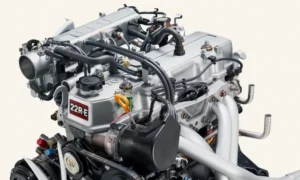
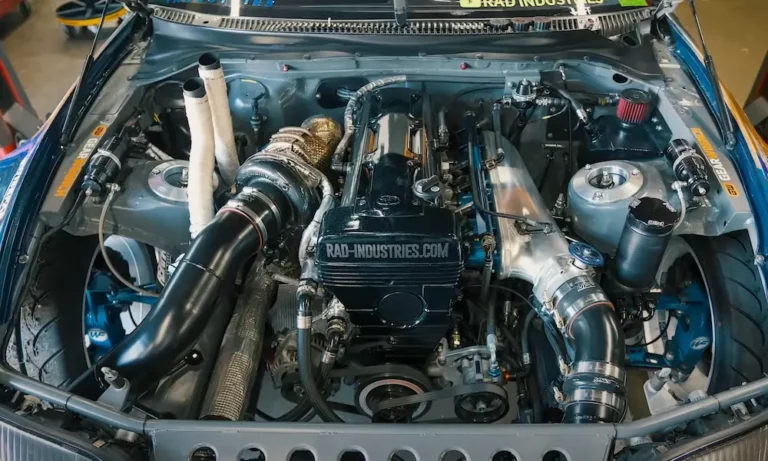
Toyota built the 2JZ between 1991 and 2007. It’s a 3.0-liter inline-six with a cast-iron block, aluminum head, and dead-square 86mm bore and stroke. That combination makes it incredibly strong — strong enough to handle serious power without cracking.
Three main variants exist:
- 2JZ-GE — naturally aspirated, smooth, bulletproof
- 2JZ-GTE — twin-turbocharged, the one tuners worship
- 2JZ-FSE — direct-injected, built for fuel efficiency
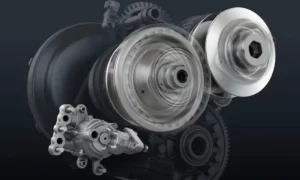
The 2JZ-GTE’s sequential turbo system routes all exhaust to the first turbo at low rpm, then opens the second at high rpm. That’s why it pulls hard everywhere in the rev range.
| Engine Variant | Aspiration | Power Output | Key Feature |
|---|---|---|---|
| 2JZ-GE | Naturally Aspirated | 215–230 HP | VVT-i added post-1997 |
| 2JZ-GTE | Twin-Turbocharged | 280 HP (JDM) / 320 HP (US) | Sequential turbos, forged internals |
| 2JZ-FSE | Naturally Aspirated | 217 HP | D-4 direct injection |
Now let’s get into every car that actually got one.
Toyota Supra (JZA80) — The Icon
The fourth-generation Supra, the JZA80, is the car that put the 2JZ on the map globally.
Built from 1993 to 2002, the Supra came in two flavors. The base model got the naturally aspirated 2JZ-GE. The flagship Supra Turbo — or RZ in Japan — got the full twin-turbo 2JZ-GTE paired with a Getrag V160 six-speed manual.
The tuning potential turned out to be insane. Tuner Craig Paisley ran an 8.72-second quarter-mile on a stock engine block with only upgraded camshafts. That got him the first official TRD factory sponsorship ever given to a US drag racer by a Japanese manufacturer.
The Fast and the Furious made it famous. The drag racing community made it immortal.
Toyota Aristo / Lexus GS 300 — The One That Came First
Here’s a fact that shocks most people: the first car ever to receive the 2JZ engine wasn’t the Supra. It was the Toyota Aristo, launched in Japan in October 1991 — a full two years before the Supra.
The first-gen Aristo (JZS147) came with two options:
- 3.0Q — 2JZ-GE, 227 HP
- 3.0V — 2JZ-GTE twin-turbo, 275 HP
The twin-turbo Aristo literally served as the development mule for the 2JZ-GTE before it went into the Supra.
Export markets got the Lexus GS 300, but only with the naturally aspirated GE engine. Toyota kept the twin-turbo exclusive to Japan to protect the Supra’s performance image overseas.
The second-gen Aristo (JZS161, 1997–2005) brought VVT-i to the 2JZ-GTE. Enthusiasts nicknamed it “The Gentleman’s Supra” — same firepower, four-door sedan body. The Aristo outlasted the Supra by three years, making it the last production car ever built with the 2JZ-GTE.
| Generation | Japanese Model | US Export | Chassis | Engine |
|---|---|---|---|---|
| First Gen | Aristo 3.0Q | Lexus GS 300 | JZS147 | 2JZ-GE |
| First Gen | Aristo 3.0V | None | JZS147 | 2JZ-GTE |
| Second Gen | Aristo S300 | Lexus GS 300 | JZS160 | 2JZ-GE |
| Second Gen | Aristo V300 | None | JZS161 | 2JZ-GTE |
Toyota Soarer / Lexus SC 300 (Z30 Series)
The Z30 Soarer and its American twin, the Lexus SC 300, share the same platform as the A80 Supra. Same suspension geometry, same subframe, same brakes — just tuned for cruising rather than track use.
The US-market SC 300 launched in July 1992 with the naturally aspirated 2JZ-GE. Uniquely for a luxury coupe, Toyota offered a five-speed manual transmission from 1992 to 1997. That makes the manual SC 300 essentially a longer, more comfortable Supra with a plusher interior.
In Japan, the JZZ31 Soarer arrived in 1994 with the 2JZ-GE producing 225 HP, later bumped to 230 HP with VVT-i in 1997. It was the only six-cylinder Soarer with manually adjustable black leather seats and outlasted the V8 models in production until the Z30 ended in April 2001.
The JZZ31 is now crossing the 25-year import threshold in the US, making it an increasingly popular import.
Lexus IS 300 / Toyota Altezza (XE10 Series)
Toyota built the XE10 platform to fight the BMW 3 Series directly. In Japan it sold as the Toyota Altezza. In the US, it became the Lexus IS 300.
The US-market IS 300, launched for the 2001 model year, got the 2JZ-GE in a compact rear-wheel-drive chassis — 215 HP in a lightweight, agile body. The result was genuinely quick and critically praised. The chronograph gauges, clear taillights, and sharp handling made it an enthusiast favorite.
Toyota Altezza Gita / Lexus IS 300 SportCross
The Altezza Gita AS300 was the 2JZ-GE wagon version of the Altezza — and the only Altezza in Japan to ever receive the 3.0-liter engine. It produced 217 HP in a practical five-door body, available in rear-wheel drive (JCE10W) or all-wheel drive (JCE15W).
The US equivalent, the IS 300 SportCross, is exceptionally rare today. Rear-wheel-drive wagon with 2JZ reliability? Collectors are paying serious attention.
Toyota Crown and Crown Majesta
The Toyota Crown has been Japan’s prestige sedan since 1955. The 2JZ-GE entered the Crown lineup with the ninth-generation S140 series in 1991, replacing older M-series engines.
Models like the JZS145 Crown Royal Saloon G used the 2JZ-GE’s smooth torque delivery for chauffeur-driven government and executive use. The engine’s near-silent idle made it perfect for the job.
The eleventh-generation S170 Crown (introduced 1999) brought the 2JZ-FSE direct injection engine to meet tightening emissions rules. Some S170 Royal Saloon models even paired it with a mild-hybrid system — one of the earliest hybrid applications in a full-size luxury sedan.
One warning if you’re buying a 2JZ-FSE: carbon buildup on the intake valves is a real and recurring issue. Because direct injection bypasses the valves entirely, oil vapors bake onto them over time. Budget for a walnut-blast clean every 20,000 miles.
Toyota Mark II, Chaser, and Cresta — The Triplet Sedans
Toyota ran multiple separate dealership chains in Japan. To give each chain a competitive mid-size RWD sedan, they built three distinct bodies on one shared platform. Same engine, same transmission, different sheet metal.
- Mark II — Toyopet Store, traditional luxury
- Chaser — Auto Store, sport-oriented
- Cresta — Vista Store, formal prestige
The X90 generation (1992–1996) introduced the four-wheel double-wishbone suspension. The top luxury trims — Chaser Avante G (JZX91), Cresta Super Lucent G, and Mark II Grande G — all used the 2JZ-GE producing 220 HP. The sportier Tourer V trims used the smaller 1JZ-GTE. The X100 generation (JZX101, 1996–2001) continued the same hierarchy with added traction control, VSC, ABS, and optional Torsen differentials on the 2JZ-GE flagship trims.
| Model | Dealership | Top Luxury Trim | Chassis Code | Engine |
|---|---|---|---|---|
| Toyota Mark II | Toyopet Store | Grande G | JZX91 / JZX101 | 2JZ-GE |
| Toyota Chaser | Auto Store | Avante G | JZX91 / JZX101 | 2JZ-GE |
| Toyota Cresta | Vista Store | Super Lucent / Exceed G | JZX91 / JZX101 | 2JZ-GE |
Toyota Mark II Blit, Verossa, and X110 Mark II
The X110 Mark II arrived in late 2000 and retired both the Chaser and Cresta nameplates. It sat 60mm taller than before, sharing its platform with the S170 Crown. The flagship naturally aspirated trims used the 2JZ-FSE to meet emissions targets.
The Toyota Verossa replaced the Chaser and Cresta at Netz dealerships in June 2001. European-inspired styling, polarizing looks, short production run — just over 26,000 units built before 2004. The upper trims used naturally aspirated JZ engines in a traditional RWD setup.
The Mark II Blit, introduced January 2002, was the X110 station wagon. The broader lineup leaned on the JZ family for effortless highway cruising in a practical cargo body. It’s exactly the kind of overlooked JZ-powered wagon that’s quietly gaining value.
Toyota Progres, Brevis, and the Rare Origin
Toyota identified buyers who wanted Crown-level luxury in a smaller footprint for tight Tokyo parking. The answer was the JCG platform.
The Toyota Progres launched in May 1998 with a unique “P” badge — no standard Toyota emblem. The top NC300 trim used the 2JZ-GE, later swapped to the 2JZ-FSE in April 2001. Walnut trim, radar cruise control, excellent refinement.
The Toyota Brevis followed in June 2001 on the same platform, aimed at slightly younger executive buyers.
Then there’s the Toyota Origin — possibly the rarest 2JZ car ever made. Only 1,073 units were built between May 2000 and April 2001 to celebrate Toyota’s 100 millionth vehicle. It wore bespoke bodywork styled after the original 1955 Toyopet Crown, complete with rear-hinged suicide doors and premium materials throughout. Under the hood? A 2JZ-GE, fitted as a tribute to Toyota’s engineering legacy.
Importing These Cars to the US: What You Need to Know
The federal 25-year import rule lets you legally import foreign-market vehicles once they turn 25 years old from their manufacture date. Vehicles from 1999 and 2000 are eligible right now. The JZX100 Mark II, JZS171 Crown, Altezza Gita, and JZZ31 Soarer are all actively crossing that threshold.
The practical advantage? The 2JZ-GE shares water pumps, timing belts, alternators, and ignition components with US-market Lexus GS 300 and IS 300 parts. Your local auto parts store can support most maintenance jobs.
One caveat: avoid the 2JZ-FSE if you’re not prepared for specialized carbon cleaning. Finding a US mechanic experienced with Japan-only direct injection systems takes effort, and the carbon buildup issue is real.
The Full 2JZ Car List at a Glance
Here’s every confirmed production vehicle that carried a 2JZ engine:
2JZ-GTE (Twin-Turbo)
- Toyota Supra RZ / Supra Turbo (JZA80)
- Toyota Aristo 3.0V (JZS147)
- Toyota Aristo V300 (JZS161) — last production car with the 2JZ-GTE
2JZ-GE (Naturally Aspirated)
- Toyota Supra SZ / Supra NA (JZA80)
- Toyota Aristo 3.0Q (JZS147 / JZS160)
- Lexus GS 300 (first and second gen)
- Toyota Soarer JZZ31 / Lexus SC 300 (Z30)
- Lexus IS 300 / Toyota Altezza Gita AS300 (XE10)
- Toyota Crown S140 / S150 / S170 (select trims)
- Toyota Crown Majesta (select trims)
- Toyota Mark II Grande G (JZX91 / JZX101)
- Toyota Chaser Avante G (JZX91 / JZX101)
- Toyota Cresta Super Lucent G / Exceed G (JZX91 / JZX101)
- Toyota Progres NC300
- Toyota Brevis (top trim)
- Toyota Origin
2JZ-FSE (Direct Injection)
- Toyota Crown S170 (JZS175 / JZS177)
- Toyota Crown Majesta (S170)
- Toyota Mark II X110 (select trims)
- Toyota Verossa (upper trims)
- Toyota Mark II Blit (select trims)
- Toyota Progres NC300 (post-2001 update)
The full scope of 2JZ applications spans sports cars, luxury coupes, executive sedans, compact sport sedans, full-size flagships, station wagons, and a hand-built tribute car. No other engine in automotive history crossed that many market segments while maintaining the same legendary durability throughout.
Whether you want the twin-turbo firepower of the Aristo V300, the rare practicality of an Altezza Gita, or the cultural icon status of the Supra — the 2JZ engine family gives you options most people never knew existed.