You’ve spotted Lexani tires at a price that seems too good to be true, and now you’re wondering who actually makes them. Smart move—knowing the manufacturer tells you everything about what you’re really buying. Let’s cut through the marketing and get to the facts about where Lexani tires come from and whether they’re worth your money.
The Real Manufacturer Behind Lexani Tires
Here’s the straight answer: Nexen Tire, a South Korean company established in 1942, manufactures Lexani tires. But there’s more to the story than a simple label swap.
Lexani operates as a private label brand managed by Lexani Wheel Corporation, a California-based aftermarket specialist located in Corona. They don’t actually make tires themselves—they’re essentially the marketing and distribution arm. The physical manufacturing happens in Nexen facilities and, after corporate changes, also at Sentury Tire plants across China, Thailand, and the USA.
This arrangement is common in the budget tire world. Think of it like store-brand cereal—same factory, different box. When Zisser Tire (the original US wholesaler) got acquired by Sentaida Incorporated in 2006, production shifted to Sentury’s facilities while maintaining Nexen’s involvement.
What’s particularly interesting? Multiple Chinese manufacturers produce tires under the Lexani brand name through licensing agreements. You might find Lexani tires that are essentially identical to other budget brands like Lionard or W Lee Juan, just with different logos stamped on the sidewall.
Lexani Wheel Corporation: The Brand Manager
Lexani Wheel Corporation runs the show from their headquarters at 2380 Railroad Street in Corona, California. They’re not a massive operation—annual revenue hovers around $6.6 million with a lean team. Their focus isn’t manufacturing; it’s getting these tires into your hands at prices that undercut premium brands by roughly 40%.
The company positions itself as an aftermarket specialist, which explains why you’ll see Lexani tires heavily marketed toward custom vehicle owners and luxury car enthusiasts looking for large-diameter wheel applications. They’ve carved out a niche serving drivers who want the look of premium performance without the premium price tag.
How Lexani Tires Are Actually Made
Even though Lexani doesn’t own the factories, the manufacturing process follows standard industrial procedures. Raw rubber compounds get mixed, steel belts and fabric layers are assembled, treads are applied, and everything gets vulcanized under high heat and pressure—same basic process whether you’re making a $60 Lexani or a $200 Michelin.
What differentiates Lexani is their design approach. They incorporate what they call “European-designed technology” into many models, including innovations like Extended Flange Technology (EFT) for better vehicle control and asymmetric tread patterns for improved handling. These aren’t just marketing buzzwords—real-world testing confirms these design elements deliver measurable performance benefits.
The quality control question is trickier. Since production happens across multiple facilities under licensing agreements, consistency can vary. Some batches get better quality oversight than others, which explains why customer experiences range from “surprisingly good” to “wouldn’t buy again.”
The Complete Lexani Tire Lineup
Lexani offers more variety than you’d expect from a budget brand. Here’s what’s actually available:
Performance Models:
The LX-Twenty is their flagship ultra-high-performance all-season tire. It sports a 320 treadwear rating, W speed rating (up to 168 mph), and a 55,000-mile warranty. Available in 17 to 22-inch sizes, it’s built for drivers who want spirited handling without bankruptcy. Real testing over 12,000 miles showed impressive lateral grip and relatively quiet operation—at least initially.
The LXUHP-207 targets sports cars and performance sedans with four wide grooves for water channeling and reinforced shoulders for aggressive cornering. It carries the same 55,000-mile warranty and fits everything from Honda Accords to Ford Mustangs.
SUV and Truck Options:
The LX-Thirty and LX-Thirty II serve SUV owners with asymmetric tread designs and high-speed capabilities. They feature solid center ribs for stability and angled tread blocks for wet-road grip, backed by a 45,000-mile warranty.
The Terrain Beast AT handles off-road duties with aggressive tread designs and deep grooves for mud, rain, and snow. The angled blocks clear debris while a center rib maintains highway stability—crucial for trucks that split time between pavement and dirt.
Specialty Tires:
The Volt-EC represents Lexani’s newest innovation, specifically engineered for electric vehicles. It features ultra-low rolling resistance to maximize battery range, optimized weight distribution, and advanced micro-siping for wet and snow grip. Available in 18 to 22-inch sizes, it fits Tesla Model 3, Ford Mustang Mach-E, Toyota Prius, and Chevrolet Volt applications.
The Quattro Tempo AW, launched in 2025, is their first dedicated all-weather tire with Three-Peak Mountain Snowflake certification. It combines winter capability with all-season versatility, backed by a 50,000-mile warranty plus a 2-year replacement policy.
What You Actually Get: Warranty Coverage
Lexani’s warranty program is straightforward but less generous than premium brands. Most models include limited mileage warranties ranging from 40,000 to 55,000 miles:
- LX-Twenty and LXUHP-207: 55,000 miles
- Volt-EC: 40,000 miles
- Quattro Tempo AW: 50,000 miles
- LX-Thirty series: 45,000 miles
These warranties cover defects in materials and workmanship under normal use. What’s not covered? Damage from accidents, abuse, misuse, or improper installation. Road hazard protection—coverage for nails, glass, and debris damage—costs extra rather than coming standard.
Compare this to Michelin or Goodyear, which often provide more comprehensive coverage baked into the purchase price. You’re getting basic protection that matches the budget pricing.
Real-World Performance: What YouTube Reviewers Found
YouTube testing reveals the truth premium brands don’t want you to know: budget tires have improved dramatically over the past decade.
Speed Culture Studios ran the LX-Twenty through 12,000 miles of abuse on a rear-wheel drive performance car. Their findings? “Exceptional lateral grip for a $100 tire” that handled sustained mountain driving and aggressive cornering without significant degradation. The tire performed well in South Carolina’s spring downpours and even surprised them with decent cold-weather performance despite being classified as a summer tire.
After 12,000 hard miles, the front tires retained substantial tread with minimal cupping after rotation. The reviewer projected roughly 45,000 total miles and concluded the value was “exceptional” for drivers who prioritize cornering over drag racing.
HILLYARD’S RIM LIONS confirmed these tires are competitive with other Chinese brands but highlighted the critical trade-off: noise. Tires started quiet but gradually became noticeably louder as tread wore down. After the first couple thousand kilometers, highway hum became increasingly apparent. Despite this, they credited Lexani with good treadwear and recommended them for budget-conscious buyers building modified vehicles.
JCS – CUSTOMS documented one year with Lexani performance tires on a Camaro SS, emphasizing exceptional value at roughly one-quarter the cost of competing performance brands. The tires held up well for everyday driving throughout the extended test period.
Not all reviews were positive. Steve’s Garage criticized the LXTR-203 after one year of four-season driving, stating it provided insufficient traction even in dry summer conditions. After switching to Michelin and Yokohama tires, the improvement was substantial—highlighting that not all Lexani models perform equally.
The Highway Noise Reality: What Drivers Actually Experience
Here’s the truth every budget tire buyer needs to understand: road noise increases as these tires wear.
Reddit discussions reveal a consistent pattern. Drivers report that Lexani tires start relatively quiet but develop a noticeable “hum” on highways above 65 mph. After approximately 15,000 miles, this noise can become “unbearable” at highway speeds, though city driving remains acceptable.
Interestingly, some users noted that after about 8,000 miles with rotation, road noise actually decreased or became less noticeable—possibly indicating driver adaptation rather than actual noise reduction.
One Reddit user running LX-Twenty tires on a high-powered RWD coupe reported mixed launch performance due to limited rear grip during aggressive acceleration but acknowledged better-than-expected performance for a 500 hp vehicle in normal driving.
The consensus? If you’re primarily a city driver or don’t mind road noise during your highway commute, Lexani delivers solid value. If you spend hours on interstates and value quiet comfort, these aren’t your tires.
20,000-Mile Long-Term Testing Results
Performance Plus Tire conducted comprehensive testing over 20,000 miles, providing measurable data on actual durability. Tread depth measurements showed wear from 10/32 inches to 7/32 inches, projecting approximately 45,000 total miles under mixed driving conditions.
The wear pattern remained even across all four tires—a critical indicator of quality construction and proper alignment compatibility. No cracking, sidewall bulging, or uneven wear patterns appeared, which separates acceptable budget tires from dangerous ones.
Dry pavement performance delivered adequate grip for daily commuting with responsive braking, though slightly behind premium brands in precision and immediate feedback.
Wet road performance proved surprisingly effective. Advanced tread designs maintained good contact during sudden stops, and handling in rain inspired confidence—genuinely competitive with more expensive options in this category.
City driving comfort exceeded budget tire expectations, effectively absorbing potholes and road imperfections without harsh impacts transmitted to the cabin.
Highway driving above 65 mph revealed the budget nature through steady hum—the inevitable trade-off for the price point.
Minor cupping appeared on front tires around 15,000 miles but resolved with rotation, highlighting the importance of regular maintenance. Extended highway trips showed slightly accelerated wear compared to city driving, suggesting heavy interstate users might see shorter life than the projected 45,000 miles.
How Lexani Compares to Premium Brands
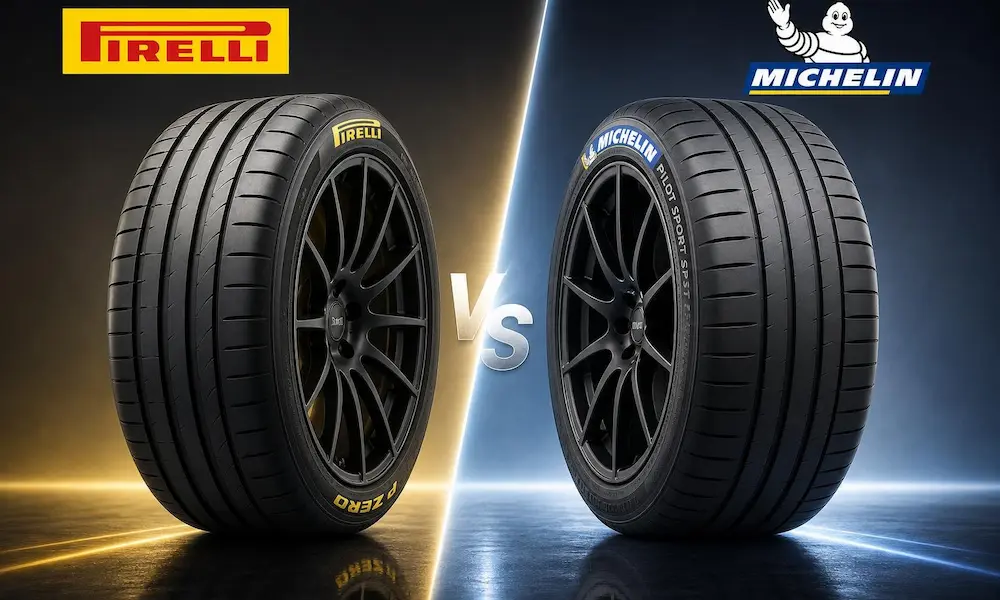
Let’s be honest about where Lexani stands against Michelin, Bridgestone, Pirelli, and Continental.
Pricing: Lexani runs $60–$120 per tire versus $120–$200+ for premium brands—a 40% cost advantage that’s impossible to ignore when you’re buying sets for multiple vehicles.
Dry grip: Solid and adequate for daily driving but doesn’t match the precision and immediate responsiveness of premium performance tires. You’ll notice the difference during aggressive cornering or emergency maneuvers.
Wet handling: Surprisingly competent for the price point, though longer braking distances and slightly reduced confidence in heavy rain differentiate them from premium options.
Highway noise: The most significant performance gap. Lexani produces noticeably more road hum above 65 mph compared to premium alternatives engineered for quiet highway cruising.
Tread life: 40,000–50,000 miles is reasonable for budget tires but trails the 50,000–70,000 mile life of premium brands. However, when you factor in the lower replacement cost, total cost of ownership over time can actually favor budget options if you’re diligent about rotations.
Warranty coverage: 40,000–55,000 miles versus 50,000–80,000 miles for premium brands, reflecting realistic durability expectations.
Compared to other budget brands like Laufenn and lower-tier Nexen products, Lexani holds competitive positioning with strong brand recognition, particularly among custom vehicle owners. The brand hasn’t achieved the established reputation of Toyo or the OEM credibility of Yokohama or Hankook, but it’s carving out its own niche.
The Honest Strengths and Weaknesses
What Lexani Does Well:
The value proposition is undeniable—40% cost savings while maintaining basic safety and reliability standards. For drivers managing tight budgets or maintaining multiple vehicles, this math matters.
Brand recognition among custom vehicle owners and luxury car enthusiasts provides perceived quality beyond actual tire specifications. People recognize the name, which influences resale value and curb appeal.
Innovation in specialty products like the Volt-EC shows commitment to modern vehicle requirements rather than just recycling old designs. The fact that a budget brand developed an EV-specific tire before many premium manufacturers deserves recognition.
Wet weather performance consistently exceeds expectations, providing competent hydroplaning resistance and rain traction that rivals more expensive options.
Even tread wear patterns and durability results suggest quality construction and proper material composition—these aren’t dangerous garbage tires that’ll fall apart at 20,000 miles.
Where Lexani Falls Short:
Progressive road noise that increases as tires wear represents the most significant quality-of-life trade-off, particularly for highway drivers covering substantial interstate miles.
Launch grip limitations on high-horsepower rear-wheel drive vehicles restrict performance driving capabilities. If you’re launching a 500+ hp car at the drag strip, you need better tires.
Limited cold weather performance on all-season models necessitates dedicated winter tires in harsh climates, unlike some premium all-season options rated for severe winter conditions.
Installation variability and balancing issues have been reported, suggesting inconsistent quality control from some manufacturing batches or retailer installations.
Limited model availability in all-terrain and winter-specific categories compared to premium brands restricts market reach to specific applications.
What You’ll Actually Pay
Individual Lexani tires typically cost $60–$120 depending on size and model, with complete sets ranging from $300–$500. This pricing represents approximately 40% savings compared to premium brands.
Online retailers like Fitment Industries, SimpleTire, and Walmart offer financing options with monthly payments starting at $26–$49 for individual tires. This accessibility particularly appeals to young drivers, budget-conscious families, and owners of multiple vehicles who need to prioritize cost.
The affordability comes from efficient production management and material sourcing rather than dangerous manufacturing shortcuts. You’re not getting premium materials or cutting-edge engineering, but you’re getting functional, safe tires at prices that won’t destroy your budget.
Who Should Actually Buy Lexani Tires
Lexani makes sense for specific driver profiles:
Ideal buyers:
- Everyday commuters with modest annual mileage (under 15,000 miles/year)
- Budget-conscious families maintaining multiple vehicles
- Owners of customized vehicles seeking attractive large-diameter tire options
- New drivers requiring economical tire solutions
- City drivers who rarely hit highways above 65 mph
- Second cars or seasonal vehicles where premium performance isn’t critical
Who should look elsewhere:
- Drivers emphasizing highway comfort and quiet operation during long commutes
- High-performance enthusiasts seeking sports car handling dynamics
- Residents in severe winter climates without dedicated winter tire coverage
- Anyone valuing luxury brand prestige and advanced performance features
- Heavy highway users covering 20,000+ miles annually
- Drivers who prioritize maximum wet braking performance and safety margins