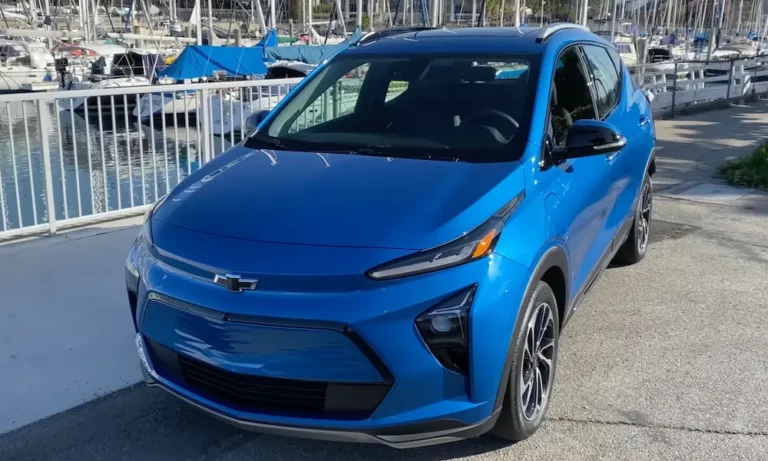
The road to electric vehicle adoption hasn’t been without bumps, and the Chevy Bolt battery recall represents one of the biggest potholes yet. If you’re a Bolt owner wondering about your vehicle’s safety, or a potential buyer concerned about purchasing a used model, you’ve got legitimate questions that deserve clear answers.
The Chevy Bolt Battery Recall: By the Numbers
The Chevrolet Bolt battery recall stands as one of the most expensive automotive safety recalls in recent history. The numbers tell a compelling story:
- Over 142,000 vehicles affected worldwide
- Approximately $2 billion in total costs
- Every single Bolt EV and EUV manufactured (2017-2022 models)
- $1.9 billion reimbursement from LG to GM
What began as a limited recall in November 2020 quickly expanded to encompass the entire Bolt fleet by August 2021. The National Highway Traffic Safety Administration (NHTSA) opened an investigation after receiving reports of battery fires in parked vehicles, including at least one case where the fire spread to a home.
What Caused the Battery Fires?
The investigation by GM and LG Energy Solution identified a dangerous combination of two specific manufacturing defects that, when present simultaneously in the same battery cell, created a significant fire risk:
Torn Anode Tab
The anode tab serves as the negative electrode component that connects the cell into the battery pack. When torn during manufacturing, this component compromises the battery cell’s structural integrity, potentially causing internal short circuits.
Folded Separator
The separator is a thin sheet that keeps the anode and cathode from making direct contact within the battery cell. When folded during manufacturing, it creates pathways for unintended electrical contact between the electrodes.
When both defects appeared in the same cell, they created conditions for thermal runaway—a chain reaction where the battery generates heat faster than it can dissipate it. As one Bolt owner explained on Reddit: “if both are present in the same battery cell provided to GM for their cars, it is inevitable that a fire will occur; it’s just a question of when.”
Timeline: How the Recall Expanded
The recall didn’t happen all at once. Instead, it grew in stages as GM and LG discovered the full extent of the problem:
| Date | Action | Vehicles Affected |
|---|---|---|
| November 2020 | Initial recall | 50,930 (2017-2019 Bolt EVs) |
| July 2021 | First expansion | 68,700 vehicles |
| August 2021 | Final expansion | All 142,000 Bolt EVs and EUVs (2017-2022) |
This gradual expansion occurred as investigators discovered that manufacturing defects weren’t limited to LG’s South Korean facility but also appeared in batteries produced at their Holland, Michigan plant.
The Fix: What GM Did to Address the Problem
GM’s remedy for the battery recall involved both hardware and software solutions:
Battery Module Replacement
For vehicles with the highest risk, GM replaced defective lithium-ion battery modules with new modules featuring enhanced manufacturing processes. These replacement batteries came with an extended 8-year/100,000-mile limited warranty.
Advanced Diagnostic Software
For select 2020-2022 model year vehicles, GM developed sophisticated diagnostic software that continuously monitors battery performance. This software initially limited charging to 80% capacity and, after approximately 6,200 miles without detected anomalies, automatically returned the vehicle to 100% charging capacity.
The system alerts drivers through the vehicle’s information center if any battery abnormalities are detected, prompting them to contact a Chevrolet dealer for module replacement if necessary.
Recent Developments: Software-Related Recalls in 2024
Despite the extensive original recall, battery and software-related issues have persisted into 2024:
- June 2024: 72 vehicles recalled due to incorrectly installed diagnostic software
- November 2024: 107 vehicles recalled for failed diagnostic software installation
These follow-up recalls demonstrate the challenges with implementing monitoring systems for advanced battery technologies. In both cases, the faulty software installation could fail to detect defective battery modules, potentially increasing fire risk.
Current Safety Recommendations for Bolt Owners
If your vehicle is affected by the most recent recalls, NHTSA and GM recommend these safety precautions:
- Set target charge level to 90% maximum
- Charge vehicles more frequently
- Avoid depleting battery below 70 miles of remaining range
- Park outside after charging
- Do not charge vehicles indoors overnight
Financial Impact: Who Paid for the Recall?
The massive scope of the recall resulted in unprecedented costs—approximately $1.8 billion, averaging roughly $12,700 per recalled vehicle. This reflects the expensive nature of replacing entire battery packs, which represent a significant portion of an electric vehicle’s total value.
In October 2021, GM reached a landmark agreement with LG Electronics and LG Energy Solution for reimbursement of $1.9 billion to cover most of the recall costs. This settlement represented one of the largest supplier reimbursements in automotive history, with LG taking responsibility for the manufacturing defects.
Compensation for Bolt Owners: The Class Action Settlement
A significant class action lawsuit resulted in a settlement that provides compensation for affected Bolt owners. The settlement covers all persons who purchased or leased model year 2017-2022 Chevrolet Bolts built and shipped to dealers on or before August 19, 2021.
Key details of the settlement include:
- Claim deadline: July 31, 2025 (with some recipients having until September 22, 2025)
- Potential compensation: $700 to $1,400 per eligible owner
- Relief fund: GM, LG Energy Solution, and LG Electronics established a $150 million relief fund to reimburse owners who had software updates or battery pack replacements
Impact on GM’s Electric Vehicle Strategy
The Bolt recall presented significant challenges for GM’s broader electric vehicle ambitions. The company had positioned the Bolt as its flagship mainstream electric vehicle and planned to leverage it as a foundation for attracting consumers to EVs.
Despite these challenges, GM has continued its aggressive EV investment strategy, committing $35 billion through 2025 to develop more than 30 new electric vehicle models globally. The company has also maintained its partnership with LG Energy Solution, establishing joint-venture battery manufacturing facilities in Ohio and Tennessee.
The End of the Original Bolt (And Its Future Return)
GM announced the discontinuation of the original Bolt EV in December 2023, ending production after seven model years. However, the company has confirmed that a new version of the Bolt will return in 2025, built on GM’s newer Ultium EV platform with redesigned battery technology and enhanced safety systems.
Buying a Used Bolt? Here’s What to Check
For prospective used car buyers, vehicles that have completed the recall can be identified through several methods:
1. Check the Recall Status
Use the vehicle’s VIN to check its recall status on the NHTSA’s website. This will tell you if the vehicle has had the necessary repairs completed.
2. Verify the Battery Warranty
Look for warranty information showing an 8-year/100,000-mile battery warranty starting from the repair date. This extended warranty was provided for all vehicles that received battery replacements.
3. Contact GM’s Bolt EV Team
Call GM’s Bolt EV Concierge Team at 1-833-382-4389 for verification of the vehicle’s recall status and repair history.
Table: Warning Signs of Potential Battery Issues
| Warning Sign | What It Might Mean | What to Do |
|---|---|---|
| Reduced range after full charge | Potential battery degradation | Have dealer run diagnostics |
| Battery warning light on dashboard | System detecting anomaly | Contact dealer immediately |
| Unusual odors from battery area | Possible thermal issue | Stop driving, park outside, contact dealer |
| Vehicle not accepting full charge | Software limiting charge for safety | Verify recall status with dealer |
| Diagnostic error messages | Software not functioning properly | Schedule service appointment |
Technical Lessons from the Recall
The Bolt recall has provided important lessons for the broader electric vehicle industry:
Manufacturing Quality Control is Crucial
The recall highlighted the critical importance of strict quality control in battery cell manufacturing. The simultaneous presence of two seemingly minor defects demonstrated how small manufacturing inconsistencies can have catastrophic safety implications.
EV Supply Chain Complexity
The recall illustrated the complex relationships between automakers and battery suppliers in the EV era. While LG ultimately took financial responsibility for the manufacturing defects, the incident showed how supplier issues can have far-reaching impacts on vehicle manufacturers’ reputations.
Diagnostic Technology Challenges
The ongoing challenges with diagnostic software installations reveal the complexity of implementing monitoring systems for advanced battery technologies. The multiple software-related recalls suggest that even sophisticated diagnostic systems require careful implementation and ongoing validation.
Current Status of the Recall
As of September 2025, the vast majority of affected Bolt vehicles have received either battery replacements or diagnostic software installations to address the original recall. However, the recent software-related recalls affecting small numbers of previously repaired vehicles indicate that some issues persist.
The Chevrolet Bolt battery recall serves as a watershed moment for electric vehicle safety and quality assurance. While the recall process was extensive and costly, it has ultimately led to improved manufacturing processes, enhanced diagnostic capabilities, and stronger supplier accountability standards that benefit the entire electric vehicle industry.