Facing battery issues with your Honda Civic Hybrid? You’re about to discover everything from telltale warning signs to cost-saving replacement options. Whether you’re dealing with that dreaded IMA light or trying to decide between OEM and aftermarket solutions, this guide breaks down the entire replacement process to help you make informed decisions and potentially save thousands.
Understanding Honda Civic Hybrid Battery Systems
Battery Technology Through the Years
Honda’s hybrid battery technology has evolved significantly across different Civic generations. The earliest models (2003-2005) featured nickel-metal hydride (NiMH) batteries rated at 144 volts, positioned behind the rear seats. The second generation (2006-2011) continued with improved NiMH technology, while the third generation (2012-2015) made the leap to more advanced lithium-ion battery systems.
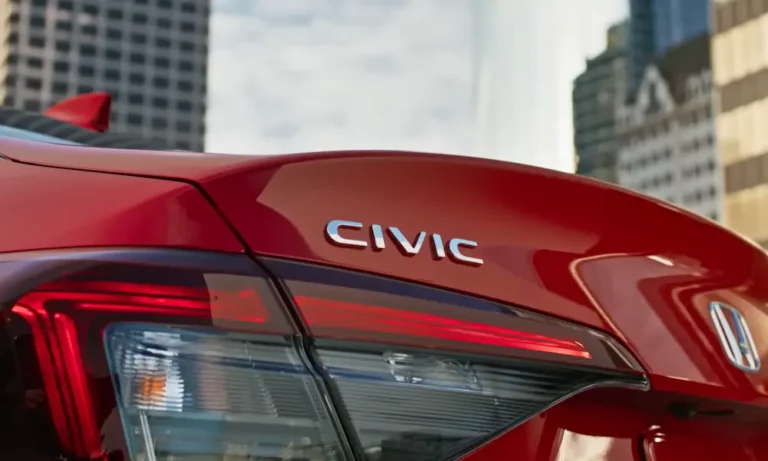
The latest Civic Hybrids (2022-2025) represent Honda’s most sophisticated approach yet. These models use a complex lithium-ion system that functions more like an electric vehicle using the gas engine as a generator, with a single-speed transmission that engages at around 42 mph.
Where’s the Battery and How’s It Built?
All Honda Civic Hybrid generations locate the main battery pack behind the rear seats, requiring removal of seat components for access. The battery consists of multiple individual cells connected in series to create the necessary voltage for powering the electric motor.
What makes these systems particularly clever is the battery management system (BMS) that constantly monitors:
- Charge state
- Temperature
- Cell balance
- Voltage output
This sophisticated monitoring helps extend battery life and prevent catastrophic failures, though it can’t prevent the eventual degradation all hybrid batteries experience.
Signs Your Honda Civic Hybrid Battery Is Failing
Dashboard Warning Lights
Your car will typically give you clear signals when the hybrid battery is failing. Watch for these warning indicators:
- IMA Light: The Integrated Motor Assist light is the most direct indicator of hybrid battery problems
- Check Engine Light: Often appears alongside the IMA light
- Red Battery Warning: Indicates charging system issues that may relate to the hybrid battery
When these lights appear together, it’s almost always battery-related and requires immediate attention.
Performance Issues
Beyond warning lights, you’ll notice significant changes in how your Civic drives when the battery is failing:
- Decreased fuel efficiency: Your 50 MPG hybrid might suddenly drop to 40 MPG or less
- Sluggish acceleration: The electric motor no longer provides that instant torque
- Rough idle: The engine may struggle to maintain smooth operation
- Frequent auto start/stop failures: The system may stop working entirely
These performance issues develop gradually, making them easy to miss until they become severe.
Diagnostic Trouble Codes
When connected to a diagnostic scanner, failing hybrid batteries often trigger specific codes:
- P1570: Battery voltage problems
- P1600: ECM battery function issues
- P1447: EVAP system problems (often hybrid-related)
- P0420: Catalytic converter issues (sometimes caused by hybrid system problems)
Professional scanners can assess individual cell conditions, pinpointing exactly which cells are degrading or causing imbalances.
Honda Civic Hybrid Battery Replacement Costs
Dealership Replacement
Going to the Honda dealership is the most expensive option, but provides peace of mind with OEM parts:
| Expense | Cost Range |
|---|---|
| OEM Battery | $3,058-$3,500 |
| Labor | $300-$500 |
| Total | $3,300-$4,000 |
Dealership replacement may qualify for Honda’s 8-year/100,000-mile warranty on replacement batteries, though the specifics of this warranty can be confusing.
Independent Shop Options
Independent shops offer significant savings while maintaining professional installation standards:
| Option | Cost Range | Typical Warranty |
|---|---|---|
| New Aftermarket | $1,900-$2,600 | 36-48 months |
| Remanufactured | $1,300-$1,800 | 18-24 months |
Companies like Greentec Auto offer new aftermarket batteries for Honda Civic Hybrids starting at $1,749 with 36-month warranties, while remanufactured units start around $1,395 with 18-month coverage.
DIY Replacement Costs
For the mechanically inclined, DIY replacement offers the biggest savings:
| Option | Cost Range | Notes |
|---|---|---|
| New Aftermarket + DIY | $1,400-$1,800 | Requires mechanical skills |
| Remanufactured + DIY | $1,095-$1,395 | 12-18 month warranty |
| DIY Rebuild Kit | $400-$700 | Most advanced option |
DIY installation eliminates labor costs but requires a solid understanding of high-voltage safety precautions and about 3-5 hours of work time.
Step-by-Step Battery Replacement Process
Preparation and Safety First
Before starting any hybrid battery replacement:
- Disconnect the 12V battery’s negative terminal
- Wait at least 10 minutes for capacitors to discharge
- Have appropriate tools ready: 10mm and 12mm sockets, T30 Torx bits, needle-nose pliers
- Consider wearing high-voltage gloves for safety
Despite common fears, the DC power system in hybrid batteries poses less electrocution risk than many believe, but proper safety protocols remain essential.
Accessing the Battery
The battery access procedure follows these steps:
- Remove the rear seat bottom (secured by one 10mm bolt)
- Remove the upper seat section (three bolts)
- Locate the battery compartment cover
- Engage the red safety disconnect switch
- Turn off the high-voltage disconnect switch
- Wait 10 minutes before proceeding
- Remove T30 Torx screws from the battery compartment cover
Removing the Old Battery
With proper access established:
- Disconnect high-voltage cables using 10mm sockets
- Unplug orange connectors from battery and computer systems
- Remove four 12mm bolts securing the battery case
- Use the metal handles to carefully lift out the battery pack
- Take care not to catch wiring on electronic components during removal
The battery weighs approximately 65-85 pounds depending on the generation, so proper lifting technique is important.
Installing the New Battery
Installation follows the reverse order:
- Lower new battery into position using handles
- Secure with four 12mm bolts
- Reconnect orange connectors, ensuring proper seating
- Reattach high-voltage cables with 10mm sockets
- Replace battery compartment cover and Torx screws
- Turn high-voltage switch back on
- Reinstall rear seat components
- Reconnect 12V battery
After installation, the vehicle may require a battery recalibration procedure or reset, sometimes performed automatically by the onboard computer after several driving cycles.
Warranty Coverage for Honda Civic Hybrid Batteries
Honda’s Factory Warranty Terms
Honda’s hybrid battery warranty structure includes:
- Standard 3-year/36,000-mile limited warranty
- Powertrain coverage: 5 years/60,000 miles
- Hybrid battery specific: 8 years/100,000 miles
The 8-year coverage specifically applies to defects in materials or workmanship rather than normal capacity degradation. This distinction creates frequent confusion among owners, as declining capacity is often considered normal wear.
Warranty Limitations to Know
Before counting on warranty coverage, understand these important limitations:
- Normal wear and capacity loss aren’t covered
- Damage from accidents, misuse, or extreme environments isn’t covered
- Proper maintenance records are required for claims
- Warranted replacements may use refurbished/reconditioned units
- Incidental costs like towing or rentals typically aren’t included
The interpretation of warranty terms has created disputes between owners and dealerships, with some owners reporting difficulties getting coverage for batteries showing significant capacity loss.
OEM vs. Aftermarket Battery Options
OEM Battery Advantages
Original Equipment Manufacturer batteries offer several benefits:
- Perfect compatibility with vehicle systems
- Factory-grade cell matching and assembly
- Typically longer service life
- Eliminates potential warning light issues
- May qualify for full Honda warranty coverage
The primary drawback is cost, with OEM options running $3,000+ before installation.
Aftermarket Quality Considerations
Aftermarket options have improved dramatically in recent years:
- Reputable manufacturers like Best Hybrid Batteries use advanced cell matching
- Quality testing protocols ensure reliability
- Warranties range from 12-48 months
- Cost savings of 40-60% compared to OEM
- Installation is identical to OEM procedure
The best aftermarket batteries offer comparable performance to OEM at significantly lower prices, though quality varies between manufacturers.
Remanufactured Battery Value
Remanufactured batteries offer the most economical option:
- Uses tested cells from other battery packs
- Combines with new components where needed
- Typical cost: $1,095-$1,395
- Usually includes 12-18 month warranties
- May have shorter service life than new options
Quality depends heavily on the rebuilder’s process. Reputable rebuilders use precision cell matching with advanced testing equipment, while lower-quality options may use substandard components.
Newer Honda Civic Hybrid Considerations (2022-2025)
Early Reliability Issues
The newest Honda Civic Hybrid models have experienced some early concerns:
- Multiple simultaneous warning lights (transmission, emissions, hill assist)
- Electrical system problems affecting battery performance
- Defective throttle bodies affecting hybrid operation
- 12-volt battery issues causing system malfunctions
Some owners have reported significant repair backlogs due to parts availability, highlighting the challenges of servicing newer hybrid systems.
Cold Weather Performance
Recent Civic Hybrids appear particularly sensitive to cold weather:
- 12-volt system may be undersized for colder climates
- Starting failures reported in cold conditions
- Multiple warning lights during cold starts
- Trickle charging sometimes needed in very cold regions
These issues suggest that proper battery maintenance becomes even more critical for the newer generations, particularly in colder climates.
Making the Right Replacement Decision
The best Honda Civic Hybrid battery replacement option depends on several factors:
- Vehicle age and value: Older Civics may not justify OEM expense
- Mechanical skills: DIY options save labor but require technical ability
- Warranty needs: Longer coverage might justify higher upfront costs
- Expected ownership duration: Longer-term owners benefit from higher quality replacements
For most owners, independent shop installation with quality aftermarket or remanufactured batteries provides the optimal balance of cost, reliability, and warranty protection.
DIY installation remains feasible for 2006-2015 models with well-documented procedures, while newer 2022+ models may require professional expertise due to complex electronic integration.
Regular maintenance and proper charging system care can extend battery life, but replacement is inevitable for most Honda Civic Hybrids between 100,000-200,000 miles. By recognizing early symptoms and choosing reputable suppliers, you can minimize costs while maximizing vehicle performance.