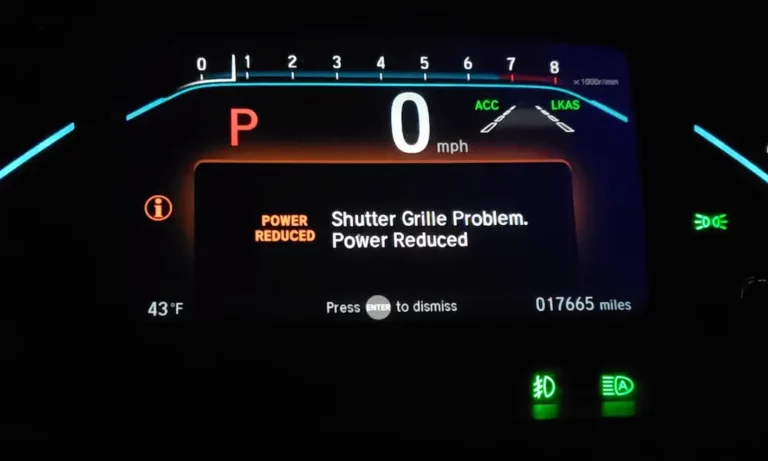
Seeing “Shutter Grille Problem, Power Reduced” flash across your Honda’s dashboard can be pretty unsettling. Good news? This issue is usually fixable, and you don’t always need a mechanic. Let’s break down what’s happening, why it matters, and how to get your Honda running normally again.
What’s the Active Grille Shutter System Anyway?
Your Honda isn’t just another car with a pretty grille. If you’re driving a 2017 or newer CR-V, Odyssey, Pilot, or Ridgeline, you’ve got some smart tech hiding behind that front grille.
The Active Grille Shutter (AGS) system uses motorized shutters that open and close automatically. Think of it like your car’s nostrils—they open when your engine needs to breathe and close when it doesn’t.
Here’s how it works:
At highway speeds, the shutters close to reduce wind resistance. This improves your fuel economy by up to 2%. Not massive, but it adds up over time.
When your engine needs cooling, they pop open to let maximum airflow through. Simple, right?
During cold starts, they stay closed to help your engine warm up faster. This means better efficiency and less wear on engine components.
An electronic control module manages everything based on engine temperature, vehicle speed, and cooling needs. When this system glitches, that’s when you see the warning message.
Signs Your Shutter Grille System Is Acting Up
The warning message is just one clue. Your Honda might be telling you about a shutter grille problem in several ways.
Power loss is the big one. Your car drops into “limp mode” to protect the engine from potential damage. You’ll notice reduced acceleration and overall performance.
Check engine light often appears alongside the shutter grille warning. They’re buddies like that.
Higher fuel consumption happens when the shutters can’t close properly at speed. You’re basically driving with a parachute deployed.
Engine running hot is another symptom. If the shutters won’t open when needed, your cooling system can’t do its job properly.
Weird noises from the front grille might indicate the motor is struggling or debris is rattling around in there.
The power reduction isn’t Honda being mean. The engine control module enters protective mode when it detects AGS system faults. It’s preventing bigger problems down the road.
What’s Actually Causing This Mess?
Let’s talk about the usual suspects. Understanding what went wrong helps you fix it faster.
Debris Is Usually the Culprit
About 60-70% of shutter grille problems come from debris stuck in the mechanism. Road debris, small stones, leaves, ice, or even plastic bags can jam the shutters.
This is especially common if you drive on gravel roads, through construction zones, or during winter months. One small rock in the wrong spot can prevent the entire system from working.
The Motor Gives Up
The electric actuator motor that moves the shutters can fail over time. Higher mileage vehicles see this more often. The motor deals with constant movement, electrical stress, and sometimes impact damage from debris hits.
When the motor fails, the shutters get stuck in one position. Your Honda’s computer notices they aren’t responding to commands and triggers the warning.
Electrical Gremlins
Wiring problems cause their fair share of headaches. Damaged wiring harnesses from front-end impacts or minor collisions can interrupt the signal.
Corroded electrical connections are common in areas with harsh winters. Road salt and moisture don’t play nice with electronics.
Blown fuses—specifically fuses A22 and A23 in most Honda models—can knock out the whole system. A $5 fuse can cause a $1,500 panic.
Software Hiccups
Sometimes your Honda’s computer just has a bad day. Software glitches can trigger false error messages even when everything’s mechanically fine. These usually clear after restarting the vehicle.
Which Honda Models Get This Problem?
Honda introduced the AGS system in 2017, so if you’re driving something older, you’re in the clear. Here’s the lineup:
| Model | Years Affected |
|---|---|
| CR-V | 2017-2025 |
| Odyssey | 2018-2025 |
| Pilot | 2019-2025 |
| Ridgeline | 2019-2025 |
The CR-V sees this issue most frequently, probably because it’s Honda’s best-selling vehicle. More cars on the road means more reported problems.
Troubleshooting Steps You Can Try First
Before you start calling dealerships, try these fixes. You might save yourself hundreds of dollars and a trip to the shop.
The Restart Trick
Turn off your vehicle completely. Wait about 30 seconds, then restart. If the warning doesn’t return, keep an eye on it for the next few days.
This works surprisingly often for software glitches. It’s basically turning your car off and on again—the universal fix for technology.
Visual Inspection
Pop the hood and look at your front grille area. You’re checking for visible debris, damage, or anything that looks out of place.
Sometimes you can spot a plastic bag or stick wedged in there. Remove any debris carefully without forcing anything.
Check Those Fuses
Grab your owner’s manual and locate fuses A22 and A23 in your under-hood fuse box. Pull them out and check if they’re blown.
A blown fuse has a broken metal strip inside. Replace any blown fuses with the correct amperage rating. They cost a few bucks at any auto parts store.
Get a Code Reader
An OBD-II scanner will tell you exactly what your Honda is complaining about. You can buy a basic scanner for $20-30, or many auto parts stores will scan for free.
Common codes you’ll see include P059F (active grille air shutter performance), P05A0 (active grille air shutter A control circuit), and P2867 (active grille air shutter stuck open).
Watch the Shutters During Startup
Start your car and watch the grille area. You should see the shutters move during the startup sequence. If they’re stuck or moving sluggishly, you’ve found your problem.
What It’ll Cost to Fix
Let’s talk money. Costs vary wildly depending on what’s actually broken.
DIY Solutions
Debris removal: Free if you can do it yourself. Just be gentle and don’t force anything.
Fuse replacement: $5-15 for replacement fuses. Easy fix if that’s the problem.
Connector cleaning: Free if you’ve got electrical contact cleaner and some time. This can resolve corrosion issues.
Professional Repairs
Complete AGS assembly replacement: $400-1,500 depending on your model and location. Dealerships typically charge more than independent shops.
Actuator motor only: $200-600 if the rest of the system is fine. This is the sweet spot for most repairs.
Labor costs: 1-3 hours at $100-300 total. The job isn’t terribly complicated, but accessing everything takes time.
Independent shops generally offer better prices than dealerships for out-of-warranty repairs. Get multiple quotes before committing.
Warranty Coverage and Your Options
Honda’s standard bumper-to-bumper warranty covers 4 years or 50,000 miles. If you’re within those limits, your repair should be free.
There’s a catch though. Damage from external debris might not be covered. Some dealerships argue that rocks and road debris are “environmental damage” not covered by warranty.
Technical Service Bulletins (TSBs) exist for AGS issues, but Honda hasn’t issued official recalls. TSBs are typically covered under warranty but may require payment for out-of-warranty vehicles.
If your dealership denies warranty coverage, push back politely. Ask them to review relevant TSBs and explain their reasoning. Sometimes a service manager will approve coverage that a service advisor initially denied.
Keeping This From Happening Again
Prevention beats repair every time. Here’s how to minimize your chances of seeing that warning again.
Inspect your grille regularly. Make it part of your routine when you’re checking oil or washing your car. Look for debris accumulation or damage.
Wash carefully around the front grille. Gentle is the key word here. High-pressure washers aimed directly at the shutter mechanism can damage components or force water into electrical connections.
Address warnings promptly. Don’t ignore dashboard messages hoping they’ll go away. Early intervention prevents small problems from becoming expensive ones.
Schedule inspections during oil changes. Ask your mechanic to quickly check the AGS system. Takes them 30 seconds and might catch issues before they trigger warnings.
Common Questions Honda Owners Ask
Can I Drive With This Warning?
Yes, but you shouldn’t ignore it. Your car operates in reduced power mode, which is safe but inconvenient. You’ll struggle with merging, passing, and highway driving.
The bigger concern is what caused the warning. If it’s a stuck-closed shutter in summer, your engine might overheat during hard driving.
Will Disconnecting the Battery Clear It?
Temporarily, yes. But if there’s an actual problem, the warning will return within a few miles. Battery disconnection doesn’t fix mechanical or electrical issues.
Can I Just Remove the Whole System?
Technically possible but not recommended. You’ll lose the fuel economy benefits, and your check engine light will stay on permanently. Most states won’t pass emissions testing with active fault codes.
Some owners have disconnected the system and lived with the warning light. It’s a workaround, not a solution.
Are Aftermarket Parts Any Good?
Quality varies significantly. OEM Honda parts are pricier but guaranteed to fit and function correctly. Reputable aftermarket brands can save money without sacrificing quality.
Avoid the cheapest options on marketplace sites. You’ll often end up replacing the replacement, spending more in the long run.
Real Owner Experiences
Honda owners have shared thousands of experiences with this issue online. The CR-V Owners Club forums are particularly active.
One common theme? Many owners fixed the problem by simply removing debris. A few minutes with a flashlight and some needle-nose pliers saved them dealership visits.
Another pattern: dealers sometimes misdiagnose the issue. Multiple owners report being quoted for complete assembly replacement when just the actuator needed replacing. Getting a second opinion is smart.
Odyssey owners report similar experiences, with winter months seeing increased problems from ice and road salt buildup.
The good news? Most owners eventually resolved the issue without breaking the bank. The key was systematic troubleshooting rather than immediately replacing expensive parts.
Final Thoughts on This Annoying Warning
The shutter grille problem with power reduced warning is frustrating, but it’s usually manageable. Most cases come down to simple debris blockage that you can fix in your driveway.
Start with the easiest solutions first. Restart your car, check for debris, inspect fuses, and scan for codes. These steps cost nothing and solve the majority of cases.
If you need professional help, shop around for quotes. Dealerships aren’t always the best value for out-of-warranty repairs. Find an independent mechanic familiar with Honda’s AGS system.
Don’t panic when you see this warning. Your Honda is protecting itself, not dying. With some basic troubleshooting, you’ll likely get back to normal driving quickly and affordably.