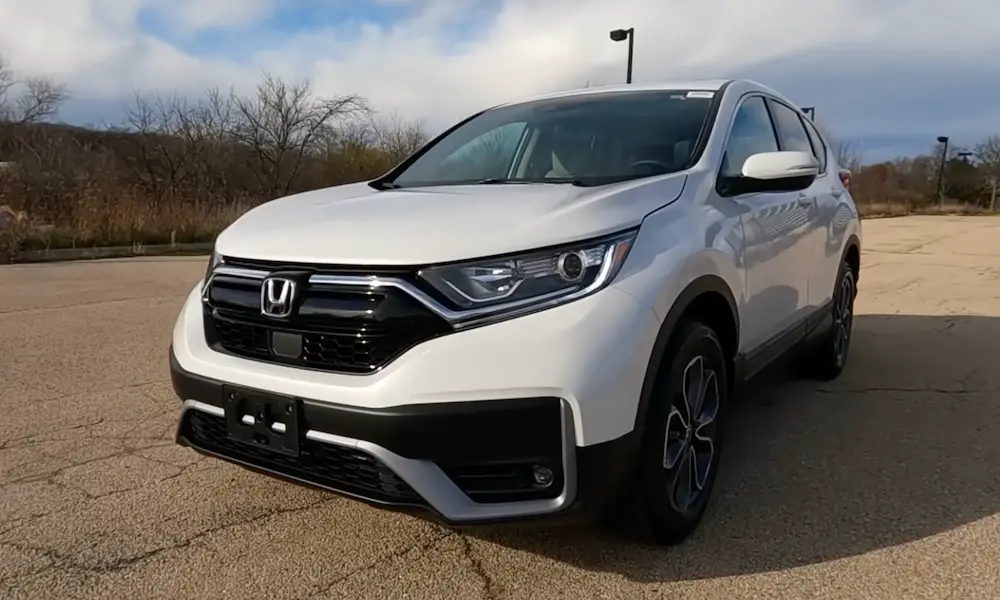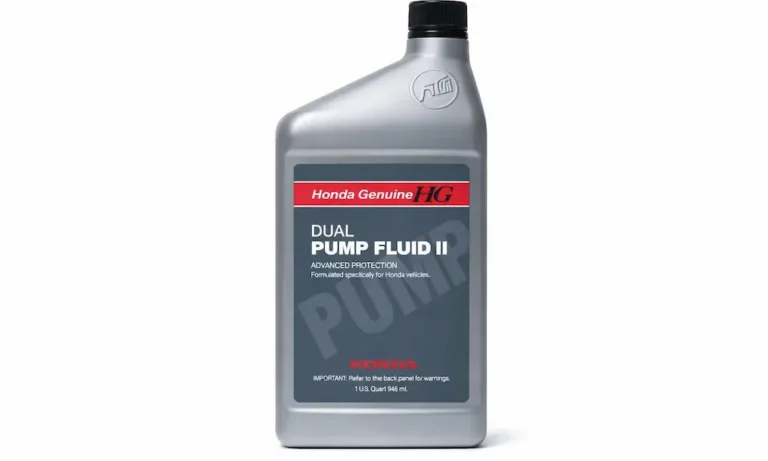
Your Honda CR-V’s rear differential makes a groaning noise on tight turns. You check the fluid, and it’s black and gritty. Now you’re searching for a Honda dual pump fluid II equivalent that won’t trash your AWD system. This post covers exactly what works, what doesn’t, and why the difference matters more than you’d expect.
What Makes Honda Dual Pump Fluid II So Different
Honda’s Real-Time AWD system is brilliant in its simplicity. Under normal driving, it’s front-wheel drive. The moment your front tires lose grip and spin faster than the rear, two hydraulic pumps detect the speed difference and build pressure that engages the rear axle automatically.
The fluid inside that rear differential isn’t just a lubricant. It’s also the hydraulic medium that triggers engagement. That’s why it can’t be any old gear oil or transmission fluid. The Honda system service documentation confirms this dual function clearly.
Most differentials use thick hypoid gear oil like SAE 80W-90. This system needs something completely different — a fluid with specific friction modifier chemistry that controls how the clutch pack inside the differential grabs and releases.
Which Vehicles Need Honda Dual Pump Fluid II
Before buying anything, confirm your vehicle actually uses this fluid. Here’s the full list:
| Vehicle | Model Years | Fluid Required |
|---|---|---|
| Honda CR-V | 1997–2011 | Dual Pump Fluid II |
| Honda CR-V | 2012–2016 | Dual Pump Fluid II |
| Honda Element | 2003–2011 | Dual Pump Fluid II |
| Honda HR-V | 2016–Present | Dual Pump Fluid II |
| Honda Crosstour | 2010–2015 | Dual Pump Fluid II |
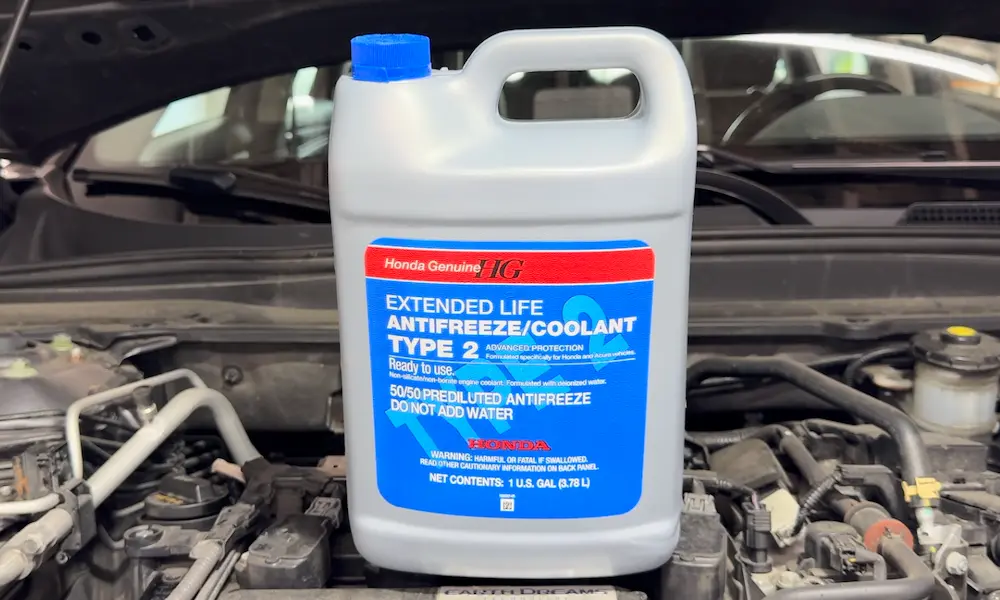
The genuine Honda part number 08200-9007 is the OEM reference for this fluid. If your vehicle is on this list, keep reading.
The Best Honda Dual Pump Fluid II Equivalent Options
Option 1: Acura DPSF (08200-9007A) — The Closest Match
This is the safest pick. The Acura All-Wheel Drive Fluid, part number 08200-9007A, is chemically identical to Honda DPF-II. The “A” just means Acura branding.
Honda and Acura used the same rear differential hardware across multiple generations. Honda dealerships regularly substitute Acura DPSF for Honda DPF-II when supply is tight. There’s no difference in the bottle except the label.
Option 2: ENEOS Import DPS Fluid — Best Aftermarket Pick
ENEOS isn’t just another aftermarket brand. They’re an OE supplier to Asian automakers, meaning they supply fluids directly to manufacturers in various markets.
The ENEOS Import DPS Fluid is engineered specifically to match Honda DPF-II and Acura DPSF. It uses synthetic base stocks and the same additive technology used in factory-fill fluids. This is the aftermarket option with the highest technical confidence.
Option 3: RAVENOL DPS Fluid — Strong Synthetic Alternative
RAVENOL offers a fully synthetic fluid built specifically for Honda’s Dual Pump System. According to RAVENOL’s own technical data, their DPS fluid matches the OEM density and pour point of DPF-II, which matters a lot in cold climates.
A low pour point ensures the fluid stays fluid when it’s -20°C outside, preventing pump cavitation when you need AWD most. RAVENOL’s formulation hits that spec.
Here’s a clean summary of all your options:
| Fluid | Type | Safe to Use? |
|---|---|---|
| Acura DPSF (08200-9007A) | Direct OEM match | ✅ Yes |
| ENEOS Import DPS Fluid | Validated aftermarket | ✅ Yes |
| RAVENOL DPS Fluid | Validated synthetic | ✅ Yes |
| Multi-vehicle ATF | Generic | ❌ No |
| Honda ATF-Z1 / DW-1 | Emergency only | ⚠️ Temporary only |
Why Regular ATF Will Wreck Your Differential
This comes up constantly in Honda forums, and the answer is always the same: don’t use it.
Multi-vehicle ATFs like Valvoline MaxLife are excellent products — for transmissions. They’re designed to help planetary gear sets shift smoothly by managing torque converter clutch slip. That’s completely opposite to what the Dual Pump system needs.
The Honda service manual explicitly states: “Do not use ATF” in the rear differential. The friction modifier chemistry is wrong. Instead of a stable clutch engagement, you get clutch chatter and groaning sounds during tight turns.
That noise isn’t just annoying. It’s a sign of rapid stick-slip cycling in the clutch pack — the plates grab, slip, grab, slip — which accelerates wear. The science behind friction modification in clutch systems confirms this clearly.
Using wrong fluid once isn’t the end of the world if you flush immediately. Using it long-term risks glazing the clutch plates, which means a differential rebuild costing well over $1,000.
The Cost Argument Doesn’t Hold Up
Here’s what makes the “cheaper ATF” argument fall apart completely:
- A quart of genuine Honda DPF-II costs roughly $15–$25
- A standard service uses one quart
- Potential savings from using generic ATF? Maybe $10
- Cost of a rear differential rebuild? Often $1,500+
The risk-reward math here is obvious. Saving $10 per service isn’t worth gambling your AWD system.
How to Do a Proper Fluid Change (Including the 3x Flush)
A simple drain and fill doesn’t remove all the old fluid. The clutch pack and pump housing trap a significant amount. For vehicles showing symptoms — grinding, groaning on turns — Honda’s TSB 07-024 service bulletin recommends a 3x flush and burnish procedure.
Here’s how it works:
- Drain and fill — Remove old fluid, fill with fresh DPF-II or equivalent
- Burnish the clutches — Drive 10 figure-eight patterns at full steering lock, forcing the clutches to slip and clean themselves
- Drain and fill again — Repeat two more times until the fluid comes out clean and the noise stops
The drain and fill plugs both require a new aluminum or copper washer every time. Torque them properly — skipping that washer is the most common cause of post-service leaks.
Standard capacity for a drain-and-fill: approximately 1 quart
Full overhaul (dry differential): approximately 1.5 quarts
How Often Should You Change It
Most dealerships quote 30,000 miles as the standard interval. But your actual schedule depends on how you drive:
- First change: Many technicians recommend 15,000 miles to flush out assembly debris and break-in metal particles
- Normal driving: 30,000 miles is the standard benchmark
- Severe duty (towing, heavy salt exposure, stop-and-go city traffic): 15,000 miles or 2 years
If you use your vehicle to launch boats or regularly drive through standing water, inspect the fluid more often. The rear differential has a breather vent that can ingest moisture in deep water conditions. Emulsified fluid turns milky pink and destroys the friction modifier’s effectiveness almost immediately.
Don’t Confuse This With Honda’s Other AWD Systems
Honda uses several different AWD technologies, and they don’t share fluids. Using the wrong fluid in the wrong system causes fault codes and mechanical damage.
i-VTM4 (Pilot, Passport, Ridgeline post-2016): Uses electromagnetic clutches and requires Honda VTM-4 fluid. Using DPF-II here triggers error code C-1858-73 and causes wear. The NHTSA service bulletin for these systems makes the distinction clear.
SH-AWD (Acura): Early versions used Acura DPSF. Newer versions with 9-speed and 10-speed transmissions transitioned to different fluids. Always cross-reference your VIN before ordering anything.
The Dual Pump system is reactive and hydraulically driven. The others are electronically controlled. Different hardware means different fluid requirements.
Quick Checklist Before You Buy
✅ Confirm your vehicle is on the compatibility list above
✅ Check whether it’s a Dual Pump system, i-VTM4, or SH-AWD
✅ Buy genuine Honda DPF-II, Acura DPSF, ENEOS Import DPS, or RAVENOL DPS
✅ Get a new drain plug washer (18mm) and fill plug washer (20mm)
✅ If the differential was groaning, plan for the 3x flush procedure, not just a single drain-and-fill
✅ Note your mileage — set a reminder for your next service
The Honda Real-Time AWD system is one of the more elegant drivetrain designs out there. It doesn’t need complex electronics to engage — just the right fluid doing its job correctly. Stick to the validated options above, follow the service guidelines from Honda of Burlington, and that rear differential will keep working exactly as Honda designed it.