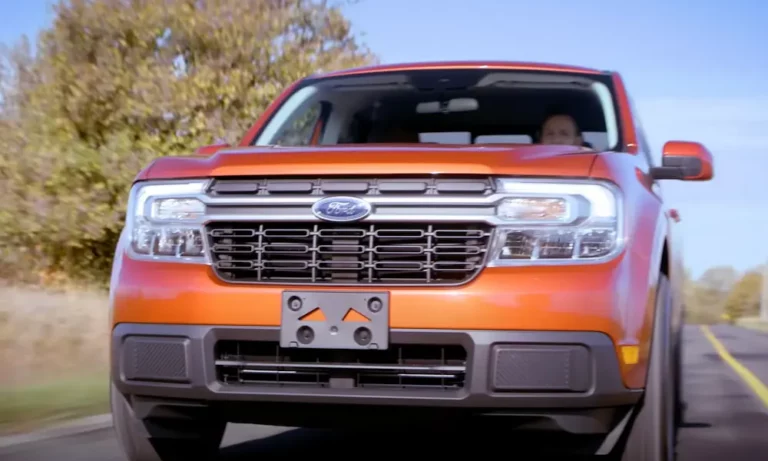
Is your Ford Maverick hybrid experiencing battery issues? Whether you’re facing frequent “deep sleep” modes, unexplained battery drain, or just planning ahead for future maintenance, understanding your options can save you time and money. The Maverick hybrid has two distinct battery systems—each with their own replacement procedures, costs, and considerations.
The Two Battery Systems in Your Maverick Hybrid
Your Ford Maverick hybrid relies on two completely different battery systems:
- 12-volt auxiliary battery – Powers accessories and enables starting
- High-voltage battery pack – Powers the electric drive motor
These two systems serve different purposes and have drastically different replacement processes. Let’s dive into each one.
12-Volt Battery Replacement: The DIY-Friendly Option
Where Is the 12V Battery Located?
Unlike conventional vehicles, the Ford Maverick hybrid’s 12-volt battery isn’t under the hood. Instead, it’s tucked under the rear passenger seat. This location was chosen to accommodate the hybrid powertrain components while maintaining accessibility for service.
This placement makes replacement accessible for DIY-minded owners, though the tight space requires some careful maneuvering.
Why Maverick Hybrid 12V Batteries Fail Prematurely
If you’re experiencing 12V battery issues, you’re not alone. Many Maverick hybrid owners report battery problems within the first 2-3 years of ownership, including:
- “Deep sleep mode” activating unexpectedly
- Battery saver alerts disabling remote features
- Dead battery conditions requiring jump-starts
The root cause? Ford installed a standard flooded battery (part number BXT-99RT4-A) in a system designed for AGM (Absorbent Glass Mat) batteries. This mismatch creates a fundamental conflict between what the Battery Monitoring System expects and what the actual battery can deliver.
OEM vs. Aftermarket Battery Options
| Battery Type | Part Number | Price Range | Expected Lifespan | Benefits |
|---|---|---|---|---|
| OEM Flooded (Original) | BXT-99RT4-A | $180-210 | 2-3 years | Factory match |
| OEM AGM (2025+ models) | BAGM-H4 | $210-240 | 4-5 years | Designed for system |
| Aftermarket AGM | ACDelco LN1AGM | $110-150 | 4-5 years | Better value, improved performance |
| Aftermarket AGM | UPlus H4/Group 140R | $110-140 | 4-5 years | Better value, improved performance |
AGM batteries provide superior performance in hybrid applications because they:
- Handle deep-cycle demands better
- Resist the frequent charging cycles typical in hybrids
- Maintain voltage more consistently during periods of non-use
Step-by-Step 12V Battery Replacement
You’ll need:
- 10mm socket and ratchet
- Magnetic extension
- Telescoping magnetic pickup tool (highly recommended)
- New battery (preferably AGM)
1. Preparation and Access
- Open the rear passenger door
- Locate the seat release latches at the front edge of the seat cushion
- Pull up on both latches simultaneously to release the seat cushion
- Tilt the seat cushion upward and secure it
2. Battery Removal
- Disconnect the negative terminal first (black)
- Disconnect the positive terminal (red)
- Remove the plastic housing covers by carefully popping off clips
- Remove the 10mm hold-down bolt using a long extension
- Lift out the old battery
3. New Battery Installation
- Place the new battery in position (terminal orientation matters!)
- Secure with the hold-down bracket and 10mm bolt
- Replace the plastic housing covers
- Connect the positive terminal first, then negative
The most challenging aspect is often removing the plastic housing covers, which may require removing the battery hold-down bracket first to provide adequate clearance. Some owners report needing to slightly modify mounting tabs on aftermarket batteries for proper fit.
Battery Monitoring System Reset: Critical Step
After replacement, you must reset the Battery Monitoring System (BMS) for proper operation. Skip this step, and you’ll likely experience continued “deep sleep” issues.
Reset Procedure:
- Turn the ignition to ON position (don’t start engine)
- Flash high beams five times in succession
- Press the brake pedal three times
- Watch for the battery warning light to flash three times (confirms successful reset)
This reset allows the system to learn the new battery’s characteristics and prevents continued deep sleep mode issues.
High-Voltage Battery Pack: Professional Service Required
Safety First: Why You Shouldn’t DIY
The high-voltage battery operates at approximately 300-400 volts—enough to cause serious injury or death. This system:
- Remains energized even when the vehicle is off
- Uses orange-colored wiring to indicate high-voltage components
- Requires Class 0 high-voltage gloves rated for over 1000 volts
- Needs face shields and insulated tools for safe service
Professional technicians have the training and equipment to safely de-energize and service these components.
High-Voltage Battery Location and Access
The main battery pack is mounted under the vehicle floor, behind an underbody air shield. Access requires:
- Vehicle lift equipment
- Specialized tools
- Training in high-voltage safety protocols
For emergency situations, there’s a green high-voltage disconnect connector located in the left front area under the hood. This should only be used by trained personnel in emergencies.
High-Voltage Battery Costs and Options
| Option | Price Range | Pros | Cons |
|---|---|---|---|
| OEM New Battery | $2,685-2,821 (parts only) | Factory warranty, known quality | Highest cost |
| Professional Installation | $3,175-3,340 (parts + labor) | Proper procedures, warranty intact | Significant expense |
| Used/Salvage Battery | $1,000-1,200 | Lower initial cost | Limited warranty, unknown lifespan |
The high-voltage battery carries an 8-year/100,000-mile warranty—significantly longer than the 12V battery’s 3-year coverage. This extended warranty reflects both the component’s importance and cost.
Signs Your High-Voltage Battery Needs Attention
Professional diagnosis is required, but watch for these warning signs:
- Diagnostic trouble codes P0A7F (Hybrid Battery Pack Deterioration)
- Code P0A80 (Replace Hybrid Battery Pack)
- Significantly reduced fuel economy
- Limited electric motor operation
- Constant cooling fan operation
- Activation of “limp mode”
These symptoms require professional diagnosis using specialized hybrid diagnostic equipment to determine whether individual cell replacement or complete pack replacement is necessary.
Warranty Coverage and Recalls
Current Recall Situation
Ford has issued recall 24S24 for 2022-2023 Maverick EcoBoost models experiencing 12V battery issues, but this recall specifically excludes hybrid models despite similar problems. The recall addresses software issues preventing proper detection of battery degradation in EcoBoost models.
Hybrid owners must seek individual warranty claims or pay for replacement out of pocket.
Warranty Coverage Details
- 12V battery: Standard 3-year/36,000-mile bumper-to-bumper warranty
- Note: Many dealers require the battery to fail load testing before approving warranty replacement
- High-voltage battery pack: Extended 8-year/100,000-mile coverage
Ford has issued Service Special Message (SSM) 53087 addressing 12V battery drain issues in 2022-2024 Maverick hybrids, acknowledging intermittent drain when the ignition is off. A software solution initially promised for Q1 2025 has been delayed to Q2 2025.
Sourcing Parts and Managing Costs
Where to Find Replacement Batteries
For 12V Batteries:
- RockAuto offers competitive pricing on aftermarket AGM batteries, typically 20-30% below dealership costs
- Local parts stores like AutoZone and Advance Auto Parts offer installation services for $40-80
- Ford dealerships and Ford Parts Giant carry OEM options
For High-Voltage Batteries:
- Ford dealerships (requires special ordering)
- Reputable salvage suppliers like AH Parts offer used options with basic warranties
- Independent hybrid specialists may offer refurbished options
Despite Amazon’s compatibility warnings stating certain AGM batteries don’t fit the Maverick hybrid, multiple owners confirm successful installation of recommended AGM replacements like the ACDelco LN1AGM.
Troubleshooting Common Battery Issues
Deep Sleep Mode Problems
Deep sleep mode represents the most common complaint among Maverick hybrid owners. The system activates when battery voltage drops below 12.0 volts—much higher than the documented 9.5-volt threshold.
This premature activation:
- Disables remote features
- Prevents app connectivity
- Requires manual starting to restore functionality
Regular BMS resets and AGM battery upgrades typically resolve these issues.
Battery Saver Mode Activations
Battery saver mode disables non-essential electrical features to preserve battery charge but frequently activates inappropriately with weak 12V batteries. Features affected include:
- Keyless entry
- Remote start
- Dome lights
- Wireless connectivity
Upgrading to a quality AGM battery with higher cold cranking amps typically eliminates these nuisance activations.
Parasitic Drain Issues
Some Maverick hybrids exhibit excessive parasitic drain, causing battery discharge even with AGM upgrades. This issue often relates to software problems or faulty modules maintaining power draw when the vehicle should be sleeping.
If an AGM battery replacement doesn’t solve persistent drain issues, professional diagnosis may be required to identify specific drain sources.
Extending Your Battery Life
For maximum 12V battery lifespan in your Maverick hybrid:
- Upgrade to an AGM battery rather than replacing with another flooded battery
- Perform the BMS reset procedure correctly after replacement
- Drive the vehicle regularly—short trips are better than letting it sit
- Consider a trickle charger for vehicles stored longer than 2 weeks
- Keep connections clean and tight
For high-voltage battery longevity:
- Avoid regularly depleting the battery completely
- Follow recommended maintenance schedules
- Address any cooling system issues promptly
- Respond to hybrid system warnings quickly
Understanding your Ford Maverick hybrid’s battery systems gives you the knowledge to make informed decisions about maintenance and repairs. While 12V battery replacement represents a manageable DIY project with the opportunity for meaningful upgrades, the high-voltage system demands professional expertise and represents a significant investment requiring careful consideration.