Got a Ford 3.5 EcoBoost and wondering exactly how much oil it takes — and what kind? You’re in the right place. Get this wrong and you’re looking at turbo wear, timing chain issues, or worse. Read through to the end and you’ll have everything you need to do this right.
How Much Oil Does the 3.5 EcoBoost Hold?
The short answer: 6.0 quarts (5.7 liters) with a filter change.
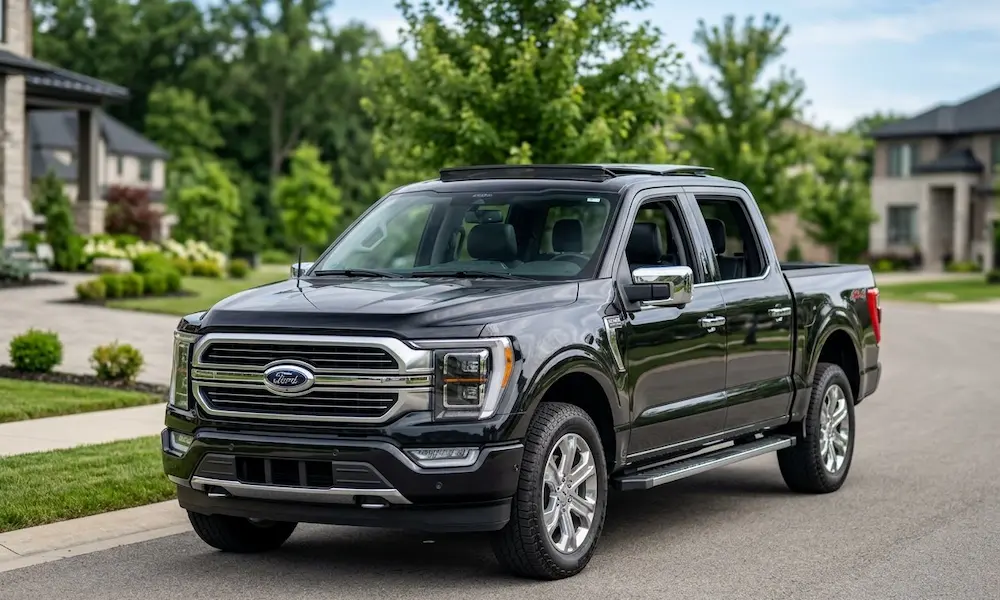
That’s the standard 3.5 EcoBoost oil capacity across almost every platform Ford stuffed this engine into — F-150, Expedition, Navigator, Transit, Explorer Sport, Taurus SHO, and Flex EcoBoost. Same number across the board.
There’s one wild exception: the Ford GT supercar. That beast uses a four-stage dry-sump system and holds 15.3 quarts. But if you’re reading this about a truck or SUV, 6.0 quarts is your number.
3.5 EcoBoost Oil Capacity by Vehicle
Here’s a quick reference table so you don’t have to guess:
| Vehicle | Years | Oil Capacity (with Filter) | Viscosity |
|---|---|---|---|
| Ford F-150 | 2011–2025 | 6.0 Quarts | 5W-30 |
| Ford Expedition | 2015–2025 | 6.0 Quarts | 5W-30 |
| Lincoln Navigator | 2015–2025 | 6.0 Quarts | 5W-30 |
| Ford Transit | 2015–2024 | 6.0 Quarts | 5W-30 |
| Ford Explorer Sport | 2013–2019 | 6.0 Quarts | 5W-30 |
| Ford Taurus SHO | 2010–2019 | 6.0 Quarts | 5W-30 |
| Ford Flex EcoBoost | 2010–2019 | 6.0 Quarts | 5W-30 |
| Ford GT (Supercar) | 2017–2022 | 15.3 Quarts | 5W-50 (Dry Sump) |
What Oil Does the 3.5 EcoBoost Take?
Use SAE 5W-30 full synthetic or synthetic blend. That’s it. Don’t deviate.
Early 2011 owners got confused because some early service manuals mentioned 5W-20. Ford corrected that mistake and standardized 5W-30 across all model years. The reason? Fuel dilution. In a turbocharged direct-injection engine, small amounts of unburnt fuel can slip past the piston rings and thin your oil. A 5W-20 gets too thin under those conditions and leaves your turbo bearings dry. A 5W-30 holds its viscosity better under heat and fuel contamination.
Which Oil Specification Do You Need?
Viscosity is only half the story. The oil has to meet Ford’s internal chemical specification too.
- 2011–2016 (Gen 1): Look for WSS-M2C946-B1 on the bottle
- 2017–Present (Gen 2): Look for WSS-M2C961-A1, which aligns with API SP and ILSAC GF-6A standards
The newer WSS-M2C961-A1 spec exists mainly to fight Low-Speed Pre-Ignition (LSPI) — a nasty phenomenon where oil droplets ignite in the combustion chamber before the spark plug fires. LSPI can crack cylinder heads and shatter piston rings. Modern oils that meet this spec swap out calcium-based detergents for magnesium-based alternatives, which dramatically reduce LSPI events.
Cold Weather Exception
If you live somewhere that regularly drops to extreme lows, Ford recommends SAE 0W-30 meeting WSS-M2C963-A1. The lower cold-flow rating gets oil to your turbo and cam bearings faster on startup — which is when the most engine wear actually happens.
Gen 1 vs. Gen 2: Does the Capacity Change?
No — the 3.5 EcoBoost oil capacity stays at 6.0 quarts for both generations. But there are real differences worth knowing.
Gen 1 (2011–2016) used direct injection only. That meant carbon buildup on the intake valves over time, since fuel never washed the back side of them. Many owners added oil catch cans to reduce PCV oil mist getting into the intake.
Gen 2 (2017–present) added port injection alongside direct injection — Ford’s dual port and direct fuel injection (PFDI) system. Port injectors spray fuel directly onto the back of the intake valves, so carbon buildup is far less of an issue. The Gen 2 also got lighter turbine wheels and electrically actuated wastegates, making it more responsive but generating more heat. That’s exactly why full synthetic meeting WSS-M2C961-A1 is non-negotiable on Gen 2 engines.
F-150 Raptor and High-Output: Same Capacity, Higher Stakes
The High-Output (HO) version in the F-150 Raptor and F-150 Limited makes 450 horsepower and 510 lb-ft of torque. The 3.5 EcoBoost oil capacity still stays at 6.0 quarts, but the engine uses upgraded components — Mar-M-247 superalloy turbine wheels and a deep-sump aluminum oil pan for better heat rejection.
At higher boost levels, the oil works harder. Full synthetic 5W-30 meeting WSS-M2C961-A1 is mandatory here, not optional. Pair it with 91+ octane premium fuel to keep everything thermally stable.
Oil Change Intervals: Don’t Trust the Monitor Blindly
Ford’s Intelligent Oil-Life Monitor (IOLM) tracks engine load, temperatures, revolutions, and driving conditions to estimate oil life. Under ideal highway conditions, it might let you go 10,000 miles. That sounds great on paper.
Here’s the real-world advice most technicians give: change it every 5,000 miles using full synthetic if you tow, haul, or drive in dusty or cold conditions. The IOLM doesn’t physically test the oil — it runs an algorithm. And in a turbocharged engine, soot and fuel contaminants degrade your oil’s additive package faster than the algorithm accounts for.
| Duty Cycle | Description | Recommended Interval |
|---|---|---|
| Normal | Highway driving, light loads | 7,500–10,000 miles |
| Severe | Towing, hauling, high idle | 5,000–7,500 miles |
| Extreme | Off-road, dusty environments | 3,000–5,000 miles |
Oil Filter and Drain-Back: Small Details That Matter
Use the Motorcraft FL-500S filter. It’s engineered specifically for this engine and features a silicone anti-drain-back valve that keeps oil in the upper galleries when the engine shuts off. That prevents dry starts, which kill turbo bearings faster than almost anything else.
After you shut the engine off, wait 15 minutes before checking the oil level. The 3.5 EcoBoost has a complex overhead cam design with long turbo oil lines. Oil takes a while to drain back to the sump. Check it too early and you’ll get a false low reading — which leads to overfilling, which is just as bad as running low.
Known Issues: Oil Consumption and Leaky Oil Pans
TSB 20-2423 — High-Output Oil Consumption
Owners of 2018–2020 High-Output engines (Raptor and Limited) reported burning up to a quart of oil every 500 to 1,000 miles with no external leaks. Ford addressed this with Technical Service Bulletin TSB 20-2423.
The root cause: the PCV system was pulling excessive oil vapor during hard deceleration. The fix involves a mandatory PCM reprogram that adjusts camshaft timing and throttle behavior under deceleration to lower crankcase vacuum. In some cases, both valve covers need replacement with updated versions (Part Nos. HL3Z-6582-E and HL3Z-6582-C) to improve oil-air separation.
If you own one of these trucks and you’re burning oil, check whether your dealer has applied this TSB. A second related bulletin also covers this condition alongside DTC P0365/P0369 codes.
Plastic Oil Pan Problems on 2017–2018 F-150s
A batch of 2017 and 2018 F-150s came with a two-piece composite plastic oil pan and a quarter-turn plastic drain plug. These cracked, leaked, and generally caused headaches — especially after temperature cycling or a few oil changes.
Ford eventually moved back to aluminum. If you’ve got a leaking plastic pan, the aluminum pan conversion using Part No. HL3Z-6675-A or ML3Z-6675-D is the permanent fix. It’s not a direct swap — you’ll also need a matching oil pickup tube (LK4Z-6622-B) and dipstick (HL3Z-6750-B). The metal drain plug torques to 19–20 ft-lbs and won’t give you any more trouble.
Fuel Quality and Your Oil’s Health
The standard 3.5 EcoBoost runs fine on 87-octane regular. But there’s a connection between fuel quality and how fast your oil degrades.
Ethanol-blended fuels (E10, E15) produce more moisture and organic acids during combustion. These acids eat through your oil’s Total Base Number (TBN) faster than straight gasoline does. If you regularly run E10 or E15, prioritize oils that meet the latest API SP standard and shorten your interval to 5,000 miles.
For Raptor and HO owners who tow frequently, the combination of 91+ octane fuel and WSS-M2C961-A1 full synthetic gives you the best defense against both LSPI and thermal breakdown. Higher octane fuel resists premature ignition, and the right oil chemistry handles the combustion chamber oil droplets that trigger LSPI in the first place.
Quick Maintenance Checklist for the 3.5 EcoBoost
Here’s a summary of what actually matters:
- ✅ Always use SAE 5W-30 — not 5W-20, regardless of what older resources say
- ✅ Match the spec: WSS-M2C961-A1 for Gen 2, WSS-M2C946-B1 for Gen 1
- ✅ Fill to 6.0 quarts with a filter change — every platform, every year (except the GT)
- ✅ Change every 5,000 miles under severe duty — towing, hauling, cold starts
- ✅ Use the Motorcraft FL-500S filter and wait 15 minutes before checking the dipstick
- ✅ Check for TSB 20-2423 if you have a 2018–2020 High-Output engine burning oil
- ✅ Inspect your oil pan if you have a 2017–2018 F-150 — plastic pans fail
The 3.5 EcoBoost is a genuinely strong engine. It’s been pulling F-150s, Expeditions, and Navigators for over a decade. Keep the right oil in it, change it on time, and use the right filter — and this engine will easily cross 200,000 miles without major drama.