Your 6L80 is slipping, shuddering, or you’re simply planning ahead before a big power build. Either way, the right upgrades can take this transmission from a liability to one of the strongest automatics behind an LS or LT engine. Keep reading — this guide covers every critical upgrade, from a $10 thermostat fix to full billet builds pushing 1,000+ HP.
Why the Stock 6L80 Struggles Under Pressure
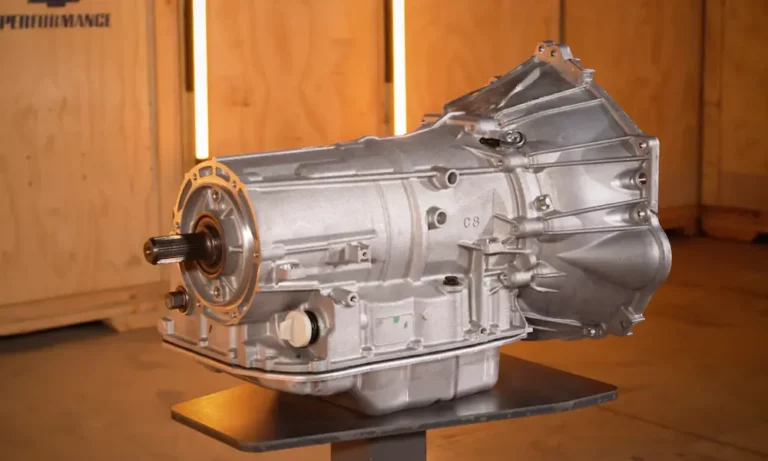
GM introduced the 6L80 in 2006 as a serious step forward. It brought six speeds, a clever clutch-to-clutch shift strategy, and an aggressive 4.02:1 first gear to vehicles like the Silverado, Camaro, Corvette, and Cadillac Escalade. The factory torque rating sits at 440 lb-ft, which sounds solid — until you start towing, tuning, or adding boost.
The problem isn’t that the 6L80 is a bad transmission. It’s that heat, hydraulic pressure loss, and a weak torque converter form a chain reaction that takes the whole unit down. Builders call it a “death spiral,” and once it starts, it’s expensive.
The good news? Every weak point has a solution.
The Torque Converter: Fix This First
If you do nothing else on this list, upgrade the torque converter. The factory unit uses a thin, single-disc lockup clutch inside a stamped steel cover that flexes under load. That flex causes TCC shudder — that vibration you feel between 35 and 60 mph — and once the clutch material starts breaking down, it releases metallic debris directly into your transmission fluid.
That debris then scores your pump, kills line pressure, and starts burning clutch packs. One failing converter can destroy an otherwise healthy transmission.
The fix: a billet triple-disc converter
- A precision-machined billet steel cover won’t flex under pressure, eliminating pump damage and TCC valve wear
- A triple-disc lockup clutch provides three times the holding power of the stock single disc, keeping the converter fully locked even under wide-open throttle
- Billet converters also handle higher stall speeds without overheating
Choosing Your Stall Speed
Stall speed has a big impact on how your truck or car drives day-to-day. Pick the wrong one and you’ll either bog off the line or cook your fluid on the highway.
| Application | Stall Speed | Best For |
|---|---|---|
| Towing / Daily Driver | 1,600 – 1,800 RPM | Heavy trucks, max off-the-line torque |
| Street Performance | 2,200 – 2,500 RPM | Mild cam, bolt-on builds |
| Track / Competition | 3,000+ RPM | Big turbos, aggressive cams, drag racing |
Higher stall = more heat at low speeds, so pair anything above 2,200 RPM with an upgraded cooler and a thermal bypass delete (covered below).
Kill the Heat: Thermal Bypass Delete and Cooling Upgrades
Heat is the number one killer of the 6L80. The factory thermal bypass valve (basically a wax-pellet thermostat) keeps fluid temps between 190°F and 220°F to squeeze out fuel economy. That’s too hot for long-term seal and clutch health.
Worse, if that bypass valve fails in the closed position, fluid never reaches the external cooler. Temps spike fast, and you’re looking at a rebuild.
The thermal bypass delete from companies like PPE, BD Diesel, and TransGo replaces the thermostatic assembly with a constant-flow design. Real-world testing shows a 40°F to 60°F drop in operating temps, bringing the unit down to a much safer 140°F–150°F range.
Pair the bypass delete with:
- A bar-and-plate external transmission cooler sized for your application
- A deep aluminum transmission pan from brands like Mag-Hytec, PML, or B&M
A deep aluminum pan adds 2–4 extra quarts of fluid capacity, buffers temperature spikes during hard pulls, and the cast aluminum construction with cooling fins helps shed heat passively. It also stiffens the transmission case, which prevents internal pressure leaks at the valve body mating surface under high torque.
Valve Body and Hydraulic Upgrades: Stop the Pressure Leaks
The valve body is the hydraulic brain of the 6L80, and it wears out in very specific ways. Steel valves constantly slide inside aluminum bores, and over time those bores wear loose. When that happens, fluid leaks past the valves and the TEHCM (the transmission’s onboard control module) loses the ability to accurately control clutch pressure.
The four most common wear points:
| Valve Bore | Failure Symptom | What It Causes |
|---|---|---|
| Pressure Regulator (PR) | Erratic line pressure | High pressure spikes, clutch failure |
| TCC Regulator | Shudder, TCC slippage | Converter overheating, debris |
| Solenoid Regulator | Harsh garage shifts | TEHCM damage, fault codes |
| Compensator Feed | Shift flare, soft shifts | Clutch burnout |
Sonnax Zip Kit: The Preventative Fix
The Sonnax Zip Kit (6L45-6L90-ZIP) is a straightforward drop-in upgrade that seals critical pressure losses using O-ringed end plugs — no specialized reaming tools required. It ensures that hydraulic pressure actually reaches the clutch pistons instead of leaking back into the pan.
It’s a great first step for any high-mileage 6L80 showing soft shifts or delayed engagement.
TransGo SK-6L80: Add TEHCM Repairs Too
The TransGo SK-6L80 Shift Kit goes further by including replacement rubber seals and diaphragms for the internal pressure switches — the ones that trigger codes like P0751 or P0776. It also includes updated PR valve springs that deliver roughly 10% more baseline line pressure, helping clutches hold under load without a full tune.
PulseDelete Billet Valve Body: Maximum Durability
For serious performance builds, Next Gen Drivetrain’s PulseDelete kit replaces the soft aluminum valves with heavy-duty billet steel valves. The factory uses hydraulic pulses to soften shifts, but those pulses accelerate wear as the unit ages.
| Feature | PulseDelete Billet Kit | Standard Shift Kit |
|---|---|---|
| Valve Material | High-grade billet steel | Standard steel or aluminum |
| Separator Plate | Laser-cut, crushing-style | Standard OEM or bonded |
| Logic Adjustment | Eliminates oscillation pulses | Maintains factory pulse logic |
| Best For | High-performance / extreme duty | Street performance / repair |
Clutch Pack Upgrades: More Friction, More Holding Power
The factory clutch packs use paper-based friction material that glazes and cones under repeated heat cycling. Two upgrades make a significant difference here.
Raybestos GPZ High-Energy Friction Material
Raybestos GPZ material handles higher temperatures and repeated engagement cycles without glazing. Independent testing shows GPZ outperforms OEM friction material by up to 20% in holding capacity. It’s the go-to choice for any performance 6L80 rebuild.
Z-Pak High-Capacity Clutch Configurations
Z-Pak kits use single-sided friction elements to fit more discs in the same drum space. Here’s what that looks like in practice:
| Clutch Pack | Factory Count | Upgraded Count |
|---|---|---|
| 1-2-3-4 Clutch | 4–5 frictions | 6–7 frictions |
| 3-5-Reverse | 4 frictions | 5–6 frictions |
| 4-5-6 Overdrive | 6 frictions | 7–8 frictions |
The 3-5-Reverse Z-Pak upgrade delivers up to 50% more clutch surface area, which directly addresses one of the most common 6L80 failure points — 3rd gear, 5th gear, and Reverse loss from a fractured wave plate or burnt clutch pack.
Billet Hard Parts: For Builds Over 500 HP
At higher power levels, the cast metal internals simply run out of strength. These billet upgrades move the breaking point well past the 1,000 HP mark.
300M Billet Intermediate Shaft
The factory shaft can shear at the splines during hard overdrive engagement. Sonnax and Circle D offer intermediate shafts made from 300M billet steel — a high-performance alloy with roughly 40% more tensile and yield strength than stock.
Billet Apply Pistons
The 1-2-3-4 clutch apply piston is cast aluminum from the factory and cracks under high pressure. A CNC-machined billet aluminum replacement holds its shape at elevated line pressures, keeping first through fourth gears engaged consistently.
Billet Pump Rotor
The factory pump rotor can shatter above 6,500 RPM, causing immediate total oil pressure loss. A billet rotor handles the centrifugal loads of high-revving engines without issue.
Billet Planetary Gear Sets
For sled pulling or drag racing, Stage 3 builds from Tier One or SunCoast include billet rear planetary assemblies engineered for wide-open-throttle shock loads and extreme torque multiplication.
Performance Build Tiers: Which Level Do You Need?
| Build Tier | Power Rating | Key Features |
|---|---|---|
| Stage 1 / Street | Up to 500 HP | High-energy clutches, Zip Kit, billet single converter |
| Stage 2 / Sport | Up to 650 HP | Billet triple converter, billet pump, Z-Paks |
| Stage 3 / Track | Up to 1,000 HP | 300M billet shafts, billet planets, billet hubs |
Monster Transmission’s StreetMonster works well for daily drivers with bolt-on mods, while Gearstar’s custom builds dial in stall speed, shift firmness, and clutch setup based on your specific vehicle weight, tire size, and gear ratio.
If you just need a reliable stock-replacement, remanufactured units from Jasper or Certified Transmission include all the TSB fixes and carry 3-year/100,000-mile warranties — solid for a daily driver with a stock engine.
TCM Tuning: Don’t Skip the Software Side
Mechanical upgrades only work correctly when the transmission’s software knows about them. The TEHCM learns clutch behavior through a metric called the Clutch Volume Index (CVI). If you install a rebuilt unit without resetting those values, the transmission applies the new clutches with old pressure data — and burns them up fast.
Always perform a Fast Learn reset using a GM MDI2 or HP Tuners after any rebuild or replacement. Then run the proper relearn drive cycle:
- Light-throttle takeoffs (5–15% throttle) through gears 1–4
- Part-throttle accelerations (15–30% throttle) for mid-range calibration
- Gentle coasting downshifts for deceleration logic
No burnouts or WOT runs until the TCM finishes learning.
Key Tuning Adjustments (HP Tuners / Holley EFI)
The VCM Performance tuning guide covers these in detail, but here are the four adjustments that matter most:
- Torque Management (TM): Reduce but don’t eliminate TM entirely — keeping 50%+ active protects hard parts from shift shock
- Line Pressure: Increase commanded pressure across all torque ranges to eliminate microscopic clutch slippage
- TCC Slip Tables: Zero out the desired slip values to force full converter lockup instead of the factory’s heat-generating PWM slip strategy
- Shift Completion Time: Shorten the overlap between oncoming and off-going clutches to minimize heat during gear changes
Fluid, Cooler, and Installation Hygiene
These steps don’t get enough attention, but they’re what separates a build that lasts from one that fails six months later.
- Always replace the external cooler after a converter or transmission failure — metallic debris hides in the cooler corners and destroys the new unit once temps climb
- Use Dexron VI full synthetic only — the 6L80’s adaptive logic is calibrated specifically for Dexron VI’s friction coefficient. Using older Dexron III or universal ATF causes shift quality issues and long-term wear
- Inspect fluid every 15,000 miles, change it every 30,000 miles in towing or performance applications
- Heat drives fluid oxidation — if the fluid smells burnt or looks dark, change it immediately regardless of mileage