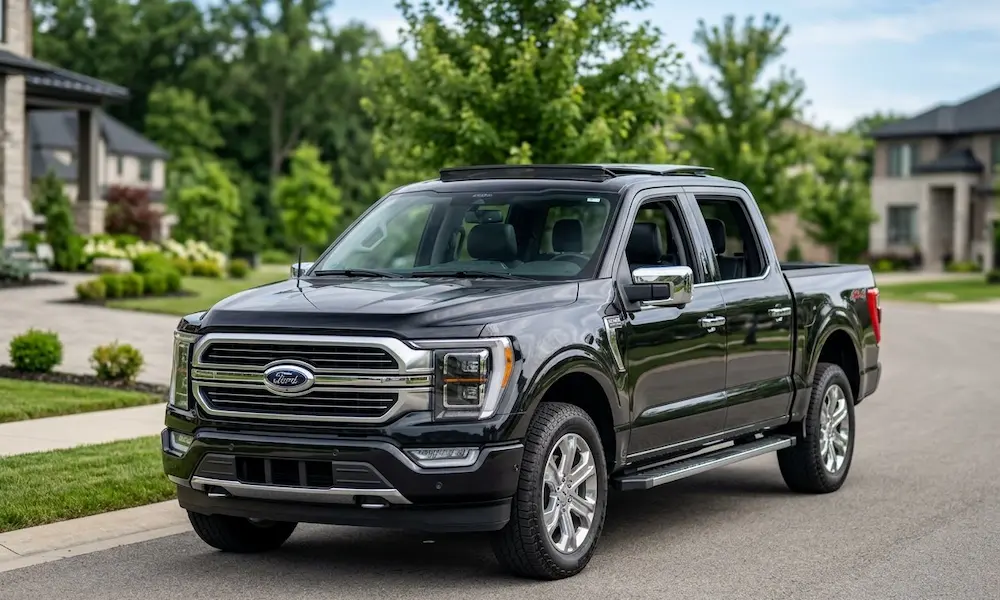
Got a Ford F-150, Expedition, or E-Series van with the 5.4 Triton under the hood? You’ve probably heard the horror stories — rattling engines, blown-out spark plugs, and repair bills that make your eyes water. Some of it’s true. But here’s the thing: most 5.4 Triton engine problems have real, proven fixes. Stick around, and you’ll know exactly what to watch for and how to handle it.
What Is the Ford 5.4 Triton Engine?
The 5.4L Triton V8 is part of Ford’s Modular engine family. Ford introduced it in 1997 as a replacement for the older 5.8L Windsor pushrod engine. It powered the F-150, Expedition, E-Series vans, and even the SVT Lightning performance truck.
The engine came in three main versions:
- 2-valve (2V) — 1997 to 2004
- 3-valve (3V) with Variable Cam Timing — 2004 to 2014
- 4-valve (4V) DOHC — specialty/performance use
Each version has its own personality. And its own set of headaches.
| Variant | Years | Horsepower | Known For |
|---|---|---|---|
| 2V SOHC | 1997–2004 | 235–260 hp | Spark plug blowouts |
| 3V SOHC VCT | 2004–2014 | 300–320 hp | Cam phaser “death rattle” |
| 4V DOHC | Specialty | 385–550 hp | High performance |
The 2-Valve Triton Problem: Spark Plugs Flying Out
If you owned or drove a 1997–2003 F-150 or early Expedition, you might know this one all too well.
Why Spark Plugs Blow Out
The 2-valve Triton had aluminum cylinder heads with only four to five threads holding each spark plug in place. That’s not much. Over time, the heat cycles, vibration, and the difference in how steel and aluminum expand cause those threads to wear down.
Once the threads strip, the plug starts to wiggle. Then it picks up speed. Eventually, the cylinder pressure kicks it right out of the head — sometimes with enough force to shatter the coil-on-plug ignition coil and damage the fuel rail.
In rare cases, the escaping fuel vapor combined with a dangling spark caused engine compartment fires. Ford bumped the thread count to eight in late 2003 and 2004, but millions of trucks were already out there with the weaker heads.
How to Fix a Blown Spark Plug Thread
You don’t have to yank the cylinder head. Aftermarket steel thread insert kits from brands like Time-Sert and Calvan let mechanics install a stronger thread directly into the head — no removal needed. After this repair, the spark plug interface is actually stronger than the factory original.
The 3-Valve Triton’s Nightmare: The Cam Phaser “Death Rattle”
Ford’s 3-valve 5.4L Triton — introduced in 2004 — solved the blowout problem. Then it created new ones.
The biggest? A horrible knocking noise that mechanics call the “death rattle.” If you’ve ever heard a 2004–2010 F-150 at cold startup sounding like a diesel engine, that’s it.
What Causes the Death Rattle
Cam phasers are hydraulic parts that sit on the front of the camshafts. They use oil pressure to advance or retard valve timing on the fly. The whole system depends on clean, high-pressure oil reaching the phasers quickly.
When oil sludge builds up, the phasers don’t get enough pressure. The internal vanes wear out. The locking pin fails. The camshaft starts flopping around inside the phaser, and it bangs against the housing. That’s your rattle.
If you ignore it, the phaser housing can crack. The engine jumps timing. Valves hit pistons. Now you’re looking at a full engine rebuild.
Diagnostic Trouble Codes to Watch For
These OBD-II codes tell you the timing system is struggling:
| DTC Code | What It Means |
|---|---|
| P0011 | Over-advanced timing, Bank 1 (passenger side) |
| P0012 | Over-retarded timing, Bank 1 |
| P0021 | Over-advanced timing, Bank 2 (driver side) |
| P0022 | Over-retarded timing, Bank 2 |
| P0340 | Camshaft position sensor error |
| P0341 | Timing chain slack or phaser oscillation |
The 3-valve timing system is also extremely sensitive to oil condition. Ford’s original recommendation of 5,000–7,500-mile oil change intervals wasn’t enough to keep the VCT solenoid screens clean. Most experienced mechanics now recommend 3,000–5,000-mile intervals using full synthetic oil.
Timing Chain Problems: A Domino Effect You Don’t Want
The 5.4 Triton’s timing system runs two long chains, multiple plastic guides, and hydraulic tensioners. Long chains stretch. Plastic guides break. And the tensioners have a weak spot.
The Tensioner Seal Problem
Each timing chain tensioner uses a rubber gasket on the back to hold oil pressure. These seals blow out. When they do, the tensioner loses pressure and can’t keep the chain tight.
Here’s where it gets ugly:
- Chain goes slack and starts slapping plastic guides
- Guides shatter and send debris into the oil pan
- Debris clogs the oil pickup tube
- Engine starves for oil
- Bearings fail or camshafts seize
This chain reaction is one of the most common ways a 5.4 Triton hits the junkyard. Many mechanics recommend retrofitting the older cast-iron tensioners from the 2-valve engine — they don’t use those fragile rubber gaskets.
The Two-Piece Spark Plug Disaster (2004–2008)
The 2-valve trucks had plugs that shot out. The early 3-valve trucks had plugs that wouldn’t come out at all. Ford can’t catch a break.
Ford designed a two-piece spark plug with a long electrode shield for the 2004–2008 3V heads. The gap between the shield and the head bore let carbon bake around the plug over time, cementing it in place.
When a mechanic tried to remove it, the torque snapped the two-piece plug in half. The bottom half stayed stuck in the head. Extracting it was a nightmare.
Ford issued TSB 08-7-6 to address removal procedures, but breakages kept happening. The fix came in late 2008 when Ford redesigned the heads to use a conventional one-piece plug. If you own a 2004–2008 model, change your plugs before 60,000 miles — don’t let them get baked in.
Other 5.4 Triton Engine Problems Worth Knowing
Exhaust Manifold Stud Failure
The cast-iron exhaust manifolds bolt to aluminum heads through steel studs. The passenger-side rear studs rust and snap. The result is an exhaust leak that sounds exactly like a cam phaser rattle or loose spark plug — super fun to diagnose.
Fixing broken studs means drilling in a tight space. Many shops refuse this job entirely. Stainless steel stud replacement kits are a smart upgrade when you’re in there.
Fuel Pump Driver Module Corrosion
The Fuel Pump Driver Module on 2004–2008 F-150s mounts on the frame rail right above the spare tire. Road salt and moisture eat through the aluminum housing. The internal circuit board corrodes and the truck stalls or won’t start.
The fix is simple: replace the module and use spacers to keep it off the steel frame. Galvanic corrosion between aluminum and steel is what kills it.
| Component | Failure Mode | Difficulty | Best Fix |
|---|---|---|---|
| Exhaust manifold studs | Rust and snap | Very high | Stainless steel stud kit |
| Fuel pump driver module | Corrosion | Low | Replace + add spacers |
| COP boots | Dry rot | Low | Replace at every plug change |
| Valve cover gaskets | Oil leaks | Moderate | Inspect at 100k miles |
The Lawsuit History Behind These Problems
The 5.4 Triton’s failures weren’t just frustrating — they ended up in court.
In 2015, Ford settled a nationwide class-action lawsuit over the two-piece spark plug breakage issue for $2.2 million. Owners of 2004–2008 models who paid for expensive extractions received partial reimbursement — some getting back over $1,700. Ford denied liability but cut the checks anyway.
Separate litigation like Schmidt et al. v. Ford Motor Co. targeted the cam phaser failures, claiming Ford knew about the timing defects as early as 2005 but stayed quiet to avoid warranty costs. These cases didn’t lead to wide-scale engine replacements, but they put Ford’s internal documents under a microscope.
You can review documented NHTSA complaints for the 2004 F-150 — it holds the record for the most complaints of any F-150 model year, with over 2,400 documented cases.
The Best Fix: Bulletproofing the 5.4 Triton
The aftermarket has done what Ford wouldn’t — engineer permanent solutions to these problems.
Cam Phaser Lockout Kits
A cam phaser lockout kit replaces the moving vanes inside the phaser with solid aluminum blocks. The phaser becomes a fixed gear. No more movement, no more rattle, no more catastrophic failure risk.
The catch: your engine computer expects to control timing. You’ll need a custom PCM tune to prevent error codes and optimize performance for fixed timing. You lose a little efficiency. You gain reliability.
High-Volume Oil Pumps
For oil pressure issues, the Melling M360HV delivers 20% more oil volume and a higher pressure relief setting than the factory pump. High-mileage engines with worn cam journals get the lubrication they need, especially at the top end where the phasers live.
Which Model Years Are Actually Reliable?
Not all 5.4 Tritons are equal. Here’s the honest breakdown:
| Year Range | Model | Reliability | Why |
|---|---|---|---|
| 2009–2014 | Expedition/Navigator | Excellent | Revised heads, better phasers |
| 1997–2003 | F-150 | Good | Simple 2V engine, easy spark plug fix |
| 2004–2006 | F-150 | Very Poor | The disaster years for 3V |
| 1997–2014 | E-Series Van | Excellent | Kept the reliable 2V until the end |
| 2007–2008 | F-150 | Fair | Better phasers, still has 2-piece plugs |
| 2000–2005 | Excursion | Good | Heavy-duty 2V, dependable workhorse |
The 2004–2006 F-150 is the one to avoid if you’re buying used. The 2009–2010 F-150 is the sweet spot — revised heads, better phasers, and usually paired with the stronger 6-speed transmission.
The E-Series van deserves a special mention. Ford kept the dependable 2-valve engine in the E-Series all the way through 2014 for passenger vans and even longer for commercial chassis. Many fleet E-Series vans hit 300,000 to 400,000 miles on original internals. That tells you everything about how solid the 2V version was when you avoided the 3V’s baggage.
The Smart Maintenance Schedule for 5.4 Triton Owners
Ford’s factory maintenance schedule wasn’t aggressive enough for this engine. Here’s what the pros actually recommend:
| Service Item | Ford Says | Smart Owners Do |
|---|---|---|
| Oil change interval | 7,500 miles | 3,000–5,000 miles (full synthetic) |
| Spark plug replacement | 100,000 miles | 50,000–60,000 miles |
| VCT solenoid replacement | Replace on failure | Replace at 100,000 miles |
| Oil filter type | Standard | Motorcraft with anti-drainback valve |
| Cooling system flush | 100,000 miles | 50,000 miles |
| Timing chain inspection | Life of engine | Check for rattle at 150,000 miles |
The single biggest thing you can do for a 3-valve Triton is change the oil more often with quality synthetic. Most phaser failures trace back to sludge buildup from stretched oil change intervals. It’s a $50 habit that prevents a $3,000 repair.