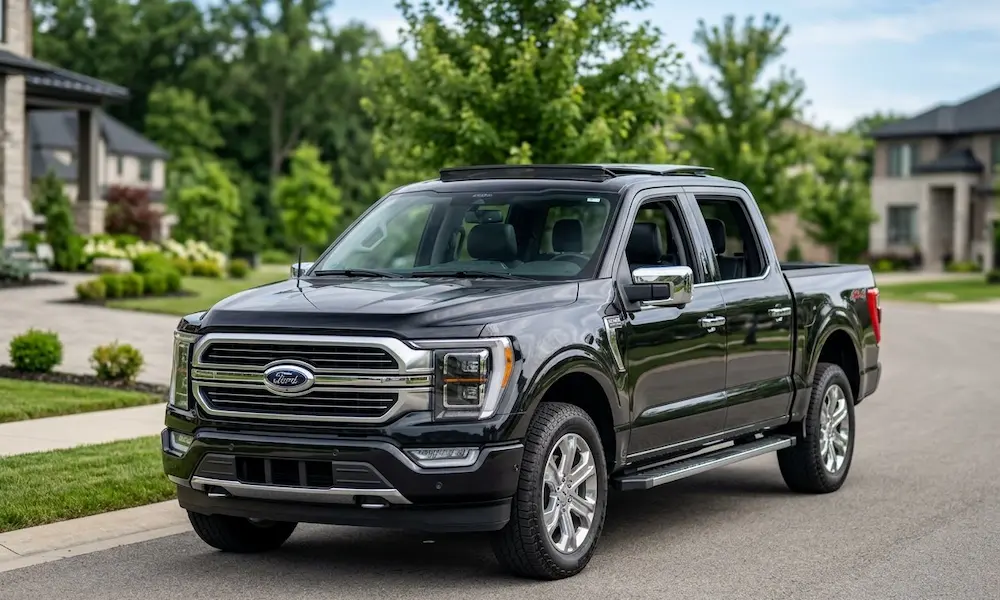
Thinking about a Ford truck or SUV from the late 90s to early 2010s? Then you’re probably curious about the heart that powered these beasts – the 5.4 Triton engine. This powerplant was Ford’s go-to V8 for nearly two decades, finding its way into everything from everyday F-150s to the exotic Ford GT supercar.
Let’s dive into the complete specs and details of this influential engine, whether you’re shopping for a used vehicle, troubleshooting issues, or just curious about what made this engine tick for so many years.
What Exactly Is the 5.4 Triton Engine?
The 5.4 Triton is a 5.4-liter (330 cubic inch) V8 engine that Ford introduced in 1997 as part of their “Modular” engine family. Think of it as the big brother to the 4.6L engine – it’s essentially a stroked version with similar architecture but more displacement.
This engine wasn’t just any powerplant – it was impressive enough to earn spots on Ward’s 10 Best Engines list multiple times between 1997 and 2002. Ford kept it in production until the mid-2010s, making it one of their longest-running modern engines.
Core Engine Specifications
Let’s get straight to the numbers that define the 5.4 Triton:
| Specification | Detail |
|---|---|
| Displacement | 5.4 liters (330 cubic inches) |
| Configuration | 90-degree V8 |
| Bore | 3.552 inches |
| Stroke | 4.165 inches |
| Block Material | Deep-skirt cast iron |
| Deck Height | 10.079 inches |
| Bore Spacing | 3.937 inches |
| Compression Ratio | 9.0:1 to 9.8:1 (varies by generation) |
| Firing Order | 1-3-7-2-6-5-4-8 |
| Redline | 6,000 RPM |
| Fuel Type | 87 octane regular unleaded (some later models E85 compatible) |
The slightly undersquare design (stroke longer than bore) explains why these engines favor torque production over high-RPM horsepower – perfect for truck applications where you need that low-end grunt.
The Evolution of the 5.4 Triton Engine
Ford didn’t just stick with one version of the 5.4 Triton. The engine evolved significantly over its lifespan through three major valvetrain designs.
2-Valve SOHC (1997-2004)
The original 5.4 Triton started with a single overhead cam design with two valves per cylinder. This version was straightforward and established the engine’s reputation.
- Power Output: Approximately 235 horsepower
- Torque: Around 330 lb-ft
- Key Features: Simple design, good reliability
- Notable For: Many of these engines surpassed 250,000 miles with proper care
3-Valve SOHC (2004-2010)
With the 2004 F-150 redesign, Ford upgraded the 5.4 Triton to a 3-valve per cylinder design (two intake, one exhaust) with variable valve timing.
- Power Output: Approximately 300 horsepower
- Torque: Around 365 lb-ft
- Key Features: Variable valve timing, improved fuel efficiency
- Notable For: Increased performance while maintaining truck-friendly characteristics
4-Valve DOHC (Performance Applications)
The most sophisticated version featured dual overhead cams with four valves per cylinder, primarily reserved for high-performance vehicles.
- Power Output: Up to 550 horsepower in supercharged applications
- Key Applications: Ford GT supercar, Shelby GT500 Mustang
- Notable For: Demonstrating the platform’s performance potential
What Vehicles Used the 5.4 Triton Engine?
The 5.4 Triton was incredibly versatile, powering an impressive array of Ford vehicles:
Trucks:
- Ford F-150 (1997-2010)
- Ford F-250 (2005-2010)
- Ford F-350 (2005-2010)
- Lincoln Mark LT (2006-2008)
- Lincoln Blackwood
SUVs:
- Ford Expedition (2005-2014)
- Lincoln Navigator (2005-2014)
Vans:
- Ford E-Series
Performance Vehicles:
- Ford GT supercar
- Shelby GT500 Mustang
- Ford Mustang Cobra R (2000)
International:
- Ford Falcon (Australian market, 2002-2010)
Performance Specifications Across Applications
The 5.4 Triton’s performance varied significantly depending on the application:
| Application | Configuration | Horsepower | Torque |
|---|---|---|---|
| Standard 2-valve trucks | Naturally aspirated | 235-260 hp | 330-350 lb-ft |
| 3-valve trucks | Naturally aspirated | 300-320 hp | 365 lb-ft |
| SVT Lightning | Supercharged | 380 hp | 450 lb-ft |
| Shelby GT500 | Supercharged | 500-550 hp | 480-510 lb-ft |
| Ford GT | Supercharged | 550 hp | 500 lb-ft |
The supercharged Ford GT version was particularly special, featuring dual fuel injectors per cylinder and oil squirters for the piston skirts – technology not found in other Ford Modular engines at the time.
Inside the 5.4 Triton: Rotating Assembly Specs
The Triton’s internals were engineered to handle significant power while providing truck-worthy durability:
- Pistons: Hypereutectic cast aluminum alloy with a dished design (-18cc volume)
- Connecting Rods: Cracked powdered metal, I-beam design, 6.657 inches long, ~634 grams
- Wrist Pins: 0.866 inches in diameter
- Crankshaft: Nodular iron construction
- Main Journals: 2.657 inches in diameter
- Rod Journals: 2.0859-2.0867 inches
- Main Caps: Five positions, four bolts with two lateral cross-bolts
- Thrust Bearing: Located at the #5 main position
Valvetrain Specifications
The valvetrain components also contributed significantly to the engine’s character:
- Valve Springs: Beehive-style design
- Intake Valves: Solid-stem steel, 1.338 inches in diameter
- Exhaust Valves: Solid-stem steel, 1.476 inches in diameter
- Ignition System: Coil-on-plug design
- Spark Plug Gap: 0.051-0.057 inches (1.29-1.45 mm)
Fuel System Details
The 5.4 Triton used sequential multi-point fuel injection across all variants:
- Injector Size: 1.900 inches between O-rings
- Connector Type: USCAR/EV6
- Fuel Requirements: 87 octane regular unleaded gasoline
- Alternative Fuel: Later models supported E85 ethanol
5.4 Triton Reliability: The Good and the Bad
Like any engine that spans nearly two decades of production, the 5.4 Triton has both strengths and weaknesses:
The Good
- Many examples exceed 200,000-250,000 miles with proper maintenance
- Robust cast iron block provides excellent durability
- Overall design focused on truck-friendly torque delivery
The Challenges
- 2-valve engines had issues with spark plugs being ejected due to limited thread engagement
- 3-valve engines introduced more complex systems, including cam phasers that could cause problems
- Some model years had problematic spark plug designs
As with most engines, maintenance practices significantly impact longevity. Regular oil changes, timely replacement of wear components, and quality fuel are crucial factors in maximizing engine life.
Why the 5.4 Triton Matters in Ford’s History
The 5.4 Triton represents a pivotal chapter in Ford’s powertrain development. It bridged the gap between older pushrod V8s and today’s smaller, turbocharged engines like the EcoBoost family.
What makes this engine especially interesting is its versatility. How many engines can claim to have powered both everyday work trucks and exotic supercars? The 5.4 Triton did exactly that, demonstrating Ford’s ability to adapt a basic architecture to wildly different applications.
While modern Ford trucks now use different engines, the 5.4 Triton’s influence lives on in countless vehicles still on the road today. Understanding its specifications helps us appreciate both its capabilities and limitations as a workhorse that helped define an era of Ford trucks and SUVs.
Whether you’re looking at a used F-150, considering a project car, or just appreciating Ford’s engineering history, the 5.4 Triton remains a significant engine worth understanding.