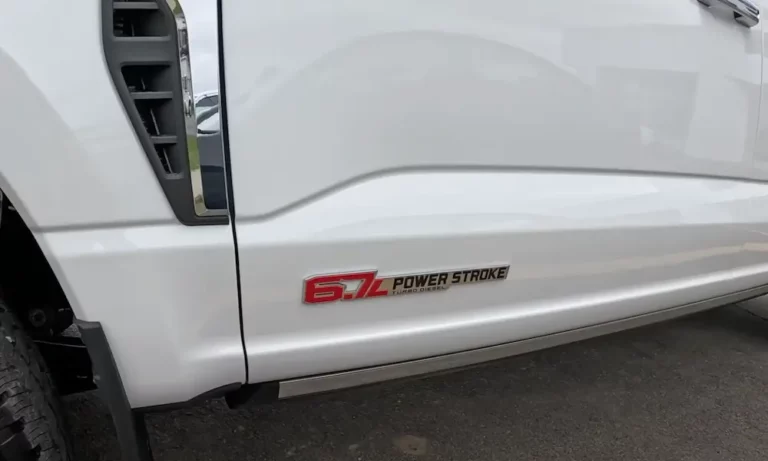
Your 6.7 Powerstroke just jumped to 1,000+ RPM while sitting in park. Before you panic, there’s a good chance your truck is doing exactly what Ford programmed it to do. This guide breaks down every reason your diesel idles high in park — and how to spot the ones that actually need fixing.
Why Your 6.7 Powerstroke Idles High in Park
Here’s the short answer: your truck’s brain — the powertrain control module — reads dozens of sensor inputs every second. When certain thresholds are hit, it deliberately raises engine speed to protect hardware, charge batteries, or clean the exhaust system.
Owners on Reddit confirm this catches people off guard constantly. You’re not dealing with a mystery. You’re dealing with software doing its job.
The tricky part? Sometimes a failing sensor mimics a normal high idle event. That’s where things get expensive if you’re not paying attention.
Normal High Idle Events: Ford Programmed These On Purpose
Cold Start Idle (1,000–1,200 RPM)
Cold mornings trigger the most common 6.7 Powerstroke high idle in park. When oil or coolant temperatures drop below Ford’s calibrated minimums, the PCM bumps idle speed to generate more combustion heat.
This prevents wet stacking — a condition where unburnt fuel washes lubricating oil off cylinder walls, accelerating wear and contaminating the crankcase. Raising RPMs increases compression heat and ensures cleaner combustion.
Tap the brake pedal or press the gas, and it drops right back to base idle. That’s your confirmation the system is working normally.
Charge Protect Mode (1,100–1,200 RPM)
Your 6.7 runs dual 12-volt batteries. At base idle (650–700 RPM), the alternator spins too slowly to meet full electrical demand — especially if you’re running inverters, lighting, or auxiliary equipment.
BD Diesel’s technical breakdown explains that when voltage drops toward 12.2 volts, the PCM bumps idle speed to push the alternator into a more efficient output range. Your electronics stay stable, and your batteries stay charged.
| Battery Voltage | Status | Action |
|---|---|---|
| 12.6V+ | Healthy | Normal operation |
| 12.4–12.6V | Acceptable | Monitor |
| 12.2V | Warning threshold | Inspect immediately |
| Below 10.0V | Failure | System may not recover |
Hydrocarbon Scrub Cycle (1,000–1,200 RPM for 20–40 Minutes)
This one confuses people the most. Your truck idles high in park, no warning lights come on, no “Regenerating” message appears. Feels like a ghost.
What’s actually happening: the PCM’s math model predicts that unburnt hydrocarbons have started coating the SCR catalyst — the system that reduces nitrogen oxide emissions. To burn them off, it raises idle speed until exhaust temps hit the autoignition point of diesel fuel.
Ford Doctors DTS confirms this “regen lite” event runs 20–40 minutes at exactly 1,000 RPM in moderate temps, up to 1,200 RPM in extreme cold. It’s normal, but it’s silent.
Parked DPF Regeneration (1,600–2,000 RPM)
When soot load in the Diesel Particulate Filter hits a critical threshold, the truck needs a full stationary regeneration. RPMs climb significantly here — you’ll feel it and hear it.
This is well-documented as a normal maintenance function. Trucks running frequent short trips or heavy idle time clog their DPFs faster, triggering these events more often. 2017+ models have more aggressive idle-up profiles specifically for this reason.
| High Idle Event | RPM Range | Trigger | How to Stop It |
|---|---|---|---|
| Cold Start | 1,000–1,200 | Low oil/coolant temp | Tap brake pedal |
| Charge Protect | 1,100–1,200 | Low battery voltage | Automatic — resolves itself |
| HC Scrub Cycle | 1,000–1,200 | Predicted SCR hydrocarbon buildup | Wait it out (20–40 min) |
| DPF Regen | 1,600–2,000 | High soot load in filter | Manual initiation or wait |
The SEIC System: Ford’s Built-In Manual High Idle
For work trucks, Ford built in the Stationary Elevated Idle Control (SEIC) system. It’s standard on Super Duty trucks over 8,500 lbs GVWR and lets you command a specific RPM for running auxiliary equipment.
Safety Requirements to Activate SEIC
The system won’t engage unless all these conditions are met simultaneously:
- Parking brake fully engaged
- Transmission in Park
- Service brake pedal not depressed
- Accelerator pedal fully released
- Vehicle speed at zero
- Engine at stable base idle
Break any of these conditions — like tapping the brake — and the SEIC instantly drops back to base idle. That’s a deliberate safety feature preventing a lunge if you accidentally select a gear at high throttle.
Wiring It Up with Factory Switches
Ford Super Duty trucks often include four to six auxiliary upfitter switches on the dash or overhead console. By connecting a trigger wire from the PCM through a resistor to one of these switches, you can command a specific idle speed on demand.
The resistor value determines your target RPM:
| Target RPM | Resistor Value | Best Use Case |
|---|---|---|
| 900 | High resistance | Minimum elevated idle |
| 1,200 | ~20k ohms | Charging and heat |
| 1,600 | ~10k ohms | Light PTO demand |
| 2,400 | ~5k ohms | Hydraulic equipment |
| 3,000 | Low resistance | Maximum PTO output |
Aftermarket High Idle Kits
If you don’t want to splice wires, plug-and-play kits like the BD Diesel High Idle Control Kit connect behind the dashboard without cutting anything. A dash-mounted dial lets you adjust RPM between 900 and 3,000 in real time — useful if your work varies between cold-weather warm-ups and running hydraulic pumps.
Abnormal High Idle: When Something’s Actually Wrong
A 6.7 Powerstroke high idle in park isn’t always normal. Certain sensor failures trick the PCM into permanent high idle states. Here’s what to watch for.
Clogged MAP Sensor (Surging RPM)
The Manifold Absolute Pressure sensor measures intake pressure so the PCM can calculate engine load. On the 6.7, EGR gases carry soot and oil vapor into the intake — and that gunk coats the MAP sensor over time.
Stage 3 Motorsports identified this as a hidden epidemic on 2020–2024 model years. A biased MAP sensor reports higher pressure than actually exists, making the PCM think the engine is under load. The result: surging RPM or a persistent high idle regardless of temperature.
The quick test: compare MAP and BARO sensor readings with the engine off. Ford Doctors DTS explains that a difference of more than 0.7 PSI means your MAP sensor is contaminated. Codes P0108 or P2073 often accompany this.
Stuck EOT Sensor (Permanent Cold-Start Idle When Warm)
If the Engine Oil Temperature sensor fails low — reporting cold temperatures when the engine is fully warmed up — the PCM stays in cold-start high idle mode indefinitely. You’ll sit at 1,000+ RPM long after the truck should have settled down.
An open circuit in the EOT wiring can also trigger a failsafe high idle, since the PCM can’t verify oil viscosity is safe. Watch for diagnostic codes P0197 or P0198 — these point directly at the sensor.
EGT Sensor Fault and Throttle Lockout
This one’s serious. When certain Exhaust Gas Temperature sensors fail (specifically sensors 12, 13, or 14 in the exhaust stream), the PCM can enter a limp mode where the engine idles high and ignores the accelerator entirely.
The message center displays “Engine Idled – Exhaust Fluid System Fault.” Clearing the code with a scanner often won’t fix it — the truck requires a specific warm-up and drive cycle to verify the repair before the PCM unlocks the throttle. Codes P0544 and P2085 are the usual suspects.
Fuel System Issues (Loping or Surging Idle)
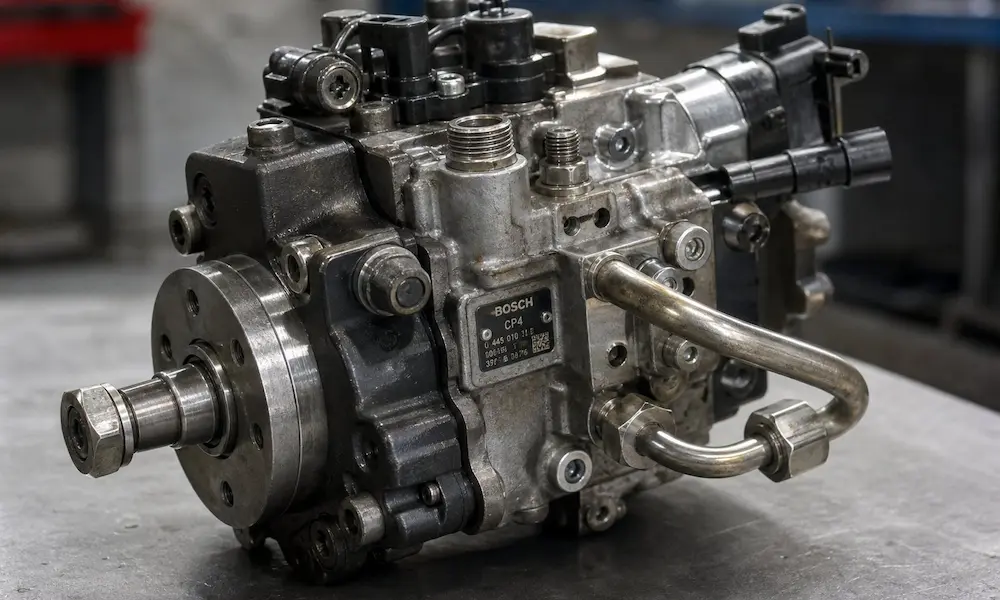
A sticking fuel pressure regulator causes a rhythmic RPM surge as the PCM rapidly compensates for unstable rail pressure. On 2011–2020 models, the CP4 high-pressure injection pump is a known weak point — metal debris from internal wear clogs injectors and creates rough, erratic idle behavior.
Technicians check the fuel pressure regulator screen for metallic “glitter” as an early diagnostic step. Don’t ignore a rough idle on older trucks — it can be the first sign of a catastrophic fuel system failure.
Summary: Normal vs. Fault-Driven High Idle
| Component | Symptom | Typical Code |
|---|---|---|
| MAP Sensor | Surging RPM, high idle when warm | P0108, P2073 |
| EOT Sensor | Persistent cold-start idle after warm-up | P0197, P0198 |
| EGT Sensor | “Engine Idled” warning, throttle locked | P0544, P2085 |
| Fuel Regulator | Rhythmic RPM surge | P0087, P0088 |
| EGR Valve | Rough idle or stalling in park | P0401, P0402 |
Diagnosing an Unexplained High Idle with FORScan
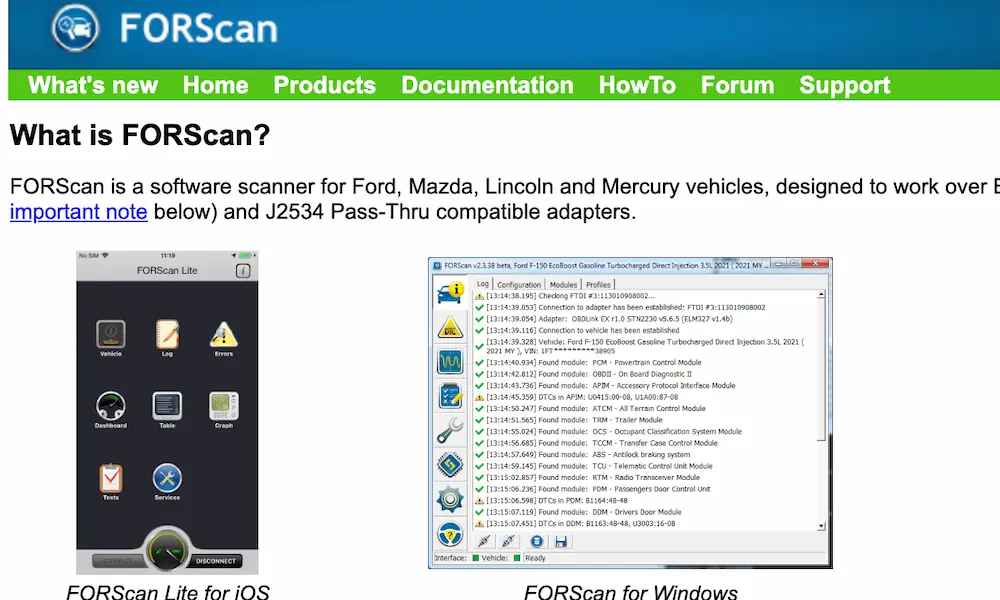
A scan tool like FORScan lets you read live PIDs and see exactly what the PCM is reacting to. These are the key parameters to check:
- DPF_REGEN_STAT — confirms whether an active or parked regeneration is running
- BARO vs. MAP — compare with engine off to catch a biased MAP sensor
- REDUCT_TNK_P — DEF pump pressure; rules out emissions system protection mode
- VPWR — system voltage; confirms if Charge Protect mode is active
If everything checks out mechanically and the idle is still erratic, a battery disconnect and adaptive learning reset sometimes clears a PCM that learned incorrect idle behavior from a temporary sensor issue. Just don’t skip the mechanical inspection first — a reset won’t fix a clogged MAP sensor or a stuck EGR valve.
The Real Cost of Excessive Idling
Ford estimates that every hour of idling equals roughly 25 miles of engine wear. A truck with 50,000 miles but 4,000 idle hours carries wear equivalent to a 150,000-mile vehicle.
High idle hours accelerate oil degradation, soot buildup in the intake, and EGR cooler fouling. If your truck logs heavy idle time, check the crankcase breather assembly, MAP sensor, and EGR cooler more frequently than the standard service schedule suggests. Your Intelligent Oil Life Monitor will usually shorten your service intervals automatically — but stay ahead of it.
The 6.7 Powerstroke high idle in park is almost always a feature, not a fault. Know the difference, monitor your PIDs, and your truck will keep doing exactly what Ford designed it to do.