Shopping for a used Highlander? Picking the wrong model year could cost you thousands in repairs. This guide breaks down every generation so you can spot the winners, dodge the lemons, and drive away with confidence. Stick around — the best years might surprise you.
Why Model Year Matters More Than You Think
Not all Highlanders are created equal. Toyota rolled out four generations over 25 years, and the reliability data tells a clear story: peak reliability almost always shows up in the final years of each generation cycle — not the first. First-year models carry engineering risks. Late-cycle models carry refinements. That pattern repeats itself across every single generation of this SUV.
Here’s the quick version before we go deep:
- Best budget pick: 2012
- Best hybrid before modern tech: 2019 Hybrid
- Best late-model used: 2021 Hybrid
- Best new or near-new: 2026 Grand Highlander Hybrid MAX
Now let’s look at why — generation by generation.
First Generation (2001–2007): Humble Beginnings, Strong Finish
What Made It Special
Toyota launched the first Highlander on the Lexus RX 300 platform in 2001. That was a bold move. Instead of building a truck-based SUV like everyone else, Toyota went with a car-based unibody design. The result? A smoother, more comfortable ride for families who didn’t actually need to go off-roading.
The Year to Avoid: 2003
The 2003 Highlander has one nasty, well-documented flaw. Engine bolt threads stripped out, causing coolant leaks that led to engine failure. Repair costs regularly topped $3,700. In many cases, owners needed a full engine block replacement. Hard pass.
The Best Year: 2007
By 2007, Toyota had smoothed out every rough edge from the first generation. The 2007 model came standard with side-impact airbags, rollover curtain sensors, and a proven 3.3-liter V6. Reliability trackers gave it top marks — earning what some platforms dubbed a “Seal of Awesome” for its near-flawless drivetrain record.
| Feature | 2001–2003 | 2004–2005 | 2006–2007 |
|---|---|---|---|
| Engine | 2.4L I4 / 3.0L V6 | 2.4L I4 / 3.3L V6 | 2.4L I4 / 3.3L V6 |
| Transmission | 4-Speed Auto | 5-Speed Auto (V6) | 5-Speed Auto (V6) |
| Safety Equipment | Optional VSC | Standard VSC & TPMS | Standard Side Airbags |
| Hybrid Available | No | Yes (2005) | Refined System |
| Reliability Verdict | Avoid 2003 | Recommended | 2007: Best in Class |
Second Generation (2008–2013): Rocky Start, Brilliant Recovery
The Year to Avoid: 2008
The second-generation Highlander arrived bigger, bolder, and packed with a punchy 3.5-liter 2GR-FE V6 making 270 horsepower. But the 2008 model quickly became one of the most recalled Highlanders ever built. The gas model racked up 13 recalls. The hybrid hit 14.
The problems weren’t minor either. Sticking accelerator pedals, faulty airbag sensors, melted window switches, and seat heaters with electrical vulnerabilities that raised fire concerns made the 2008 a model year worth skipping entirely.
The Best Year: 2012
Here’s where things get exciting. The mid-cycle refresh in 2011 transformed this generation, and by 2012 Toyota had dialed everything in perfectly. The 2012 Highlander logged only two recalls — neither involving mechanical systems. The 3.5-liter V6 ran like a watch. The 5-speed automatic transmission proved bulletproof.
Used car buyers have caught on. Resale values for 2011–2013 models have climbed steadily as more buyers recognize just how reliable these late second-gen units really are.
If you want the best year for Toyota Highlander ownership on a tighter budget, the 2012 is your answer.
Third Generation (2014–2019): Great Promise, Hidden Trap
2017 Brought Big Upgrades — and a Big Problem
The XU50 generation kicked off in 2014 with a wider cabin, eight-passenger seating, and much better interior materials. The 2014 and 2015 models were mostly solid, though early buyers reported wind noise, infotainment glitches, and trim rattles — classic first-year stuff.
Then 2017 arrived with genuinely exciting news: a new direct-injection V6 pumping out 295 horsepower, an 8-speed automatic transmission (the UA80), and — most importantly — Toyota Safety Sense P (TSS-P) as standard equipment across all trims. Adaptive cruise control and automatic emergency braking on every single Highlander. That was a big deal.
The UA80 Transmission Problem
Unfortunately, the UA80 8-speed came with a serious defect that’s still costing owners real money today. Owners of 2017–2019 gas models reported a high-pitched whine between 25 and 45 mph that progressed into shift hesitation and jerking. Engineering analysis points to the front carrier assembly pinion shafts delaminating and sending metal debris into the transmission fluid, ultimately shredding the torque converter.
The worst part? These failures frequently occur right after the 60,000-mile powertrain warranty expires. Replacement costs run $7,000 to $10,000 out of pocket.
The Best Year: 2018 Hybrid
Here’s the smart move for this generation: go hybrid. The 2018 Highlander Hybrid uses an electronically controlled CVT (eCVT) instead of the UA80 8-speed. That means zero transmission drama. It recorded zero mechanical recalls for that year, includes TSS-P safety tech, and delivers better fuel economy than any gas model in the generation.
| Metric | 2014–2016 Gas | 2017–2019 Gas | 2017–2019 Hybrid |
|---|---|---|---|
| Transmission | 6-Speed Auto | 8-Speed UA80 | eCVT (No UA80 risk) |
| V6 Power | 270 hp | 295 hp | Hybrid V6 |
| Safety Tech | Optional | Standard TSS-P | Standard TSS-P |
| Smartphone Integration | No CarPlay | No CarPlay | No CarPlay |
| Best Value Pick | 2016 | Avoid gas models | 2018 Hybrid |
Fourth Generation (2020–Present): Modern Tech Finally Arrives
What Changed With the TNGA-K Platform
Toyota rebuilt the Highlander from scratch for 2020 using the TNGA-K platform, which stiffened the structure, improved crash performance, and — finally — brought Apple CarPlay and Android Auto to the lineup.
The 2020 model had the usual first-year growing pains: sluggish throttle response and software glitches topped the complaint list. Worth skipping if you’re buying used.
The Best Year: 2021 Hybrid
The 2021 Highlander Hybrid hits the sweet spot for anyone shopping late-model used vehicles. Here’s what you get:
- 35 MPG combined — significantly better than the gas model
- Apple CarPlay and Android Auto — standard
- Toyota Safety Sense 2.5+ — upgraded intersection detection added
- Standard LED projector headlights
- A clean reliability record with no major mechanical issues
The 2021 Hybrid genuinely represents the best year for Toyota Highlander buyers who want modern features without rolling the dice on an unproven powertrain.
The 2023 Engine Swap: Good or Bad?
In 2023, Toyota dropped the beloved 3.5-liter V6 in favor of a 2.4-liter turbocharged four-cylinder. The turbo actually makes more torque (310 lb-ft vs. 263 lb-ft) at lower RPMs, which feels punchy in city driving. But it makes less horsepower (265 hp vs. 295 hp).
The long-term reliability question remains open. Turbo engines in heavy three-row SUVs carry more wear potential than naturally aspirated V6s, especially at high mileage. Many mechanics still recommend the proven V6 for buyers planning to keep their Highlander past 150,000 miles.
| Model Year | 2022 | 2023–2025 | 2026 |
|---|---|---|---|
| Engine | 3.5L V6 | 2.4L Turbo | 2.4L Turbo |
| Drivetrain | FWD or AWD | FWD or AWD | Standard AWD |
| Transmission | 8-Speed UA80 | 8-Speed U81 | 8-Speed U81 |
| Base Trim | L | LE | XLE (LE dropped) |
| Infotainment | 8-inch standard | 12.3-inch available | 12.3-inch on Limited+ |
What the 2026 Highlander Changes
For 2026, Toyota made AWD standard across the entire Highlander lineup. The entry-level LE trim is gone. The XLE is now the new base model. Starting MSRP clears $45,000.
Gas models hit 24 MPG combined. Hybrid models reach 35 MPG combined and add Predictive Efficient Drive (PED), a system that reads upcoming road conditions to optimize battery use.
One important note: Toyota issued a recall covering roughly 550,000 Highlanders from model years 2021–2024 for second-row seatbacks that may fail to lock properly. If you’re buying used in that range, check the vehicle’s VIN on NHTSA’s recall database before you sign anything.
Why the Hybrid System Deserves Extra Credit
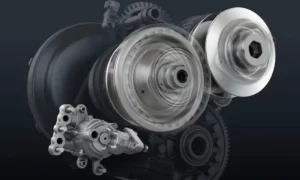
Toyota’s hybrid battery packs are genuinely impressive. The eCVT uses a planetary gearset to blend power from the gas engine and two electric motors — no traditional gearshifts to wear out. Toyota manages its Nickel-Metal Hydride and Lithium-ion battery packs within a tight 40–60% charge range. That shallow discharge cycle is why these batteries routinely exceed 200,000 miles.
The one component to watch? The 12V auxiliary battery in hybrid models. It typically lasts 3–5 years and its failure can trigger misleading hybrid system warnings on the dashboard.
| Battery Type | NiMH | Li-ion |
|---|---|---|
| Pros | Reliable, safe, cold-weather friendly | Lightweight, efficient, compact |
| Cons | Heavy, less energy-dense | Heat-sensitive, higher cost |
| Lifespan | 8–15 years | 10–15 years |
| Replacement Cost | $2,000–$4,500 | $3,000+ |
The Grand Highlander: A Whole New Ballgame
If the standard Highlander’s cramped third row has always bothered you — you’re not imagining it. Toyota addressed this directly with the 2024 Grand Highlander, built on a longer, wider TNGA-K platform. Third-row legroom jumps to 33.5 inches. Maximum cargo capacity reaches 97.5 cubic feet.
The Grand Highlander Hybrid MAX pairs the 2.4-liter turbo with a beefed-up electric motor system for 362 combined horsepower and 400 lb-ft of torque. It tows 5,000 pounds and accelerates noticeably faster than the standard hybrid. For families who need genuine space and real performance, this is the most capable Highlander ever built.
Your Quick Cheat Sheet: Best Year by Priority
Best for mechanical longevity on a budget → 2012
Mature 3.5-liter V6, proven 5-speed auto, only two minor recalls. The gold standard for worry-free ownership.
Best hybrid before modern connectivity → 2019 Hybrid
TSS-P safety tech, smooth V6 hybrid system, eCVT bypasses all UA80 transmission risks. Zero mechanical recalls for that year.
Best late-model used vehicle → 2021 Hybrid
35 MPG, CarPlay, Android Auto, TSS 2.5+. The best balance of modern features and proven reliability in the fourth generation.
Best new or near-new → 2026 Grand Highlander Hybrid MAX
Standard AWD, 362 hp, TSS 3.0, massive interior. The peak expression of everything the Highlander nameplate stands for.
The data from CarGurus, JD Power, and TopSpeed’s generation reliability rankings all point to the same truth: reliability peaks at the end of each generation, not the beginning. Stick to 2007, 2012, 2019, or 2021 in the used market, and you’ll get a Highlander that earns its reputation rather than testing your patience.