Buying a used Ford Escape isn’t as simple as picking a color and haggling on price. Some years are genuinely great. Others will drain your wallet faster than a broken fuel pump. This guide cuts through the noise and tells you exactly which years to target — and which ones to run from.
Why the Ford Escape Has Such an Uneven Track Record
The Ford Escape has been around since 2001. That’s 25 years and four completely different generations of the same nameplate. Each generation brought new engineering, new engines, and — in some cases — brand-new ways to fail.
The Escape’s history splits into four chapters:
- Gen 1 (2001–2007): Mazda-influenced, boxy, simple
- Gen 2 (2008–2012): Refined, rugged, most reliable era
- Gen 3 (2013–2019): Sleek, turbocharged, deeply troubled early years
- Gen 4 (2020–present): Modern, hybrid-focused, improving fast
Knowing which chapter you’re buying from changes everything.
The Best Years for Ford Escape: A Quick-Reference Table
| Model Year | Generation | Reliability Verdict | Best For |
|---|---|---|---|
| 2012 | Gen 2 | ⭐⭐⭐⭐⭐ Best overall | Budget buyers wanting longevity |
| 2024–2025 | Gen 4 | ⭐⭐⭐⭐⭐ Best modern | New/near-new buyers |
| 2023 | Gen 4 | ⭐⭐⭐⭐ Very good | Hybrid/PHEV buyers |
| 2019 | Gen 3 | ⭐⭐⭐⭐ Best of Gen 3 | Sleeker styling seekers |
| 2010–2011 | Gen 2 | ⭐⭐⭐⭐ Great used pick | Reliability on a budget |
| 2004 | Gen 1 | ⭐⭐⭐ Best Gen 1 option | Tight-budget buyers |
The 2012 Ford Escape: The Overall Best Year
If you want one clear answer on the best year for Ford Escape, it’s the 2012 model. It’s the final year of the second generation, which means it got nearly a decade of refinements before Ford retired the platform.
Here’s what makes it stand out:
- Only two NHTSA recalls — one for a fuel leak, one for a wheel bearing. That’s remarkably low.
- Owners routinely hit 200,000+ miles with routine maintenance.
- Simple, proven powertrain choices: a 2.5L four-cylinder or a 3.0L V6, both naturally aspirated and easy to maintain.
- No turbos. No complex dual-clutch transmissions. No drama.
The NHTSA recall data tells the story clearly — the 2012 has one of the lowest complaint counts in the Escape’s entire history. Average annual maintenance runs around $544/year according to RepairPal, which is reasonable for any compact SUV.
What’s not great: The 2012 Escape brakes long — about 154 feet from 60 mph, which is above the class average. It also scored a “Marginal” roof strength rating from the IIHS. It’s old tech. But for the money, it’s still hard to beat.
The 2024–2025 Ford Escape: Best If You Want Something Modern
The current generation Escape took a rocky start (more on that below), but it’s found its footing. The 2025 model scores an 86 out of 100 for quality and reliability on J.D. Power’s scale — the same score it hit back in the reliable 2019 era.
The standout version is the hybrid and plug-in hybrid (PHEV). Here’s why:
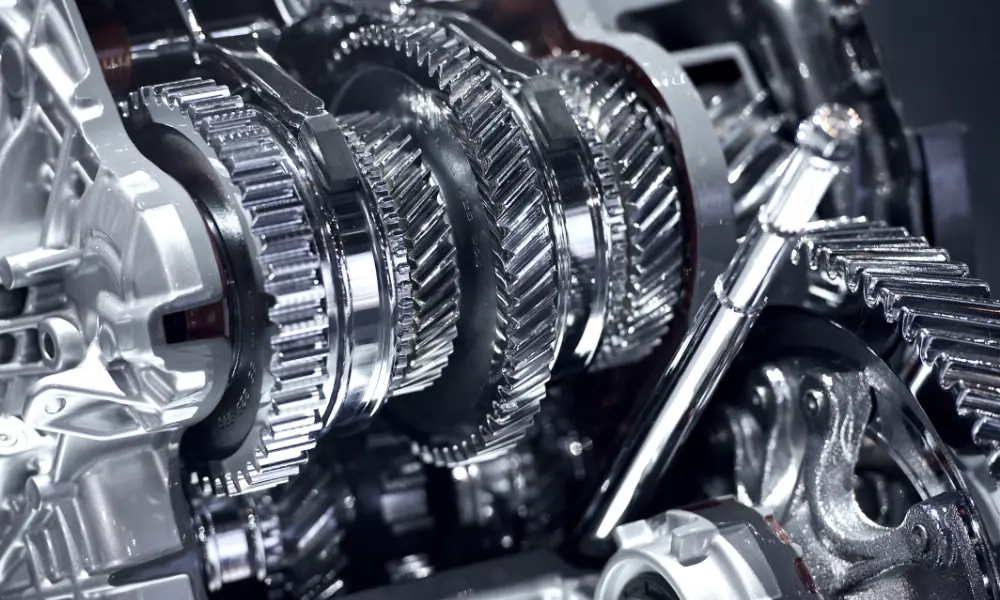
- The hybrid uses a Toyota-licensed eCVT planetary gearset transmission — one of the most durable designs on the market today.
- PHEV owners get 37 miles of all-electric range and a combined system output of 210 hp.
- Standard hybrid owners consistently report 40–44 MPG in real-world driving.
- The 2024 model earned a five-star NHTSA overall rating and a “Good” score from the IIHS across all major crash categories.
Ford’s COO reported a 10% reduction in repairs per thousand vehicles in early 2025 — a sign the company’s quality improvements are actually sticking.
The one persistent complaint? Interior build quality. Some owners mention misaligned panels, thin plastics, and cabin rattles. It drives well and runs reliably. It just doesn’t feel as solid as the price tag sometimes suggests.
The 2019 Ford Escape: Best Pick from Gen 3
The 2013–2019 generation is a minefield — but the 2019 model is the safest spot to stand. By this point, Ford had addressed most of the catastrophic early failures and the J.D. Power score climbed back to 86 out of 100.
The 2019 IIHS ratings show “Good” scores for moderate overlap front, side impact, and roof strength. Safety tech improved significantly too — Ford’s Co-Pilot360 suite came standard on most trims.
One catch: The 2019 Escape still carries passenger-side small overlap weakness (“Poor” in that specific IIHS test). And you need to pick the right engine.
Third-Generation Engine Guide: Choose Wisely
| Engine | Verdict | Notes |
|---|---|---|
| 2.5L i-VCT (naturally aspirated) | ✅ Most reliable | Simple, durable, available on S/SE trims |
| 2.0L EcoBoost | ✅ OK — with caution | More robust than smaller turbos; check history |
| 1.5L EcoBoost | ⚠️ Risky | Coolant intrusion TSB documented by NHTSA |
| 1.6L EcoBoost | ❌ Avoid completely | Prone to engine fires and cracked blocks |
The coolant intrusion problem documented in NHTSA Technical Service Bulletin 19-2139 and TSB 20-2100 was a design flaw — not a maintenance issue. Coolant seeped into the cylinders, causing white smoke, rough running, and total engine failure. A short block replacement for these engines runs $7,000 to $11,000.
If you buy a 2019 Escape, go for the 2.5L naturally aspirated and verify service records.
The 2004 Ford Escape: Best Budget Option from Gen 1
If your budget is really tight and you need something older, the 2004 Escape is the smartest first-gen pick. Ford had worked out most early assembly issues by this point, and complaint data shows only 119 documented issues — the lowest in the first generation.
Avoid the 2005 model. That year saw an explosion in rust complaints, particularly in the wheel wells and shock mounting points. The structural corrosion was expensive and sometimes impossible to repair economically.
Years to Avoid: Don’t Make These Mistakes
The 2013 Ford Escape: Worst Year, Period
The 2013 Ford Escape is a disaster by every measurable standard. It carries the “Avoid Like the Plague” designation from CarComplaints for good reason:
- 17 separate NHTSA recalls
- Nearly 2,700 consumer complaints filed
- Almost half of all complaints involved engine and powertrain failures
- The 1.6L EcoBoost triggered a “stop-driving” order from Ford — owners were told to park and wait for a tow truck due to fire risks
Don’t buy a 2013 Escape. Not at any price.
The 2014 Ford Escape: Almost as Bad
The 2014 model inherited most of the 2013’s problems. Transmission failures became the dominant theme, with the 6F35 unit failing at an average of just 70,000 miles. A full replacement cost owners roughly $4,500.
The 2020 Ford Escape: First-Year Blues
History repeated itself with the fourth generation. The 2020 launch year triggered 18 recalls — the highest count of any single Escape year. Door rivets could break causing sagging, infotainment screens went black randomly, and parasitic battery drain became a common complaint.
J.D. Power reliability scores dropped to 76/100 for 2020. If you want a Gen 4 Escape, skip 2020 entirely.
Other Years to Treat With Caution
- 2005: Severe rust in structural mounting points
- 2008: Early transmission teething issues with the new 6F35 six-speed
- 2014–2016: Continued EcoBoost engine concerns
How to Keep Any Ford Escape Running Longer
Regardless of the year you pick, these maintenance habits separate 150,000-mile owners from 250,000-mile owners:
Transmission fluid (6F35 models, 2009–2018): Flush every 30,000–60,000 miles. Skipping this destroys the clutch packs early.
Coolant system (EcoBoost engines): Inspect every 40,000 miles. Catch intrusion early and you might avoid a catastrophic repair.
Transfer case fluid (PTU on AWD models): This one gets overlooked constantly. Low or contaminated fluid leads to grinding noises and expensive internal gear damage.
12V battery (2020–2023 hybrids): Upgrade to an AGM-type battery. The stock unit struggles with the system’s parasitic drain and causes false error codes and no-start conditions.
The Escape averages 0.31 unscheduled repairs per year — better than the 0.4 compact SUV average. But when a major repair hits, it tends to hit hard. The 10-year maintenance cost runs about $9,440, which is roughly $1,200 above the industry average, largely because of the high-cost failures in Gen 3 models.
The Bottom Line on Best Years for Ford Escape
The best years for Ford Escape are clear when you look at the data honestly. The 2012 stands alone as the best used value — simple engines, low recalls, and proven longevity. The 2023–2025 hybrid models are the best modern choice, especially if fuel economy matters to you. The 2019 works if you want Gen 3 styling — just stay away from the turbocharged 1.5L and 1.6L engines.
Avoid 2013 without exception. Skip 2020 if you can. And always check the engine choice before you check the color.
The Escape has a genuinely great version somewhere in its history. You just need to know which one you’re looking at.