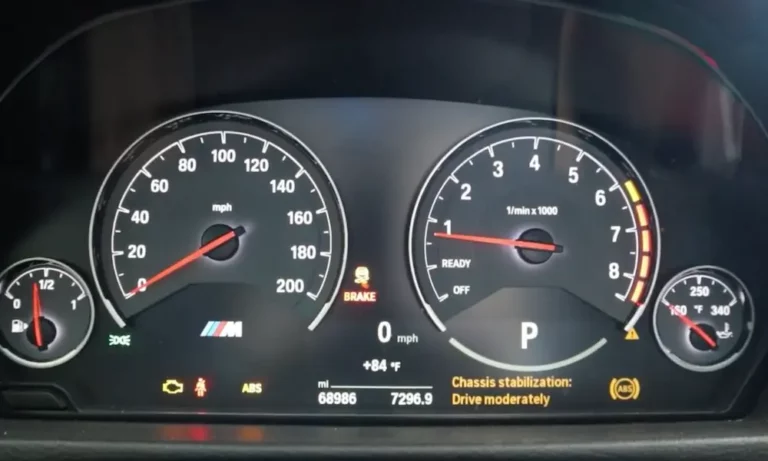
You’ve seen that warning light flash on your BMW’s dashboard – “Chassis Stabilization: Drive Moderately.” Your heart sinks a little. What does it mean? How serious is it? And most importantly, can you still make it to that important meeting?
Let’s cut through the confusion and get straight to what this warning means, why it happens, and what you can do about it.
What Is BMW’s Chassis Stabilization System?
The chassis stabilization system in your BMW isn’t just one component – it’s a network of advanced technologies working together to keep your ride smooth, stable, and safe.
Dynamic Stability Control (DSC): Your Car’s Balance Keeper
Think of DSC as your BMW’s personal balancing act manager. It constantly monitors your wheels, steering, and body movement to prevent skids and slides.
When you take that corner a bit too quickly, DSC jumps into action by:
- Applying brakes to specific wheels
- Reducing engine power when needed
- Adjusting steering response
This happens in milliseconds – often before you even realize you needed help. According to BMW’s technical documentation, DSC integrates with other systems to create a safety net that works continuously in the background.
Active Roll Stabilization: Fighting Against Physics
Higher-end BMW models feature something special: Active Roll Stabilization (ARS). This system uses hydraulic actuators built into the anti-roll bars to combat body lean during cornering.
What makes this system clever is how it adapts:
- During straight driving: It stays relaxed for a comfortable ride
- During cornering: It instantly stiffens to keep the car flat
This dual-mode operation gives you the best of both worlds – comfort when cruising and sharp handling when pushing it.
Electronic Damper Control (EDC): Real-Time Suspension Tuning
The final piece of the puzzle is EDC, which adjusts your shock absorbers on the fly. Using sensors throughout the vehicle, EDC can:
- Soften the suspension for comfort on rough roads
- Tighten things up for better handling during spirited driving
- Adapt to your selected driving mode (Comfort, Sport, etc.)
This intelligent system, detailed by BMW specialists, means your BMW can transform from a comfortable cruiser to a corner-carving machine at the push of a button.
Why You’re Seeing “Drive Moderately” – The Causes
When your BMW flashes the chassis stabilization warning, it’s not just being dramatic. Something’s genuinely wrong with one of these sophisticated systems.
Impact Damage: The Sudden Troublemaker
The most common trigger? Physical impacts. That seemingly innocuous curb strike or pothole hit can cause real problems.
According to owner reports on Reddit, impacts can cause:
- Bent control arms
- Damaged tie rods
- Misaligned wheels
- Distorted wheel hubs
These mechanical issues throw off the precise calibration your chassis systems rely on. When sensors detect something’s not right with suspension geometry, the warning appears.
Sensor and Electrical Problems: The Silent Culprits
Your BMW’s stability systems depend on numerous sensors. When these fail, your car gets confused.
Key sensors include:
| Sensor Type | Purpose | Common Issues |
|---|---|---|
| Steering Angle Sensor | Tracks steering wheel position | Misalignment after repairs, internal failure |
| Wheel Speed Sensors | Monitor individual wheel rotation | Debris buildup, physical damage, wiring issues |
| Vertical Acceleration Sensor | Detects body movement | Internal failure, calibration errors |
Electrical issues cause their own troubles. BMW forums document cases where low voltage from weak batteries or bad grounds triggered these warnings.
Software Glitches: The Digital Gremlins
Even your BMW’s software can act up. After certain repairs, battery disconnections, or even routine updates, calibration can get thrown off.
Common software-related triggers include:
- Uncalibrated steering angle sensors
- Outdated DSC module firmware
- Communication errors between control modules
Technical videos demonstrate how these systems sometimes need a proper reset through BMW’s diagnostic systems to resolve these electronic hiccups.
Warning Signs Beyond the Dashboard
The dashboard warning is just the most obvious sign. Your BMW will likely give you other clues something’s wrong.
Handling Changes You Can Feel
Pay attention to how your BMW drives when the warning appears:
- Steering might feel vague or uncertain
- The car may pull to one side
- You might notice increased body roll in corners
- Braking could feel uneven or less responsive
According to BMW repair specialists, these changes aren’t just annoying – they’re your car’s way of telling you something’s seriously wrong.
Lost Features and Functionality
When chassis stabilization systems malfunction, they often take other features down with them:
- Active cruise control may disable itself
- Lane-keeping assistance might stop working
- Automatic emergency braking could be compromised
Forum discussions document how these interconnected systems will often disable themselves as a safety precaution when stability issues are detected.
Strange Noises: Your Car Talking to You
Listen closely when driving – your BMW might be telling you what’s wrong:
- Clunking from the suspension when going over bumps
- Whining noises from hydraulic pumps (especially in ARS systems)
- Grinding or scraping from wheel areas
These sounds, often documented in owner discussion threads, provide valuable diagnostic clues.
Diagnosing the Problem: Getting to the Root Cause
When that warning light appears, you need a systematic approach to find what’s wrong.
Initial Assessment: What You Can Do
Even before heading to a shop, there are steps you can take:
- Examine recent events – Did you hit something? Install new parts? Jump-start the battery?
- Visual inspection – Look for obvious damage to wheels, tires, or suspension components
- Check for related warnings – Are the ABS, DSC, or other warning lights also on?
- Test basic functionality – Does steering feel normal? Any unusual vibrations?
Gathering this information helps technicians focus their diagnosis and can save diagnostic time.
Professional Diagnostics: What to Expect
When you bring your BMW in for service, technicians will likely:
- Scan for fault codes – Using BMW-specific diagnostic tools like ISTA+ to retrieve stored error codes
- Perform suspension inspections – Checking components for damage, wear, or misalignment
- Test sensor functionality – Verifying sensors return accurate readings
- Examine electrical systems – Testing the battery, alternator, and electrical connections
Advanced diagnostics might include road testing with live data monitoring or specialized testing of individual components.
Common Fault Codes and Their Meanings
BMW diagnostic systems return specific codes that point to particular issues:
| Code | Meaning | Typical Cause |
|---|---|---|
| 4809AB | Voltage supply issues | Weak battery, alternator problems |
| D354EE | Invalid steering angle signal | Damaged steering rack, sensor failure |
| 482941 | Vertical acceleration sensor fault | Sensor defect or calibration error |
According to technical forums, these codes provide valuable starting points for diagnosis.
Fixing the Problem: From Simple to Complex
Solutions range from quick fixes to major component replacements, depending on the underlying cause.
DIY Approaches: What You Might Try
Some simpler issues can be addressed without specialized tools:
- Battery maintenance – Cleaning terminals and ensuring proper charging
- Visual inspections – Checking for loose connections or obvious damage
- Basic resets – Disconnecting the battery for 15+ minutes to reset some systems
However, BMW technical guides caution that many issues require professional equipment for proper resolution.
Professional Repairs: Component Replacement
For mechanical issues, replacement parts are often necessary:
- Suspension components – Control arms, tie rods, ball joints
- Sensors – Steering angle, wheel speed, or vertical acceleration sensors
- Hydraulic components – ARS pumps, lines, or actuators
Using OEM or high-quality parts is crucial, as BMW specialists explain that aftermarket components may not communicate properly with BMW’s systems.
Software Solutions: Calibration and Programming
Many issues require software intervention:
- Sensor calibration – Resetting steering angle or level sensors
- Module programming – Updating DSC or chassis control modules
- Adaptation procedures – Teaching the car about new components
These procedures typically require BMW-specific diagnostic tools like ISTA+ and should be performed by experienced technicians.
Real-World Examples: Learning from Others
Let’s look at some actual cases where BMW owners solved this problem.
Case Study 1: The Curb Strike
A BMW 430i owner reported on Reddit that after hitting a curb, they immediately received the chassis stabilization warning. Diagnosis revealed:
- Bent control arm
- Damaged wheel speed sensor wiring
- Misaligned front end
The solution required:
- Replacement control arm
- New sensor installation
- Four-wheel alignment
- DSC system recalibration
After repairs, the warning disappeared and normal handling returned.
Case Study 2: The Mysterious Intermittent Warning
An X3 owner described on BMW forums receiving intermittent warnings without any obvious cause. After multiple dealer visits, the issue was traced to:
- Corroded electrical connector at the steering angle sensor
- Low voltage from an aging battery
Resolution involved:
- Cleaning and sealing the connector
- Battery replacement
- Steering angle sensor recalibration
This case shows how electrical issues can mimic mechanical problems.
Case Study 3: The ARS Pump Failure
A 5-Series owner documented on YouTube how their chassis warning appeared alongside increased body roll in corners. Diagnosis found:
- Failed hydraulic pump in the Active Roll Stabilization system
- Leaking hydraulic lines
- Damaged actuator
The repair required:
- Complete pump assembly replacement
- System bleeding and pressure testing
- Control module reset
After repairs, the system’s functionality was fully restored.
Preventing Future Problems
While you can’t avoid all potential issues, these steps help minimize your risk.
Driving Habits That Protect Your Chassis
Smart driving goes a long way toward preventing problems:
- Slow down for speed bumps and driveway entrances
- Avoid potholes when possible, or go over them slowly
- Take corners at reasonable speeds to reduce stress on components
- Be extra cautious in construction zones with uneven surfaces
These simple habits can significantly extend the life of your suspension components.
Regular Maintenance Checks
Preventive maintenance should include:
- Inspection of suspension bushings and ball joints
- Checking tire wear patterns for alignment issues
- Testing battery voltage and charging system
- Looking for fluid leaks from ARS or shock absorber systems
According to BMW maintenance experts, catching issues early can prevent more extensive damage.
Software Updates Matter
Stay current with your BMW’s software:
- Ask about control module updates during regular service
- Consider periodic diagnostic checks even without warning lights
- Research if your specific model has known software issues
Software updates often contain fixes for known issues and can prevent false warnings.
When You See “Drive Moderately” – Your Action Plan
The warning has appeared – what now?
Immediate Steps to Take
- Reduce speed – The warning literally tells you to “drive moderately,” so ease off the throttle
- Avoid aggressive maneuvers – No sharp turns, sudden braking, or quick acceleration
- Find a safe place – If the car feels unstable, carefully move to a safe location
- Document conditions – Note when the warning appeared and what you were doing
These steps keep you safer while preserving diagnostic information.
Is It Safe to Keep Driving?
This depends on how the car feels:
- Minor issues: If handling seems normal and no other warning lights are on, you can typically drive carefully to a service center
- Moderate issues: When handling feels slightly off but controllable, limit your driving to reaching service
- Severe issues: If you notice significant handling changes, strange noises, or multiple warning lights, it’s best to have the vehicle towed
According to safety data from the NHTSA, continuing to drive with serious stability control issues increases accident risk significantly.
Finding the Right Help
Not all repair shops are created equal for this issue:
- BMW dealerships – Have all the right diagnostic equipment and factory training
- Independent BMW specialists – Often offer more personalized service at lower costs
- General repair shops – May struggle with BMW-specific systems
Look for shops with BMW-specific diagnostic equipment like ISTA, INPA, or Autologic, as generic OBD-II scanners often miss crucial information.
The Bottom Line on BMW Chassis Stabilization
The “Chassis Stabilization: Drive Moderately” warning is your BMW’s way of saying its stability systems can’t function properly. While causes range from simple sensor issues to major mechanical damage, the warning should never be ignored.
Modern BMWs rely on these sophisticated systems not just for sporty handling but for fundamental safety. Addressing the warning promptly keeps you safer and often prevents more expensive repairs down the road.
Remember: your BMW’s intricate systems work together to deliver that legendary driving experience. When something interrupts their harmony, proper diagnosis and repair restores not just the absence of warning lights but the dynamic handling and safety you expect from your ultimate driving machine.