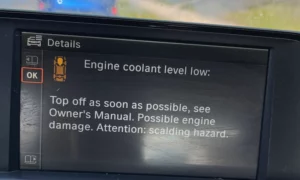
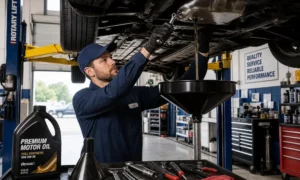
Your BMW’s coolant light just came on, and your heart skipped a beat. Don’t panic, but don’t ignore it either. This warning light is your car’s way of telling you something’s wrong with the cooling system. If you act quickly and correctly, you can prevent serious damage to your engine and potentially save thousands in repair costs. Here’s everything you need to know to handle this situation properly.
What Does the BMW Coolant Warning Light Look Like?
When your BMW’s cooling system has an issue, you’ll see a specific warning light on your dashboard. It typically appears as a thermometer-like symbol partially submerged in liquid. The light is usually blue or yellow, depending on your BMW model.
This warning system is triggered by sensors monitoring the coolant level in your reservoir. When levels drop too low, the light comes on to warn you before real damage occurs.
Pull Over Now: Immediate Steps When the Light Comes On
If your coolant light illuminates while driving, treat it as an urgent situation. Here’s what to do:
- Find a safe place to stop immediately. The coolant light is considered a “pull over as soon as safely possible” scenario.
- Turn off your engine once safely parked. Continuing to drive risks severe engine damage.
- Wait at least 30 minutes for the engine to cool completely before opening the hood. Hot coolant can cause serious burns.
- If you absolutely must keep driving (though not recommended), turn your heater to maximum temperature and fan to high speed. This helps draw heat away from the engine while you find a safe stopping point. Turn off your A/C and any unnecessary electrical systems.
Why Is My BMW Coolant Light On? Common Causes
Several issues can trigger your BMW’s coolant warning light. Here are the most common culprits:
Low Coolant Level
This is the most straightforward reason. Your system simply doesn’t have enough coolant. This can happen due to:
- Normal evaporation over time
- Seasonal temperature changes
- Small, hard-to-detect leaks
- Recent service work where the system wasn’t properly filled
Coolant Leaks
BMWs are particularly prone to coolant leaks because of their extensive use of plastic components in the cooling system. Common leak points include:
- Expansion tanks and reservoir caps
- Water pump weep holes
- Radiator end tanks
- Hose connections and clamps
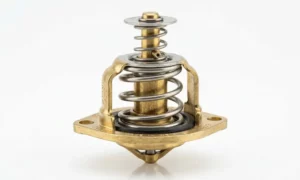
- Thermostat housing
These plastic parts become brittle with age and heat cycles, making them increasingly prone to cracking as your BMW gets older.
Faulty Coolant Sensor
Sometimes there’s nothing wrong with your coolant level. Instead, the float sensor in the coolant reservoir is giving false readings. This is a known issue in many BMW models and can trick the system into thinking coolant is low when it’s actually fine.
Air in the Cooling System
After coolant service or cooling system repairs, air pockets can become trapped in the system. These air bubbles can cause the coolant level sensor to trigger falsely, especially if they’re near the level sensor in the reservoir.
How to Check and Add BMW Coolant
If you’ve allowed adequate time for cooling (at least 30 minutes), you can check your coolant level:
- Locate the coolant expansion tank. It’s typically a translucent plastic reservoir near the engine with “min” and “max” markings.
- Check the level when the engine is COLD. Never check or add coolant to a hot engine.
- Ensure your car is on level ground for an accurate reading.
- If the coolant is below the “min” mark, you’ll need to add more.
Adding Coolant Properly
- Use only BMW-approved coolant. BMWs require specific phosphate and silicate-free formulations, typically blue in color.
- Mix with distilled water in a 50/50 ratio unless buying pre-mixed coolant.
- Slowly add the coolant to the reservoir until it reaches between the “min” and “max” lines.
- Replace the cap securely, start the engine, and check if the warning light goes off.
| BMW Coolant Type | Appearance | Suitable For | Where to Buy |
|---|---|---|---|
| BMW Antifreeze/Coolant | Blue | All BMW models | Dealership, auto parts stores, online |
| BMW Coolant (Pre-mixed) | Blue | All BMW models | Dealership, auto parts stores, online |
| Zerex G05 | Blue/Green | Compatible alternative | Auto parts stores |
| Pentosin Pentofrost NF | Blue | Compatible alternative | Specialty suppliers, online |
The Dangers of Driving with Low Coolant
You might be tempted to ignore the warning light and keep driving. Don’t. Here’s what can happen:
- Rapid overheating: Without sufficient coolant, engine temperatures can spike dramatically in minutes.
- Head gasket failure: Overheating often blows head gaskets, leading to oil/coolant mixing and severe performance issues.
- Warped cylinder heads: The extreme heat can physically warp metal components.
- Complete engine seizure: In worst-case scenarios, pistons can actually weld themselves to cylinders, requiring total engine replacement.
- Automatic shutdown: Some newer BMWs will force-shutdown the engine to prevent damage, which could be dangerous if it happens unexpectedly while driving.
BMW’s Cooling System Vulnerability
BMWs are especially prone to cooling system issues compared to some other vehicle brands. This is primarily due to:
- Plastic components: BMW uses many plastic parts in critical cooling system areas that degrade over time.
- High operating temperatures: BMWs run hotter than many other vehicles, accelerating component wear.
- Pressurized system: The high-pressure cooling system puts extra stress on all components.
- Complex design: With more components comes more potential failure points.
Most BMW cooling systems have a practical lifespan of about 80,000-100,000 miles before components begin failing. Many BMW specialists recommend proactive replacement of key cooling system parts around this mileage mark.
Diagnosing Coolant Leaks in Your BMW
If you’ve topped off your coolant but the light returns quickly, you likely have a leak. Here’s how to find it:
- Look for puddles or stains under your parked car. BMW coolant is typically blue and may leave residue.
- Inspect all visible hoses and connections for dampness, crusty residue, or drips.
- Check the expansion tank for hairline cracks, especially near the bottom and around the cap.
- Examine the water pump for signs of weeping around the bearing seal.
- Use a flashlight to inspect the radiator for wet spots or staining, particularly at the plastic end tanks.
If leaks aren’t immediately visible, you may need a pressure test of the cooling system, which requires professional equipment.
BMW Coolant Loss Without Visible Leaks
Sometimes coolant levels drop, but you can’t find any external leaks. This could indicate:
- Internal leaks: Coolant could be leaking into combustion chambers via a damaged head gasket.
- Tiny seepage points: Some leaks are so small they evaporate immediately without leaving visible traces.
- Headlight washers: In some BMW models, the headlight washer system shares the same reservoir, and frequent use can lower fluid levels.
- Venting issues: Pressure relief in the cooling system can sometimes vent small amounts of coolant vapor.
The Real Cost of Ignoring Your BMW’s Coolant Light
Continuing to drive with an illuminated coolant light can prove extremely expensive. Here’s what you might face:
| Ignoring the Light Can Lead To: | Approximate Repair Cost |
|---|---|
| Coolant hose replacement | $150-$400 |
| Water pump replacement | $600-$1,200 |
| Radiator replacement | $600-$1,200 |
| Head gasket repair | $1,500-$3,000 |
| Cylinder head replacement | $2,500-$4,000 |
| Complete engine replacement | $8,000-$15,000+ |
Compare these costs to simply pulling over and adding coolant ($20-$30), and the smart choice becomes obvious.
Preventive Maintenance for BMW Cooling Systems
To avoid cooling system failures, consider these preventive measures:
- Regular coolant flushes: Follow BMW’s recommendation (typically every 30,000-60,000 miles).
- Visual inspections: Check coolant level and condition monthly.
- Proactive replacement: Consider replacing key components like the water pump, thermostat, and expansion tank preventively around 80,000-100,000 miles.
- Use only BMW-approved coolant: The correct specification prevents internal corrosion and proper lubrication of components.
- Address small issues immediately: A minor leak will only get worse with time.
Signs Your BMW Needs Professional Cooling System Help
Contact a BMW specialist immediately if:
- The coolant light returns after topping off the reservoir
- You notice any coolant puddles or stains under your vehicle
- The temperature gauge shows overheating even with sufficient coolant
- Your heater blows cold air when it should be hot
- You smell sweet, syrupy odors inside the cabin
- You notice steam from under the hood
- You hear gurgling sounds from the dashboard area
Early intervention by a professional can prevent catastrophic failures and keep repair costs manageable.
BMW Cooling System Components Most Likely to Fail
Understanding which parts of your BMW cooling system are most prone to failure can help you be proactive:
- Expansion tank: Often the first component to crack due to pressure and heat cycles.
- Water pump: BMW uses plastic impellers in many models, which can fail without warning.
- Thermostat housing: Typically made of plastic that becomes brittle with age.
- Radiator: Plastic end tanks crack and separate from the aluminum core.
- Hose connections: Clamps loosen, and connection points deteriorate over time.
- Bleeder screws: These small valves often become brittle and crack.
Many BMW enthusiasts follow the “10-year/100,000-mile rule” – replacing most cooling system components preventively at this interval, regardless of whether they’re showing symptoms.
Driving in Extreme Conditions with a BMW
Your BMW’s cooling system faces added stress in extreme conditions:
Hot Weather Driving:
- Check coolant levels more frequently
- Consider a higher concentration of coolant (up to 70/30 coolant/water) for extremely hot climates
- Avoid extended idling in traffic when possible
Winter Driving:
- Ensure proper coolant concentration to prevent freezing (typically 50/50 mix protects to -34°F)
- Be aware that heater performance can indicate cooling system issues
- Remember that cold engines still need proper coolant levels
Track or Performance Driving:
- Consider upgrading to a high-performance cooling system
- Monitor temperatures closely during high-RPM operation
- Allow proper cool-down periods between hard driving sessions
Your BMW’s cooling system is a complex network of components working together to keep your engine at optimal temperature. Treating any cooling issue as urgent will help you avoid the catastrophic damage that can result from even a single overheating event. Remember – when that coolant light comes on, it’s time to act immediately.