Skipping your BMW transfer case fluid change isn’t just lazy — it’s expensive. That shudder you feel during a U-turn? That’s your wallet begging for attention. This guide covers the right fluid, the correct intervals, the actual procedure, and the electronic reset most people forget. Stick around, because the last section could save you a costly rebuild.
What Does the BMW Transfer Case Actually Do?
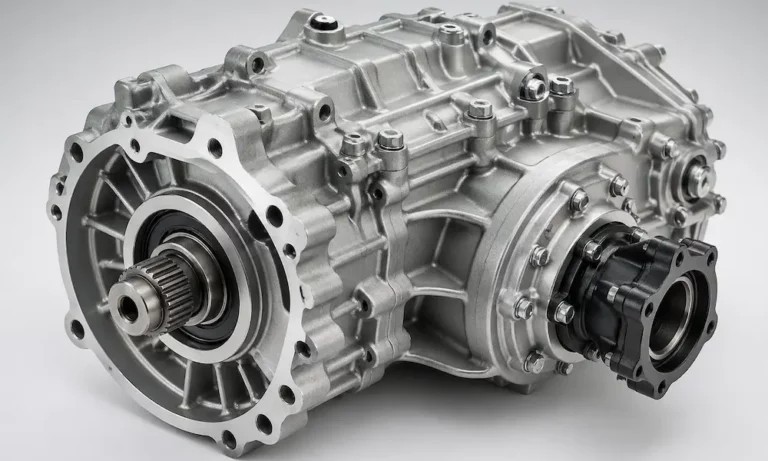
The transfer case sits at the heart of the xDrive system. It splits torque between your front and rear axles using an electronically controlled multi-plate clutch pack. When you turn, accelerate hard, or hit a slippery patch, the transfer case adjusts how much power goes where.
The fluid inside isn’t just a lubricant. It cools the clutch pack, carries away wear particles, and maintains the precise friction needed for smooth torque transfers. When that fluid breaks down, things get rough — literally.
How Often Should You Change BMW Transfer Case Fluid?
BMW used to call the transfer case a “lifetime fill.” That policy is changing fast. BMW has officially updated its service schedules for 2025+ M and M60i models, and independent specialists have been recommending changes for years.
Here’s a practical breakdown:
| Driving Situation | Recommended Interval | Why |
|---|---|---|
| Normal daily driving | 50,000–60,000 miles | Prevents additive breakdown and clutch glazing |
| High-mileage or used BMW | Every 40,000 miles | Accounts for potential past neglect |
| Towing, track use, heavy traffic | Every 30,000 miles | Heat degrades fluid faster under load |
| 2025+ M/M60i models (BMW official) | 20,000–50,000 miles | Factory acknowledgment of stress levels |
The 60,000-mile mark is where things get serious. Most xDrive maintenance guides treat this as the last reasonable window before fluid degradation starts causing real mechanical damage.
Which Fluid Does Your BMW Transfer Case Need?
Using the wrong fluid is worse than skipping the change altogether. The clutch pack’s friction characteristics are tuned to a specific lubricant chemistry. Get it wrong and you’ll create shudder instead of fixing it.
Here’s a model-by-model breakdown:
| Transfer Case | Vehicles | Fluid Spec | Capacity |
|---|---|---|---|
| NV 124/125 | E46 3-Series, E53 X5 (1999–2003) | Dexron III ATF | 0.52–0.60L |
| ATC 300/400/500 | E90, E60, E83 X3, E53 X5 | DTF-1 (formerly TF0870) | 0.65–0.70L |
| ATC 350/35L/45L | F30, F10, F15 X5, F25 X3 | DTF-1 SAE 75W GL-4 | 0.50–0.70L |
| ATC 13-1/13-2 | G01 X3, G05 X5, G07 X7, G20 | DTF-1 SAE 75W GL-4 | 0.52–0.70L |
For all modern ATC units, you want DTF-1 specification fluid. Avoid universal “multi-vehicle” gear oils unless they explicitly list DTF-1 or TF0870 compatibility.
Approved Fluid Alternatives
Genuine BMW fluid is always the safe bet. But if you’re managing costs, these alternatives all meet the spec:
- Genuine BMW DTF-1 (83-22-2-409-710) — OEM standard
- Shell TF0870 / S-TEC — the original factory fill manufacturer
- Ravenol TF-0870 — formulated specifically for xDrive systems
- Rein DTF1/TF0870 — solid OEM-equivalent option
- Febi Bilstein 75W — meets API GL-4 and BMW DTF-1 specs
- Liqui Moly Fully Synthetic Hypoid — application-specific; confirm compatibility for your model
Warning Signs Your Transfer Case Fluid Needs Changing Now
Don’t wait for a scheduled interval if your BMW is already showing symptoms. Catch these early and a fluid change fixes the problem. Ignore them and you’re looking at a full transfer case replacement.
Watch for:
- A jerking or shuddering sensation during slow turns or parking maneuvers
- Metallic clicking or grinding from underneath the vehicle
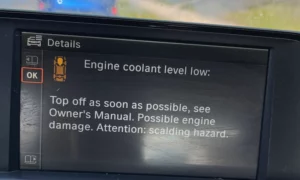
- Dashboard warnings like “Drivetrain Malfunction” or “4×4 System Inactive”
- Fault codes related to the transfer case actuator or wear integrator
One often-overlooked trigger: mismatched tire wear. If your front and rear tire tread depths differ by more than 2–3mm, the xDrive system reads it as constant wheel slip. It keeps engaging the clutch pack to compensate, which generates excessive heat and cooks the fluid fast. This is one of the most common causes of premature transfer case failure.
How to Do a BMW Transfer Case Fluid Change
The procedure differs significantly depending on your chassis generation.
Tools You’ll Need
| Tool | Purpose |
|---|---|
| 14mm Hex Bit Socket | Fill and drain plug removal |
| E10 External Torx | Transmission support bracket bolts |
| 13mm / 16mm / 18mm Sockets | Crossmember hardware |
| Fluid Transfer Pump | Evacuating old fluid and filling fresh |
| Thin Suction Hose (0.25 inch) | Reaching sump floor past internal components |
| Torque Wrench | Factory-spec reassembly |
E-Series and F-Series (Drain Plug Present)
These units have both a drain and fill plug. The process is straightforward: remove the underbody shielding, drain the old fluid, reinstall the drain plug to spec, then refill through the fill port until fluid reaches the opening level.
The E90 transfer case fluid replacement process and E60 5-Series procedure are well-documented and DIY-friendly.
G-Series ATC 13-1/13-2 (Suction Method Required)
The G01 X3, G05 X5, and G07 X7 don’t have drain plugs. You need a suction pump and a very thin, flexible hose — around 0.25 inches in diameter. A standard-diameter hose hits internal bearings and the clutch housing before reaching the sump floor.
There’s another challenge unique to these units. The ATC 13-1 and 13-2 have a dual-chamber design separated by a solenoid-controlled valve. Without opening that valve electronically, 200–300ml of old fluid stays trapped inside. You need a diagnostic tool to trigger the valve during the service.
Torque Specs for Reassembly
| Fastener | Thread | Torque (Nm) | Torque (ft-lb) |
|---|---|---|---|
| Transfer Case Fill/Drain Plug | M22 | 60 Nm | 44 ft-lb |
| Transmission Support Main Bolt | M12 | 68 Nm | 50 ft-lb |
| Support Bracket to Body | M8 | 19 Nm | 14 ft-lb |
The Electronic Reset Nobody Mentions
This step separates a proper BMW transfer case fluid change from a half-done one. The Transfer Case Control Module (VTG) runs a wear integrator — a software model that assumes your fluid is gradually degrading. It adjusts clutch clamping pressure based on that assumption.
Put fresh fluid in without resetting the wear integrator and the module keeps applying excessive clamping force. That causes jerky engagement and unnecessary wear on the actuator motor.
After every fluid change, the VTG wear integrator needs a reset. The module then runs the actuator through its full range to relearn the clutch contact points with fresh fluid. You might hear a faint hum or clicking from underneath — that’s normal.
Tools That Can Do the Reset
| Tool | Type | What It Can Do |
|---|---|---|
| BMW ISTA | PC via ENET cable | Full dealer capability; opens chambers; calibrates VTG |
| Foxwell NT510 Elite | Handheld device | BMW-specific menus; wear resets and adaptations |
| Bimmergeeks ProTool | Android app via Bluetooth | Professional-grade coding and service functions |
| BimmerLink | iOS/Android app | Good for code reading; limited VTG reset capability |
What to Expect After the Service
Your xDrive might feel slightly grabby for the first 100–200 miles. BMW’s own service bulletin for the ATC13-x acknowledges this as normal. Fresh fluid needs time to fully saturate the clutch friction material.
If shuddering persists past 200 miles of varied driving, the clutch plates are likely glazed or physically damaged from extended operation with degraded fluid. At that point, a fluid change won’t fix it — you’re looking at mechanical repairs or full unit replacement.
Don’t Forget the Differentials
The transfer case doesn’t work alone. While you’re under the car, change the front and rear differential fluids too. Most specialists recommend syncing these services since the wear patterns follow similar mileage curves — typically every 40,000–60,000 miles. Use a 75W-85 or 75W-90 hypoid gear oil, and confirm whether your differential is standard or limited-slip before buying fluid.
Disposing of Used Transfer Case Fluid Responsibly
Used gear oil contains wear metals and additives that can contaminate groundwater. Don’t pour it down the drain or toss it in the trash.
Here’s how to handle it properly:
- Capture it in a clean, sealed polyethylene container — original oil jugs work perfectly
- Don’t mix it with brake fluid, antifreeze, or gasoline; contaminated oil often can’t be recycled and becomes hazardous waste
- Drop it off at Advance Auto Parts or AutoZone — both accept used oil for free, up to five gallons per visit
- Check local programs — many U.S. cities offer curbside pickup or hazardous waste collection days
The EPA notes that it takes 42 gallons of crude oil to produce 2.5 quarts of high-quality lubricant — but just one gallon of recycled oil produces the same amount. Dropping it off takes five minutes and keeps your local water supply clean.