Seeing “P1000-FF” on your scan tool can feel alarming — but it’s actually one of the least serious codes your Ford can throw. It doesn’t mean something’s broken. It means your computer hasn’t finished its homework yet. Read to the end and you’ll know exactly what caused it, what the “-FF” suffix actually means, and how to clear it with a simple drive.
What Is the Ford P1000-FF Code?
The P1000-FF is a Ford-specific status code, not a fault code. Your powertrain control module (PCM) is telling you it hasn’t completed its emissions self-tests since the last memory reset. No broken parts. No sensor failures. Just an incomplete checklist.
Think of it like rebooting your laptop. The programs aren’t broken — the computer just hasn’t loaded everything yet.
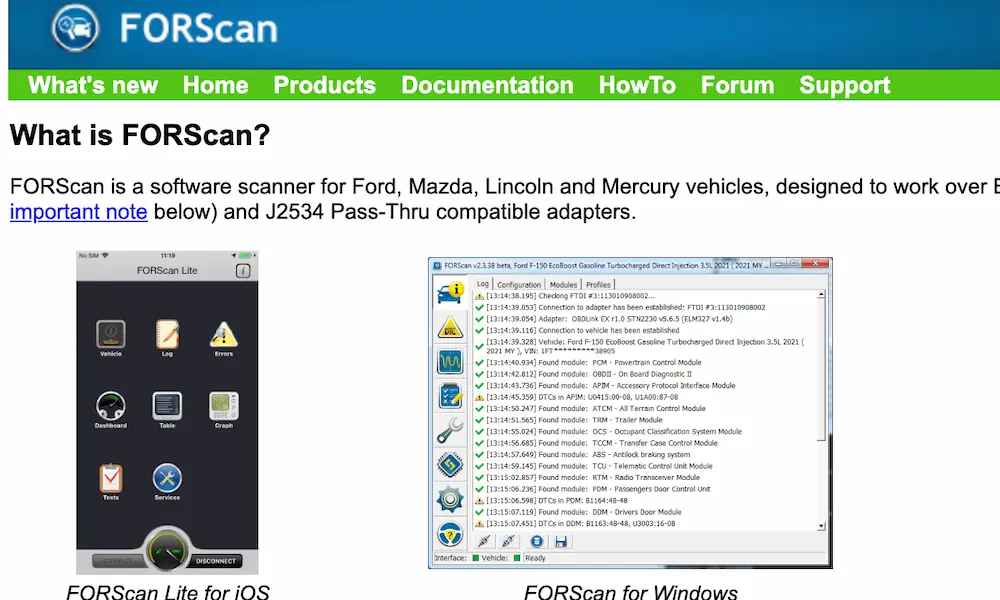
The “-FF” suffix shows up when you use advanced tools like FORScan or Ford’s Integrated Diagnostic System. In hexadecimal language, “FF” means all status bits are set to their maximum value — essentially a default “not initialized” flag. According to Motorcraft’s throttle body diagnostics documentation, this suffix confirms the system hasn’t recorded any test results since the last memory clear.
Here’s a breakdown of what the code structure actually means:
| Code Component | Technical Meaning | What It Tells You |
|---|---|---|
| P | Powertrain System | Engine and emissions controls |
| 1 | Manufacturer Specific | Defined by Ford, not a global standard |
| 000 | System Target | Engine control computer status |
| -FF | Status Byte | “Not complete since last clear” |
What Causes the Ford P1000-FF Code?
According to ANCEL’s diagnostic breakdown, this code almost always follows one of these three triggers:
Battery Disconnection or Failure
This is the most common cause. Replacing your battery, jumping a dead one, or even a bad alternator causing a voltage drop can wipe the PCM’s Keep Alive Memory (KAM). Once that memory clears, P1000-FF appears immediately. The computer starts from scratch.
Clearing Fault Codes With a Scan Tool
Every time a technician clears a code — say, after fixing an oxygen sensor — the PCM resets its readiness monitors. P1000-FF will show up right after that reset as a signal that re-verification hasn’t happened yet. It’s a built-in safety feature, not a mistake.
New Vehicles and Module Reprogramming
Brand-new Fords straight from the factory carry P1000-FF because the PCM has never completed a full drive cycle. Software updates and module reprogramming trigger the same result. The iCarsoft diagnostic guide confirms this is completely normal behavior in all three scenarios.
Understanding Readiness Monitors (Why the Code Sticks Around)
The P1000-FF code clears only after your Ford completes a series of self-tests called OBD-II readiness monitors. These split into two groups:
Continuous Monitors
These run constantly while the engine operates. They finish quickly after a reset because they don’t need specific driving conditions.
- Misfire monitor — checks for irregular combustion
- Fuel system monitor — confirms the air/fuel mixture is correct
- Comprehensive component monitor — checks sensor circuits
Non-Continuous Monitors
These are the reason P1000-FF can linger for days or even weeks. They only run under very specific conditions:
- Oxygen sensor monitor — checks sensor response time in the exhaust
- Catalyst efficiency monitor — compares O2 readings before and after the catalytic converter
- Evaporative emissions (EVAP) monitor — tests for fuel vapor leaks
- EGR monitor — checks the exhaust gas recirculation valve
| Monitor Type | Systems Tested | How Hard to Complete |
|---|---|---|
| Continuous | Misfire, Fuel Trim, Circuits | Easy — runs constantly |
| Non-Continuous | Catalyst, O2 Sensors, EGR | Medium — needs specific driving |
| Non-Continuous | EVAP System | Harder — strict temp and fuel requirements |
How to Clear the Ford P1000-FF Code: The Drive Cycle
You can’t just drive around the block a few times and call it done. Your Ford needs a structured OBD-II drive cycle that mimics the conditions each monitor requires. Here’s exactly how to do it.
Before You Start: Check These Requirements
Skip these and the monitors won’t run — no matter how many miles you put in.
- Fuel level: Keep it between 15% and 85% full. A nearly empty or completely full tank stops the EVAP monitor cold.
- Temperature: Ambient air should be between 40°F and 100°F.
- Cold soak: Let the car sit for at least 8 hours so the engine temperature matches the outside air.
Phase 1 — Cold Start and Idle (2–4 Minutes)
Start the engine and let it idle without touching the throttle. Turn on the heater or rear defroster to put a light load on the engine. The PCM uses this time to calibrate idle air control and set a baseline for misfire detection.
Phase 2 — Moderate Acceleration to 40 mph
Pull away gently at about half-throttle. Accelerate to 40 mph and hold that speed for up to 4 minutes. The heated oxygen sensors need this phase to confirm they’re responding accurately to exhaust oxygen levels.
Phase 3 — Highway Cruise at 45–65 mph (10–15 Minutes)
This is the most important phase. Accelerate to a steady 45–65 mph and hold it. Use cruise control if you can — a consistent throttle position is what triggers the catalyst efficiency and EVAP monitors. Don’t skip this step or cut it short.
Phase 4 — Coasting Deceleration
Lift off the throttle completely while still at highway speed. Let the car coast down to 20 mph without braking or shifting. This high-vacuum deceleration is what the PCM uses to test the EGR valve. It needs to see the valve opening and closing correctly during this coast-down window.
Phase 5 — City Driving and Final Idle (10 Minutes)
Drive through normal stop-and-go traffic for about 10 minutes. Several stops and starts help finalize the catalyst monitor data. Once you park, let the engine idle for 1–2 minutes before shutting it off. This gives the PCM time to write the completed test results back into Keep Alive Memory.
What the “-FF” Suffix Actually Means
Most basic code readers just show “P1000.” When you see “P1000-FF,” you’re reading data from a professional-grade tool. Here’s what that suffix tells you under the hood.
The ISO 15031-6 diagnostic standard assigns eight status bits to every fault code’s fourth byte. Each bit carries specific meaning. For Ford’s P1000-FF, Bit 4 is the critical one — it flags that the test hasn’t completed since the last code clear.
| Bit Position | Standard Meaning | P1000-FF Context |
|---|---|---|
| Bit 0 | Test Failed | Not set — no actual failure |
| Bit 3 | Confirmed Fault | Not set — this is a status, not a fault |
| Bit 4 | Not Completed Since Clear | This is the primary reason for P1000-FF |
| Bit 6 | Not Completed This Cycle | Common after short trips |
| Bit 7 | Warning Indicator Requested | Check engine light not triggered by this alone |
When a scan tool shows “-FF,” it’s displaying all bits in their default uninitialized state. It confirms there’s no active mechanical failure — just an incomplete test record.
Will P1000-FF Fail an Emissions Inspection?
Yes. And that’s where things get practical fast.
Many states require vehicles to pass an OBD-II readiness check before they’ll issue registration. The inspection equipment reads your readiness monitors directly. If P1000-FF is present, your vehicle fails — not because it’s polluting, but because the computer can’t confirm it isn’t.
This rule exists specifically to stop people from clearing a check engine light right before inspection to hide a real problem. The PCM must meet the 1.5x Federal Test Procedure (FTP) emissions standard before the monitors show “ready.” Until they do, P1000-FF blocks a passing result.
If you’ve recently replaced a battery or had codes cleared, run the full drive cycle before booking your smog test.
Why Won’t the P1000-FF Code Clear? Common Roadblocks
Sometimes you drive for days and the code won’t budge. Here’s what’s likely blocking it:
Stuck-Open Thermostat
The catalyst monitor won’t run below 170°F. A thermostat stuck open keeps the engine perpetually cool. You won’t see an overheating warning, but the monitors silently refuse to run. A bad thermostat is a sneaky cause of a persistent P1000-FF.
Faulty Vehicle Speed Sensor
The PCM needs a clean speed signal to know when you’ve hit the steady cruise phase. A failing speed sensor means the computer never “sees” the highway cruise — and the catalyst monitor never fires.
PTO System Issues (Trucks)
Ford trucks with a Power Take Off system won’t run readiness monitors while the PTO is active or if there’s a fault in the PTO circuit. High engine load from PTO operation invalidates the testing conditions entirely.
Bad Grounds or a Weak Alternator
Electrical noise from a failing alternator can intermittently reset Keep Alive Memory. The P1000-FF keeps reappearing as if the battery was just disconnected. If your code keeps coming back with no clear cause, check your charging system and ground connections first.
P1000-FF vs. Other Trouble Codes: Know the Difference
It’s worth being clear on this point: P1000-FF doesn’t behave like a real fault code.
Real fault codes — like P0420 (catalyst efficiency below threshold) or P0171 (system too lean) — mean a component has failed a test. They trigger the check engine light and require a repair. P1000-FF just means the tests haven’t run yet. It won’t trigger your check engine light on its own, and it doesn’t indicate mechanical damage.
If you see P1000-FF alongside other active codes, address the other codes first. Fix the underlying issue, then run the drive cycle. Trying to complete readiness monitors while a real fault is present is a waste of time — the PCM won’t certify a system it knows is broken.
The Bottom Line on Ford P1000-FF
Ford P1000-FF is your PCM saying “I haven’t checked everything yet — give me a proper drive.” It shows up after battery disconnections, code resets, module reprogramming, and on brand-new vehicles. The “-FF” suffix confirms the system is in its default uninitialized state, not stuck in a failure loop.
Fix it with a structured drive cycle: cold start, moderate cruise, highway hold, coast-down, and city traffic. Meet the pre-conditions (fuel level, temperature, cold soak), and your monitors will complete. Once they do, P1000-FF disappears — and your Ford is cleared for registration, inspection, and confident daily driving.