Finding your Chevy Colorado oil filter shouldn’t feel like a treasure hunt. But depending on your engine and model year, it genuinely can. This guide breaks down exactly where the oil filter lives on every Colorado generation, what tools you need, and what trips up most DIYers. Stick around — the second-gen engines hide some real surprises.
Why the Location Changes Between Generations
GM didn’t move the Chevy Colorado oil filter location just to frustrate you. Each redesign responded to engine packaging, emissions demands, and thermal management needs. The result? Three distinct generations with three different filter setups. Knowing your generation saves you time, mess, and potentially a stripped oil pan.
Here’s the quick breakdown:
- 2004–2012 (Gen 1): Traditional spin-on canister, accessed from underneath
- 2015–2022 (Gen 2): Mostly top-mounted cartridge filters — location varies by engine
- 2023–present (Gen 3): Back to spin-on, but now buried behind skid plates
Let’s dig into each one.
First-Generation Colorado Oil Filter Location (2004–2012)
Every engine in the first-gen Colorado uses a spin-on canister filter mounted on the lower engine block. You’re going underneath the truck to reach it — no way around that.
The Crossmember Problem
The inline-five engines (3.5L and 3.7L) position the filter directly above the front suspension crossmember. When you crack the seal, oil dumps onto that crossmember and splashes everywhere before hitting your catch pan. It’s messy every single time.
Smart fix: use a moldable silicone funnel or position a secondary catch basin directly under the crossmember. Chemical brake cleaner cleans up the residue afterward.
First-Gen Specs at a Glance
| Engine | Oil Capacity | Viscosity | Filter Type | Drain Plug |
|---|---|---|---|---|
| 2.8L Inline-4 | 5.0 quarts | 5W-30 | Spin-On | 15mm |
| 2.9L Inline-4 | 5.0 quarts | 5W-30 | Spin-On | 15mm |
| 3.5L Inline-5 | 6.0 quarts | 5W-30 | Spin-On | 15mm |
| 3.7L Inline-5 | 6.0 quarts | 5W-30 | Spin-On | 15mm |
| 5.3L V8 | 6.0 quarts | 5W-30 | Spin-On | 15mm |
Use standard oil filter pliers or an end-cap wrench to remove it. The drain plug takes a 15mm socket.
Second-Generation Colorado Oil Filter Location (2015–2022)
The second gen is where things get interesting. GM switched most engines to top-mounted cartridge filters — cleaner design, but each engine hides the filter in a genuinely awkward spot.
2.5L Inline-4 (Engine Code LCV): Passenger Side, Behind the Fuse Box
This is the sneakiest Chevy Colorado oil filter location in the entire lineup. The cartridge housing sits on the passenger side, low in the engine bay, tucked directly behind the main fuse box assembly against the firewall.
You won’t see it when you open the hood. You need to look straight down behind the fuse box with a flashlight.
What you need to reach it:
- A 24-inch ratchet extension (sometimes with a swivel joint)
- A 1-inch or 24mm socket
- Patience
Pull the cap straight up once it’s loose. Unclip the old filter media from the cap, swap the O-ring, and snap the new element in. Always coat that new O-ring with fresh oil before reinstalling — a dry O-ring binds, tears, and leaks.
The 2.5L takes 5.0 quarts of full-synthetic 5W-20 or 0W-20 meeting dexos1 spec.
3.6L V6 (LFX 2015–2016, LGZ 2017–2022): Driver Side, Under the Engine Cover
The V6’s oil filter sits on the driver side, on top of the engine block. But first, you pull the acoustic engine cover — it’s held down by 10mm bolts and a 7mm fastener clamped to the intake tube.
Once the cover’s off, the housing cap is right there.
Critical difference between LFX and LGZ engines:
The 2015–2016 LFX uses a cast aluminum cap and needs the ACDelco PF2129G filter. The 2017–2022 LGZ uses a black plastic cap (often stamped “Hengst”) and needs the ACDelco PF2257G. Mixing these up means the filter won’t seat properly — and that means a pressure failure.
Use a 24mm socket on a 3/8-inch drive ratchet with a short extension. After loosening the cap, wait a few minutes before fully removing it. This lets oil drain back into the block, so you don’t get a lap full of oil when you pull it out.
Torque spec matters here: The LGZ plastic cap tightens to exactly 18 ft-lbs (25 Nm). Over-tighten it and you’ll crack the housing — high-pressure oil spray in the engine bay is not a fun result.
Watch your tools. The V6 filter sits directly above the steering linkage. Drop a socket into the engine bay and it can wedge into the steering column universal joints. That turns a 40-minute oil change into a multi-hour recovery job.
The V6 takes 6.0 quarts of 5W-30 full-synthetic dexos1 oil.
2.8L Duramax Diesel (LWN): Driver Side, Top-Mounted, Easy Access
The diesel’s oil filter housing sits on the driver side of the engine block, accessible straight from the top. It’s honestly the easiest filter access in the second generation.
Use a 27mm socket to remove the cap. Pull the old cartridge (ACDelco PF2262G) straight up. Lube all three O-rings — one on the cap, two on the filter stem — with fresh diesel oil before reinstalling. Torque the cap to 25 Nm (18 ft-lbs).
Pro move: The diesel’s top-mounted filter pairs perfectly with vacuum extraction. Feed a tube down the oil dipstick and pull all the oil out from the top — no crawling required, and no mess.
If you do drain from the bottom, the drain plug uses an elastomer O-ring instead of a crush washer. Torque it to just 18 ft-lbs — the rubber seal does the work. Over-tightening deforms the seal and risks stripping the aluminum pan.
The Duramax takes 6.0 quarts of dexosD-certified 5W-30 or 0W-40 diesel oil.
Second-Gen Quick Reference Table
| Engine | Filter Location | Filter Part # | Cap Socket | Capacity | Oil Spec |
|---|---|---|---|---|---|
| 2.5L LCV | Top, Passenger Side | PF2257G | 1″ / 24mm | 5.0 qts | 5W-20/0W-20 dexos1 |
| 3.6L LFX (2015–16) | Top, Driver Side | PF2129G | 24mm | 6.0 qts | 5W-30 dexos1 |
| 3.6L LGZ (2017–22) | Top, Driver Side | PF2257G | 24mm | 6.0 qts | 5W-30 dexos1 |
| 2.8L LWN Diesel | Top, Driver Side | PF2262G | 27mm | 6.0 qts | 5W-30/0W-40 dexosD |
Third-Generation Colorado Oil Filter Location (2023–Present)
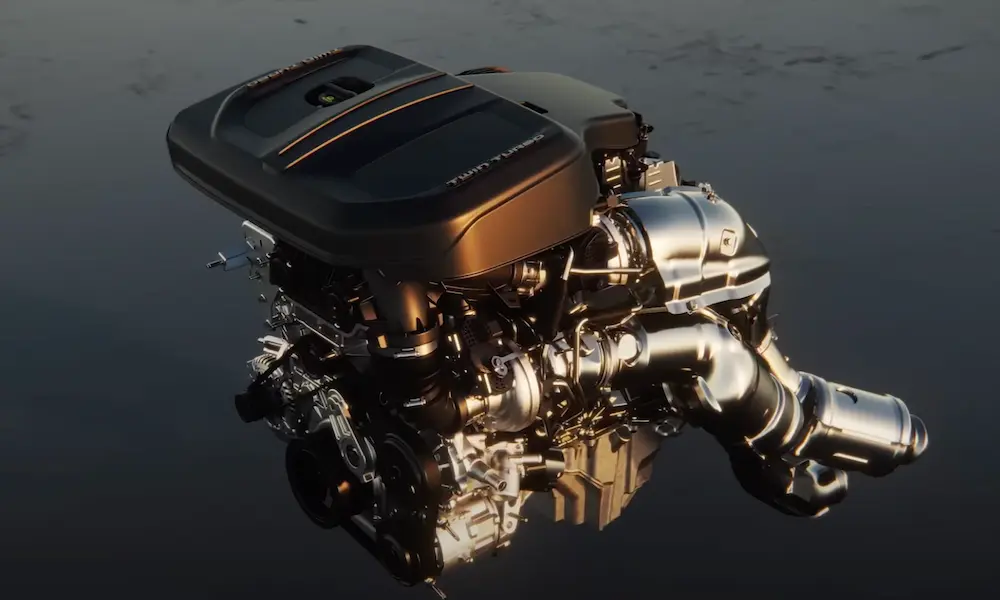
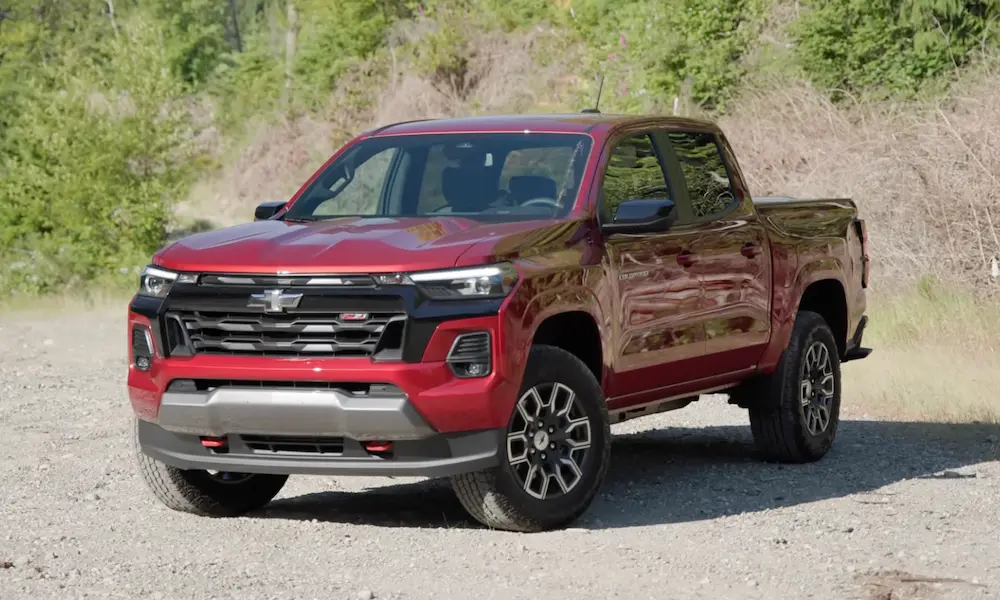
The 2023 redesign dropped all three previous engines and went all-in on the 2.7L TurboMax inline-four. And with the turbo’s demanding oil flow requirements, GM returned to a spin-on canister filter — accessed from underneath the truck.
The Skid Plate Problem
The TurboMax’s biggest service challenge isn’t the filter itself. It’s getting to it. Off-road trims — Z71, Trail Boss, ZR2 — ship with heavy factory skid plates that block access to both the filter and the drain plug.
You’re removing 13mm and 15mm bolts, T-15 Torx screws, and 7mm fasteners to get those plates off. Primary skid plates on these trims can weigh 30–40 pounds. Use a transmission jack or bring a second set of hands.
The ACDelco PF66A is the correct filter for this engine — it superseded the older blue PF66.
The TurboMax takes 6.0 quarts of full-synthetic 5W-30 meeting dexos1 Gen 3 spec. In temperatures consistently below -20°F, switch to 0W-30 to protect the turbo on cold starts.
GM recommends a maximum of 7,500 miles for severe duty, but many technicians suggest 5,000 miles to keep turbo oil feed lines clear of coking.
The Hidden P0521 Oil Pressure Code Trap
If your second-gen Colorado throws a P0521 code (Engine Oil Pressure Sensor Performance), don’t automatically blame the filter or oil pump. There’s a secondary micro-filter — the Valve Lifter Oil Filter — sitting deep inside the engine block beneath the oil pressure sensor. That tiny mesh screen clogs with fine debris and starves the sensor of oil flow, triggering a false low-pressure warning.
On the 2.5L, it’s relatively accessible on the side of the block. On the 3.6L V6, it’s at the rear of the engine, pressed against the firewall — a genuinely painful location to work in.
Prevention is far better than the fix: use OEM-specified ACDelco filters and don’t stretch your oil change intervals.
Aftermarket Upgrades Worth Considering
Access-Door Skid Plates
Companies like RCI Metalworks and Victory 4×4 build heavy-duty plates with integrated maintenance trap doors. You drop four small bolts and open a window directly over the filter and drain plug — no removing a 40-pound armor plate every oil change.
Oil Drain Valves
Products like the Fumoto valve and EZ Oil Drain Valve replace your factory drain plug with a spring-loaded ball valve. Attach a silicone hose, route the oil over the crossmember directly into your catch pan, and you’ve solved the crossmember mess issue permanently. Most Colorado oil pans use an M12 x 1.75 thread pitch — verify yours before ordering.
Magnetic Drain Plugs
Magnetic drain plugs use neodymium magnets to catch microscopic metal shavings circulating in the oil. Check the fuzz on the magnet at each change — it’s an early warning system for bearing wear or piston ring issues before they turn into something expensive.
Premium Synthetic Filters
Brands like FRAM Ultra, Mobil 1 Extended Performance, and WIX use synthetic filter media that traps 99% of particles down to 20 microns. For towing, dusty trails, or high-mileage engines, the upgrade is worth it.
Resetting the Oil Life Monitor
After every oil change, reset the Oil Life Monitoring System from the driver’s seat. Navigate the steering wheel controls to Information → Oil Life → right arrow → hold to confirm. This resets the gauge to 100%. Skip this step and the truck will nag you with early service reminders based on stale data.
During the oil drain, make it count with a quick multi-point check:
- Rotate tires every 7,500 miles — critical for protecting the transfer case. Torque lug nuts to 140 ft-lbs with a 22mm socket
- Check brake pad thickness while the wheels are off
- Inspect engine and cabin air filters — a clogged air filter strains the turbo on TurboMax and Duramax engines
- Check wiper blades — 22-inch driver side, 18-inch passenger side on most trims