So your Chevy Sonic just hit a big mileage milestone, or maybe you heard something weird coming from the engine bay. Either way, you’re wondering about the timing belt. Good instinct — this is one service you really don’t want to skip. Miss it, and you’re looking at a destroyed engine. Stick around, because this guide covers everything from whether your Sonic even has a timing belt to the exact torque specs you need.
Does Your Chevy Sonic Have a Timing Belt or a Chain?
This is the first question to answer, and the answer depends on your engine.
The Chevy Sonic came with two engine options. The 1.8-liter naturally aspirated Ecotec (engine codes LUW or LWE) uses a timing belt. The 1.4-liter turbocharged Ecotec (engine code LUV) uses a timing chain instead.
Here’s a quick breakdown of the differences:
| Feature | 1.8L Ecotec (Timing Belt) | 1.4L Turbo Ecotec (Timing Chain) |
|---|---|---|
| Timing Mechanism | Rubber Belt | Steel Chain |
| Lubrication | Dry (external) | Wet (uses engine oil) |
| Noise Level | Quiet | Moderate |
| Replacement Interval | 97,500–150,000 miles | Inspect for stretch; no set interval |
| Water Pump Drive | Driven by timing belt | Driven by serpentine belt |
| Failure Style | Sudden snap | Gradual stretch |
| Interference Engine? | Yes | Yes |
If you drive the 1.8-liter version, chevy sonic timing belt replacement is absolutely on your maintenance checklist. If you have the 1.4-liter turbo, you’re off the hook for a belt — but that doesn’t mean you ignore the timing system entirely.
Why a Failed Timing Belt Is Such a Big Deal
Both Sonic engines are interference engines. That term matters a lot.
In an interference engine, the pistons and valves share the same space in the cylinder — but they’re timed so they never actually meet. The timing belt keeps that dance perfectly coordinated. When the belt snaps, that coordination disappears instantly.
The crankshaft keeps spinning from momentum while the camshafts freeze. Pistons slam into open valves at high speed. The result? Bent valves, damaged pistons, cracked cylinder heads, and sometimes a totaled engine.
Here’s what can break when timing fails:
| Component | Damage Type | Outcome |
|---|---|---|
| Valves | Bent stems or shattered heads | Loss of compression |
| Pistons | Punctured crowns or cracked skirts | Connecting rod damage |
| Cylinder Head | Damaged valve seats and guides | Needs full rebuild or replacement |
| Camshafts | Twisted shafts | Rare but possible at high RPM |
| Crankshaft | Bearing damage from impact | Possible total engine replacement |
A professional timing belt and water pump service runs $600 to $1,200. A full engine replacement costs several times that. The math is simple.
When Should You Replace the Timing Belt on a Chevy Sonic?
The official GM maintenance schedule lists the replacement interval at 97,500 miles, with some newer documentation extending this to 150,000 miles or 10 years, whichever comes first.
That said, most experienced technicians recommend replacing it between 60,000 and 90,000 miles. Here’s why mileage alone doesn’t tell the whole story:
- Extreme temperatures — Hot summers and freezing winters crack rubber faster than mileage does
- Fluid contamination — Even a small oil or coolant leak near the timing belt speeds up degradation
- Short-trip driving — Frequent cold starts and city driving add wear that highway miles don’t
- Age — A low-mileage Sonic with a 10-year-old belt is still at risk; rubber loses elasticity over time regardless of miles driven
If your belt is over a decade old, replace it. Don’t wait for the odometer to tell you it’s time.
Warning Signs Your Timing Belt Is Going Bad
Timing belts usually fail without much warning — but not always. Watch for these clues:
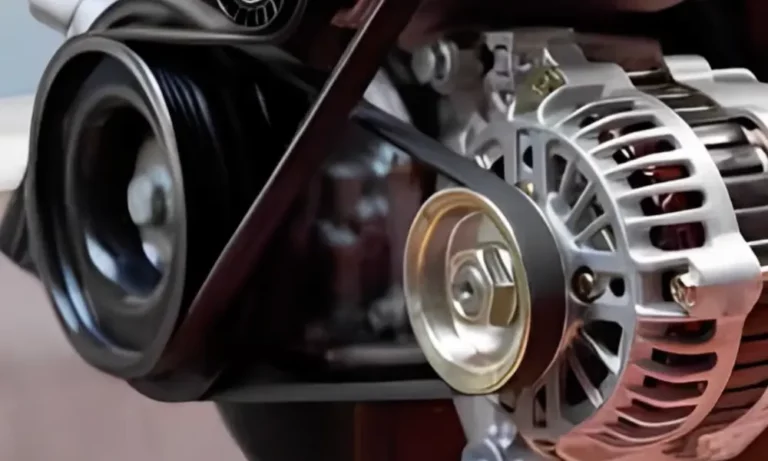
- High-pitched whirring or chirping from the passenger side of the engine bay, especially on cold starts. This often points to a failing tensioner or idler pulley bearing.
- Orange stains near the lower timing cover — that’s coolant leaking from the water pump, which sits right next to the belt
- Check Engine Light with codes P0011 or P0016 — these indicate a correlation error between the crankshaft and camshaft position sensors, which can mean the belt has stretched or skipped a tooth
- Rough idle or poor fuel economy — a belt that’s slightly off timing affects combustion efficiency
If you notice any of these, get a diagnostic scan done immediately. Don’t keep driving.
Replace the Water Pump at the Same Time — No Exceptions
This is a point that plenty of Sonic owners skip, and they regret it every time.
On the 1.8-liter engine, the water pump is driven by the timing belt and sits behind the timing covers. The labor to reach it is identical to the labor for the belt replacement itself. If you replace the belt and leave the old water pump, you’re gambling. A leaking water pump can saturate a brand-new timing belt with coolant, destroying it and causing the exact engine damage you were trying to prevent.
Replace everything together. Every time.
A complete timing kit for the 1.8L Sonic should include:
- Timing belt
- Tensioner pulley
- Idler pulley
- Water pump
- Necessary gaskets and hardware
Brands like Gates and Continental make complete kits that include all of these components. Don’t mix cheap pulleys with a quality belt. The whole system has to work together.
Tools You Need for Chevy Sonic Timing Belt Replacement
This job isn’t a basic wrench-and-socket affair. GM designed the 1.8-liter Ecotec with a keyless timing system, meaning the cam gears don’t use physical keys for alignment. You need specialty locking tools to hold everything in position.
| Tool | Function |
|---|---|
| EN-6340 Camshaft Locking Tool | Bridges both camshaft gears to prevent rotation |
| EN-6625 Flywheel Holding Tool | Locks the crankshaft via the flywheel ring gear |
| EN-6333 Tensioner Locking Pin | Holds the tensioner in compressed position |
| E-Torx Set (E10–E14) | Required for engine mounts and timing covers |
| Calibrated Torque Wrench | Essential for torque-to-yield bolt specs |
| Angle Gauge | Required for final bolt tightening stages |
| Floor Jack + Wood Block | Supports the engine from the oil pan |
You also need to remove the passenger-side engine mount to reach the timing covers, so the engine must be safely supported throughout the process. Trying this job without the cam locking tool and flywheel holder is how timing gets set wrong — and wrong timing means valve damage on the first crank.
Step-by-Step: How the Replacement Works
Here’s a clear walkthrough of the process.
1. Prepare the Engine Bay
Remove the air intake ducting and mass airflow sensor. This clears space to access the upper engine mount. Support the engine from below with a floor jack and wood block under the oil pan. Remove the upper engine mount bolts (15mm) and then the upper timing cover (E-Torx bolts).
2. Access the Crankshaft Balancer
Raise the vehicle and remove the passenger-side wheel. Remove the serpentine belt by rotating its tensioner. Install the flywheel holding tool (EN-6625) through the access hole between the engine and transmission. With the crankshaft locked, break loose the large crankshaft balancer bolt. Remove the balancer and the lower timing cover.
3. Set Top Dead Center (TDC)
Rotate the crankshaft until the timing marks on both camshaft gears align horizontally, pointing toward each other. Verify the crankshaft sprocket mark lines up with the notch on the oil pump housing. Install the camshaft locking tool (EN-6340) between the two cam gears to lock them in place.
4. Remove the Old Belt and Components
Use a 6mm Allen wrench to rotate the tensioner away from the belt, then insert the locking pin (EN-6333) to hold it retracted. Slide the old belt off. Unbolt and discard the old tensioner and idler pulley. Drain the cooling system and remove the water pump, cleaning the mounting surface thoroughly before installing the new one.
5. Install the New Belt
Route the new belt around the crankshaft sprocket first, then up over the water pump, idler pulley, and finally over both cam gears. Keep the drive side (opposite the tensioner) taut during installation. Remove the tensioner locking pin so it applies proper pressure to the belt.
6. Perform the Two-Revolution Check
Remove the cam and crank locking tools. Using a socket on the crankshaft sprocket, rotate the engine by hand for exactly two full revolutions (720 degrees). After two rotations, verify that all timing marks realign perfectly with their reference points. If anything’s off even slightly, remove the belt and re-synchronize. This check is non-negotiable.
Torque Specifications for the 1.8L Ecotec
Getting these specs right matters. Several fasteners are torque-to-yield, meaning they stretch slightly to achieve maximum clamping force. Use new hardware on these.
| Fastener | Initial Torque | Final Step |
|---|---|---|
| Crankshaft Balancer Bolt | 111 lb-ft | +45°, then +15° |
| Timing Belt Tensioner Bolt | 15 lb-ft | +135° |
| Timing Belt Idler Pulley | 15 lb-ft | +135° |
| Water Pump Housing Bolts | 71 lb-in | None |
| Water Pump Pulley Bolts | 16 lb-ft | None |
| Lower Timing Cover Bolts | 53 lb-in | None |
| Upper Engine Mount to Block | 44 lb-ft | +45° to 60° |
| Upper Engine Mount to Body | 44 lb-ft | None |
The water pump bolts deserve special attention. At just 71 inch-pounds, these are easy to over-torque. Stripping threads in an aluminum engine block turns a straightforward job into an expensive nightmare.
Refilling the Cooling System After the Job
Since you opened the cooling system to replace the water pump, you need to bleed it properly. Air pockets near the thermostat or cylinder head cause localized overheating and potential head gasket failure.
Use Dex-Cool antifreeze mixed with distilled water — never tap water. Follow this sequence:
- Close the radiator drain plug
- Loosen the vent screw on the top right of the radiator
- Fill the coolant surge tank until fluid flows steadily from the vent screw, then tighten it
- Fill the surge tank to the “Cold” fill line
- Start the engine and hold it at 2,500 RPM until the cooling fan kicks on
- Shut it off and let it cool completely
- Check the level and top off if needed
Skip this bleed procedure and you risk overheating on the first drive after a clean timing belt replacement. That would be a frustrating way to end the job.
How Long Will a Chevy Sonic Engine Last With Proper Timing Belt Care?
A well-maintained 1.8-liter Sonic can comfortably exceed 200,000 miles. The timing belt is the single biggest variable in that equation. Stick to the 97,500-mile interval, replace the water pump and pulleys at the same time, use the right locking tools, and follow the torque specs — and this engine will keep running reliably for years.
Neglect the belt and you’re not asking if it will fail. You’re just finding out when.