Are you sweating in your RV while your Dometic air conditioner struggles to cool? Nothing ruins a camping trip faster than a malfunctioning AC on a hot day. Whether your unit is making strange noises, not cooling properly, or refusing to turn on at all, this guide will help you identify and fix the most common Dometic air conditioner problems.
1. Your Dometic AC Won’t Turn On
When your Dometic unit refuses to power up, the issue is usually electrical. Before panicking, check these common culprits:
Capacitor Failure
Capacitors provide the initial energy surge needed to start your AC’s compressor and fan motors. When they fail, you’ll often hear a clicking sound as the system tries repeatedly to start.
How to identify: If your AC attempts to start but shuts off within seconds, accompanied by clicking noises, you likely have a bad capacitor. Faulty capacitors typically show capacitance values outside the manufacturer’s ±5% tolerance range when tested with a multimeter.
Fix it yourself: Capacitor replacement is relatively simple and inexpensive ($10-$15). Just remember to:
- Disconnect power before handling any electrical components
- Discharge the old capacitor before removal (touch a screwdriver across the terminals)
- Match the new capacitor’s specifications exactly to the old one
Many RV owners carry spare capacitors during trips since they’re common failure points on Dometic units, especially in older models like the 57915.621 and 59016.621 series.
Thermal Overload Protector Issues
The thermal overload protector is a safety device that cuts power when the compressor overheats or draws too much current.
How to identify: If your AC starts briefly then stops, the thermal overload protector might be triggering.
Fix it yourself: While you can test for continuity with a multimeter, intermittent failures are common in aging units. Replacement is the best solution if you confirm this is the problem.
2. Your Dometic AC Isn’t Cooling Properly
Is your AC running but not cooling? Here’s what might be happening:
Frozen Evaporator Coils
Frozen coils are extremely common in Dometic units and significantly reduce cooling efficiency.
How to identify: Reduced cooling capacity and water leaking into your RV interior are telltale signs. You might also notice frost or ice formation if you look at the coils.
Causes:
- Clogged air filters restricting airflow
- Faulty blower motors not moving enough air
- Low refrigerant levels
- Failed freeze sensors not detecting low temperatures
Fix it yourself:
- Turn off the AC and let it thaw completely (can take 24+ hours)
- Clean or replace air filters monthly during heavy use
- Clean the evaporator fins using a soft brush and compressed air
- Check that nothing is blocking airflow to the unit
For persistent freezing issues, you may need professional help to address refrigerant levels or replace the blower motor.
Airflow Restrictions
Poor airflow is a primary cause of cooling problems and frozen coils in Dometic ACs.
How to identify: Weak air coming from vents or uneven cooling in your RV.
Fix it yourself:
- Clean or replace air filters (foam filters can be washed with mild detergent; pleated filters should be vacuumed)
- Check all vents are open and unobstructed
- Clean the condenser and evaporator coils annually
- Inspect the blower wheel for debris or damage
3. Your Dometic AC Is Leaking Water Inside Your RV
Water dripping from ceiling vents or running down walls isn’t just annoying—it can cause costly damage to your RV’s interior.
Clogged Drain Pan and Channels
The most common cause of water leakage is blockage in the drainage system.
How to identify: Water dripping from ceiling vents or running down interior walls, even though the AC seems to be working.
Fix it yourself:
- Check that your RV is level (uneven parking can prevent proper drainage)
- Clean the drain pan by accessing it through the ceiling assembly
- Remove debris (pollen, insects, dirt) from drain holes
- Use compressed air to clear drain tubes of blockages
Improperly Sealed Gaskets
Aging or damaged gaskets around the roof AC unit can allow rainwater to enter.
How to identify: Water leaks occur during rainfall, not just when the AC is operating.
Fix it yourself: Inspect the gaskets around your rooftop unit and reseal with appropriate RV AC gasket material if cracks or gaps are visible.
4. Your Dometic AC Shows Error Codes
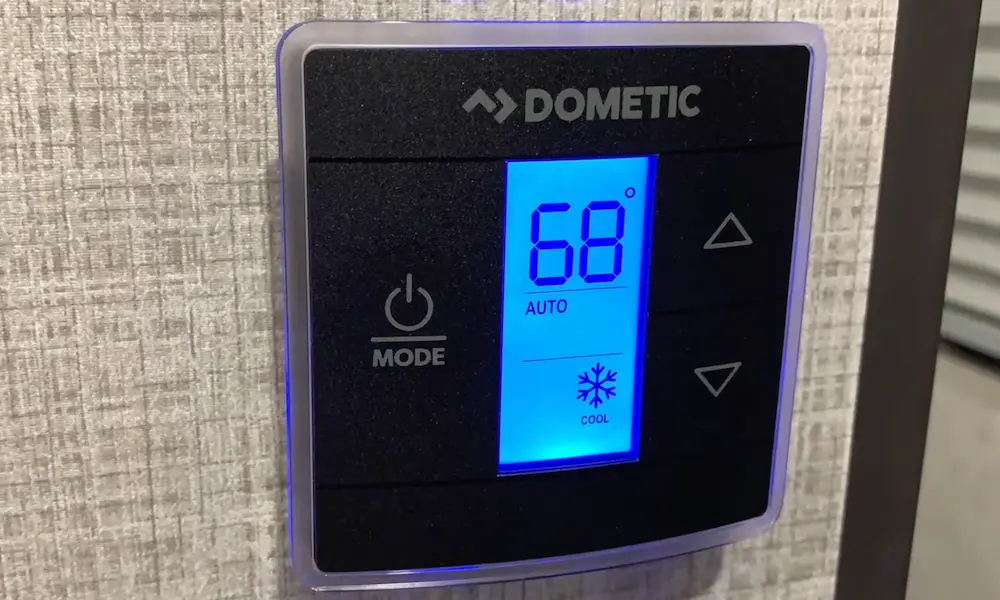
Modern Dometic units with digital controls display specific error codes to help diagnose problems. Here are the most common:
E1: Communication Error
What it means: The thermostat can’t communicate with the control module.
Fix it yourself:
- Check RJ11 connections for corrosion
- Inspect wiring between the thermostat and control board
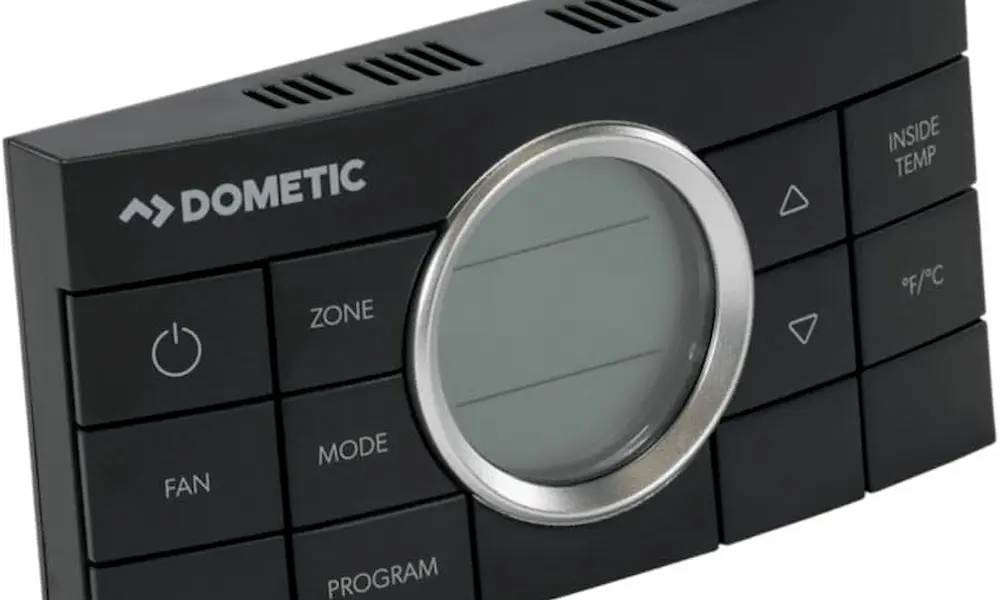
- Reset the thermostat by holding the Zone and Mode buttons
E2/E3: Temperature Sensor Issues
What it means: Indoor temperature sensor is open or shorted.
Fix it yourself: These typically require sensor replacement, though sometimes reconnecting loose wires can solve the issue.
E5: Freeze Sensor Malfunction
What it means: The freeze protection sensor has failed, so the system locks out cooling to prevent damage.
Fix it yourself: This typically requires sensor replacement by someone comfortable working with electronics.
5. Your Dometic AC Is Making Strange Noises
Different sounds indicate different problems:
Rattling or Vibrating
Causes:
- Loose mounting bolts
- Foreign objects in the blower wheel
- Damaged fan blades
Fix it yourself:
- Tighten all accessible mounting hardware
- Remove the shroud and clean out any debris
- Check for damaged components that need replacement
Grinding or Squealing
Causes:
- Worn bearings in the fan motor
- Failing compressor
Fix it yourself: Motor bearings can sometimes be lubricated if accessible, but persistent grinding usually indicates a need for motor replacement.
6. Your Dometic AC Keeps Tripping the Circuit Breaker
Power issues can quickly sideline your AC during hot weather.
Voltage Fluctuations and Overloads
How to identify: AC runs briefly then trips the breaker, especially during peak usage times.
Causes:
- Low shore power voltage (below 105V)
- Running multiple high-draw appliances simultaneously
- Damaged relay board with arcing contacts
- Compressor drawing excessive current
Fix it yourself:
- Use a surge protector with voltage monitoring
- Manage power load by staggering use of high-draw appliances
- Check for burn marks on the control board or melted wire insulation
- Have shore power tested for adequate voltage
Expert tip: Low voltage is particularly hard on air conditioner motors and can cause them to draw excess amperage, tripping breakers. Voltage below 105V can damage your AC unit over time.
7. Your Dometic AC Has Refrigerant Issues
While refrigerant problems typically require professional service, it’s good to understand the symptoms.
Refrigerant Leaks
How to identify:
- Decreased cooling performance despite fan working normally
- Oil stains or pink residue near copper lines (in systems with leak detection dye)
- Frost forming on some parts of the coil while other sections remain warm
What to do: Refrigerant issues almost always require professional service due to EPA regulations and the specialized equipment needed. In RV applications, technicians typically recommend full component replacement rather than trying to locate and repair small leaks.
Preventive Maintenance for Dometic Air Conditioners
An ounce of prevention is worth a pound of cure, especially with RV air conditioners:
Monthly Maintenance
- Clean or replace air filters
- Check for any unusual noises or performance changes
- Ensure drain holes are clear
- Verify all vents are open and unobstructed
Annual Maintenance
- Clean condenser and evaporator coils with appropriate cleaner
- Inspect and clean drain channels
- Check all wiring connections for corrosion
- Tighten mounting bolts
- Consider proactive replacement of capacitors every 3-5 years
Before Long Trips
- Run the AC for at least 20 minutes to verify proper operation
- Check that it achieves desired temperature
- Listen for unusual noises
- Carry spare capacitors and filters if traveling to remote areas
When Repairs Make Sense vs. Replacement
Most Dometic air conditioner problems can be fixed, but sometimes replacement is the better option:
Consider repair when:
- The unit is less than 7 years old
- The issue is clearly identified as a minor component (capacitor, control board, sensor)
- The cooling system itself is intact
- Parts are readily available for your model
Consider replacement when:
- The unit is over 10 years old
- There are refrigerant leaks or compressor failure
- Repairs would cost more than 50% of a new unit
- Your current unit is undersized for your needs
Remember that newer units are often more energy-efficient, which can save on generator fuel and provide better cooling performance.
By understanding these common Dometic air conditioner problems and their solutions, you’ll be better equipped to diagnose issues, make simple repairs yourself, and know when to call for professional help. Keep cool on your adventures and enjoy your RV lifestyle to the fullest!