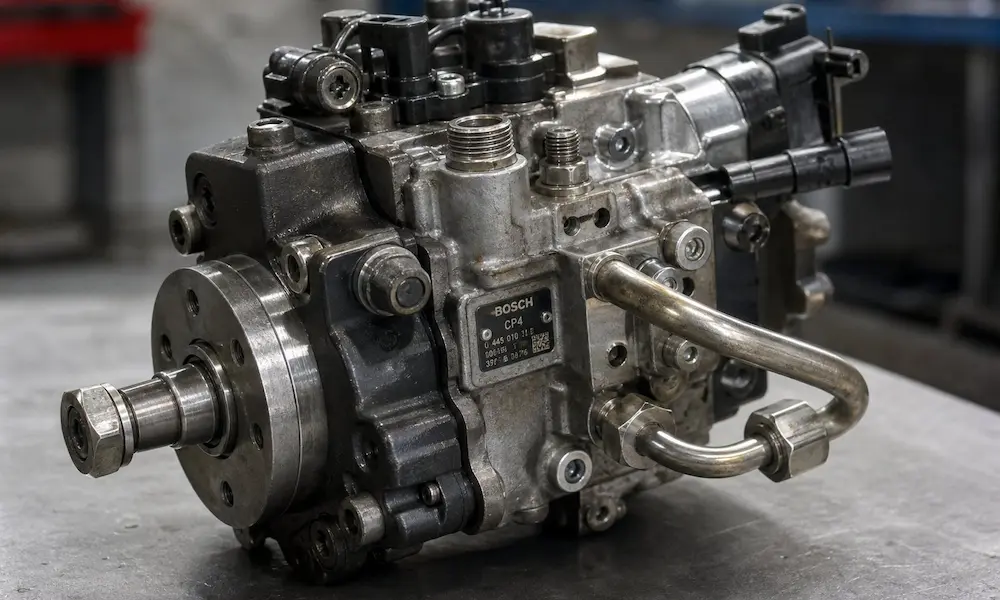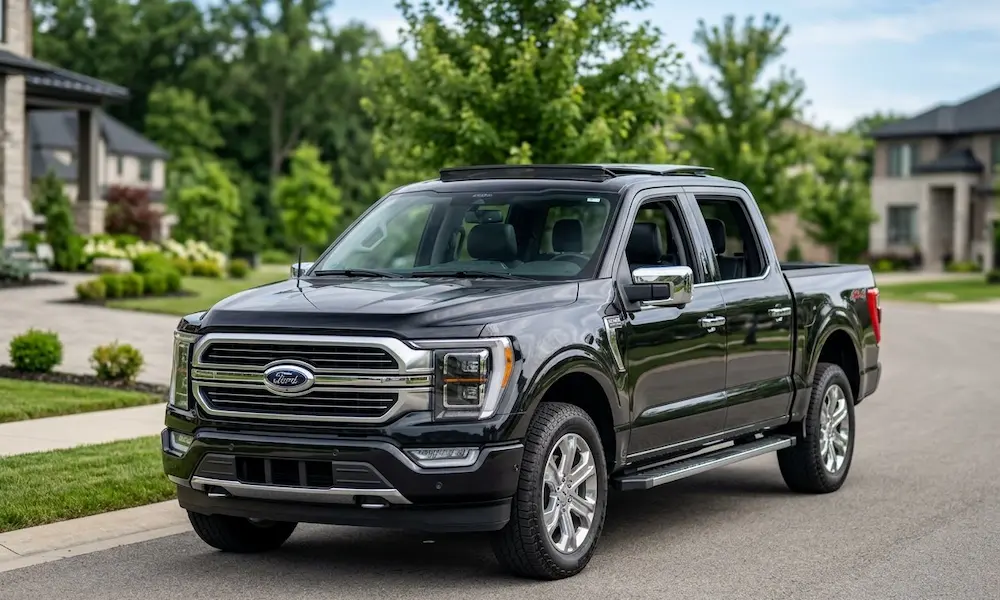
Getting the Ford 6.2 oil capacity wrong isn’t just a minor inconvenience — it can wreck your engine over time. Whether you’re doing your first DIY oil change or you’ve been wrenching for years, this guide covers every spec, viscosity recommendation, and maintenance tip you need for the Boss V8.
What’s the Ford 6.2 Oil Capacity?
The Ford 6.2L V8 Boss engine takes 7.0 quarts (6.6 liters) of engine oil when you replace the filter — which you always should. That’s the official number straight from Ford’s service content, and it applies across the F-150, F-250, and F-350 Super Duty from 2010 to 2022.
You’ll occasionally see 6.0 quarts listed in some retail oil change kits or older dealership records. That discrepancy usually comes from not accounting for oil retained in certain pan configurations or cooling systems. Stick with 7 quarts, run the engine briefly after the change, then check the dipstick to confirm everything’s filled — including the new filter and internal oil galleries.
Ford 6.2 Oil Capacity: Full Fluid Reference Table
The engine oil is just one piece of the puzzle. Here’s a complete look at fluid capacities for 6.2L-equipped trucks:
| Fluid System | U.S. Capacity | Metric Capacity |
|---|---|---|
| Engine Oil (6.2L V8 with Filter) | 7.0 qt | 6.6 L |
| Engine Coolant (Standard) | 21.3 qt | 20.2 L |
| Engine Coolant (with Aux Rear Heat) | 30.7 qt | 29.1 L |
| 6R100 Automatic Transmission | 13.9 qt | 13.2 L |
| 6R140 Automatic Transmission | 17.4 qt | 16.5 L |
| 10R140 Automatic Transmission | 18.1 qt | 17.1 L |
| Transfer Case | 1.9 qt | 1.8 L |
| Front Axle (4WD) | 2.7 qt | 2.6 L |
| Rear Axle (10.5-inch Ring Gear) | 3.3 – 3.6 qt | 3.1 – 3.4 L |
| Rear Axle (Dana M300) | 3.78 qt | 3.58 L |
Source: Ford Service Content – Capacities and Specifications
Fleet managers — pay attention to those coolant figures. If your truck has auxiliary rear heat, you’re looking at nearly 31 quarts of coolant. That changes your service costs significantly across a fleet.
Why the 6.2L Needs So Much Oil
Seven quarts sounds like a lot, and it is — deliberately so. The Boss engine uses a crankshaft-driven gerotor oil pump that feeds a dual-equal Variable Cam Timing (VCT) system. That system uses high-pressure oil to hydraulically rotate the camshafts relative to the timing chain, optimizing torque at low RPMs and horsepower up top.
The larger oil volume serves two purposes:
- Heat dissipation: More oil means more thermal buffer during long towing runs or loaded hauling
- Contaminant suspension: A bigger reservoir dilutes debris and combustion byproducts between drain intervals
If oil sludge builds up — usually from extended drain intervals or substandard oil — the VCT phasers are the first to suffer. You’ll hear phaser chatter, see erratic engine timing, and likely trigger a Check Engine light. That 7-quart capacity is your first line of defense.
Which Oil Viscosity Does the Ford 6.2 Take?
This is where things get a little more nuanced. Ford shifted its viscosity recommendation over the engine’s lifecycle, and using the wrong grade can accelerate wear.
5W-20 vs. 5W-30: Which One Do You Need?
| Model Year | Application | Recommended Viscosity | Ford Specification |
|---|---|---|---|
| 2011 – 2015 | F-150 & Super Duty (Standard) | SAE 5W-20 | WSS-M2C945-A |
| 2011 – 2014 | F-150 SVT Raptor | SAE 5W-30 | WSS-M2C946-A |
| 2016 – 2022 | Super Duty F-250/F-350 | SAE 5W-30 | WSS-M2C946-B1 |
| 2020 – 2022 | Super Duty (All Applications) | SAE 5W-30 | WSS-M2C961-A1 |
Source: Ford Service Content
The shift from 5W-20 to 5W-30 wasn’t arbitrary. Ford gathered real-world data from heavy-duty towing and desert racing applications (looking at you, Raptor owners). The slightly thicker grade builds a more robust film between bearing surfaces at the high temperatures that come with loaded operation.
For extreme cold — below -22°F (-30°C) — Ford permits SAE 0W-30 to ensure oil flows to the overhead cams fast enough during startup to prevent dry wear.
Ford WSS Oil Specifications Explained
Ford doesn’t just want any 5W-30 off the shelf. Here’s what those spec codes actually mean:
- WSS-M2C945-A / -B1: Governs 5W-20 oils — focuses on sludge prevention, viscosity stability, and wear protection for early 6.2L engines. Check Blauparts’ breakdown for approved brands.
- WSS-M2C946-A / -B1: Covers 5W-30 for later models and high-performance applications — designed for higher shear stress and piston ring deposit resistance
- WSS-M2C961-A1: The current gold standard, aligned with API SP and ILSAC GF-6A categories
Always look for the API Certification Mark on the bottle. Ford explicitly discourages oils labeled “API SN” without the certification mark — they may not meet emissions system or durability standards for the Boss engine.
The Right Oil Filter for the Ford 6.2L
The standard filter for the 6.2L V8 across most of the production run is the Motorcraft FL-820-S. It’s engineered specifically for this engine’s flow requirements and achieves 80% filtration efficiency on particles 20 microns or larger.
Here’s what makes it worth using:
- Silicone anti-drain back valve: Keeps oil in the filter when the engine’s off, so your cam journals and rocker shafts get lubrication the instant you start up — not five seconds later
- Internal pressure relief valve: If the filter gets restricted from extreme cold or a missed service, oil bypasses the media so your engine stays lubricated
- Fluted steel case: Easier grip, corrosion-resistant for the abuse a truck’s undercarriage takes
Some 2022 models and select F-150 catalog listings show the Motorcraft FL-500-S as an option. It works fine on smaller displacement engines, but the FL-820-S is the right call for the 6.2L — it has a larger internal volume and the correct bypass rating for this engine’s oiling demands.
Don’t confuse this with the FL-2051-S, which is for the 6.7L Powerstroke Diesel. Those aren’t interchangeable.
Aftermarket Filter Options
Prefer to go aftermarket? These are solid professional-grade alternatives:
- Standard intervals: Wix 51372, Purolator PL10241
- Extended drain intervals with full synthetic oil: Wix XP 51372XP, Purolator BOSS PBL10241 — both use fully synthetic media with polymer mesh backing
Oil Drain Plug Specs and Torque Values
The 6.2L uses a pilot point drain plug (M14-1.50) in a cast oil pan assembly. The pilot point design helps align threads during installation, which matters a lot in fast-paced fleet service environments where cross-threading is a real risk.
Here are the specs you need:
| Component | Specification | Torque Value |
|---|---|---|
| Engine Oil Drain Plug | M14-1.5 Threads | 17 – 20 lb-ft |
| Oil Filter | Hand tight | ¾ to 1 full turn after gasket contact |
| Transfer Case Drain/Fill Plug | 3.8-pint fill | 11 – 20 lb-ft |
| Differential Fill Plug (10.5-inch RG) | — | 20 lb-ft |
Source: AMSOIL Lookup – 2019 Ford F-250 6.2L
Overtighten the drain plug and you risk stripped threads or a cracked pan. Under-tighten it and you’ve got oil on your driveway and potentially a seized engine. Torque it to spec — it’s worth the 30 seconds.
For the filter, hand-tight only. A wrench can distort the silicone gasket or the filter body, creating a leak point and making the next removal a wrestling match. Coat the gasket with a thin film of clean oil before installation so it seats evenly.
How Often Should You Change the Oil on a 6.2L?
This depends heavily on how you actually use the truck. Ford offers two maintenance tracks — Normal and Severe — and the difference matters.
Normal Driving Conditions
Under normal conditions (highway driving, temperate weather, paved roads), the recommended interval is 7,500 to 10,000 miles or every 6 to 12 months — whichever comes first. That range works if you’re genuinely driving in ideal conditions.
Severe Operating Conditions
Here’s the reality check: roughly 80% of vehicles operate under conditions that qualify as severe. If your truck checks any of these boxes, drop your interval to 3,000 to 5,000 miles:
- Frequent short trips under 10 miles — the engine never gets hot enough to burn off moisture and unburned fuel that accumulate in the crankcase
- Excessive idling — Ford’s own service guidelines state that one hour of idle time equals roughly 33 miles of driving — an 8-hour idle shift adds over 260 equivalent miles with zero odometer change
- Regular towing or heavy payloads — both increase thermal load on the oil and break down viscosity index improvers faster
- Dusty or unpaved roads — abrasive particles can bypass the air filter and contaminate the oil
- Extreme temperatures — sustained operation above 100°F or below 0°F accelerates chemical oil degradation, per AutoCare’s oil change interval guidance
Using the Intelligent Oil-Life Monitor (IOLM)
2017 and newer 6.2L trucks use an Intelligent Oil-Life Monitor that tracks cold starts, idle time, ambient temperature, and load through an algorithm — not an actual oil chemistry sensor. When it shows “Change Engine Oil,” change it within the next 3,000 miles. If you ever reset the IOLM early by mistake, default to a fixed 5,000-mile interval until the system recalibrates to your actual driving pattern.
Transmission and Drivetrain Fluids to Know
A healthy engine paired with neglected drivetrain fluids is still a truck on borrowed time. Here’s what the 6.2L’s drivetrain partners need:
Transmissions:
- 6R100 / 6R140: Both require Mercon LV ATF — the 6R140 holds a substantial 17.4 quarts total
- 10R140 (2020+): Requires Mercon ULV (Ultra-Low Viscosity) fluid — don’t substitute with LV, the viscosity difference affects shift quality and clutch pack life
Axles:
- Front axle: SAE 80W-90 (WSP-M2C197-A)
- Rear 10.5-inch axle: SAE 75W-85 or 75W-140 synthetic gear lube
- Traction-Lok limited-slip differential: Requires a friction modifier (EST-M2C118-A) — skip it and you’ll hear that characteristic low-speed chatter every time you corner
Coolant:
The 6.2L’s iron block needs 21.3 quarts of coolant minimum. Ford transitioned from Motorcraft Orange (WSS-M97B44-D2) to Motorcraft Yellow (WSS-M97B57-A2) during the production run — the newer Yellow is an Organic Acid Technology (OAT) formulation that protects aluminum components while working with the cast iron water jackets. Don’t mix the two — you’ll shorten the coolant’s effective life and risk sludging the radiator.
The Bottom Line on Ford 6.2 Oil Capacity
The Ford 6.2 oil capacity is 7.0 quarts — every time, with every filter change. Use the right viscosity for your model year (5W-20 for early trucks, 5W-30 for 2016+ Super Duty and SVT Raptor applications), meet Ford’s WSS specification standards, grab the Motorcraft FL-820-S filter, and torque your drain plug to 17-20 lb-ft. If your truck tows, idles, or works hard — and most of them do — treat it as a severe-duty vehicle and service it accordingly. That Boss V8 is built to go the distance. Give it the oil it deserves and it will.