Your Ford’s check engine light is on, and the scanner reads P0191. Now what? This guide breaks down exactly what’s triggering that code, which component is most likely to blame on your specific model, and how to diagnose it without throwing parts at the wall. Read to the end — the fix might be simpler than you think.
What Is the Ford P0191 Code?
The Ford P0191 code stands for Fuel Rail Pressure Sensor Circuit Range/Performance. It’s not a simple “wire broke” code. It’s a rationality failure — your Powertrain Control Module (PCM) is receiving a fuel pressure signal that’s technically within range (0.5–4.5 volts) but doesn’t match what the engine should be seeing right now.
Think of it this way: your PCM is constantly calculating the exact fuel pressure it expects based on engine load, throttle position, and pump speed. If the sensor reports something wildly different, the PCM calls it out. That mismatch triggers P0191.
This is different from P0192 (circuit low) or P0193 (circuit high), which point to definitive electrical breaks. P0191 is sneakier — the signal looks valid, but something isn’t adding up.
Why Ford P0191 Is a Big Deal
Ignore this code and you risk real damage. Here’s what happens under the hood when fuel pressure goes wrong:
- Too little pressure (lean condition): The engine runs hot. You get pre-ignition, spark knock, and eventually melted piston crowns or burned exhaust valves.
- Too much pressure (rich condition): Unburned fuel floods the exhaust and torches your catalytic converter. Replacement costs can run into the thousands.
- Limp mode: The PCM restricts engine speed and power to prevent damage. Your truck or SUV becomes a slug — dangerous on the highway.
The PCM also disables emissions self-tests like the Fuel System Monitor and Oxygen Sensor Monitor. That means an automatic fail on any smog or emissions inspection.
| Condition | Root Cause | Engine Risk |
|---|---|---|
| Lean (low pressure) | Weak pump, clogged filter | Pre-ignition, piston damage |
| Rich (high pressure) | Stuck regulator, sensor skew | Catalytic converter failure |
| Erratic pressure | FPDM failure, wiring fault | Stalling, rough idle, limp mode |
How the Fuel Rail Pressure Sensor Works
The Fuel Rail Pressure (FRP) sensor sits directly on the fuel rail. It uses a silicon diaphragm that flexes under pressure, changing its electrical resistance. That change gets converted into a voltage signal sent to the PCM.
It runs on three wires:
- 5V reference (VREF) — powers the sensor’s internal logic
- Signal ground — must stay near zero volts for accuracy
- Signal return — the variable voltage that tells the PCM what the pressure is
Here’s what healthy readings look like:
| Condition | Signal Voltage | Pressure |
|---|---|---|
| Key on, engine off | ~0.5V | Atmospheric (depressurized) |
| Engine at idle | 1.0–1.3V | 35–55 PSI |
| Wide-open throttle | 4.0–4.5V | 65–75+ PSI |
If the sensor’s diaphragm gets “poisoned” by dirty fuel or drifts from heat cycling, it reports false voltages. The PCM sees 50 PSI when actual pressure is 30 PSI. That mismatch is classic P0191 behavior.
The Top Causes of Ford P0191
1. Faulty Fuel Rail Pressure Sensor
This is the most common culprit on EcoBoost engines. The sensor itself drifts or fails internally. It reports plausible-but-wrong voltages, and the PCM can’t reconcile them with real-world conditions.
On the 3.5L and 2.7L EcoBoost F-150, autobarn.net’s P0191 diagnostic guide puts the sensor or high-pressure pump as the cause roughly 60% of the time.
2. Wiring Harness Damage
Engine bays are brutal environments. The harness runs through heat, vibration, road salt, and tight routing near sharp brackets. Two specific failure points show up repeatedly in Ford Technical Service Bulletins:
- 6.7L PowerStroke Super Duty (2017–2019): TSB 19-2231 identifies harness chafing against the PCM mounting bracket — caused by a missing pushpin retainer.
- 2.0L EcoBoost (Fusion, Edge, Escape): TSB 18-2062 pinpoints chafing near the throttle body and intake manifold.
Corrosion inside the connector is equally sneaky. Road salt wicks into the FRP sensor pins, creates oxidation, and causes a voltage drop. The PCM reads that drop as low pressure and triggers P0191.
3. Fuel Pump Driver Module (FPDM) Failure
Ford’s Electronic Returnless Fuel System doesn’t run the pump at constant voltage. The PCM sends a pulse-width modulated (PWM) signal to the Fuel Pump Driver Module, which controls how hard the pump works.
On older F-150s and Explorers (mid-2000s to early 2010s), the FPDM mounts on a steel crossmember above the spare tire. The aluminum module bolted to steel, exposed to moisture and salt, creates galvanic corrosion — what technicians call “rust jacking.” The aluminum housing cracks, the circuit board gets exposed, and fuel delivery becomes erratic.
Symptoms include surging idle, intermittent stalling, and yes — P0191.
4. Weak or Failing Fuel Pump
A worn pump can hold pressure at idle but drops off under load. You’ll notice it during hard acceleration or towing. The PCM sees it commanding maximum pump duty cycle while pressure keeps falling — that’s a textbook rationality failure.
Running your tank consistently low accelerates pump wear. The pump cools itself with the fuel surrounding it. No fuel, no cooling.
5. Clogged Fuel Filter
A restricted filter makes the pump work harder. Eventually the pump hits 100% duty cycle and still can’t push enough fuel through the clog, especially under load. Vdiagtool’s P0191 guide recommends replacing the filter every 30,000–50,000 miles as basic prevention.
6. High-Pressure Fuel Pump (HPFP) Failure — EcoBoost Specific
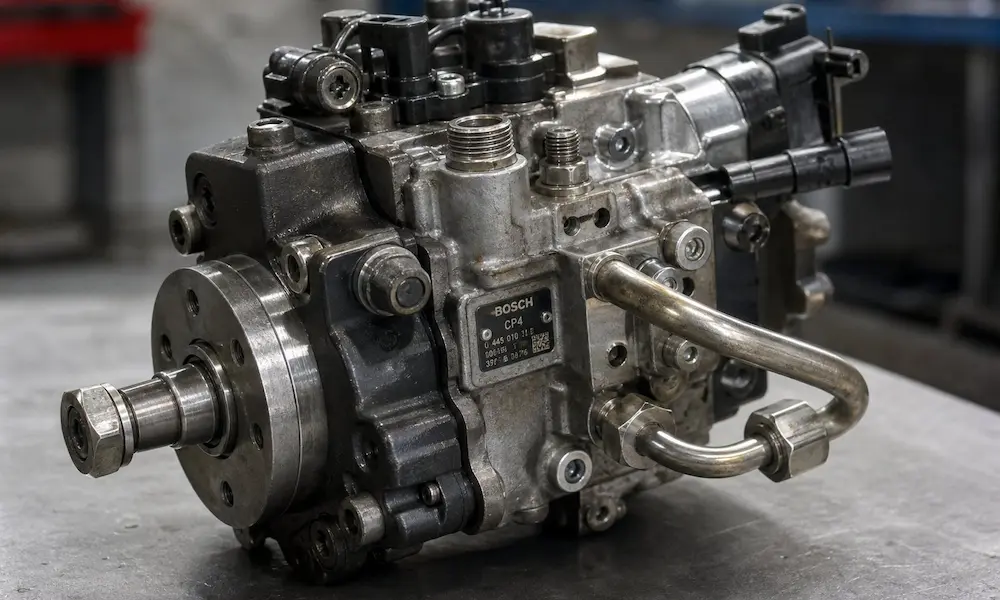
EcoBoost engines use a mechanical high-pressure pump driven by a dedicated camshaft lobe. It takes the 50–60 PSI from the in-tank pump and cranks it up to thousands of PSI for direct injection.
If the HPFP’s seals fail, fuel can leak into the crankcase. Check your oil dipstick — if it smells like gasoline, that’s a red flag for EcoBoost P0191. A 10% deviation in high-side pressure is enough to trigger the code and cut power severely.
Model-Specific P0191 Patterns
Ford F-150 EcoBoost (2011–2024)
Dual-pump architecture means you need to check both the in-tank lift pump and the mechanical HPFP. If the lift pump starves the HPFP, the high-pressure side cavitates and pressure goes haywire.
Ford Super Duty 6.7L PowerStroke
Air intrusion is a major trigger here. If the primary fuel filter isn’t properly sealed during service, air enters the system. Air compresses; fuel doesn’t. The PCM sees massive pressure swings and logs P0191. Water contamination is also a problem — it damages the high-pressure pump’s internal seals, leading to crank-no-start conditions.
Ford Escape, Fusion, Edge (2.0L EcoBoost)
TSB 19-2346 covers coolant intrusion issues on these engines. Coolant-fouled plugs cause unstable engine speed, which creates erratic fuel pump commands that the PCM misreads as a pressure performance failure. The harness chafe near the throttle body is still the highest-probability electrical cause on these models.
How to Diagnose Ford P0191 Step-by-Step
Step 1: Read Freeze Frame Data
Pull the code and check the freeze frame snapshot. RepairPal’s P0191 guide recommends asking: Was this set at idle or at 3,000 RPM? Was pump duty at 100%? That context narrows your search dramatically.
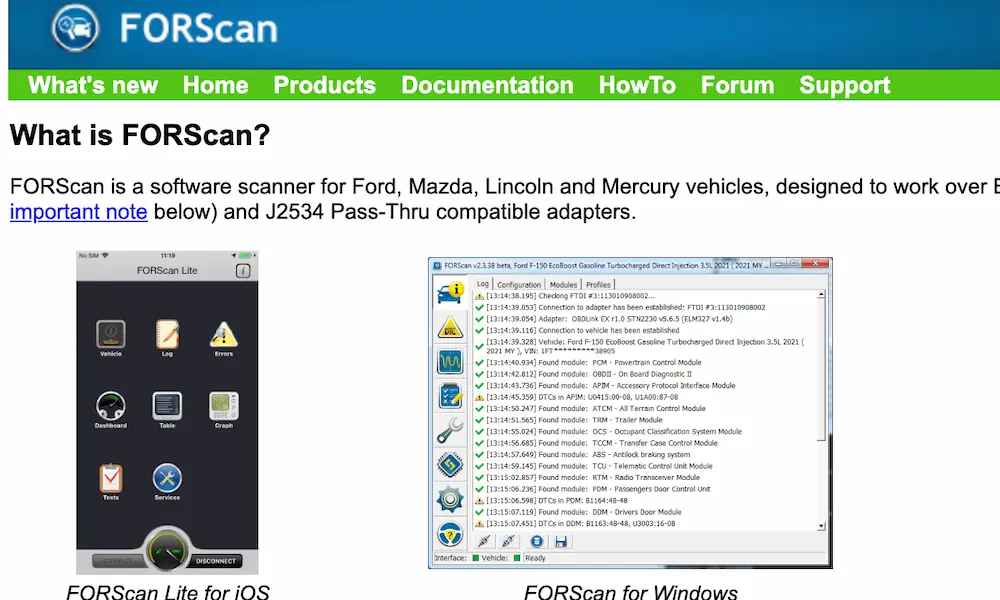
Step 2: Monitor Live PIDs
Watch two live data values simultaneously: FRP (Actual) vs. FRP_DSD (Desired). A healthy system keeps these within 2–3 PSI of each other. Wild swings between the two confirm the rationality failure. If the engine runs fine despite erratic readings, the sensor or its wiring is the likely liar.
Step 3: Mechanical Pressure Test
Connect a mechanical fuel pressure gauge to the test port. Compare it to the scan tool reading. Flagship One’s P0191 diagnostic procedure puts it simply: if the gauge reads steady but the scan tool is erratic, replace the sensor. If both readings are erratic, the problem is upstream — pump or FPDM.
Step 4: Oscilloscope the Signal Wire
An intermittent P0191 that’s hard to reproduce needs an oscilloscope. YourMechanic’s P0191 explainer notes that a digital multimeter shows averages, but a scope sees thousands of samples per second. A dropout lasting a fraction of a millisecond — invisible to a multimeter — will absolutely trigger P0191.
| Test Method | Healthy Result | Fault Indicator |
|---|---|---|
| Scan tool FRP vs. FRP_DSD | Match within 2–3 PSI | Deviation over 10 PSI |
| Mechanical gauge vs. scan tool | Values match exactly | Values differ |
| Multimeter (signal wire) | Smooth voltage change with RPM | Erratic jumps or static reading |
| Oscilloscope | Clean linear waveform | Spikes, noise, or dropouts |
Preventing Ford P0191 Before It Happens
A few habits keep P0191 off your scanner:
- Replace the fuel filter every 30,000–50,000 miles. A clean filter protects the pump and keeps pressure stable.
- Use Top Tier certified fuel. The detergent concentration in Top Tier gas prevents varnish buildup on the sensor diaphragm and injectors.
- Inspect the FPDM at every oil change on older F-150s and Explorers. If the housing shows oxidation or cracking, replace it. Always install rubber or plastic spacers between the module and the frame — they break the galvanic corrosion circuit.
- Keep your tank above a quarter full. The pump uses fuel to cool itself. Running it dry regularly shortens its lifespan.
- Check your battery and alternator. A failing alternator with excessive voltage ripple injects electrical noise into sensor circuits, according to Flagship One’s diagnostic breakdown. That noise can fake a P0191 even when the fuel system is fine.
The Ford P0191 code is complex, but it’s not mysterious. Follow the data, test mechanically before replacing parts, and check the simple stuff — wiring, connectors, and fuel quality — before assuming the worst. Your PCM is telling you something doesn’t add up. Your job is to find out what’s lying.