That annoying clicking sound when you start your F-150? It’s probably your active grille shutters throwing a tantrum. Ford F150 active grill shutter problems are more common than Ford would like to admit — and they can trigger a check engine light, hurt your fuel economy, or even cook your engine if you ignore them. Here’s everything you need to know to diagnose, fix, or delete the system entirely.
What Does the Active Grille Shutter Actually Do?
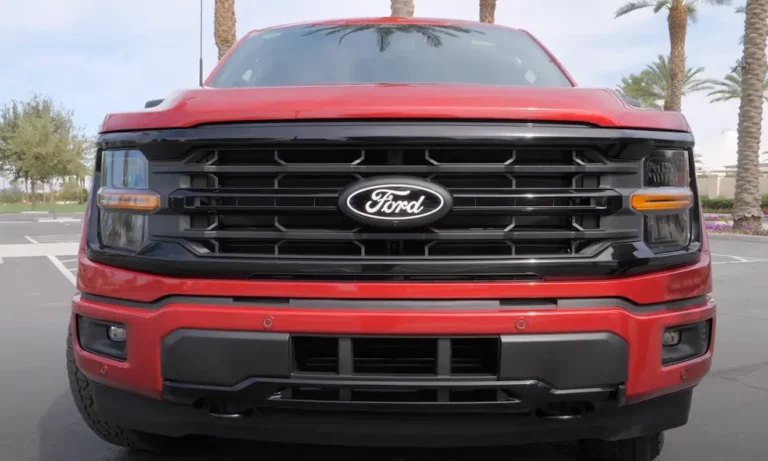
The active grille shutter (AGS) is a set of horizontal louvers sitting behind your front grille. The Powertrain Control Module (PCM) opens and closes them automatically based on speed, engine temperature, and AC pressure.
Here’s the basic logic:
- Cold start → shutters close to trap heat and warm the engine faster
- Highway cruising (low heat load) → shutters close to reduce drag and improve fuel economy
- Towing, stop-and-go, or high temps → shutters open wide for maximum cooling
According to Edmunds, the system delivers a 1–2% improvement in highway fuel efficiency and speeds up engine warm-up cycles. Sounds great on paper. In practice? The system is built mostly from brittle plastic and lives at the front of a truck that drives through ice, mud, and road debris every day.
Upper vs. Lower Shutters: Know Which One You Have
Not all F-150s use the same setup. The Go-Parts diagnostic guide breaks this down clearly:
| Feature | Upper Shutter Assembly | Lower Shutter Assembly |
|---|---|---|
| Location | Behind the main radiator grille | Inside the bumper opening |
| Cooling Target | Engine radiator & A/C condenser | Intercooler / Charge Air Cooler |
| Engine Application | All engines (2.7L, 3.3L, 3.5L, 5.0L) | Primarily 2.7L and 3.5L EcoBoost |
| Actuator Sold Separately? | Yes (OEM: JL3Z10884A) | Usually sold as a full assembly only |
If you’re running a naturally aspirated 3.3L V6 or 5.0L Coyote, you’ve got one upper shutter assembly. If you’re on an EcoBoost, you’re dealing with two — and diagnosing the right one matters a lot when you’re ordering parts.
The Most Common Ford F150 Active Grill Shutter Problems
1. Broken Plastic Stop Tabs (The Clicking Problem)
This is the most widespread failure. Every time you start your F-150, the PCM runs a self-calibration cycle — it drives the shutters to their fully open and fully closed positions to find their limits. Those limits are defined by small plastic stop tabs built into the shutter frame.
When those tabs snap — and they do snap, especially in cold climates — the actuator motor keeps spinning past its intended endpoint. It enters a “hunting” phase, desperately searching for a stopping point it’ll never find. That’s the clicking or grinding noise you hear from the front of your truck on startup.
The PCM attempts this calibration up to 20 times before it gives up, stores a fault code, and shuts the motor down. At that point, your shutters may flop open from airflow or freeze in their last known position.
2. Frozen Shutters in Winter
Ice and snow pack into the louvers and freeze them solid. If the actuator tries to cycle frozen shutters, it strips the plastic gears or burns out the motor. This is also how you end up with a blown fuse — the motor draws too much current fighting the ice and trips the circuit.
Continental’s AGS technical overview confirms that environmental exposure is one of the top contributors to premature failure.
3. Wiring Harness Damage and Corrosion
The AGS system uses a single-wire LIN (Local Interconnect Network) protocol to talk to the PCM. It’s efficient but fragile. The harness can chafe against the chassis or shutter frame, causing short circuits or open grounds.
Corrosion inside the 4-pin actuator connector is a particular headache in states that use road salt or brine. Once that connector corrodes, you lose communication entirely — and you’ll see U-prefix codes on your scanner.
4. Road Debris Jams
Plastic bags, leaves, and stones can wedge themselves into the linkage and physically block the louvers. The actuator fights against the obstruction and logs a “stuck off” code. Sometimes a visual inspection and a good cleaning solves it. Sometimes the gears are already stripped.
Dashboard Symptoms and Fault Codes
Your check engine light (CEL) won’t always fire immediately. The PCM often stores “soft codes” that only show up on an OBD-II scanner after several failed calibration cycles. Here are the codes you’ll most likely see:
| DTC | Description | What It Usually Means |
|---|---|---|
| P059F | Active Grille Air Shutter “A” Performance/Stuck Off | Mechanical jam or linkage failure in upper shutters |
| P05AE | Active Grille Air Shutter “B” Performance/Stuck Off | Lower intercooler shutter failure — common on EcoBoost |
| P05B0 | Active Grille Air Shutter “B” Position Sensor Min/Max Stop | Lower actuator can’t verify position — often a broken frame tab |
| U0284 | Lost Communication With Active Grille Air Shutter Module “A” | Complete LIN bus failure between PCM and upper actuator |
| P05A7 | Shutter Control Module “A” Supply Voltage Circuit Low | Blown fuse (BJB Fuse 12) or shorted harness |
For deeper reading on the P059F code specifically, KBB’s OBD-II guide and the iCarsoft diagnostic breakdown are both solid references. The U0284 code has its own KBB explanation here.
Beyond the CEL, watch for these symptoms:
- Clicking or grinding on startup — broken stop tabs
- Engine running hot — shutters stuck closed, blocking airflow
- Worse fuel economy on the highway — shutters stuck open, increasing drag
- Slow cabin heat in winter — engine can’t reach operating temp
- Electrical burning smell from the front of the truck — the actuator motor is jammed but still powered
How to Diagnose the Problem Yourself
Step 1: Visual Inspection First
Pop the hood and look at the shutter assembly. Check for visible debris, cracked plastic, or misaligned louvers. With the engine off, try moving the louvers by hand — if they’re floppy or don’t move at all, that tells you a lot before you even plug in a scanner.
Step 2: Pull the Codes
Grab a bidirectional scan tool like the Foxwell GT60 or iCarsoft CR MAX. These let you command the shutters to open and close manually, bypassing the PCM logic entirely. That’s the fastest way to isolate whether the problem is mechanical or electrical.
Step 3: Check the Fuse
Before you spend money on parts, check your fuse box. On 2015–2017 F-150 models, the AGS circuit runs through a 15A fuse in the Battery Junction Box — typically Fuse 12. A blown fuse causes a complete communication loss (U0284) and costs about $0.50 to fix. This is where the NHTSA technical service bulletin recommends starting before recommending component replacement.
Step 4: Test Voltage and LIN Continuity
If the actuator is unresponsive, disconnect connector C1651 and test for at least 11V between Pin 3 and Ground. Then measure resistance on the LIN circuit (Pin 2) between the actuator and PCM. Anything above 3 ohms indicates a break or high resistance in the wiring harness.
Repair Options: What You Can Actually Do About It
Replace the Full Assembly
This is Ford’s official fix. It works, but it’s expensive. Here’s a quick parts cost breakdown:
| Component | Application | OEM Part Number | Estimated Cost |
|---|---|---|---|
| Upper Shutter Assembly | 2021–2023 F-150 (All Engines) | ML3Z-8475-C / ML3Z-8475-D | $350–$510 |
| Upper Actuator Motor Only | 2018–2020 F-150 | JL3Z10884A | $50–$65 |
| Lower Shutter (with skid plate) | 2018–2020 3.5L EcoBoost | JL3Z8475F | $300–$450 |
| Lower Shutter (no skid plate) | 2018–2020 3.5L EcoBoost | JL3Z8475G | $300–$450 |
Important: Don’t mix up the metal skid plate with the fiberboard aero shield (“diaper”). They use completely different mounting points for the lower assembly — wrong part number means nothing fits.
Labor at a dealership runs 2–4 hours at $150–$200/hour, so you’re looking at up to $800 in labor alone on top of parts. The full upper assembly replacement requires pulling the front fascia and grille, including releasing a frustrating number of plastic body clips.
Replace Just the Actuator Motor
If the frame and louvers are intact, swap only the motor. Dorman makes a direct-fit replacement that’s plug-and-play with no software calibration needed. At $50–$65, it’s a much cheaper repair.
The Zip Tie Fix
This sounds ridiculous but it genuinely works as a temporary repair. Thread a high-tensile zip tie through the shutter frame over the louver pivot to create a secondary “stop point.” This gives the actuator something to find during its calibration cycle, stops the clicking, and clears the code. It’s not forever, but it’s a free diagnostic confirmation that a broken stop tab is your actual problem.
Plastic Welding and Epoxy Repair
For broken stop tabs, structural adhesives like JB Weld PlasticWeld or 3M’s plastic tab repair system can rebuild the missing plastic. Sand the surface rough for better adhesion. Done right, these repairs often outlast the original factory plastic.
The AGS Delete: Should You Just Remove the Whole Thing?
A growing number of F-150 owners skip the repair cycle entirely and delete the AGS system. Here’s what that involves and what you’re trading away.
What Happens to Engine Temps
Field data from owners who’ve deleted their shutters shows engine coolant temperature (ECT) stabilizing around 206°F — very close to the 195°F thermostat rating. With functional shutters in place, ECT regularly spikes to 220°F or higher during highway cruising before the PCM finally commands them open. Some technicians argue that constant thermal cycling at those temperatures stresses plastic cooling components like radiator end tanks over time.
The EcoBoost Condensation Problem
If you have a 2.7L or 3.5L EcoBoost, don’t delete the lower shutters without a plan. The lower AGS plays a critical role in preventing intercooler condensation misfires. By keeping the intercooler slightly warm during cool, humid highway driving, the shutters prevent moisture from pooling inside the intercooler core. Delete them, and that stumble or shudder under heavy throttle can come back — unless you install an intercooler with a drain plug like the Turbosmart upgrade or the Garrett direct-fit unit.
How to Kill the CEL After Deletion
Physically removing the shutters without addressing the software will give you a permanent check engine light. Two clean solutions exist:
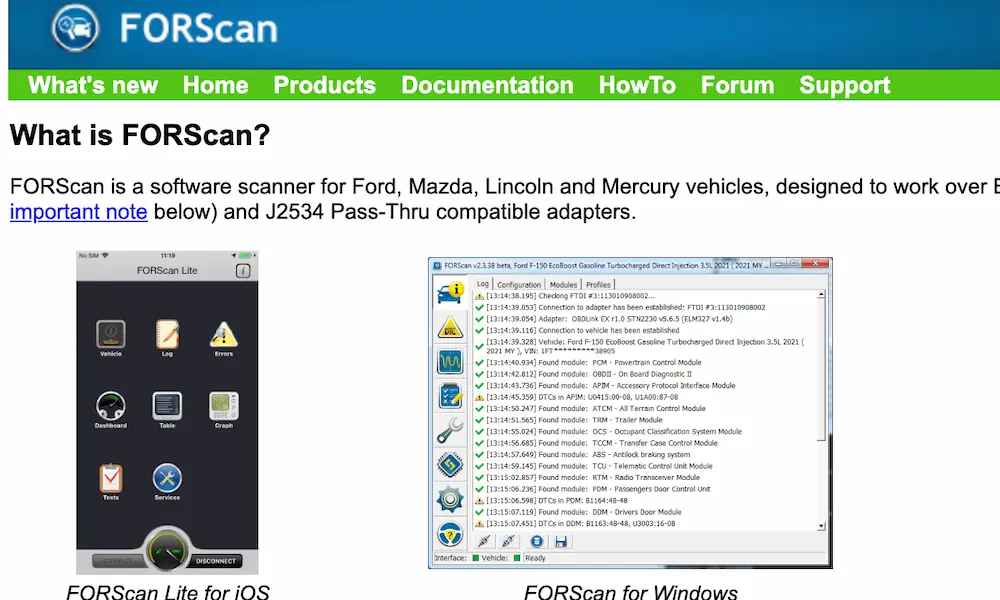
- FORScan reprogramming — Address 720-01-01 in the IPC module manages fuel-saving feature messages. Adjusting the bit values here can disable the AGS malfunction notification. It’s free if you already have a FORScan adapter.
- Hardware simulator — Velossa Tech’s AGS simulator plugs directly into the actuator harness and sends a dummy signal back to the PCM, convincing it the shutters are functioning perfectly. No software skills required.
Warranty Coverage: What Ford Covers
The AGS system qualifies as an emissions-related component, which matters for warranty purposes. Standard coverage runs under Ford’s 3-year/36,000-mile Bumper-to-Bumper warranty. Outside that window, you’re paying out of pocket unless a Customer Satisfaction Program (CSP) applies to your VIN.
Check your VIN directly on Ford’s recall and CSP lookup page. CSPs are worth checking — they’re not safety recalls, but they can cover quality-related repairs at no cost even after the standard warranty expires.
For context on how serious AGS durability issues have gotten industry-wide: in November 2023, Nissan issued a warranty extension (PC989) covering AGS failures on 2019–2020 Altimas for 15 years or 150,000 miles. The failure mode? Nearly identical plastic linkage fatigue to what F-150 owners experience. Ford hasn’t gone that far yet, but the precedent exists.
Quick Prevention Tips
You can’t make this system bulletproof, but you can slow down the failure timeline:
- Clear ice from the grille area in winter before starting the truck — let it warm up before the shutters attempt their calibration cycle
- Avoid pressure washing directly at the grille — water intrusion accelerates connector corrosion
- Scan your codes regularly with a basic OBD-II reader — catching a soft code early means you might fix a broken tab instead of a burned-out motor
- Check Fuse 12 first whenever you lose all shutter communication — it’s a two-minute fix that mechanics sometimes skip in favor of expensive part swaps
Ford’s newer calibration software includes an improved “winter mode” that delays the startup calibration cycle to give ice more time to melt — so keeping your PCM software updated is genuinely worth doing.