Your Ford Focus is jerking, slipping, or stuck in limp mode — and someone just mentioned the TCM. That’s a lot to deal with. This guide walks you through everything about Ford Focus TCM replacement: what fails, what it costs, and exactly how the fix works. Read to the end — there’s a section that could save you hundreds.
What Is the TCM and Why Does It Fail?
The Transmission Control Module (TCM) is the brain of your Ford Focus DPS6 PowerShift transmission. It controls when the clutches engage and when the gears shift. Without it working properly, nothing runs smoothly.
The module mounts directly on the outside of the transmission case, usually on the driver’s side near the battery. That location sounds practical, but it exposes the module to heat, vibration, and moisture — all things that destroy electronics over time.
Early versions of the module had manufacturing defects — specifically weak solder joints and poor moisture resistance. These flaws caused the internal logic board to degrade, often long before the car hit 100,000 miles.
The DPS6 transmission came in these models:
| Model | Years | Transmission |
|---|---|---|
| Ford Focus (All Trims) | 2012–2018 | DPS6 6-Speed Dual Clutch |
| Ford Fiesta (All Trims) | 2011–2019 | DPS6 6-Speed Dual Clutch |
| Ford EcoSport | 2014–2016 | DPS6 6-Speed Dual Clutch |
The 2012 Focus models had the worst early issues. Later models got software updates, but the core module design stayed the same — so failures kept happening throughout the entire production run.
Symptoms of a Failing TCM
TCM failure rarely happens all at once. It creeps up on you. Here’s what to watch for:
- Shuddering or jerking when you accelerate from a stop
- Gear slipping where the transmission loses its ratio mid-drive
- Delayed acceleration — dangerous when merging onto a highway
- Limp mode — the car locks into one gear to protect itself
- No-start condition — the module can’t confirm the car is in park or neutral
That delayed acceleration isn’t just annoying. It’s a real safety risk at intersections and on-ramps. Don’t ignore it.
Diagnostic Trouble Codes to Look For
A scan tool pulls the codes that point directly at the TCM. Here are the ones that matter most:
| DTC Code | What It Means |
|---|---|
| P0606 | Internal module processor failure — replacement usually needed |
| U0101 | No communication with TCM — check power/ground or replace |
| U1013 | Software corruption or memory failure inside the module |
| P0702 | General electrical fault in the transmission control system |
| P0850 | Module can’t read gear selector position — may cause no-start |
Codes U0101 and P0606 are the clearest signs of a failed TCM. But before you buy a new module, check your battery first. A weak battery mimics these exact codes and wastes your money if you skip this step.
Ford’s Extended Warranty: Program 14M02
Here’s the part that could save you serious cash.
Ford acknowledged the TCM defect and created Customer Satisfaction Program 14M02. This extends warranty coverage on the TCM to 10 years or 150,000 miles from the original warranty start date.
Better yet — this coverage transfers to used car buyers automatically. So even if you bought your Focus second-hand, you might still be covered.
Ford also added a one-time replacement window that runs through June 30, 2025 for vehicles that exceeded the time or mileage limits.
Here’s a quick look at Ford’s programs that cover the Focus transmission:
| Program | Focus Years | What It Covers | Coverage Limit |
|---|---|---|---|
| 14M02 | 2012–2016 | Transmission Control Module | 10 Yrs / 150k Miles (one-time through 6/30/2025) |
| 19N08 | 2014–2016 | Clutch Assembly | 7 Yrs / 100k Miles |
| 14M01 | 2012–2014 | Input Shaft Seals / Clutches | Varies by VIN |
Check your VIN at a Ford dealer before spending a dollar out of pocket. The NHTSA supplement documents also confirm your eligibility details.
One catch: high demand for replacement modules has caused major backorders. Some owners waited months. If the dealership can’t get the part quickly, you’ve got other options — covered below.
How Ford Focus TCM Replacement Actually Works
Ford Focus TCM replacement involves two parts: the physical swap and the software programming. You can’t skip either one.
Step 1: Preparation
Disconnect the negative battery cable first. This prevents electrical damage during the swap. On the Focus, you access the module by removing the bottom engine splash shield. On the Fiesta, you pull the battery box from above.
Step 2: Removal
- Unplug the two wiring harness connectors — they’re secured with a wire retainer
- Remove the four bolts holding the module to the transmission case
- Gently pry the module away from the transmission body — heat and debris can make it stick
Don’t force it. Use a flat-blade screwdriver carefully to separate it.
Step 3: Installation
- Inspect the mounting bore for burrs or debris before inserting the new module
- Fit new rubber sealing rings and coat them lightly with transmission fluid
- Align the module carefully — if it won’t sit flush, turn the internal gears slightly until it drops into place
- Torque the four bolts to 20 foot-pounds
If you force the module on, you risk binding the internal gears. Take your time here.
Software Programming and Adaptive Learning
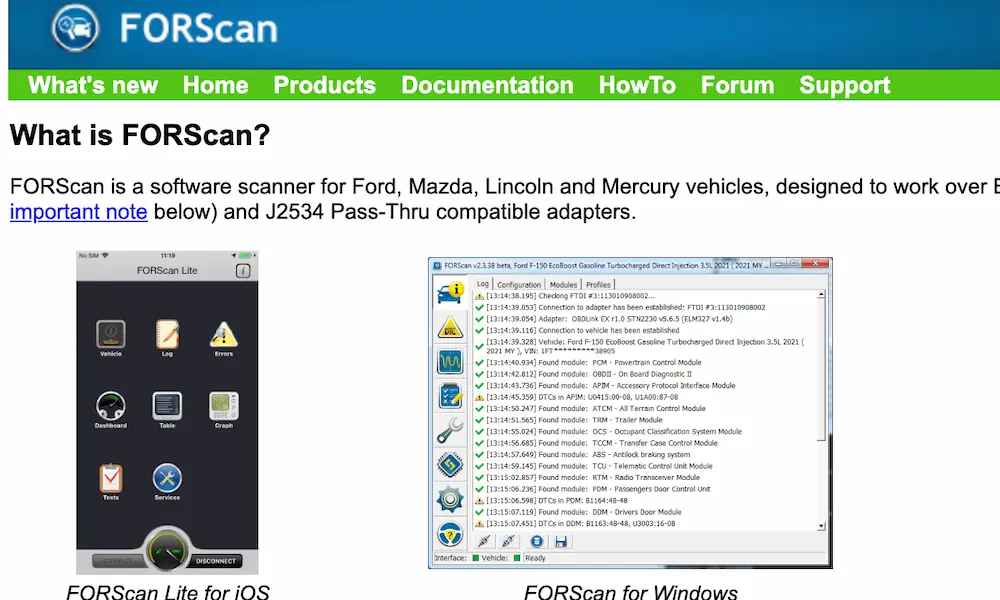
Installing the hardware is only half the job. A new TCM is a blank slate — it needs to be programmed with your vehicle’s specific calibration using Ford’s Integrated Diagnostic System (IDS) or the more affordable FORScan software.
After loading the software, the module must complete adaptive learning routines:
- Transmission Range Sensor Learn — maps the physical gear selector positions
- Shift Drum Learn — cycles through all gears to map the internal shifting points
- Clutch Adaptive Learn — finds the exact point where each clutch starts transmitting torque
During clutch learning, the engine must be at operating temperature and you must hold firm, steady pressure on the brake. The car will sound and feel strange — that’s normal.
After the digital routines, you need a physical drive cycle to finish the job:
| Step | Action | Repetitions |
|---|---|---|
| Stationary | Shift D to R with brakes held | 10 times (15s in D, 2s in R) |
| Initial Motion | Light throttle acceleration to 15 mph | 5 times |
| Low Speed | Upshifts at 1700–2000 RPM | Until shifts feel smooth |
| Highway | Steady throttle in 6th gear under 3000 RPM | Minimum 2 minutes |
Skip the drive cycle and your shifts will stay rough. The module needs real-world data to fine-tune the clutch engagement for your specific car.
The Grounding Fix That Many Owners Overlook
Not every TCM failure is actually the module’s fault. Many Ford Focus owners solve communication codes just by cleaning the factory ground points.
The TCM needs a clean, low-resistance path to the battery’s negative terminal. Ford painted over many of the factory ground points during assembly — and that paint layer creates resistance as corrosion builds underneath.
Here’s the fix:
- Remove the air intake box to access the grounding bolts on the fender or frame
- Sand, wire-brush, or grind the paint off the metal surface until you see bare metal
- Polish the cable eyelets and bolts to remove oxidation
- Reassemble and apply protective grease to prevent future corrosion
Owners who measured electrical resistance before and after the grounding modification found meaningful drops in resistance and noticeably smoother shifting. It’s free to try and worth doing before any expensive parts purchase.
New vs. Refurbished vs. Aftermarket: What’s It Going to Cost?
If your Focus is out of warranty, here’s what you’re looking at for parts and labor:
| Option | Part Cost | Programming Needed | Reliability |
|---|---|---|---|
| Genuine New Ford (AE8Z-7Z369-F) | $700–$1,100 | Full dealer flash required | High — revised internal soldering |
| Aftermarket (e.g., Dorman) | $400–$800 | Full relearn required | Moderate to high |
| Refurbished (e.g., UpFix) | $250–$500 | Usually plug-and-play | High — original flaws corrected |
| Used / Salvage | $150–$300 | Full relearn required | Low — likely to fail again |
The genuine Ford module (part number AE8Z-7Z369-F) uses revised soldered connections instead of the failure-prone design from early units. It’s the most reliable new option — but it’s expensive and often backordered.
Refurbished modules from specialists are worth serious consideration. You send your original module in, they repair the board and fix the root-cause defects, and send it back. Because it keeps your original VIN and calibration, it often installs as plug-and-play — no dealer programming required. That alone can save $300–$500 in labor.
Used salvage modules are a gamble. They likely have the same original design flaws and may fail just as fast as the one you pulled out.
Don’t Replace the TCM Without Checking the Clutches
Here’s something many shops skip — and owners regret later.
The TCM doesn’t work in isolation. The mechanical clutch assembly and input shaft seals directly affect how well the module performs. The input shaft seals are notorious for leaking transmission fluid into the dry clutch housing. Oil-contaminated clutch material causes severe shuddering that no amount of TCM programming can fix.
If you install a fresh TCM on contaminated clutches, the adaptive learn will either fail or produce terrible results. Always visually inspect the clutch housing for fluid leaks before replacing any electronics.
The TCM also controls two electric clutch actuator motors. These motors can seize due to heat or mechanical wear — and a seized actuator can throw the same fault codes as a dead TCM. Program 19N08 specifically covers clutch assembly replacement for Focus models showing excessive shudder that’s mechanical rather than electronic in origin.
Inspect the actuators for internal gear wear and electrical resistance issues while you have the module out. It’s a lot easier to catch them now than after you’ve already done the job twice.