Got a check engine light and a Ford P0113 code staring back at you? That little code can mean anything from a $20 sensor fix to a wiring nightmare — but most of the time, it’s simpler than it looks. Read to the end and you’ll know exactly what’s wrong, what to check first, and what it’ll cost you.
What Is the Ford P0113 Code?
Ford P0113 stands for “Intake Air Temperature Sensor 1 Circuit High Input.” Your Ford’s Powertrain Control Module (PCM) monitors the air coming into your engine through a small sensor called the IAT (Intake Air Temperature) sensor. When that sensor sends back a voltage reading above 4.6 volts — which tells the PCM the air is an impossible -40°F — the PCM throws the P0113 code.
The key word here is circuit high. It’s not telling you the air is actually freezing. It’s telling you the electrical signal looks like an open circuit — basically, the data pipeline broke.
How the IAT Sensor Actually Works
The IAT sensor is a thermistor. Think of it as a resistor that changes its resistance based on temperature. Ford uses a Negative Temperature Coefficient (NTC) design, which means:
- Cold air → High resistance → High voltage signal
- Hot air → Low resistance → Low voltage signal
The PCM sends a steady 5-volt reference signal through the sensor. As air warms up, the sensor pulls that voltage down toward 0.5V–1.5V. When the circuit breaks — cracked sensor, chewed wire, corroded connector — the voltage shoots up and stays near 5V. That’s your P0113.
Here’s how the numbers look across the temperature range:
| Temperature | Resistance (Approx.) | Voltage Signal | PCM Interpretation |
|---|---|---|---|
| -40°C / -40°F | 100,000+ Ω | 4.6V – 4.9V | Circuit Fault (P0113) |
| 0°C / 32°F | 32,000 Ω | 3.8V | Very Cold Intake |
| 20°C / 68°F | 15,000 Ω | 2.5V | Normal Ambient |
| 50°C / 122°F | 3,500 Ω | 1.2V | Warm Engine |
| 100°C / 212°F | 500 Ω | 0.4V | Heat Soaked |
Where Is the IAT Sensor on a Ford?
The answer depends on which Ford you’ve got. The sensor’s location varies a lot by engine family.
| Ford Engine | IAT Type | Location |
|---|---|---|
| Triton V8 (4.6L/5.4L) | Standalone or MAF-integrated | Intake tube or MAF housing |
| Duratec V6 (3.0L/3.5L) | MAF-integrated | Near air filter housing |
| EcoBoost (2.0L/2.3L/3.5L) | MAF + MAP integrated | Intake duct and intake manifold |
| PowerStroke Diesel (6.7L) | Standalone | Intake manifold and airbox |
| Coyote V8 (5.0L) | MAF-integrated | Intake zip tube |
On EcoBoost engines, there are actually two IAT sensors. P0113 specifically points to IAT Sensor 1 — the one at the air intake side, not the manifold side. That distinction matters before you start pulling parts.
What Causes Ford P0113?
The most common causes break down into three categories:
1. Dead IAT Sensor
The thermistor element inside the sensor fractures from constant heat cycling. Once it breaks internally, resistance goes infinite and the voltage pins at 5V. A quick multimeter check across the sensor’s two pins will show “OL” (open loop) if this is your problem.
2. Wiring and Connector Issues
This one catches a lot of Ford owners off guard:
- Rodent damage — Ford uses soy-based wire insulation on many harnesses. Rodents love it. Chewed wires near the MAF/IAT connector are surprisingly common.
- Wire chafing — Loose harnesses rub against brackets or the radiator shroud and eventually break the copper core inside.
- Connector corrosion — Moisture gets into the plug, green crust builds up on the pins, resistance climbs, and the signal dies.
3. Contamination
Oil blow-by from the PCV system — especially on higher-mileage EcoBoost engines — can coat the IAT element in oil and soot. A badly clogged air filter can also heat-soak the sensor, pushing readings into a range the PCM flags as unrealistic for an ambient sensor.
Symptoms You’ll Notice With Ford P0113
When your Ford is running with a P0113 fault, the PCM substitutes a -40°F air temperature into its calculations. That triggers over-fueling — and you’ll feel it:
- Rough idle or hard start — The engine floods itself with fuel it doesn’t need
- Strong gas smell from the exhaust — Unburned fuel exits through the tailpipe
- Poor fuel economy — You’re burning more fuel than necessary on every drive
- Spark plug fouling — Excess fuel coats the electrodes and kills your spark
- Check engine light — Always on with an active P0113
Keep driving with P0113 long enough and you risk damaging your catalytic converter from the constant unburned fuel flowing through it. Unburned fuel can also wash cylinder walls and dilute your engine oil with gasoline — that’s expensive territory.
How to Diagnose Ford P0113 Step by Step
Don’t just swap the sensor blind. The right diagnostic process saves you money and actually solves the problem.
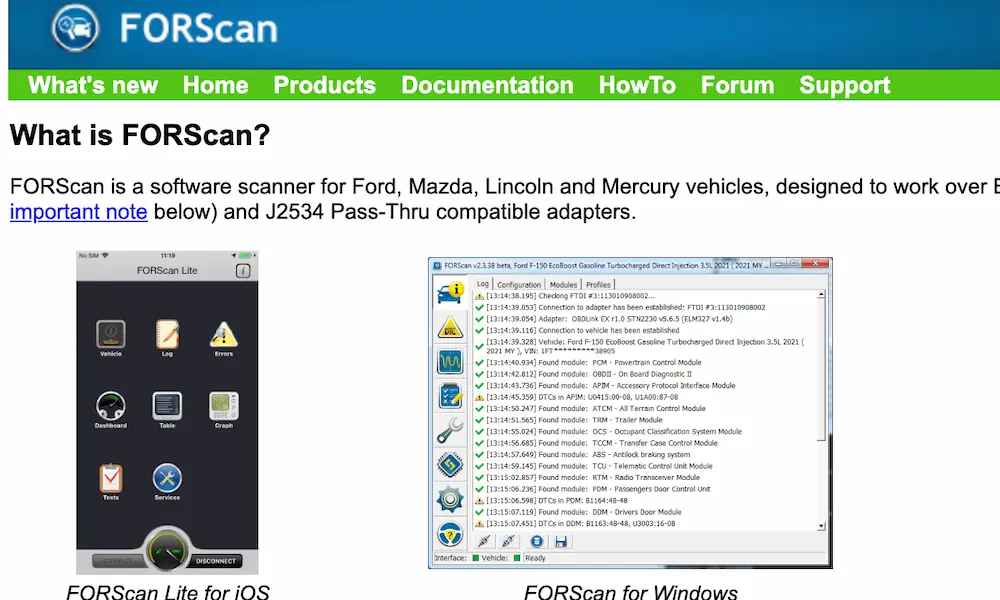
Step 1: Pull Live Data With a Scan Tool
Connect a scan tool and watch the IAT Parameter ID (PID) in real time.
- Key on, engine off — if it reads -40°, you’ve got an active open circuit
- Wiggle the wiring harness and connector while watching the PID — if the reading jumps around, the fault is in the harness or connector, not the sensor
Step 2: The Jumper Wire Test
Unplug the IAT sensor. Bridge the two harness connector pins with a fused jumper wire. Watch the scan tool — the IAT reading should jump to the opposite extreme (250°F+). If it does, the wiring and PCM are fine. The sensor is bad.
Step 3: Multimeter Resistance Check
Measure resistance across the sensor’s two pins directly. Any reading of “OL” confirms the internal thermistor is broken. Replace the sensor.
Step 4: Check Reference Voltage
With the sensor unplugged and the key on, check voltage at the harness connector. You should see approximately 5.0 volts on the reference wire. No voltage means a broken wire between the sensor and PCM — or a PCM issue.
Step 5: Cold Soak Comparison
Let the vehicle sit overnight, then compare the IAT, ECT (coolant temp), and ambient air temp readings. On a healthy Ford, all three should be within a few degrees of each other. IAT at -40° while ECT reads 68°F? That’s your confirmation.
Ford-Specific Technical Service Bulletins for P0113
Ford has issued specific TSBs that apply directly to P0113 — and in some cases, the fix isn’t a new sensor at all.
TSB 14-0075: 2013 F-150 3.5L EcoBoost Cold Weather False Triggers
In temperatures below -28°C (-20°F), the PCM’s diagnostic logic on 2013 F-150 EcoBoost trucks flags real cold-weather resistance as a circuit fault. The fix is a PCM software re-flash — not a sensor replacement. If you drive an F-150 in a cold climate and keep getting P0113 in winter, check this TSB before buying anything.
TSB for 2024 F-150 2.7L EcoBoost: Software Bug
Ford confirmed a PCM software bug on 2024 models that erroneously triggers sensor circuit codes including P0113 even when all hardware is working correctly. The fix is reprogramming through Ford’s FDRS system. This is a dealer-only repair.
Aftermarket Cold Air Intake Kits
If you’ve got a 5.0L Coyote with an aftermarket intake and you’re seeing P0113, check the IAT sensor placement. If the sensor isn’t sitting in a high-velocity airflow stream — or it’s heat-soaking from the engine — the PCM detects a mismatch and throws codes. Mount the sensor at the 9 o’clock or 3 o’clock position on the intake tube to avoid condensation and erratic readings.
What Does It Cost to Fix Ford P0113?
Your repair cost depends heavily on whether your IAT is standalone or baked into a MAF or MAP sensor assembly.
| Repair Option | Diagnostic Fee | Total Cost (Standalone IAT) | Total Cost (Integrated MAF) |
|---|---|---|---|
| Ford Dealership | $150 – $250 | $300 – $450 | $550 – $850 |
| Independent Shop | $50 – $150 | $150 – $250 | $350 – $550 |
| DIY | $0 | $20 – $45 | $120 – $250 |
Standalone IAT sensors run $15–$40 in parts. If yours is built into the MAF assembly, expect to spend $150–$350 on an OEM Motorcraft unit. T-MAP sensors for EcoBoost engines typically fall in the $60–$120 range.
Dealerships charge 40% more on labor than most independent shops on average. For a simple sensor swap, an independent shop gives you the same result for less. For TSB-related PCM reprogramming, a Ford dealer with FDRS access is your only option.
How to Prevent P0113 From Coming Back
You can’t always stop sensors from aging, but you can slow it down:
- Replace your air filter every 15,000–30,000 miles — A clogged filter heat-soaks the sensor and lets debris reach the thermistor element
- Apply dielectric grease to the MAF/IAT connector during routine service — it keeps moisture out and corrosion from starting
- Clean integrated MAF/IAT sensors every 30,000 miles with dedicated MAF cleaner spray — this removes oil and carbon deposits before they cause a fault
- Protect exposed wiring on trucks used in rural areas — wire loom or split-sleeve shielding deters rodents and prevents chafing
Ford P0113 looks intimidating on a scan tool, but most of the time you’re dealing with a broken sensor or a corroded connector. Work through the diagnostic steps before spending money, check for applicable TSBs, and you’ll have it sorted without guessing.