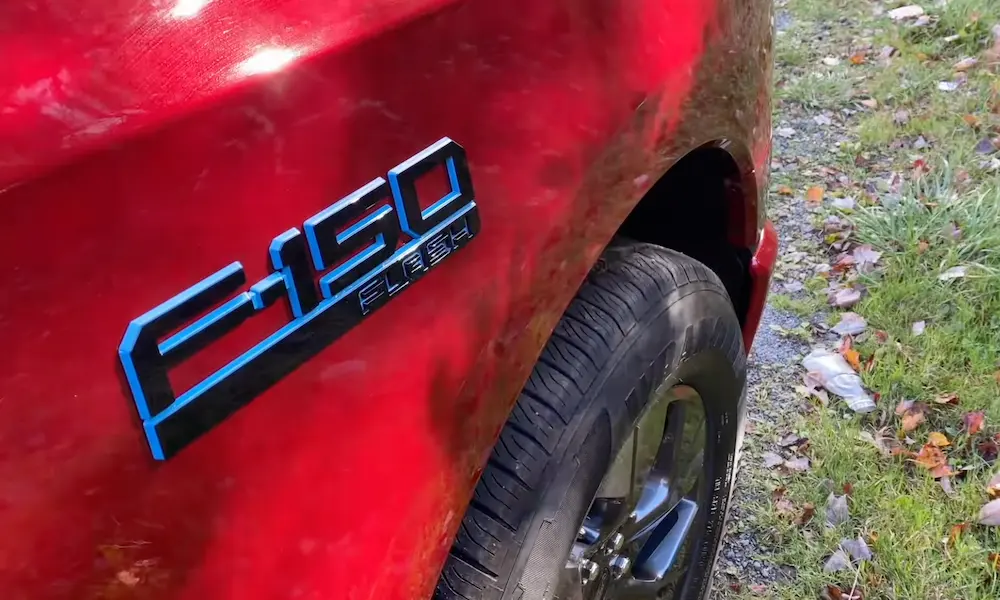
That check engine light is staring at you, and your scanner just spat out a Ford P0171 code. Good news — this code tells you a lot about what’s wrong, and most causes are fixable without breaking the bank. Stick around, because by the end of this post you’ll know exactly what’s happening, what to check first, and what it’ll cost you.
What Does Ford P0171 Actually Mean?
Ford P0171 means your engine is running lean on Bank 1. In plain English, there’s too much air and not enough fuel in the combustion mix. Your engine targets a 14.7:1 air-to-fuel ratio — that’s the sweet spot for clean, efficient combustion. When the Powertrain Control Module (PCM) can’t correct the imbalance through fuel trim adjustments alone, it throws the P0171 code.
Bank 1 is the side of the engine that contains cylinder number one. On a four-cylinder engine, that means the whole engine. On a V6 or V8, it narrows the search to one side.
Why You Shouldn’t Ignore Ford P0171
A lean engine runs hotter. Much hotter. That excess heat can:
- Melt spark plug electrodes
- Erode piston crowns
- Destroy your catalytic converter (a repair that often tops $2,000)
- Kill your fuel economy
And it doesn’t just sit there quietly doing damage. You’ll feel it. Common symptoms include rough idling, stalling at intersections, hesitation under load, and a noticeable loss of power. Ignore it long enough and a cheap fix becomes an expensive one.
How Fuel Trims Tell the Story
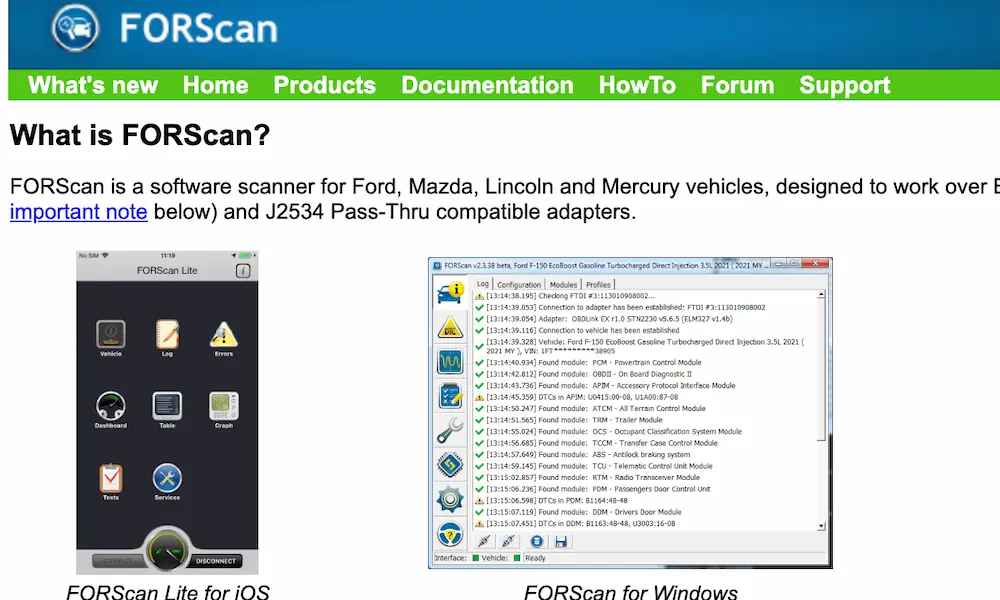
Your scanner’s live data is the first place to look when chasing Ford P0171. The PCM uses Short Term Fuel Trim (STFT) for real-time corrections and Long Term Fuel Trim (LTFT) for learned adjustments over time.
When LTFT climbs above +10%, the PCM is adding significantly more fuel than the factory map expects. An LTFT sitting at +25% means the engine is receiving nearly a quarter more fuel than it should need — that’s a big red flag pointing to either a large air leak or a serious fuel delivery problem.
Here’s the key diagnostic trick: watch how trims change with engine speed.
| Engine State | Fuel Trim Behavior | Likely Cause |
|---|---|---|
| High positive at idle, improves at 2,500 RPM | Trim moves toward zero at speed | Vacuum leak |
| High positive at idle AND at 2,500 RPM | Trim stays elevated | Dirty MAF sensor or low fuel pressure |
| Normal at idle, worsens under load | Trim gets worse at high RPM | Weak fuel pump or clogged filter |
| Lean condition at wide-open throttle | Trim can’t compensate | Restricted injectors or fuel pump failure |
A vacuum leak floods the intake with unmetered air at idle, but as you rev up, the volume of metered air dwarfs the leak and trims recover. A bad MAF sensor does the opposite — it looks fine at idle but falls apart at higher airflow.
The Most Common Causes of Ford P0171
Vacuum Leaks — The #1 Suspect
Vacuum leaks account for nearly half of all P0171 occurrences in older Ford models. Unmetered air sneaks past the MAF sensor and enters the intake, throwing off the fuel calculation. Here’s where Ford engines tend to fail:
- PCV hoses: Cracked elbows and collapsed hoses are extremely common, especially on high-mileage engines
- Intake manifold gaskets: Cold-weather shrinkage causes leaks that often seal up once the engine warms — a classic symptom on Ford Explorer V6 and V8 engines
- Brake booster vacuum hose: A ruptured internal diaphragm creates a lean condition that gets worse when you press the brake pedal
- Throttle body boot: Tears or loose clamps let air bypass the MAF sensor entirely
The best way to find a vacuum leak? A smoke test. A technician pressurizes the intake with chemical smoke while the engine is off. Smoke leaking from a hose, gasket, or valve pinpoints the problem instantly — far more reliable than spraying carb cleaner around and hoping something changes.
A Dirty or Failing MAF Sensor
The Mass Airflow (MAF) sensor measures air entering the engine using a heated platinum wire. Dust, oil from over-saturated aftermarket air filters, and fuel vapor deposits create an insulating layer on that wire, causing it to under-report airflow at high speeds.
Here’s a quick MAF diagnostic trick for Ford owners: disconnect the MAF sensor connector while the engine is running. This forces the PCM into a backup calculation mode using throttle position and RPM instead. If your rough idle or hesitation disappears immediately, the MAF sensor is likely contaminated or failing.
Also check the inferred barometric pressure (BARO) PID on your scanner. On Ford vehicles without a dedicated MAP sensor, BARO is calculated from MAF readings. A contaminated MAF that under-reports airflow will make the PCM think you’re driving at altitude when you’re not. If BARO reads 7 Hz or more lower than expected for your location, suspect MAF contamination.
MAF reference values at idle (warm engine, A/C off, neutral):
- Normal voltage: 0.6V – 1.1V
- Over 1.1V at idle = sensor may be over-estimating airflow
- BARO at sea level: approximately 159 Hz or 29.91 inHg
The EVAP Purge Valve — Ford’s Sneaky Problem
This one catches a lot of people off guard. On Ford Focus (2012–2018) and Fusion models, a sticking EVAP canister purge valve is one of the most frequent causes of Ford P0171. When the valve sticks open, it acts like a permanent vacuum leak, pulling unmetered air and fuel vapors straight into the intake manifold.
Ford actually issued field service action 18M01 on certain Focus models because a stuck-open purge valve could cause the fuel tank to deform under excessive vacuum. If you drive a Focus and you’re dealing with P0171, this valve is the first thing to check.
Fuel Delivery Problems
If the air side checks out clean, look at fuel. Low fuel pressure, clogged filters, and restricted injectors all starve the engine of fuel while the MAF reports correct airflow — a guaranteed lean condition.
On EcoBoost engines, Ford uses a two-stage fuel system: a low-pressure in-tank pump and a mechanical high-pressure fuel pump (HPFP) driven by the camshaft. A weak in-tank pump may hold pressure at idle but collapse under heavy load, producing a lean condition only during acceleration.
Watch out for sensor bias too. On many Ford Fusion and Focus models, a faulty low-side fuel pressure sensor can report 65 PSI when actual pressure is only 35 PSI. The PCM calculates a too-short injector pulse width and you end up lean. Always verify fuel pressure with a mechanical gauge before replacing fuel system parts.
Ford Model-Specific P0171 Patterns
Ford has issued several Technical Service Bulletins (TSBs) for P0171 across its lineup. Knowing your model’s known issues saves real diagnostic time.
| Ford Model | Primary P0171 Cause | Fix |
|---|---|---|
| F-150 3.3L (2021–2023) | PCM software calibration error | Reprogram PCM per TSB 23-2195 |
| F-150 (1997–2004) | Collapsed rear intake vacuum elbow | Replace rubber vacuum elbow (pattern failure) |
| Focus 2.0L (2012–2018) | Stuck-open EVAP purge valve | Replace purge valve; inspect fuel tank |
| Explorer 3.5L / 4.0L | Intake manifold gasket failure | Replace upper/lower intake gaskets |
| Fusion 2.0T EcoBoost | HPFP failure or fuel pressure sensor bias | Verify pressure mechanically; replace sensor |
| Various 3.8L V6 | Isolator bolt grommet degradation | Replace isolator bolts per TSB 03-16-1 |
The 2021–2023 F-150 with the 3.3L V6 is particularly interesting — the lean code isn’t caused by any physical failure at all. It’s a software bug in the PCM that triggers the check engine light incorrectly. The fix is a reprogramming procedure using Ford’s FDRS diagnostic system, not a parts replacement.
What Does It Cost to Fix Ford P0171?
Here’s the honest breakdown. Costs vary widely depending on what’s actually causing the code.
| Repair | Parts Cost | Labor Cost | Total Estimate |
|---|---|---|---|
| Vacuum hose / elbow | $10 – $40 | $60 – $120 | $70 – $160 |
| MAF sensor cleaning | $10 | $40 – $80 | $50 – $90 |
| MAF sensor replacement | $150 – $300 | $60 – $100 | $210 – $400 |
| EVAP purge valve | $40 – $110 | $80 – $150 | $120 – $260 |
| Intake manifold gaskets | $40 – $150 | $350 – $800 | $390 – $950 |
| In-tank fuel pump | $200 – $500 | $250 – $450 | $450 – $950 |
| Fuel injector service | $60 – $200 | $150 – $350 | $210 – $550 |
| Professional diagnostic fee | — | $100 – $180 | $100 – $180 |
Professional diagnosis typically adds $100–$180 to your total, but it’s often worth it. Replacing an oxygen sensor — a common first instinct — almost never fixes P0171. The O2 sensor is usually doing its job correctly by reporting the lean condition. Replace it and the code comes straight back.
How to Prevent Ford P0171 From Coming Back
A few simple habits go a long way:
- Use quality OEM-style air filters and make sure the airbox seals properly — loose airbox lids let unfiltered air hit the MAF sensor
- Clean the MAF sensor with dedicated MAF cleaner during every major tune-up
- Inspect vacuum hoses annually — dry-rotted rubber in an engine bay is inevitable, but catching it early is cheap
- Use quality fuel with detergent additives, especially in direct-injection EcoBoost engines where injector deposits build faster
- Replace the fuel filter on schedule — every 30,000 miles on models where it’s a separate serviceable part
Ford P0171 sounds intimidating, but it’s one of the most workable diagnostic codes out there. Start with fuel trims, watch how they behave at different RPMs, and the data will point you straight at the problem.