Your Ford’s check engine light is on, it struggles to start after filling up, and you hear a weird “whoosh” when you open the gas cap. Sound familiar? That’s the Ford P1450 code doing its thing — and it’s nastier than most people realize. Stick around, because ignoring this one can turn a $40 fix into a $1,800 nightmare.
What Is the Ford P1450 Code?
Ford P1450 means your car’s computer — the Powertrain Control Module (PCM) — detected that the fuel tank can’t bleed back to normal pressure after building up too much vacuum. The official description is “Unable to Bleed Up Fuel Tank Vacuum.”
Here’s the key thing most people miss: this isn’t just an emissions code you can ignore. The vacuum inside the tank can physically crush your fuel tank. Ford’s plastic fuel tanks can deform — or as techs call it, “oil-can” — under that pressure. When that happens, your fuel pump and fuel gauge sender go with it.
This makes Ford P1450 one of the more serious EVAP codes in Ford’s lineup.
How Ford’s EVAP System Actually Works
Your Ford’s Evaporative Emission (EVAP) system does one job: it captures gasoline vapors so they don’t float into the atmosphere. Instead, it stores them in a charcoal canister and burns them in the engine later.
The system runs three phases:
- Collection: Fuel vapors flow from the tank into the charcoal canister while you’re parked or idling.
- Purge: The PCM opens the Canister Purge Valve (CPV), and engine vacuum pulls the stored vapors into the intake manifold to burn.
- Self-Test (Monitor): The PCM seals the system and checks pressure changes using the Fuel Tank Pressure (FTP) sensor.
The P1450 code fires during that self-test phase. The PCM tries to vent the tank back to atmospheric pressure, but the vacuum stays stuck. According to AutoZone’s diagnostic breakdown, the system should return to 0.0 inches of water pressure within seconds. If it doesn’t — hello, check engine light.
What Causes Ford P1450? (The Real Culprits)
1. Stuck-Open Canister Purge Valve (The #1 Cause)
The CPV is the most common reason you’re seeing Ford P1450. According to iCarsoft’s repair guide, the purge valve accounts for roughly 90% of P1450 cases on models like the Focus and Fusion.
The purge valve is supposed to be closed when the engine isn’t actively purging vapors. But here’s what happens in aging Fords: the activated charcoal inside the canister breaks down into fine dust over time. That dust travels through the vapor lines and lodges in the purge valve’s seat, preventing it from fully closing. Even a tiny gap lets strong intake manifold vacuum suck constantly on the fuel tank — and the tank can’t vent fast enough to fight it.
The result? The tank slowly goes into a vacuum death spiral.
2. Blocked Vent Solenoid or Charcoal Canister
The vent solenoid is the “inhale” side of the system — it lets atmospheric air in to equalize tank pressure. On Ford F-150s and Explorers, this component sits low on the chassis where mud, road debris, and salt collect.
Here’s a weird one: certain spiders are attracted to hydrocarbon smells. Snap-on’s EVAP testing guide notes that spider webs and mud dauber nests inside vent lines can restrict airflow enough to trigger P1450. Strange, but true.
Also — if you’ve been topping off your gas tank after the pump clicks, stop immediately. Liquid fuel floods the charcoal canister’s pores, saturating it completely and blocking all airflow. This is one of the most common DIY mistakes Ford owners make.
3. Bad Fuel Tank Pressure Sensor
The FTP sensor tells the PCM exactly how much vacuum is in the tank via a voltage signal. If the sensor drifts or corrodes (especially on northern-climate vehicles where road salt eats connectors), it can report false vacuum readings that trigger P1450 even when everything else is fine.
Symptoms of Ford P1450 You Shouldn’t Ignore
| Symptom | What You’ll Notice | Why It’s Happening |
|---|---|---|
| Check Engine Light | Steady MIL on the dash | PCM failed the EVAP monitor twice in a row |
| Hard start after refueling | Cranks 5–15 seconds at the gas station | Stuck-open purge valve floods the intake with raw vapor |
| Rough idle or stalling | Engine stumbles at red lights | Open purge valve acts as an unmetered vacuum leak |
| “Whoosh” sound at filler | Loud rush of air when opening the cap | Air rushing in to fill the massive tank vacuum |
| Erratic fuel gauge | Reads “full” too long, DTE jumps around | Tank is physically deformed, moving the float sender |
| Worse fuel economy | 5–10% drop in MPG | PCM constantly corrects rich/lean conditions |
The dead giveaway for Ford P1450 is that post-refueling hard start. When you fill the tank, rising fuel pushes concentrated vapors upward. If the purge valve is stuck open, those vapors flood straight into the intake. The engine effectively floods itself — just like old carbureted engines used to — and you’re sitting there cranking away at the gas station while people stare.
Ford’s Official Response: Recalls and TSBs
Safety Recall 18S32 — 2012-2018 Ford Focus
This is the big one. Ford issued Recall 18S32 covering 2012-2018 Ford Focus models with the 2.0L GDI engine. Ford found that a stuck-open CPV created enough vacuum to permanently deform the fuel tank, causing stalls while driving — a genuine safety issue.
The recall mandates dealers to:
- Update PCM software with a limp-home detection mode
- Replace the CPV if P1450 or related codes are present
- Replace the fuel tank entirely (at Ford’s expense) if it shows more than 25mm of inward deformation
If you own an affected Focus, check your VIN at NHTSA’s recall database before spending a dime on repairs.
TSB 16-0075 — 2013-2014 Fusion and Escape Hard Start
TSB 16-0075 targets Fusion and Escape owners dealing with that infuriating post-refueling hard start. It identifies the purge valve as the primary fix, with specific part numbers per engine:
| Vehicle | Engine | Labor Time | Part Number |
|---|---|---|---|
| Ford Fusion | 1.5L GTDI | 0.5 hrs | GG9Z-9D289-C |
| Ford Escape | 1.6L GTDI | 0.8 hrs | CV6Z-9D289-B |
| Ford Escape | 2.0L GTDI | 0.7 hrs | CV6Z-9D289-R |
| Ford Fusion/MKZ | 2.0L GTDI | 1.0 hrs | DG9Z-9D289-D |
TSB 16-0055 — 2015-2016 Focus 1.0L EcoBoost
Sometimes P1450 isn’t a hardware problem at all. TSB 16-0055 covers the 1.0L three-cylinder Focus, where overly sensitive software calibration triggers false P1450 codes during cold weather or at high altitude. The fix is a PCM reprogram using IDS release 99.05 or higher — no parts needed.
How to Diagnose Ford P1450 (Step-by-Step)
Check the FTP Sensor Live Data First
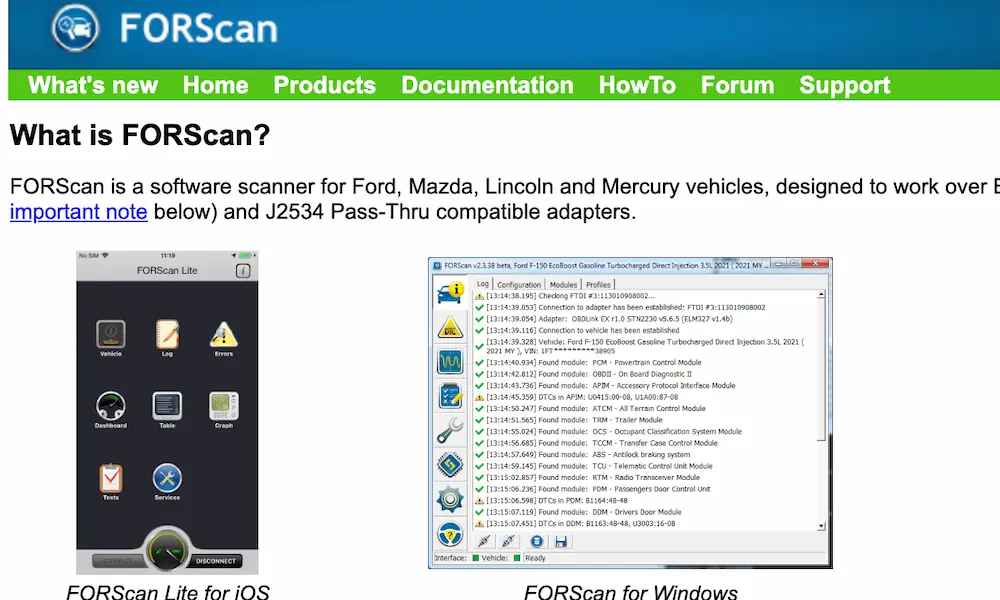
Connect a scan tool and watch the Fuel Tank Pressure (FTP) PID while the engine idles. According to Ford’s EVAP testing protocol, pressure should sit near atmospheric (around 2.5V or 0.0 inches of water). If you see it dropping steadily into the negative range right after startup — like -5.0 to -15.0 — vacuum is actively being pulled when it shouldn’t be.
The Bi-Directional Solenoid Test
Using a bi-directional scan tool, command the purge solenoid to 0% (fully closed). Watch the FTP PID. If vacuum keeps building with the solenoid commanded closed, the valve is mechanically stuck open. It needs to be replaced — full stop.
Then command the vent solenoid closed, then open. If the system holds vacuum when the vent closes but won’t bleed up when it opens, the restriction lives in the vent solenoid, vent filter, or canister itself.
The Quick “Finger Test” (No Fancy Tools Needed)
Can’t afford a bi-directional scanner? GoTech’s P1450 repair guide explains a manual check. With the engine running and the purge valve’s electrical connector unplugged, disconnect the vapor line from the purge valve port and hold your finger over it. You should feel zero suction. Feel vacuum? The valve is leaking internally. That’s your culprit.
What It Costs to Fix Ford P1450
| Component | Part Cost | Est. Labor | Total Pro Cost |
|---|---|---|---|
| Canister Purge Valve | $40–$130 | 0.5–1.0 hrs | $150–$250 |
| Vent Solenoid | $30–$80 | 0.7–1.2 hrs | $130–$220 |
| Charcoal Canister | $150–$400 | 1.0–2.0 hrs | $300–$650 |
| FTP Sensor (in-tank) | $60–$150 | 2.0–3.5 hrs | $400–$800 |
| Fuel Tank Replacement | $400–$900 | 3.0–5.0 hrs | $1,000–$1,800 |
RepairPal’s Ford Fusion purge valve estimate and KBB’s purge valve cost guide both confirm this range. Labor varies significantly by model — on a Ford Explorer with the 3.5L V6, the valve sits on top of the intake manifold and takes about 15 minutes. On the Fusion’s 1.5L EcoBoost, it’s buried behind the engine block and requires significant disassembly.
The math is simple: a $40 purge valve caught early beats a $1,800 fuel tank replacement every time.
How to Prevent Ford P1450 from Coming Back
- Stop at the first click. Topping off is the single biggest cause of canister saturation. When the pump stops automatically, you’re done.
- Keep the filler area clean. For Ford’s capless “Easy Fuel” systems, a quick blast of compressed air during a car wash prevents debris from entering the vapor lines.
- Use quality parts. Cheap aftermarket purge valves fail fast. Stick with Motorcraft or OE-quality equivalents from AutoZone — lower-quality valves have been known to chatter or fail within weeks.
- Don’t wait on the check engine light. A stuck purge valve caught early is a minor repair. A crushed fuel tank is not.
Beyond your wallet, there’s also a practical legal angle: a P1450 code causes an automatic OBD readiness failure during emissions testing. The PCM can’t complete its internal EVAP monitor while the fault is active, which means no registration renewal in states with emissions testing requirements.
Fix it early, fix it right, and you’ll never have to white-knuckle that post-refueling start again.