Got a check engine light and a scanner that’s throwing a Ford P0320 code? This post breaks down exactly what’s going on, why it happens, and how to track down the real culprit — because it’s rarely just a bad sensor. Stick around to the end, and you’ll know how to diagnose this like a pro instead of throwing parts at it.
What Is the Ford P0320 Code?
The P0320 code means your Powertrain Control Module (PCM) has detected a malfunction in the ignition/distributor engine speed input circuit. In plain English, the computer can’t get a reliable signal telling it how fast the engine is spinning.
That’s a big deal. The PCM uses that engine speed signal to control spark timing, fuel injection, and even transmission shifts. Lose that signal, and the engine doesn’t know what to do with itself.
How Ford Reads Engine Speed
Ford has used two main types of engine speed sensors across its lineup, and knowing the difference helps you diagnose the right problem.
| Sensor Type | Signal Output | Common Ford Applications | Typical Failure |
|---|---|---|---|
| Variable Reluctance | Analog sine wave | Early 4.6L/5.4L V8 crankshaft sensors | Magnetic debris, air gap issues |
| Hall Effect | Digital square wave (0–5V) | 3.5L EcoBoost, 5.0L Coyote | Internal burnout, voltage drops |
| PIP (Distributor) | 50% duty cycle square wave | 1992–1996 F-Series 5.0L/5.8L | Heat damage, bearing wear |
On older trucks with a distributor, the Profile Ignition Pickup (PIP) sensor inside the distributor was the heartbeat of the whole system. On modern engines, that role belongs to the crankshaft position (CKP) sensor and camshaft position (CMP) sensor working together.
The PCM watches a 36-minus-1 tooth reluctor wheel on the crankshaft. Each tooth represents 10 degrees of rotation. If pulses arrive out of order, too close together, or disappear entirely, the PCM flags it as a circuit malfunction — and you get P0320.
Symptoms of Ford P0320
Don’t ignore this code. Here’s what it looks and feels like.
The Engine Won’t Start
This is the most common symptom. The PCM won’t let the coils fire or the injectors pulse without a valid RPM signal. You’ll crank and crank, but the engine never catches. On 1992–1996 Ford trucks, a dead PIP sensor is the usual reason.
Stalling While Driving
Intermittent stalling is the dangerous one. If a chafed wire shorts to ground during hard acceleration — like when the engine torques over during a shift — the signal cuts out instantly and the engine dies. Once the load eases and the wire moves away from the ground source, the engine restarts like nothing happened. This pattern is common on the 2012–2014 Ford Focus.
Rough Idle, Misfires, and Hesitation
When the RPM signal is noisy, the PCM can’t nail down ignition timing. Even a few degrees off causes noticeable cylinder pressure swings. The engine shudders, bucks at highway speeds, or stumbles under load.
Tachometer Acting Weird
Watch the tach. If the needle jumps around or drops to zero while the engine’s still running, that’s the instrument cluster reflecting the PCM’s confusion. The cluster is just displaying what the PCM sees — which is garbage data.
Harsh or Erratic Transmission Shifts
The Transmission Control Module (TCM) also reads the engine speed signal to time shifts and manage torque converter lockup. A noisy RPM signal causes harsh engagements, late shifts at wide-open throttle, or a shudder that feels like a transmission problem but is actually electronic.
| Symptom | What’s Actually Happening |
|---|---|
| Crank, no-start | PCM won’t fire coils or injectors without valid RPM data |
| Intermittent stalling | Instant signal dropout due to harness chafing or loose connection |
| Misfires and hesitation | Erratic ignition timing from unstable speed pulses |
| Tachometer jitter | Instrument cluster mirrors the PCM’s noisy input |
| Harsh gear changes | TCM can’t coordinate torque reduction during shifts |
What Actually Causes Ford P0320
Here’s where most people go wrong — they assume it’s just a bad crankshaft sensor. Sometimes it is. But there are six other culprits that show up just as often.
A Failing Crankshaft or Camshaft Position Sensor
The sensors sit right on the engine block and endure thousands of heat cycles. Inductive sensors develop microscopic cracks in their copper windings from the constant expansion and contraction. Hall Effect sensors can fry from a voltage spike. A sensor that works fine when cold but fails after 20 minutes of driving is the classic sign of thermal failure.
A Damaged Reluctor Wheel
The reluctor wheel is precision-machined. A cracked tooth creates a double pulse. A slipped harmonic balancer — where the rubber isolation ring degrades and the outer ring rotates independently — shifts the entire reluctor’s position relative to the crankshaft’s actual location. The PCM reads this as a synchronization error and stores P0320.
AC Ripple From a Bad Alternator
This one surprises a lot of people. If an alternator’s rectifier diode fails, it leaks AC current into the vehicle’s 12-volt system. That AC ripple overlaps with the clean pulses from the crankshaft sensor, and the PCM sees it all as erratic engine speed data.
A telltale sign: the code sets and the car stalls only when the electrical load is high — headlights on, heater running, rear defroster active. The alternator works harder under that load, and the ripple gets stronger. Test for AC ripple by connecting a multimeter set to AC volts directly at the battery with the engine running. More than 0.5V AC means you’ve got a diode problem.
Ignition Coil Feedback
A failing coil-on-plug creates a massive electromagnetic spike during the firing event. If the CKP sensor wiring runs too close to those coils — or if the wire’s shielding is damaged — that high-voltage flyback induces a phantom pulse in the sensor circuit. The PCM thinks it saw an engine speed event when it didn’t. This is why P0320 sometimes sets at high RPM or under heavy load specifically.
Chafed or Corroded Wiring
The sensor signals run at low voltage (0–5V) and high frequency. They’re extremely sensitive to resistance and interference. Ford’s own TSBs call out specific “hot spots”:
- 2012–2014 Focus: The harness near the intake manifold and throttle body wears through from engine vibration, causing the signal wire to momentarily ground out.
- Older F-Series trucks: Exposure to salt, water, and road debris corrodes the wires along the frame rail. The green, crusty buildup inside the harness raises resistance until the PCM can’t distinguish the signal from background noise.
A Bad Engine Ground — Specifically G103
On the 2012–2014 Ford Focus, TSB 15-0036 specifically calls out the G103 ground bolt as a primary suspect for P0320. A loose or corroded engine ground lets current backfeed through the sensor circuits, shifting voltage outside the range the PCM accepts. Clean and tighten that ground before you replace anything else.
Ford-Specific TSBs You Need to Know
Ford has documented these exact failure patterns. Checking the relevant TSB first saves you hours.
2012–2014 Ford Focus — TSB 18-2062
This bulletin covers the 2.0L GDI engine. It walks technicians through a detailed harness inspection near the intake manifold and throttle body. The repair involves inspecting the back side of the harness with a mirror, repairing damaged wires with crimp connectors and adhesive-lined heat shrink, and re-routing the harness with Coroplast tape and 22mm nylon split loom.
2021–2022 Ford Mustang 5.0L — TSB 22-2464
On newer Mustangs, P0320 and related misfire codes can come from a software issue inside the PCM, not a mechanical failure. The fix is a PCM reprogram with updated calibration that includes better signal filtering logic.
1992–1996 Ford F-150 — PIP Sensor
For these older trucks, the classic pattern is a vehicle that runs fine for 20 minutes, stalls, and won’t restart for an hour. That’s a heat-soaked PIP sensor. Given the labor involved in rebuilding a distributor, most shops recommend a complete distributor replacement.
How to Diagnose Ford P0320 the Right Way
Skip the part-swapping. Work through these steps in order.
Step 1: Check Battery and Charging System First
A weak battery (under 10.5V during cranking) or a failing alternator creates electrical instability that mimics sensor failures. Load-test the battery. Then check for AC ripple at the battery terminals with the engine running and accessories on. Over 0.5V AC means the alternator is already contaminating the system.
Step 2: Pull Live Data From the Scan Tool
Watch the Engine RPM and PIP Status PIDs during a failure event. If RPM drops to zero while the car is still moving and the engine is physically spinning, you have a complete signal loss. If RPM jumps from 800 to 4,000 rpm instantly, you’re looking at electrical noise or a broken reluctor wheel tooth.
Also check the VREF (Reference Voltage) PID. The PCM supplies 5V to multiple sensors on the same bus. If a shorted MAP or AC pressure sensor pulls that bus down to 3V, the CKP sensor stops working and P0320 appears as a sympathy code. The real fault is the shorted sensor, not the crankshaft sensor.
Step 3: Test Power, Ground, and Signal at the Sensor Connector
Unplug the CKP sensor and test three things:
- Reference voltage: Key on, engine off — should read a steady 5V (or 12V depending on model).
- Ground: Voltage drop between sensor ground pin and battery negative should be under 0.1V while cranking.
- Signal: Use a multimeter set to Hz or a logic probe while cranking. Look for a toggling signal.
If any of these fail, fix the circuit before replacing the sensor. Wiring repairs must use properly crimped, heat-shrunk connectors — not twist caps or tape.
Step 4: Use an Oscilloscope to See the Signal
A multimeter shows you an average. An oscilloscope shows you every individual pulse. A healthy Hall Effect CKP sensor produces a clean square wave with sharp vertical edges. If the peaks are inconsistent or the signal has “fuzz,” you’ve got visual proof of interference or a failing sensor. A healthy alternator shows under 50 millivolts of ripple on a scope. Over 500 millivolts is enough to corrupt the speed signal entirely.
Step 5: Perform the Crankshaft Relearn After Repair
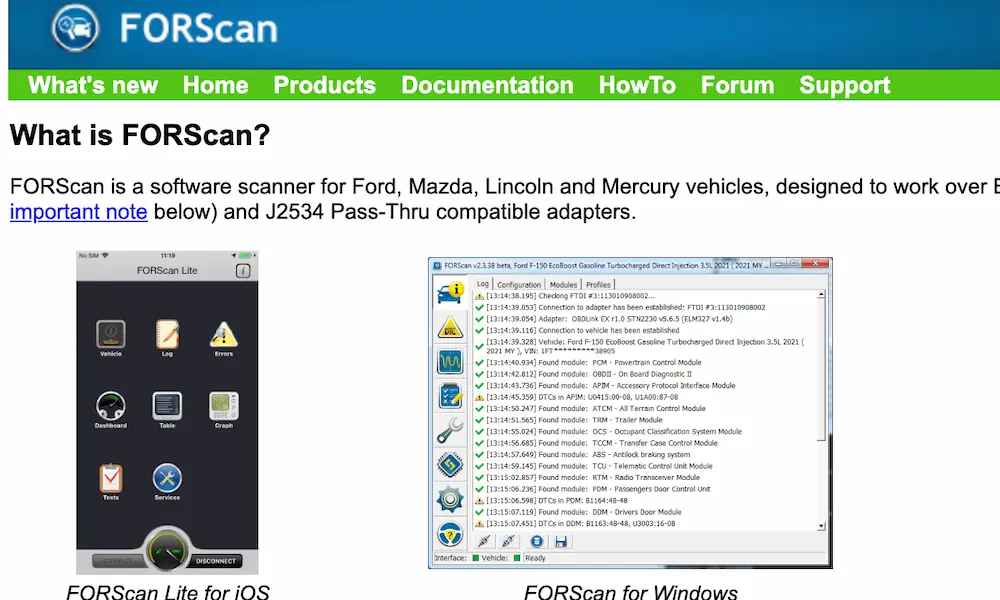
After replacing a CKP sensor or PCM, many Ford engines require a Misfire Monitor Profile Correction. Using a Ford IDS or compatible scan tool, the PCM is put into learning mode and the engine is revved to around 3,000–4,000 RPM, then allowed to decelerate. The PCM maps the tiny mechanical variations in the reluctor wheel’s teeth. Skip this step and you’ll get false misfire codes even after a perfect mechanical repair.
| Diagnostic Step | Tool Needed | What You’re Looking For | Fix If Failed |
|---|---|---|---|
| Battery load test | Load tester | Over 10.5V during crank | Replace battery |
| AC ripple test | Multimeter (AC volts) | Under 0.5V AC at battery | Replace alternator |
| Harness inspection | Visual / mirror | Chafing near intake/throttle body | Repair wires, add loom |
| CKP signal scope | Oscilloscope | Clean square or sine wave | Replace sensor or fix interference |
| VREF check | Scan tool / multimeter | Steady 5V at sensor reference pin | Isolate shorted sensor on the bus |
| Crankshaft relearn | Ford IDS / scan tool | Confirmation of completed relearn | Run Misfire Monitor Profile Correction |
Ford P0320 isn’t a one-size-fits-all repair. It’s a circuit problem — and the circuit includes the sensor, the wiring, the grounds, the power supply, and whatever electrical noise might be riding along for the trip. Work through the system, follow the TSBs Ford has already written for your specific model, and you’ll nail it the first time.