Got a check engine light and a scanner showing Ford P1151? You’re dealing with a lean condition on Bank 2 — and it could be a $5 hose or a failing sensor. This guide walks you through exactly what the code means, where to find the sensor, and how to diagnose it without throwing parts at the problem.
What Is the Ford P1151 Code?
The Ford P1151 code means “Lack of Upstream Heated Oxygen Sensor Switch — Sensor Indicates Lean, Bank 2.”
That’s a mouthful, but here’s the simple version: the powertrain control module (PCM) watched the upstream oxygen sensor on Bank 2 and noticed it wasn’t switching between rich and lean fast enough. It got stuck reporting a lean condition — too much air, not enough fuel.
This code only shows up on Ford, Lincoln, and Mercury vehicles. It’s a manufacturer-specific code, not a generic OBD-II one.
Here’s a quick breakdown of what each part of that definition actually means:
| Code Component | What It Means | Why It Matters |
|---|---|---|
| P1151 | Ford-specific code | Only applies to Ford, Lincoln, Mercury |
| Heated Oxygen Sensor | Sensor with a built-in heater | Gets to operating temp fast after cold starts |
| Bank 2 | Engine side opposite cylinder #1 | Pinpoints which half of the engine has the fault |
| Sensor 1 | Upstream position (before the cat) | The primary sensor used for fuel trim |
| Lack of Switch | Voltage stuck low, not oscillating | Sensor isn’t toggling between lean and rich |
| Indicates Lean | Too much oxygen in the exhaust | PCM can’t balance the air-fuel ratio |
How the Oxygen Sensor Actually Works
Your upstream O2 sensor isn’t meant to sit at a fixed voltage. It’s a rapid-switching sensor that toggles multiple times per second between two states:
- Low voltage (0.1–0.2V): Lean — too much oxygen in the exhaust
- High voltage (0.8–0.9V): Rich — very little oxygen left after combustion
The PCM hunts for stoichiometry (the perfect air-fuel balance) by adding and subtracting tiny amounts of fuel until the sensor bounces around that 0.45V switching threshold.
When P1151 triggers, the sensor stayed stuck below that threshold too long. The PCM tried dumping in more fuel, but the sensor kept screaming lean. That either means the engine is actually running lean — or the sensor is lying.
Where Is Bank 2, Sensor 1 on a Ford?
This is where people get tripped up. The location changes depending on how the engine sits in the chassis.
Rear-Wheel-Drive Platforms (Longitudinal Layout)
On trucks and muscle cars — F-150, Mustang, Expedition — the engine runs front-to-back. Cylinder #1 sits at the front on the passenger side, so Bank 1 is the passenger side and Bank 2 is the driver’s side. You’ll find Bank 2, Sensor 1 in the exhaust manifold on the driver’s side.
Front-Wheel-Drive Platforms (Transverse Layout)
On front-wheel-drive models — Escape, Edge, some Explorers — the engine sits sideways. Bank 1 is toward the firewall. Bank 2 is toward the radiator, meaning Sensor 1 for Bank 2 sits in the front exhaust manifold, right behind the radiator fan.
| Vehicle | Engine Layout | Bank 2 Location | Sensor 1 Access |
|---|---|---|---|
| Ford F-150 | Longitudinal | Driver’s side | Near exhaust manifold by steering column |
| Ford Mustang | Longitudinal | Driver’s side | Through driver-side wheel well |
| Ford Expedition | Longitudinal | Driver’s side | Behind driver-side cylinder head |
| Ford Escape | Transverse | Radiator side | Front manifold, relatively easy to reach |
| Ford Explorer (FWD/AWD) | Transverse | Radiator side | Front manifold before the front catalyst |
What Causes the Ford P1151 Code?
P1151 can come from four different areas: the air intake system, the fuel system, the exhaust, or the electrical circuit. Don’t assume it’s the sensor right away.
Vacuum Leaks (Most Common)
Unmetered air is the top culprit. The PCM calculates fuel delivery based on air measured by the mass airflow sensor. Air sneaking in after that sensor doesn’t get counted — and the mixture runs lean.
A common failure point on Ford V6 and V8 engines is the rubber PCV elbow connecting the crankcase ventilation valve to the intake manifold. After thousands of heat cycles, these elbows crack, collapse, or go porous. You can also get lean codes from failed intake manifold gaskets, especially in cold weather when plastic and rubber contract at different rates.
Fuel Delivery Problems
A weak fuel pump or clogged injectors can cause the same lean symptom. If one or more injectors on Bank 2 are gunked up with deposits, they won’t spray a full shot of fuel. The combustion event on those cylinders runs lean, and the upstream sensor picks it up.
Exhaust Manifold Leaks
A cracked exhaust manifold or blown gasket pulls outside air — which is full of oxygen — into the exhaust stream. The sensor reads that extra oxygen and reports a lean condition even if combustion was fine. On Ford trucks, broken manifold studs are a known issue. A missing stud lets the manifold warp just enough to create an air gap — and a false lean code.
Wiring and Sensor Circuit Issues
The O2 sensor works on a millivolt scale. A little corrosion in the connector or chafed wiring against the frame can skew the signal completely. If the PCM can’t get a clean reading, it eventually flags the sensor as non-switching and stores P1151. In rare cases, a damaged input pin inside the PCM itself causes the problem — but don’t go there until you’ve ruled everything else out.
Symptoms of the P1151 Code
P1151 doesn’t always feel obvious. Sometimes the check engine light is the only sign. Other times, you’ll notice a combination of these:
| Symptom | How Common | Root Cause |
|---|---|---|
| Check Engine Light | Universal | PCM detects sensor not switching |
| Worse fuel economy | High | PCM adds extra fuel to compensate |
| Rough idle | Moderate | Unmetered air disrupts combustion |
| Hesitation on acceleration | Moderate | Wrong air-fuel ratio under load |
| Engine pinging | Low | Lean combustion creates excess heat |
How to Diagnose Ford P1151 Step by Step
Don’t replace the sensor before you’ve done these checks. A methodical approach saves time and money.
Step 1 — Pull the Freeze Frame Data
Connect a scan tool and grab the freeze frame data stored when the code triggered. Look at:
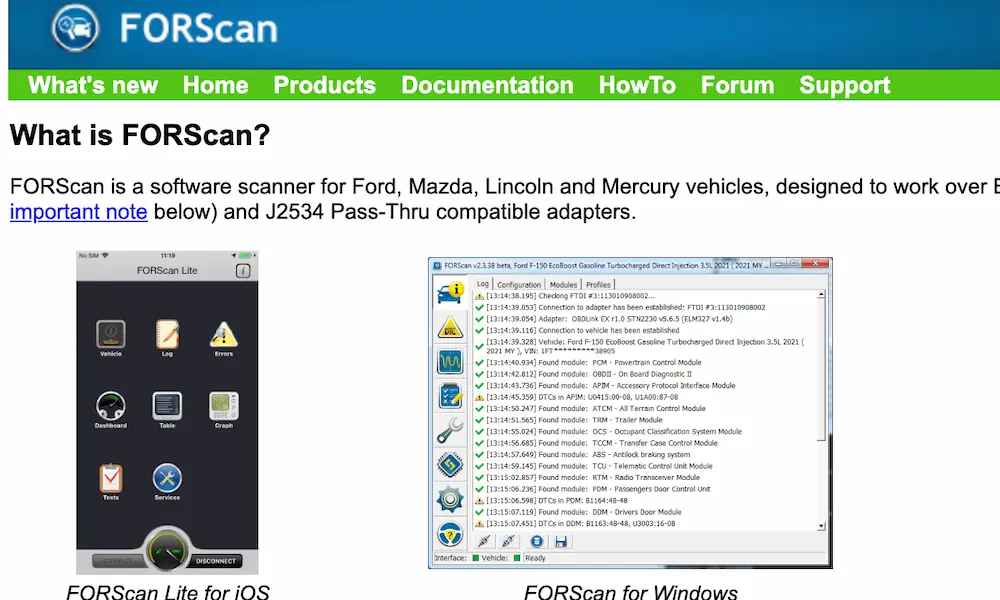
- Bank 2 short-term and long-term fuel trims — if they’re over +15%, the PCM is working hard to add fuel. That confirms a true lean condition, not just a faulty sensor reading.
- RPM and engine load — vacuum leaks show up most at idle; fuel delivery issues appear under load.
Step 2 — Watch Live O2 Sensor Data
With the engine fully warmed up, watch the live voltage of Bank 2, Sensor 1. It should swing rapidly between 0.1V and 0.9V. Compare it to Bank 1, Sensor 1 at the same time. If Bank 1 is switching normally and Bank 2 is flat below 0.45V, the problem is isolated to Bank 2’s side of the engine.
Step 3 — Check for Air Leaks
Do a visual inspection first — look for cracked rubber hoses, especially the PCV elbow. Then do a smoke test by pressurizing the intake system and watching for escaping smoke. No smoke machine? Try the spray test — carefully spray soapy water around suspected leak points while the engine idles. A change in idle speed or a spike in the O2 sensor voltage points right at the leak.
For exhaust leaks, look for soot marks near manifold joints or listen for a metallic ticking that changes with engine RPM.
Step 4 — Test the Sensor Electrically
Unplug the sensor and test the heater circuit with a digital multimeter:
- Heater resistance test: Measure across the two heater pins on the sensor itself. Most Ford sensors read between 2 and 20 ohms. An infinite reading means the heater element burned out.
- Power supply test: With the key on, check the harness connector for ~12V to the heater circuit.
- Wiggle test: While watching live O2 sensor data on a scan tool, gently flex the wiring harness. Sudden voltage jumps or drops mean there’s a loose connection or damaged wire somewhere in the run.
Step 5 — Swap the Sensors
This is the most definitive sensor test. Swap Bank 1 and Bank 2 upstream sensors — they’re typically identical parts. Clear the codes and drive the car.
- Code moves to Bank 1 (P1131)? The sensor is bad. Replace it.
- Code stays on Bank 2 (P1151)? The sensor is fine. The problem is in the engine or wiring on that side.
Step 6 — Test the Fuel System
If everything above checks out, test fuel pressure with a gauge at the rail. Low pressure under load points to a failing pump or a clogged fuel filter. For injector testing, an injector balance test pulses each injector individually and measures the pressure drop. A Bank 2 injector with a smaller-than-normal drop is restricted and causing the lean condition.
What Happens If You Ignore Ford P1151?
Driving with P1151 long-term isn’t a good idea. Here’s what’s at risk:
- Catalytic converter damage — the PCM dumps extra fuel to compensate for the lean signal. That unburned fuel reaches the catalytic converter and can ignite inside it, melting the ceramic core. That’s a very expensive fix.
- Engine damage — a true lean condition creates excess combustion heat. Over time, that burns exhaust valves, damages piston rings, and wears the cylinder walls.
- Emissions test failure — a stored P1151 means the vehicle’s readiness monitors can’t complete. You won’t pass an emissions inspection until it’s fixed.
Preventing P1151 in the Future
A few simple habits can stop this code from coming back:
- Replace the air filter on schedule — a dirty filter can contaminate the mass airflow sensor, which throws off fuel calculations and sets lean codes.
- Inspect vacuum lines during oil changes — catching a soft or cracked PCV elbow early costs nothing. Waiting until it cracks costs a diagnostic session.
- Use quality fuel and occasional fuel system cleaner — it keeps injector spray patterns clean and consistent.
- Consider proactive O2 sensor replacement — upstream sensors naturally get sluggish after 80,000–100,000 miles. Replacing them before they fail outright avoids the guessing game entirely.
The Ford P1151 code has a reputation for being tricky — but it’s not random. Work through the steps in order, use your scan tool’s live data, and you’ll find the root cause without burning money on parts you don’t need.