Got a scratch on your black Ford and need the right paint? Ford paint code G1 is trickier than it looks. Here’s everything you need to match it perfectly, find it fast, and fix it right.
What Is Ford Paint Code G1?
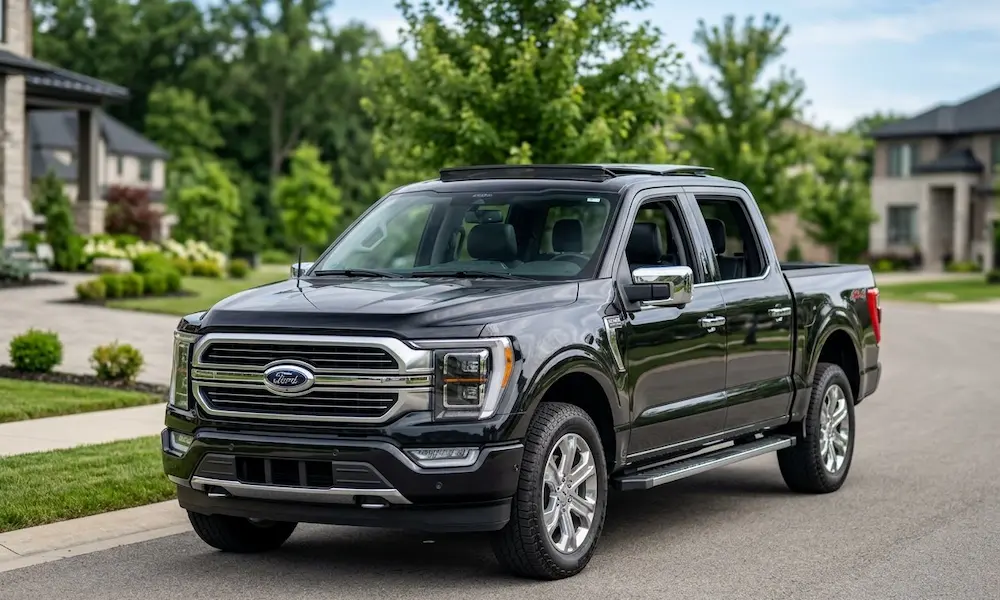
Ford paint code G1 is the factory code for a deep black finish sold under two names: Shadow Black and Absolute Black (also called Absolute Black Pearl). It’s not a simple solid black. G1 contains microscopic mica flakes suspended in the basecoat that give the paint a rich, dimensional depth you won’t get with standard black paint.
Under cloudy skies, G1 looks like a pure, ink-black finish. Under direct sunlight, those mica particles catch the light and create a subtle shimmer. It’s a clever formula that keeps the paint looking vivid instead of flat and faded.
A Quick History of G1: Shadow Black vs. Absolute Black
Ford didn’t always use G1. Before 2016, the go-to black was paint code UA, called Ebony Black — a flat, non-metallic solid. Then there was Tuxedo Black (code UH), which used chunky metallic flakes that sparkled noticeably in sunlight.
G1 arrived in 2016 to split the difference: deeper than UA, more refined than UH.
| Model Years | Paint Code | Marketing Name | Formulation Type | Common Models |
|---|---|---|---|---|
| 1991–2015 | UA | Black / Ebony Black | Non-metallic solid black | Mustang, F-150, SVT Lightning |
| 2016–2020 | G1 | Shadow Black | Micro-mica pearl black | Mustang, F-150, Explorer, Focus |
| 2021–2022 | G1 | Absolute Black / Absolute Black Pearl | Micro-mica pearl black | Mach-E, F-150, Bronco, Fiesta |
| 2023–2026 | G1 | Shadow Black | High-gloss micro-mica black | Bronco, Maverick, Transit, Mustang |
The marketing name changed, but the underlying G1 code stayed the same across all those years. That consistency is why a single touch-up product can cover multiple model years.
G1 also appeared on the Mustang Bullitt as the dark alternative to the iconic green — which tells you something about how Ford views this color. It’s a premium finish.
Which Ford Vehicles Use Paint Code G1?
G1 has an enormous footprint across Ford’s lineup. You’ll find it on:
- Ford Mustang (2016–present)
- Ford F-150 (2016–present)
- Ford Bronco (2021–present)
- Ford Maverick (2022–present)
- Ford Explorer (2016–present)
- Ford Mach-E (2021–2022)
- Ford Transit (2023–present)
- Ford Focus & Fiesta (select years)
If your Ford is black and built after 2016, there’s a strong chance G1 is the code you need.
How to Find Ford Paint Code G1 on Your Vehicle
Don’t guess. Verify the paint code directly on your car before ordering anything.
Here’s where to look:
- Open the driver’s side door completely
- Look at the door jamb or the door pillar edge
- Find the adhesive data sticker — it has a barcode and several codes printed on it
- Look for the text “EXT PNT” (Exterior Paint)
- The code G1 prints directly next to that label
One common mistake: don’t mix up the paint code with the “WB” code, which stands for wheelbase. These two codes sit close together on the label, and grabbing the wrong one will send you home with the wrong paint.
If the sticker is damaged or missing — which happens after collision repairs — contact a Ford dealership parts department and give them your 17-digit VIN. They can pull the original factory color from Ford’s records.
Why G1 Is Harder to Match Than Regular Black Paint
This is the part most DIYers miss. Because G1 uses micro-mica flakes, it behaves differently from flat solid black.
The biggest risk is mottling — dark or light splotches that appear after the paint cures. This happens when the mica flakes cluster together instead of staying evenly suspended. The result looks like shadows or uneven sheen across the repaired panel.
Three things cause mottling with G1:
- Applying the paint too thick — excess wet film lets mica flakes sink and bunch together
- Skipping the shake — mica settles quickly in storage, so you must shake the container for at least 60 seconds before using it
- Inconsistent spray distance — holding the gun too close or too far disrupts even flake distribution
Get these three things right, and G1 blends beautifully. Get them wrong, and the repair will look worse than the original scratch.
Touch-Up Paint Options for Ford G1
For small chips and scratches, you don’t need a spray gun. Several pre-packaged products match G1 accurately.
| Product | Format | Paint Volume | Best For | Price Range |
|---|---|---|---|---|
| Motorcraft OEM Pen (PMPC-19500-7343A) | Multi-tip tool | 0.25 oz base + 0.25 oz clear | Stone chips, fine scratches | $15–$25 |
| Dupli-Color Scratch Fix All-in-1 | All-in-one pen tool | 0.25 oz base + 0.25 oz clear | Direct-to-metal scratch repair | $20–$25 |
| U-POL Expert Color Aerosol | 12 oz aerosol can | 12 oz | Mirror caps, trim, blending | $19.99 |
| Everest Custom Mixed Paint | Liquid quart or gallon | Quart or gallon | Full panel spraying, repaints | $135–$435 |
The Motorcraft Pen: What’s Inside
The official Motorcraft touch-up tool is genuinely clever. It covers G1 along with codes UA, UB, and UD because they’re all close in the black spectrum. The pen packs four tools into one:
- Abrasive prep tip (top cap): scrapes rust and loose debris out of the chip
- Needle valve pen tip: dispenses precise paint lines into narrow scratches
- Basecoat brush (middle collar): fine-bristle brush for larger chips
- Clear coat foam applicator (screw-off base): seals the color and restores gloss
It’s the most complete single-tool option for minor G1 touch-up work.
How to Spray G1 Correctly: Step-by-Step
For larger repairs that require a spray gun, follow this process. Skipping steps here is how you end up with a visible repair.
Surface Preparation
Wash the panel with automotive soap, rinse, and dry completely. Wipe the repair area with a solvent-based wax and grease remover to strip away road tar, silicone, and oils. Wet-sand the edges of any bare metal with 600-grit sandpaper to featheredge the damage. Mask off surrounding panels and trim.
Primer and Ground Coat
Spray a gray primer-sealer over exposed metal or plastic. G1 benefits from a uniform gray ground coat — it speeds up opacity and gives the mica flakes a consistent base to sit against. If you’re repairing a plastic bumper cover, apply adhesion promoter before the primer stage. Let it cure fully, then sand smooth with 800-grit and wipe with a tack cloth.
Basecoat Application
Shake the paint for at least 60 seconds after the mixing ball moves freely. Mix the G1 basecoat at a 1:1 ratio with a temperature-appropriate reducer.
Apply 2–3 thin, even coats. Hold the spray gun 8–10 inches from the panel, move in smooth sweeping passes, and overlap each pass by 50%. Flash off for 10–15 minutes between coats. The basecoat should dry completely flat — no gloss — before you move to clear.
Clear Coat and Finishing
Once the final basecoat has dried for about 60 minutes, apply two wet coats of urethane clear coat, with 10–15 minutes of flash time between them. Cure in a dust-free space for 24–48 hours. After full cure, buff the repair with a fine cutting compound and foam pad to blend the sheen into the surrounding paint.
Materials and Cost Reference
| Material | Purpose | Estimated Cost |
|---|---|---|
| High-build gray primer | Fills defects, seals metal | $15–$30 |
| Adhesion promoter | Bonds paint to plastic panels | $15–$20 |
| G1 basecoat paint | Color layer with mica flakes | $35–$135 |
| Urethane clear coat (2K) | Gloss and UV protection | $20–$45 |
| Wax and grease remover | Removes surface contaminants | $5–$10 |
| Dual-cartridge respirator | Protects against paint vapors | $25–$35 |
Two Refinishing Systems for G1
Professional shops can apply G1 in two configurations depending on the job:
- Two-stage basecoat/clearcoat: Use MBC acrylic basecoat mixed 1:1 with reducer. Apply separate clear coat layers on top. This is standard for collision repairs and panel blending.
- Single-stage polyurethane: Use MTK acrylic urethane mixed 4:1:1 (paint:hardener:reducer). No separate clear needed — the system cures to a high-gloss finish on its own. Best for fleet vehicles, engine bays, and full repaints.
The two-stage system gives you better depth and UV resistance. The single-stage option is faster and works well where appearance isn’t the top priority.
The One Thing That Ruins G1 Repairs
It’s consistency. Every defect in a G1 repair — mottling, blotchiness, uneven shimmer — traces back to inconsistent mica flake distribution. Shake the paint. Apply thin coats. Maintain proper gun distance. Allow proper flash times.
Follow that process on a properly primed, clean surface and Ford paint code G1 delivers a deep, mirror-like finish that holds up for years. Rush any step and the repair will stand out more than the original damage.