Got a scratch on your White Platinum Tricoat Ford or Lincoln? You’re probably staring at that chip and wondering how hard it is to fix. The answer depends entirely on whether you understand what ford paint code UG actually is. This guide walks you through everything — from finding the code to nailing the repair.
What Is Ford Paint Code UG?
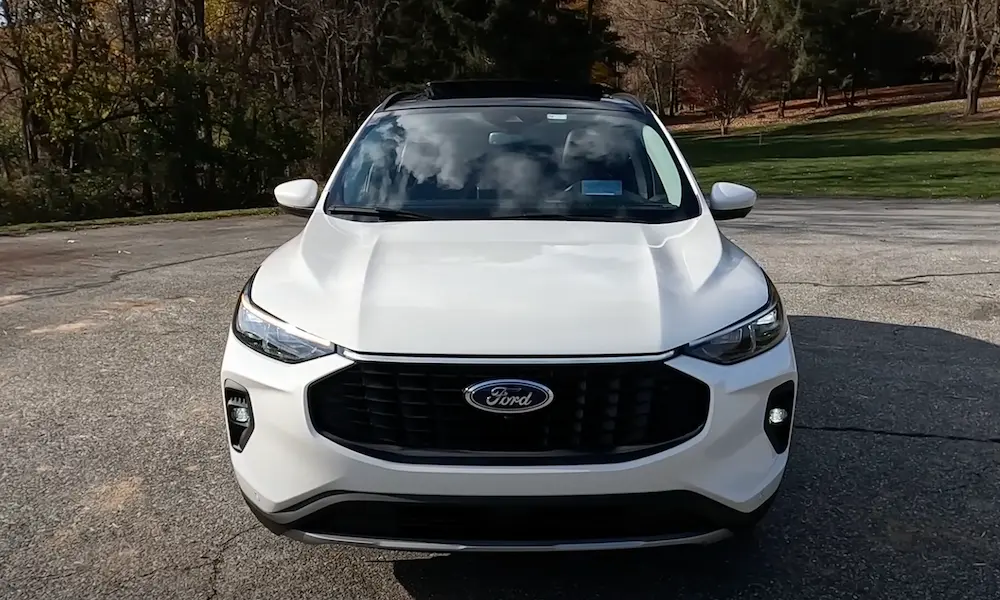
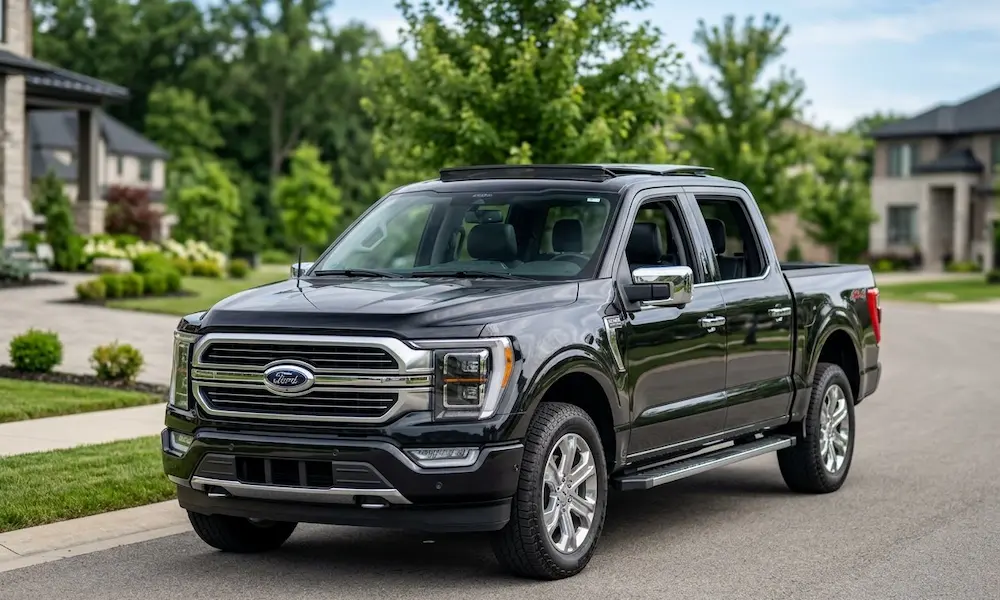
Ford paint code UG is the official designation for White Platinum Tricoat. It’s a premium multi-stage pearl finish used across Ford, Lincoln, and Mercury vehicles. You’ll also see it listed under engineering codes like M7204, M7204A, 9VJGWHA, NYA, PN3KP, and RJI depending on the catalog you’re searching.
This isn’t your standard fleet white. Ford’s styling team engineered code UG to give flagship trims a porcelain-like depth that shifts and shimmers under direct sunlight. It emphasizes body lines on premium SUVs, trucks, and sedans in a way that flat white paint simply can’t touch.
One critical rule: never rely on the color name alone when ordering touch-up paint. Color naming overlaps constantly in aftermarket catalogs, and confusing code UG with a solid gray or basic metallic white is a documented mistake. The alphanumeric code “UG” is the only reliable identifier for the correct chemical formulation.
How the Three-Layer System Works
White Platinum Tricoat earns its name. It’s a genuine three-stage coating — and understanding each layer explains why repairs require a specific approach.
Layer 1 — White Basecoat: An opaque, solid white ground coat. It masks the primer and any repaired substrate underneath, creating a uniform color foundation.
Layer 2 — Pearlescent Mid-Coat: A translucent layer loaded with microscopic synthetic mica platelets. These platelets act as tiny prisms, refracting incoming light in multiple directions rather than reflecting it straight back. That’s the iridescent shimmer you see when sunlight hits the panel at different angles.
Layer 3 — Clearcoat: A transparent polyurethane barrier that seals everything below it. It protects the color layers from UV radiation, oxidation, and mechanical abrasion while amplifying the gloss of the mica underneath.
Modern formulations of code UG are waterborne, meeting U.S. environmental regulations for low volatile organic compound emissions. The underlying urethane resins also carry natural elasticity, meaning the paint bonds to both rigid steel panels and flexible plastic bumpers without a separate flex additive.
Why Tricoat Paint Is Tricky to Match
The pearlescent mid-coat is translucent. That single fact makes everything harder.
The final color of a repair depends heavily on how many passes of mid-coat you apply:
- Too thin: The repair looks flat, chalky, and solid white — no depth, no shimmer.
- Too thick: The stacked mica platelets darken the area and push the color toward a yellowed cream or light beige.
This is exactly why a basic single-coat touch-up pen doesn’t work on a tricoat surface. It can’t replicate the light-bending physics of the original finish. The spot ends up looking like a chalky white patch — sometimes worse than the original chip.
Mottling is the other enemy. If the mid-coat goes on too heavy or at incorrect spray pressure, the suspended mica particles clump together as the solvent evaporates. You end up with dark streaks, cloudy patches, or visible striping across the repair.
Color drift adds a third challenge. Years of UV exposure, heat, and pollution subtly yellow and fade the factory clearcoat. Fresh paint mixed to exact factory specs can actually look brighter and whiter than the aged panels beside the repair. That’s why skilled technicians blend the new paint across adjacent panels to create a gradual visual transition.
How to Find Ford Paint Code UG on Your Vehicle
Open the driver’s side door and look at the vehicle certification label on the door jamb, pillar, door edge, or near the latch. It’s a vinyl sticker packed with alphanumeric data, safety certifications, and a barcode.
Find the text prefix “EXT PNT” or “EX PT” along the lower edge or beneath the barcode. The two-character factory paint code sits right next to it. It must read “UG” or “UG/M7204” to confirm White Platinum Tricoat.
Watch out for neighboring codes. The wheelbase designation “WB” and trim codes like “LX3” sit close to the paint code field. It’s easy to misread them as the paint code when the label is small or dirty.
If the label is damaged, obscured by grime, or the door was replaced after a collision, you have two options:
- Call Ford’s customer helpline at 1-800-392-3673 and provide your 17-character VIN.
- Visit a dealership parts department — they can pull your factory paint code from the manufacturing database using your VIN.
For Lincoln owners, Lincoln’s official support page also provides a cross-reference chart through the FCSD Chemicals and Lubricants portal.
Choosing the Right Touch-Up Format
The right product depends on the size of the damage. Here’s how the options stack up:
| Product Format | Target Damage | Key Components | Approx. Price (USD) |
|---|---|---|---|
| Individual Paint Pen | Micro-scratches, stone chips up to pencil-eraser size | Double-ended pen tip + fine brush | $34.95 |
| Tricoat Paint Pen Kit | Micro-scratches, stone chips up to pencil-eraser size | Basecoat pen + pearl mid-coat pen + clearcoat pen | $61.95 |
| Individual Paint Bottle | Medium scratches up to dime-size | Glass bottle with brush-in-cap applicator | $64.95 |
| Tricoat Paint Bottle Kit | Medium scratches up to dime-size | Basecoat bottle + pearl bottle + clearcoat bottle | $94.95 |
| Individual Spray Can | Single panels, mirror caps, larger scuffs | 12-oz pressurized aerosol | $79.95 |
| Tricoat Spray Can Kit | Single panels, mirror caps, larger scuffs | Aerosol basecoat + aerosol mid-coat + aerosol clearcoat | $119.95 |
| Professional Size Paint | Multiple panels, full resprays, spray-gun work | Bulk basecoat + mid-coat, pre-reduced 1:1 | From $209.95 |
For spray-gun work, you’ll also need ancillary products:
| Component | Function | Approx. Price (USD) |
|---|---|---|
| Sandable Gray Primer Aerosol | Seals bare metal or plastic | $19.95 |
| 1K High-Gloss Clearcoat Aerosol | UV-resistant single-component top coat | $19.95 |
| 2K High-Gloss Clearcoat Gallon Kit | Professional two-part clearcoat | $175.00 |
| Ultra-Cutting Creme | Levels orange peel, blends overspray | $5.99 |
| Wax and Grease Remover | Degreases substrate before painting | $4.99 |
Some premium kits include a blending solution like “Correct N Clear,” which chemically targets only the fresh touch-up paint. It lets you wipe away overflows without affecting the surrounding factory-cured clearcoat — a useful feature for tight spot repairs.
Step-by-Step Repair Protocol
Surface Prep
Wash the panel with automotive soap and dry it completely. Then wipe the area with a wax and grease remover to strip any road tar, silicone, or wax residue. These contaminants cause fish-eye defects in fresh paint.
If you’ve got bare metal or plastic exposed, apply a sandable gray primer, let it dry, wet-sand it smooth with fine-grit paper, and wipe clean with a lint-free microfiber cloth.
Agitate the Paint
Pearlescent mica particles are dense. They sink to the bottom of the container fast. Shake the basecoat and mid-coat vigorously for at least 60 seconds before application. Keep shaking or stirring between coats too. Skip this step and you’ll get a flat, off-color result every time.
The Test Card Method
This step is non-negotiable for tricoat work. It calibrates the mid-coat thickness to match your specific vehicle’s aged finish.
- Apply the solid white basecoat to a test card until fully opaque. Allow 10 minutes of flash time between coats.
- Apply a single pass of pearlescent mid-coat to the entire card.
- Mask off a section, then apply a second pass to the unmasked area.
- Repeat to create distinct sections showing one, two, and three coats of pearl.
- Apply clearcoat to the card. Once cured, hold it against the vehicle panel in direct sunlight. The section that disappears into the surrounding paint tells you exactly how many mid-coat passes you need.
Control Your Environment
Work in a clean, dust-free space with temperatures between 60°F and 80°F. Keep relative humidity below 60%. High humidity traps solvent vapors and causes “blushing” — a cloudy discoloration in the dried paint film. Temperature extremes disrupt dry times and prevent the mica platelets from aligning flat.
Apply Basecoat, Mid-Coat, and Clearcoat
Apply two to three thin passes of white basecoat with 10 minutes of flash time between each coat. Never apply heavy coats — they sag and run.
Once the basecoat is dry, apply the exact number of thin pearl mid-coat passes your test card identified. Keep the spray can or gun moving in continuous, fluid strokes. Any hesitation or slow pass pools mica particles and causes mottling.
After the mid-coat dries, apply two to three coats of high-gloss clearcoat with smooth overlapping sweeps.
Buff and Polish
Let the clearcoat cure for 24 to 48 hours before touching it. Then buff the repair with a soft microfiber cloth and an ultra-cutting rubbing compound. This step levels any orange-peel texture at the repair boundary and blends the repaired area into the surrounding factory finish.
Which Vehicles Use Ford Paint Code UG?
Code UG has covered Ford, Lincoln, and Mercury models for over 15 years. Here’s a quick reference:
| Brand | Models | Production Years |
|---|---|---|
| Ford | F-Series (F-150, F-250–F-550, Raptor) | 2008–2024 |
| Ford | Edge, Expedition, Flex | 2009–2019 |
| Ford | Fusion | 2009–2020 |
| Ford | Explorer, Taurus | 2010–2019 |
| Ford | Escape | 2011–2019 |
| Ford | Focus | 2012–2019 |
| Ford | C-Max / C-Max Hybrid | 2013–2019 |
| Ford | Fiesta | 2016–2019 |
| Ford | GT / Mustang | 2017–2019 |
| Ford | EcoSport, Ranger | 2018–2020 |
| Lincoln | Navigator / Navigator Black Label | 2009–2015, 2020–2027 |
| Lincoln | MKZ, MKC, MKX, MKT, Continental | 2013–2019 |
| Mercury | Mountaineer, Sable, Grand Marquis | 2001–2024 |
Code UG started as a flagship-only finish on vehicles like the Lincoln Navigator and high-trim F-150s. Its premium look drove Ford to roll it out across compact and mid-size platforms like the Focus and C-Max as a premium package upgrade. That’s why it’s now one of the most common multi-stage white finishes that collision and refinishing shops see in the U.S.
That span of vehicles — from a base-trim Focus to a Lincoln Navigator Black Label — also means there’s a significant range of panel aging and color drift in the wild. Always run the test card method before committing paint to your vehicle.