Your dashboard just lit up like a Christmas tree. Engine light’s on, steering feels weird, and your scanner shows a Ford U3000 code. Don’t panic—this isn’t a death sentence for your ride. This guide breaks down what’s actually happening with your control modules and shows you the smartest path to getting back on the road without emptying your wallet.
What Is the Ford U3000 Code?
The U3000 is a network diagnostic code that tells you something’s wrong with a control module. Think of your car’s modules like computers that talk to each other constantly. When one stops communicating properly, the main computer (your PCM) throws this code.
Here’s the key detail: U3000 rarely shows up alone. It usually comes with a two-digit sub-code that pinpoints the exact problem. You might see U3000:49, U3000:96, or U3000:53—each tells a different story about what failed.
The “U” prefix means it’s a network issue, different from engine codes (P), chassis codes (C), or body codes (B). This matters because you’ll need diagnostic tools that can read manufacturer-specific codes, not just a basic OBD-II scanner from the auto parts store.
Common Control Modules That Trigger U3000
Several modules in your Ford can trigger this code. Each controls critical systems you depend on daily.
Power Steering Control Module (PSCM)
Your power steering relies on an electric motor managed by the PSCM. When this module fails, you’ll lose steering assist—suddenly turning the wheel feels like you’re back in the 1970s.
Ford Focus and C-Max owners know this pain well. Water gets into the steering rack, corrodes the torque sensor, and bam—U3000:53 shows up. That’s a permanent failure code that won’t clear without replacing the entire steering assembly.
The 2021-2023 F-150 has a different issue. Low battery voltage during startup causes the PSCM to fail its self-check, logging U3000:96. Weirdly, the module isn’t actually broken—it just needs a voltage reset.
ABS Control Module
Your ABS module manages anti-lock brakes, traction control, and stability systems. When it fails with U3000:49, you lose all those safety features—though regular braking still works.
The ATE MK100 unit in 2015+ Fords is notorious for internal circuit board failures. Moisture from battery venting or corrosion on the 46-pin connector kills the electronics inside.
Without ABS, you’re at serious risk in rain or snow. Your wheels can lock up during hard braking, and you lose directional control when you need it most.
Image Processing Module A (IPMA)
This module powers your advanced safety features—lane keeping, pre-collision assist, adaptive cruise control. IPMA failures in 2021-2023 F-150s and Mustang Mach-Es often show U3000:49 or U3000:89.
Most IPMA issues aren’t actual hardware failures. They’re connectivity problems with the coaxial cables running to your front camera. Ford’s fix involves replacing the cables and securing them with 3M film tape instead of zip ties near the airbag.
Transmission Control Module (TCM)
Focus and Fiesta owners with the notorious dual-clutch transmission see U3000 codes before complete transmission failure. Customer Satisfaction Program 14M02 extended TCM warranty to 10 years or 150,000 miles—check if you’re covered before paying out of pocket.
What Causes Control Modules to Fail?
Understanding why modules fail helps you prevent repeat issues and avoid throwing money at the wrong parts.
Battery and Voltage Problems
This is huge—maybe 60% of U3000 codes trace back to electrical supply issues. Control modules need stable 12V power and solid ground connections with less than 0.1Ω resistance.
When your battery drops below 12.4V at rest or dips under 8V during cranking, modules freak out. They might fail their startup routines, corrupt internal memory, or shut down completely to protect themselves.
Battery Health and Module Impact
| Battery Voltage | Module Status | Common Codes |
|---|---|---|
| 13.5V – 14.5V (running) | Normal operation | None |
| 12.4V – 12.6V (rest) | Healthy baseline | None |
| < 12.4V (rest) | Intermittent faults | U3000, U3003 |
| < 8.0V (cranking) | Critical brownout | U3000:96, U3001:68 |
Before you replace any module, load-test your battery. A weak battery can make a perfectly good module look broken.
Water and Corrosion
Ford mounted some modules in questionable spots. ABS units sit near the battery, where acid mist from venting destroys connectors. Focus steering racks leak water into the torque sensor through worn boots.
Road salt accelerates everything. The Fusion recall (19S26) addressed steering motor bolts that corroded so badly the motor could separate from the rack.
Wiring and Connector Issues
Your modules talk over a Controller Area Network (CAN)—twisted wire pairs carrying differential signals. One corroded pin or damaged wire kills communication.
The network needs exactly 120Ω total resistance from termination resistors. Too much or too little resistance, and modules can’t hear each other properly.
Software Corruption
If power cuts during a software update—whether over-the-air or at the dealer—you can corrupt the module’s firmware. The module becomes unreadable, permanently logging U3000.
This is why techs disconnect battery maintainers during flashing procedures and verify stable voltage first.
Reading U3000 Sub-Codes: What the Numbers Mean
The two-digit sub-code after the colon tells you what actually failed inside the module.
U3000:49 – Internal Electronic Failure
This is the most common. It means the module detected something wrong with itself but can’t specify what. Could be a failed chip, corrupted memory, or damaged circuit board.
U3000:96 – Internal Electronic Failure (Voltage-Related)
Seen mostly in PSCM failures during startup. The module locked itself out after a low-voltage event. Often fixable with a reset using Ford software.
U3000:53 – Permanent Deactivation
The worst one. This code locks into EEPROM memory and won’t clear without specialty programming or replacement. Common in water-damaged Focus steering racks.
U3000:41 – Checksum Failure
The module’s internal data doesn’t match its error-checking code. Usually means corrupted memory from a failed software update or electrical spike.
U3000:42 – General Memory Failure
The module can’t read or write to its memory chips. Often seen in Audio Control Modules where the infotainment system freezes or resets constantly.
U3000:89 – Condition Not Met
A prerequisite for module operation failed. IPMA throws this when the camera can’t align during startup due to poor cable connection.
Common Sub-Codes by Module
| Sub-Code | What It Means | Modules Affected |
|---|---|---|
| :49 | Internal electronic failure | ABS, PSCM, IPMA |
| :96 | Voltage-induced logic error | PSCM |
| :53 | Permanent deactivation | PSCM (Focus/C-Max) |
| :41 | Checksum/memory error | OCSM, ACM |
| :89 | Prerequisite condition failed | IPMA, EBB |
How to Diagnose Ford U3000 Properly
Throwing parts at this code wastes money fast. Here’s the diagnostic sequence that actually works.
Step 1: Test Your Battery and Charging System
Start here every single time. Use a proper load tester, not just a voltmeter. Your battery should hold 12.6V at rest and not drop below 9.6V under load.
Check voltage at the module connector itself while cranking. If it dips below 8V, you’ve found your problem—fix the electrical supply before touching anything else.
Step 2: Scan All Modules
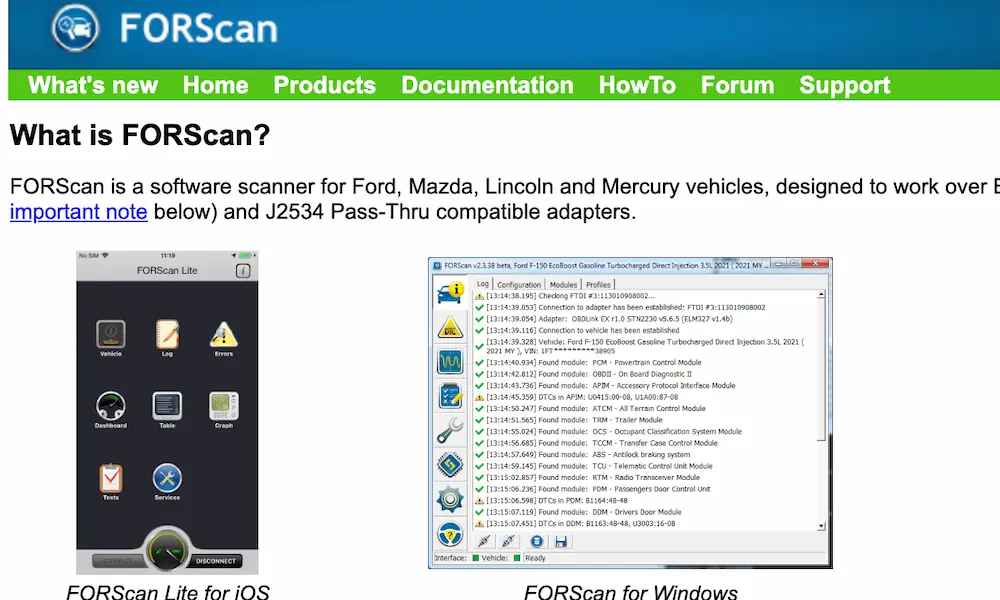
Basic code readers won’t cut it. You need a scanner that reads manufacturer-specific codes from all modules. Tools like the iCarsoft CR MAX or FORScan software show you which module is actually complaining.
Look for patterns. Multiple modules throwing codes at once? That’s usually electrical or CAN bus issues, not five modules failing simultaneously.
Step 3: Check Wiring and Connectors
Wiggle test everything. Ford’s own diagnostic procedures include physically moving harnesses while monitoring live data to spot intermittent connections.
Pull connectors and inspect for:
- Green corrosion (copper oxidation)
- Bent or pushed-back pins
- Moisture or oil contamination
- Melted plastic from overheating
Step 4: Test Ground Connections
Use a multimeter to check ground resistance. From the module’s ground pin to battery negative should read less than 0.1Ω. Anything higher indicates corrosion or a broken ground strap.
Ground issues cause the weirdest symptoms because voltage tries to find alternate paths through sensitive circuits.
Step 5: Review TSBs and Recalls
Before buying anything, cross-reference your VIN with Ford’s service campaigns. Many U3000 issues are covered under extended warranties or recalls.
DIY vs. Professional Repair: Making the Right Call
Some U3000 fixes you can handle at home. Others need dealer equipment. Here’s how to decide.
What You Can Do Yourself
Battery and Connection Repairs
Testing battery health, cleaning terminals, and fixing ground connections don’t require special tools. This solves more U3000 codes than most people realize.
Basic Code Reading
FORScan software with an ELM327 adapter lets you read detailed codes and live data for under $50 total. It’s incredibly useful for Ford diagnostics.
Connector Cleaning
Removing and cleaning multi-pin connectors with electrical contact cleaner and dielectric grease prevents future corrosion.
What Needs Professional Help
Module Programming
Replacement modules need “As-Built” data programmed in using Ford’s FDRS software. Dealers have cloud access to this; most independent shops don’t.
Camera Alignment and Calibration
ADAS features require precise alignment after IPMA replacement or windshield work. This needs specialized targets and procedures.
Warranty and Recall Work
If your repair is covered under Customer Satisfaction Programs or recalls, only dealers can perform the work at no charge.
Cost Breakdown: What to Expect
Prices vary wildly based on which module failed and where you go for repairs.
Power Steering Control Module (PSCM)
- New from dealer: $800-$1,200 (part only)
- Steering rack assembly: $1,500-$5,000 installed
- Independent shop labor: $100-$150/hour
ABS Control Module
- New OEM: $800-$1,100
- Remanufactured specialist: $200-$300
- Independent shop install: 2-3 hours labor
Image Processing Module A
- New module: $600-$900
- Cable replacement: $150-$300
- Calibration: $100-$200
Dealership vs. Independent Shop
| Service Type | Dealership Advantage | Independent Shop Advantage |
|---|---|---|
| Warranty/Recall | Free repairs | Not authorized |
| Complex programming | Direct FDRS access | 30-40% lower labor rates |
| Out-of-warranty | OEM parts guarantee | Aftermarket options available |
| Basic diagnostics | Comprehensive | Faster turnaround |
Dealerships charge more but handle warranty work and have factory software. Independent shops cost less for the same labor hours and often employ former dealer techs.
Remanufactured Modules: A Smart Alternative
Replacing a failed module with new OEM parts hurts financially. Remanufacturing offers a middle path.
Companies like ACTRONICS specialize in Ford modules. They disassemble failed units, identify the actual failed components (usually capacitors, transistors, or memory chips), and replace them with upgraded parts.
The advantage? Your original module keeps its programming and coding. You send it in, they fix the hardware fault, and you reinstall it—no FDRS programming needed. Cost runs about 20% of a new module.
For Focus/C-Max steering modules with the permanent U3000:53 code, specialists can erase the EEPROM memory and reload factory data. This requires bench work and specialty programmers, but saves $4,000+ versus a new rack.
Recalls and Extended Warranties You Should Know About
Ford has addressed several U3000-related issues through official actions.
Recall 15S18 – Power Steering (2011-2013 Explorer, 2011-2012 Fusion)
This recall covers motor position sensor failures that cause sudden loss of power steering assist. The fix is a software update that provides warnings before failure and easier manual steering. If your car already had U3000:46, U3000:49, or U3000:96 codes stored, dealers replace the entire steering gear.
Recall 19S26 – Steering Motor Bolt Corrosion (2013-2016 Fusion)
Road salt corrodes the bolts holding the steering motor to the rack. The bolts can break, allowing the motor to separate. Ford replaces affected bolts and adds protective coating.
Recall 25S77 – Electronic Brake Booster (2025 F-150, Ranger, Bronco)
Voltage spikes can shut down the brake booster motor, eliminating power assist and significantly increasing stopping distance. This one’s fixed with an over-the-air software update.
Customer Satisfaction Program 14M02 – TCM (2011-2016 Focus/Fiesta)
Extended warranty to 10 years/150,000 miles for the Transmission Control Module in dual-clutch transmission vehicles. If your transmission acts weird and throws U3000 codes, check your VIN—you might get a free TCM replacement.
The NHTSA Consent Order and What It Means
In November 2024, Ford paid a $165 million civil penalty for failing to recall defective vehicles quickly enough and providing inaccurate recall information.
Part of the settlement requires Ford to build better electronic testing facilities and improve component traceability. For you, this means Ford will likely be more aggressive about issuing recalls for control module failures going forward.
If you’re experiencing U3000 issues, file a complaint with NHTSA. When enough reports pile up about the same problem, it triggers investigations that lead to recalls—getting your repair covered for free instead of out-of-pocket.
Bottom Line: Smart Approach to U3000 Fixes
The Ford U3000 code isn’t a mystery once you understand what’s actually happening. Start with the simple stuff—battery testing and connector inspection solve more cases than anyone expects. Use the right diagnostic tools to identify the failing module and the specific sub-code.
Check for recalls and service campaigns before spending a dime. Your repair might be covered. If you need to replace a module, consider remanufacturing services that fix the actual failure instead of replacing entire assemblies.
For warranty work and complex programming, dealerships make sense. For out-of-warranty repairs, independent shops with Ford-specific tools save you money without sacrificing quality. Either way, fix the root cause—whether that’s a weak battery, corroded ground, or water leak—or you’ll be back in the same spot in six months.