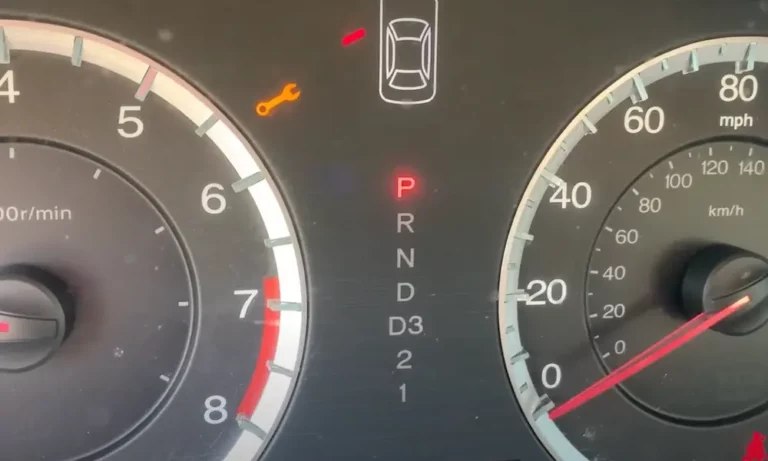
That little wrench icon on your Ford dashboard just lit up, and now you’re wondering if you should pull over or keep driving. It’s Ford’s way of saying something in the powertrain needs attention — and ignoring it can turn a cheap fix into a very expensive one. Read to the end, and you’ll know exactly what’s happening and what to do next.
What Is the Ford Wrench Light?
The ford wrench light on your dashboard is Ford’s proprietary Powertrain Malfunction Indicator. It’s not the same as your check engine light. Think of it as a second-tier warning system that targets problems directly affecting how power gets from your engine to your wheels.
The wrench light focuses on the electronic throttle control system, the transmission, and four-wheel or all-wheel drive hardware — systems that can compromise your safety if they fail.
Here’s a quick breakdown of the key differences:
| Feature | Check Engine Light (MIL) | Wrench Light |
|---|---|---|
| Standard | OBD-II (Universal) | Ford Proprietary |
| Targets | Emissions, fuel trim, exhaust | Throttle control, transmission, 4WD/AWD |
| Common causes | O2 sensors, EVAP leaks | Throttle body, sensors, lead frame |
| Triggers limp mode? | Rarely | Very often |
| Resets with key cycle? | Usually needs two drive cycles | Often resets, then returns |
What Happens When the Wrench Light Comes On?
Most of the time, your truck or car drops into “limp mode” — also called Fail-Safe Management. The PCM (Powertrain Control Module) caps your speed and power to protect the engine and transmission from further damage.
Branch Automotive explains that while limp mode feels frustrating, it’s actually doing you a favor. It keeps a manageable problem from becoming a catastrophic one.
⚠️ Don’t drive extended distances in limp mode. It can damage your catalytic converter from incomplete combustion and wear out transmission clutches faster.
The #1 Cause: Electronic Throttle Body Failure
The most common reason the ford wrench light on comes on? A failing electronic throttle body (ETB).
Your Ford uses a drive-by-wire system — no physical cable between the gas pedal and the throttle. Instead, sensors talk to each other electronically. When those signals stop matching up, the PCM panics and lights the wrench.
Three Ways the Throttle Body Fails
1. Carbon buildup
Oil vapors create a carbon ring around the throttle plate. The motor works harder to move the blade, exceeds its current limits, and the PCM flags it. Ford’s own technical documentation confirms this is one of the most preventable causes.
2. Dirty or corroded contacts
Contaminated potentiometers inside the ETB send noisy, inconsistent signals. The PCM can’t trust the data, so it shuts things down.
3. Motor wear from heat
The small DC motor inside the throttle body lives in a hot environment. Over time, repeated heating and cooling cycles wear out the brushes or cause internal shorts.
Common Throttle-Related Fault Codes
| DTC Code | What It Means | Effect |
|---|---|---|
| P2111 | Throttle stuck open | Triggers forced idle — safety critical |
| P2112 | Throttle stuck closed | Engine may stall or not start |
| P2135 | TPS voltage mismatch | Limp mode activated |
| P2107 | TAC module processor fault | Internal controller failure |
| P2110 | Forced limited RPM | PCM caps engine speed |
CarParts.com breaks down P2111 and P2110 in detail if you want to dig into a specific code.
The 6R80 Transmission Lead Frame Problem
If you own a 2011–2014 Ford F-150, Expedition, or Mustang and you’re seeing the ford wrench light on, pay close attention here.
These trucks use a 6R80 transmission with a molded lead frame — a plastic wiring assembly submerged inside the transmission case. The Output Speed Sensor (OSS) lives on this frame and tells your PCM how fast the output shaft is spinning.
When the OSS fails, Edmunds reports the PCM can misread vehicle speed as zero while you’re doing 65 mph on the highway — and command an immediate downshift to first gear. That’s not a rough shift. That’s a dangerous loss of control.
Ford’s Service Programs for This Issue
Ford launched three programs to address this. If your VIN falls within the affected range, check with your dealer immediately.
| Program | Type | Coverage |
|---|---|---|
| 16S19 | Safety Recall (software) | 2011–2012 F-150, Expedition, Navigator, Mustang |
| 16N02 | Extended warranty (hardware) | Same vehicles — 10 yr/150k miles |
| 19N01 | Extended warranty (hardware) | 2011–2013 F-150, 2012–2013 Expedition/Navigator |
Codes associated with this failure include P0720, P0722, P0731, and P1500.
Electrical Problems That Trigger the Wrench Light
Here’s something most people don’t know: the ford wrench light on doesn’t always mean a mechanical failure. Sometimes it’s purely electrical.
Weak Battery
A dying battery struggles to maintain voltage during startup. If voltage drops below ~10.5V while cranking, the PCM and TCM lose sync. Branch Automotive confirms this can make the wrench light appear immediately after startup, then disappear once the alternator recharges the battery. If this sounds familiar, test your battery before spending money on anything else.
Batteries typically last five to seven years. If yours is older, that’s your first suspect.
Wiring Damage
These issues are sneaky and hard to find without proper equipment:
- Rodent damage — Mice love chewing wires in the engine valley near knock sensors and cam position sensors
- Corrosion — Connectors near the transmission or wheel speed sensors corrode fast when exposed to road salt
- Heat damage — Wiring routed near exhaust manifolds gets brittle and can break under engine load
Model-Specific Wrench Light Issues You Should Know
2021–2022 F-150 PowerBoost Hybrid
A TSB (23-2357) from NHTSA addresses a conflict between the PCM software and the auxiliary battery isolator, logging code P2C44:00. The fix requires software updates across the PCM, ABS, and Battery Energy Control Module, plus a physical isolator replacement. If you own one of these and the wrench light is on, this TSB is your starting point.
Ford F-250 / Power Stroke Diesel
Bulletproof Diesel notes that diesel-specific wrench light triggers include:
- Clogged oil cooler — The PCM monitors oil-to-coolant temperature differences. A big gap triggers the wrench light and reduces power to protect the engine
- Variable Geometry Turbo (VGT) vane sticking — Excessive boost pressure activates the wrench light to protect head gaskets
2017–2019 Ford Fusion and Escape (1.5L EcoBoost)
Customer Satisfaction Program 19B37 covers a coolant intrusion issue where coolant leaks into the cylinder bores. The resulting misfires and torque imbalance can light up both the check engine light and the wrench light simultaneously.
Separately, the 2013–2016 Fusion and 2013–2019 Escape were recalled under 22S43 for shifter cable bushing failure. When the bushing breaks, your shifter says “Park” but the transmission is still in Drive. The TCM catches this mismatch and turns on the wrench light.
How Techs Actually Diagnose the Ford Wrench Light
A generic OBD-II reader from an auto parts store often won’t cut it here. RepairPal confirms that many wrench-light codes live in the TCM or other modules that cheap scanners can’t access.
Proper diagnosis involves:
- Full module scan — Checking not just the PCM, but also the TCM, ABS, and Body Control Module
- Live data graphs — Watching APP1, APP2, TPS1, and TPS2 voltage sweeps in real time to spot dropouts
- Circuit testing — Verifying the 5V reference signal and ground at the throttle body and transmission connectors
- KAM reset — After replacing parts like a throttle body, the PCM needs a Keep Alive Memory reset and a relearn procedure so it can adapt to the new component
Ford’s Integrated Diagnostic System (IDS) or FORScan (a great enthusiast-grade alternative) gives access to freeze frame data — a snapshot of every sensor value at the exact moment the fault triggered.
What Does It Cost to Fix?
Here’s a realistic look at repair costs based on RepairPal estimates:
| Repair | Part Cost | Labor | Total Range |
|---|---|---|---|
| Throttle Body (F-150) | $280–$420 | 1.0–1.5 hrs | $380–$710 |
| Throttle Body (Fusion/Escape) | $250–$350 | 1.5–2.0 hrs | $400–$570 |
| Molded Lead Frame (6R80) | $300–$450 | 3.0–4.5 hrs | $700–$1,200 |
| Output Speed Sensor | $100–$200 | 2.5–4.0 hrs | $450–$800 |
| Accelerator Pedal Assembly | $60–$150 | 0.5–1.0 hr | $150–$300 |
| Battery Replacement | $150–$250 | 0.3–0.5 hr | $180–$320 |
Quick Things to Check Before Calling a Shop
Before you schedule a repair, run through these yourself:
- ✅ Check your battery age — Five-plus years old? Test it first
- ✅ Look under the hood for chewed wires — Rodents love quiet engine bays
- ✅ Check for open recalls on your VIN — Visit NHTSA.gov or your Ford dealer
- ✅ Try a key cycle — Turn off, wait 30 seconds, restart. Note if the light returns
- ✅ Use FORScan — It’s free software that reads Ford-specific codes your auto parts store scanner misses
The ford wrench light on is one of those warnings that rewards quick action. Catch the root cause early — whether it’s a dirty throttle body, a weak battery, or a transmission sensor — and you’ll keep the repair bill from snowballing into something much worse.