Is your Furrion 12V fridge acting up during your camping trip? Nothing ruins an outdoor adventure faster than finding all your food spoiled. These popular RV refrigerators offer great convenience with their compressor-based cooling that doesn’t need propane or AC power—but they’re not without their frustrations. I’ll walk you through the most common Furrion 12V fridge problems and how to fix them before calling in professional help.
Most Common Furrion 12V Fridge Problems
Furrion refrigerators have developed quite a reputation in the RV community—and not always a good one. Many owners report needing multiple replacements within short timeframes. According to data from RV forums and support channels, the most frequent issues include:
| Problem | Percentage of Users Affected | Primary Cause |
|---|---|---|
| Hard Reset Requirements | 35% | Power supply fluctuations |
| Complete System Failures | 28% | Control board malfunctions |
| Temperature Inconsistency | 22% | Circulation fan problems |
| Fuse Problems | 12% | Electrical surges |
| Other Issues | 3% | Various causes |
Hard Reset: Your First Troubleshooting Step
If your Furrion 12V fridge suddenly stops working, a hard reset should be your first move. This simple procedure resolves over a third of all reported problems, making it the most important troubleshooting step you can take.
Here’s how to properly perform a hard reset:
-
Disconnect ALL power sources:
- Shore power (120V AC)
- Battery power (12V DC)
- Solar power (12V DC)
-
Wait 5-10 minutes for the system to completely clear
-
Reconnect power sources
Don’t just flip the battery disconnect switch—many Furrion refrigerators connect directly to the battery, bypassing this switch entirely. For a proper reset, you need to physically disconnect power at the source.
Voltage Issues: The Silent Killer
Your Furrion 12V fridge is picky about power. These units operate within a strict voltage range of 10.5V to 15V DC. Anything outside this range will trigger protective shutdowns.
If your fridge keeps cutting out, especially when boondocking, check your battery voltage. Lead-acid batteries should maintain at least 12.6V when fully charged, while lithium systems typically run between 13.7V and 14.7V during charging.
Here’s what to watch for:
- Test voltage at the refrigerator connection point, not just at the battery terminals
- Look for voltage drops through wiring and connections
- Check for high resistance in supply circuits, which can trigger low-voltage cutouts
- Consider installing a voltage monitoring system to prevent damage
Temperature Control Problems: When Cold Isn’t Cold Enough
Is your freezer working fine while the refrigerator section stays warm? You’re not alone. This affects about 22% of Furrion owners and usually stems from air circulation problems.
These refrigerators cool differently than residential models—all cooling happens in the freezer section, with a fan circulating cold air to the refrigerator compartment. When this circulation system fails, you get an ice-cold freezer and a warm fridge.
To address temperature inconsistencies:
- Check that the circulation fan is working
- Ensure proper ventilation around the unit (minimum 3 inches of clearance behind)
- Make sure food items aren’t blocking air vents inside the refrigerator
- Keep the refrigerator reasonably full but not overcrowded
Model-Specific Problems: FCR20DCAFA Series
The popular 20 cubic foot FCR20DCAFA model has its own set of recurring issues. If you own this model, be on the lookout for:
Complete System Failures
If neither the lights nor cooling function, check:
- The 15-amp inline fuse located under the bottom vent plate
- Twin 40-amp fuses on the control board
- Power connections for loose wires or corrosion
Temperature Control Issues
This model often maintains refrigerator temperatures between 39-45°F instead of the desired 32-36°F. Potential causes include:
- Faulty circulation fans
- Temperature sensor issues
- Inadequate ventilation around the unit
Model-Specific Problems: FCR16DCASA Series
The 16 cubic foot FCR16DCASA model has been subject to multiple recalls and replacements. Some users report going through three or more units within their warranty period.
“FF” Error Code
This error indicates freezer fan failure. When you see this code:
- Check for physical obstructions around the fan
- Listen for unusual fan noises
- Contact support for potential warranty service
Control Board Failures
Control board issues often appear as intermittent operation or complete shutdown. Unfortunately, accessing the control board requires refrigerator removal in most cases, making repairs complex.
Finding and Replacing Blown Fuses
Fuse problems account for 12% of Furrion refrigerator failures and vary by model. Here’s where to look:
- FCR20DCAFA: 15-amp inline fuse under the bottom vent plate (accessible without removing the refrigerator)
- FCR16DCASA: Fuses typically located behind the refrigerator, requiring unit removal
- All models: May have additional fuses in the main RV electrical panel
Always replace fuses with the exact same amperage rating. Using a higher-rated fuse can cause serious electrical damage.
Control Board and Electronic Failures
Control board failures represent 15% of reported problems and often require professional diagnosis. These sophisticated boards regulate compressor operation, temperature control, and monitoring.
Watch for these warning signs:
- Blinking interior lights
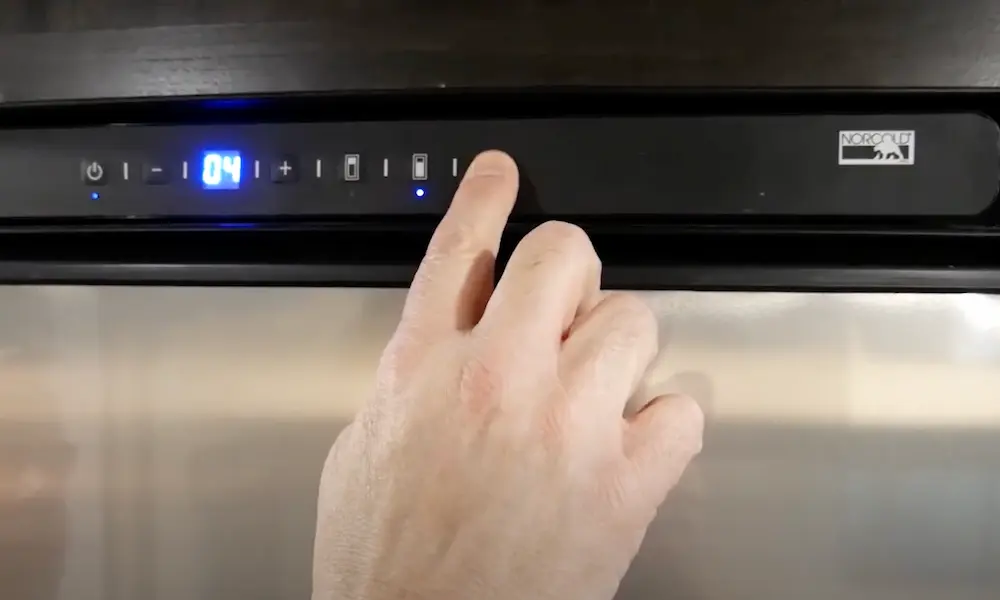
- Unresponsive control panels
- Error codes on the display
- Refrigerator cycling on and off frequently
Replacement parts can be difficult to source and installation requires technical expertise. The main control panel for the FCR20DCAFA carries part number C-FCR20DCAFA-009, while other models have their own specific parts.
Warranty Coverage for Your Furrion Refrigerator
Furrion has reduced warranty coverage from two years to one year for many models. If you’re experiencing problems, be aware that:
- Warranty coverage includes manufacturing defects
- Damage from voltage issues is typically excluded (despite causing many failures)
- Documentation of all repairs and voltage-related problems is essential for warranty claims
Technical support is available through Lippert Components at 432-547-7378, as Lippert acquired Furrion’s RV appliance division. You can also find resources at support.lci1.com for troubleshooting guides and technical documentation.
Checking the Door Seals and Gaskets
Poor door sealing is an often-overlooked cause of cooling problems. When door seals fail:
- Cold air escapes
- The compressor works harder
- Energy consumption increases
- Interior temperatures become inconsistent
To check your door seals:
- Close the door on a dollar bill
- Try to pull the bill out—you should feel resistance
- Test multiple locations around the door
- Replace cracked or damaged gaskets
Compressor Issues: When the Heart of Your Fridge Fails
The compressor is the heart of your refrigeration system. If it’s not running properly, nothing will cool. Common compressor problems include:
Compressor Won’t Start
If the compressor won’t start at all:
- Check for power at the compressor terminals
- Listen for clicking sounds that indicate the compressor is trying to start
- Feel the compressor—if it’s hot to the touch, it may have thermal protection activated
Compressor Runs But Doesn’t Cool
If the compressor runs continuously without cooling:
- Check for refrigerant leaks (look for oily residue around connections)
- Ensure the condenser coils are clean and unobstructed
- Verify proper ventilation around the refrigerator
Unfortunately, sealed refrigeration systems cannot be serviced in the field, as they lack service ports for refrigerant evacuation. Major compressor issues typically require unit replacement.
Display Panel Problems and Error Codes
Furrion refrigerators communicate issues through error codes on the display panel. Common codes include:
| Error Code | Meaning | Possible Solution |
|---|---|---|
| E1 | Temperature sensor failure | May require sensor replacement |
| E2 | Defrost sensor failure | Check wiring or replace sensor |
| FF | Freezer fan failure | Check for obstructions or replace fan |
| EE | Control board error | Hard reset or board replacement |
| Lo | Low voltage warning | Check power supply |
If the display panel is completely blank:
- Check power supply
- Perform a hard reset
- Inspect the ribbon cable connecting the display to the main board
Preventative Maintenance to Avoid Furrion 12V Fridge Problems
Prevention is better than cure. These maintenance tips can help extend the life of your Furrion refrigerator:
Power Supply Maintenance
- Monitor battery voltage regularly
- Use a quality surge protector when connected to shore power
- Consider a voltage stabilizer for boondocking
Cleaning and Ventilation
- Keep condenser coils clean
- Ensure proper airflow around the unit
- Clean door gaskets regularly with mild soap
Regular Inspections
- Check for loose connections
- Listen for unusual noises
- Monitor temperature performance
- Inspect door seals quarterly
Power Consumption: Managing Your Battery Life
Furrion 12V refrigerators draw significant power. Understanding consumption helps manage your battery resources:
| Operating Mode | Approximate Power Draw |
|---|---|
| Startup/Initial Cooling | 7-9 amps |
| Normal Operation | 2-4 amps |
| Standby | 0.5-1 amp |
| Daily Consumption | 40-60 amp hours |
To manage power consumption:
- Pre-cool your refrigerator on shore power before boondocking
- Keep the refrigerator full (but not overcrowded)
- Minimize door openings
- Consider upgrading to lithium batteries for better performance
When to Replace vs. Repair Your Furrion 12V Fridge
Sometimes, repairs just aren’t worth it. Consider replacement when:
- Multiple major components have failed
- Repair costs exceed 50% of replacement cost
- Unit is outside warranty period
- Same issue recurs despite multiple repairs
- Parts are no longer available
Popular replacement alternatives for Furrion refrigerators include models from Vitrifrigo, Dometic, and Norcold that offer better reliability records.
Finding Replacement Parts for Furrion Refrigerators
Common replacement parts include:
- Door assemblies (C-FCR20DCAFA-001)
- LED light strips (C-FCR20DCAFA-002)
- Main control panels (C-FCR20DCAFA-009)
- Circulation fans and sensors
Parts availability varies by model age and specific configuration. Check with:
- Lippert Components (now owns Furrion’s RV division)
- Online RV parts suppliers
- Authorized service centers
Installing a Backup Cooling System
Many frustrated Furrion owners install backup cooling systems:
- 12V Portable Coolers: Can be quickly deployed if your main fridge fails
- Secondary Mini-Fridge: Some RVers install a small, reliable mini-fridge for essential items
- Ice Chests: Traditional but effective backup for critical food items
If your travels take you far from service centers, having a backup cooling plan is smart insurance against food spoilage.
Documenting Problems for Warranty Claims
If you’re experiencing recurring issues, proper documentation strengthens your warranty position:
- Record all incidents with dates and specific symptoms
- Take photos or videos showing problems
- Save receipts for any service or parts
- Note any conversations with customer service (names, dates, case numbers)
- Keep a log of temperature readings if inconsistency is the issue
This documentation creates a paper trail that can help secure warranty replacements or repairs.
Furrion 12V refrigerators can provide reliable service when properly maintained and operated within specifications. However, their track record suggests being prepared with troubleshooting knowledge and possibly backup cooling options for extended RV travel. With the right approach, you can minimize disruptions and keep your food cold no matter where your adventures take you.