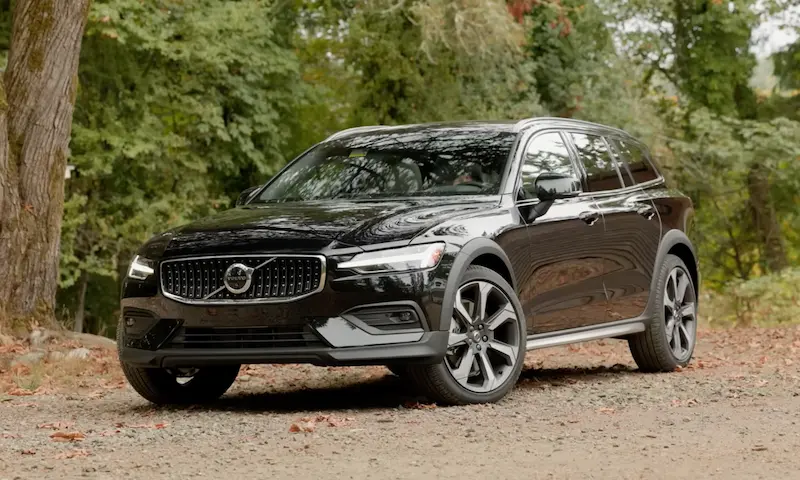
Wondering about the right fuel for your Volvo XC60? You’ve come to the right place. Whether you’ve just purchased this luxury SUV or you’re considering one, understanding the proper fuel requirements is essential for keeping your vehicle running smoothly. I’ll break down everything you need to know about the Volvo XC60 gas type, including specific recommendations for different engine variants.
Volvo XC60 Fuel Requirements: The Basics
The Volvo XC60 generally requires premium unleaded gasoline with a minimum octane rating of 91 AKI (Anti-Knock Index) in the US, which is equivalent to 95 RON (Research Octane Number) internationally. However, the specific requirements can vary depending on your XC60’s engine type.
While Volvo officially recommends premium gasoline for optimal performance and efficiency, many XC60 models can run on regular 87 AKI gasoline without causing mechanical damage. Let’s dig deeper into what this means for your specific model.
B5 Mild Hybrid Engine Fuel Requirements
If you own an XC60 with the B5 engine (the 2.0L turbocharged inline-4 with a 48V mild hybrid system), here’s what you need to know:
- Minimum Acceptable: 87 AKI (RON 91)
- Recommended: 91 AKI (RON 95) or higher
- Ethanol Compatibility: Up to E10 (10% ethanol)
Volvo’s technical documentation confirms that the B5 engine can function with 87 AKI fuel. However, using the lower octane will result in noticeable performance reductions.
T6/T8 High-Performance Engine Fuel Requirements
The high-performance T6 (turbocharged and supercharged) and T8 (plug-in hybrid) variants have stricter requirements:
- Required: 91 AKI (RON 95) or higher
- Ethanol Compatibility: Up to E10 (10% ethanol)
These engines have higher compression ratios (10.3:1 for the T6 versus 10.0:1 for the B5), making them more sensitive to fuel quality. Using regular 87 AKI fuel in these engines risks pre-ignition and potential long-term damage, despite the presence of knock sensors.
Performance Impact: Premium vs. Regular Gas
Using regular gas in a B5 engine (when premium is recommended) creates measurable performance differences:
| Performance Metric | With Premium Gas (91+ AKI) | With Regular Gas (87 AKI) | Difference |
|---|---|---|---|
| Horsepower | 250 hp (as advertised) | 235-242 hp | 3-6% loss |
| Torque | 350 Nm (as advertised) | 320-330 Nm | 5-8% loss |
| 0-60 mph Time | As rated | 0.3-0.5 seconds slower | Noticeable |
| Fuel Economy (City) | 17-19 mpg | 14-16 mpg | 15-18% worse |
| Fuel Economy (Highway) | 27-29 mpg | 24-26 mpg | 10-13% worse |
These figures are based on real-world user experiences and performance testing of the XC60 B5.
Understanding Octane Ratings Worldwide
Octane ratings can be confusing because they’re measured differently around the world:
North America (AKI Standard)
- Regular Fuel: 87 AKI (equivalent to RON 91)
- Premium Fuel: 91-93 AKI (equivalent to RON 95-98)
Europe/Asia (RON Standard)
- Standard Fuel: RON 95 (approximately 90 AKI)
- Premium Fuel: RON 98 (approximately 93 AKI)
European XC60 documentation explicitly prohibits fuels below RON 95 and recommends RON 98 for driving in high temperatures (above 38°C/100°F) to prevent engine knock.
Can You Use Ethanol Blends in the Volvo XC60?
All XC60 engines manufactured since 2020 are compatible with E10 gasoline (containing up to 10% ethanol). However, Volvo explicitly prohibits the use of:
- E85 (85% ethanol): This will damage fuel lines and injectors
- Metallic additives: These can foul oxygen sensors and catalytic converters
- Methanol-containing fuels: These cause corrosion in fuel systems
What Happens When You Use Lower Octane Fuel?
When you use 87 AKI fuel in an engine designed for 91+ AKI, several things happen:
- The engine’s ECU (Electronic Control Unit) detects the lower octane and retards ignition timing by 3-5 degrees
- This adjustment reduces peak cylinder pressure to prevent knock
- Power and torque output decrease
- Fuel consumption increases as the engine runs less efficiently
- Over time, carbon buildup on intake valves may accelerate
While modern Volvo engines have knock sensors to prevent immediate damage, long-term studies indicate that vehicles using primarily 87 AKI required carbon cleaning services approximately 15,000 miles earlier than those using the recommended 91+ AKI.
Common Misconceptions About Volvo XC60 Fuel Requirements
There’s often confusion about XC60 fuel requirements, partly because of inconsistent messaging:
Misconception: “All XC60 models can use regular gas without consequences”
While B5 engines can physically run on 87 AKI, there are significant performance and efficiency penalties. The T6/T8 models should never use regular gas long-term.
Misconception: “Premium gas is just a way for manufacturers to increase costs”
In reality, Volvo’s technical documentation confirms that premium fuel ensures the vehicle delivers its advertised power, efficiency, and long-term reliability. The engine is literally calibrated for this fuel grade.
Misconception: “You can mix regular and premium gas freely”
While occasional mixing won’t cause immediate harm, consistent use of the proper octane rating is important for long-term engine health and performance.
When Premium Gas Is Most Important for Your XC60
There are certain situations when using premium fuel becomes particularly important:
- When towing or carrying heavy loads
- During hot weather (especially above 90°F/32°C)
- During high-speed driving or mountain driving
- When maximum performance is needed
- For long-term engine health
In these high-stress scenarios, the engine is more susceptible to knock, making proper octane levels more critical.
Fuel Tank Capacity and Range
The Volvo XC60 has a fuel tank capacity of approximately 18.8 gallons (71.1 liters). Here’s what that means for your driving range:
| Engine Type | City Range (approx.) | Highway Range (approx.) |
|---|---|---|
| B5 with Premium | 320-357 miles | 507-545 miles |
| B5 with Regular | 263-301 miles | 451-489 miles |
| T6 with Premium | 283-320 miles | 432-470 miles |
| T8 PHEV (gas only) | 320-376 miles | 526-564 miles |
These ranges are calculated based on EPA fuel economy figures and real-world testing with a full tank.
Cost Analysis: Premium vs. Regular Gas
Let’s analyze the actual cost difference between premium and regular fuel for a B5 XC60 over 15,000 miles of driving:
| Factor | With Premium Gas | With Regular Gas |
|---|---|---|
| Fuel Economy (Combined) | 23 mpg | 20 mpg |
| Gallons Used | 652 gallons | 750 gallons |
| Cost Per Gallon | $4.00 (example) | $3.60 (example) |
| Total Fuel Cost | $2,608 | $2,700 |
| Engine Performance | As designed | Reduced |
| Long-term Maintenance | Standard | Potentially increased |
Despite the higher per-gallon cost, premium fuel can actually be more economical in the long run due to better fuel economy and potentially reduced maintenance needs.
Fuel-Saving Tips for Volvo XC60 Owners
To maximize efficiency regardless of which fuel you use:
- Maintain proper tire pressure (check monthly)
- Remove excess weight from the vehicle
- Use the ECO driving mode for everyday driving
- Avoid excessive idling
- Plan routes to avoid traffic congestion
- Follow the recommended maintenance schedule
- Use the Start/Stop feature (when appropriate)
- Drive smoothly, avoiding rapid acceleration and hard braking
On B5 models, the mild hybrid system helps improve efficiency, particularly in stop-and-go traffic, by recovering energy during braking.
Regional Variations in Fuel Standards
Volvo’s fuel recommendations can vary slightly by region due to different fuel standards:
- North America: US manuals permit 87 AKI for non-T6/T8 engines but note performance reductions.
- Europe: European documentation emphasizes RON 95 as the minimum standard.
- Canada: Canadian specifications align with European standards, emphasizing RON 95.
The Future of Volvo XC60 Fuel Requirements
As Volvo moves toward complete electrification, future XC60 models will likely continue the trend toward:
- More efficient engines with higher compression ratios (requiring higher octane)
- Greater hybridization (reducing overall fuel consumption)
- Eventually, full electric versions (eliminating gasoline entirely)
Until then, following Volvo’s fuel recommendations remains the best practice for current XC60 owners.
Key Takeaways on Volvo XC60 Fuel Requirements
- B5 Engine: Premium fuel (91+ AKI/RON 95+) recommended but can run on regular (87 AKI) with performance penalties
- T6/T8 Engines: Premium fuel (91+ AKI/RON 95+) required to avoid potential damage
- Ethanol: All engines accept up to E10 (10% ethanol) but nothing higher
- Performance Impact: Using regular instead of premium in a B5 reduces power by 3-6% and efficiency by 10-18%
- Cost Efficiency: Despite higher per-gallon cost, premium fuel often proves more economical due to better mileage
By following these guidelines, you’ll ensure your Volvo XC60 performs as designed while maintaining its longevity and efficiency.