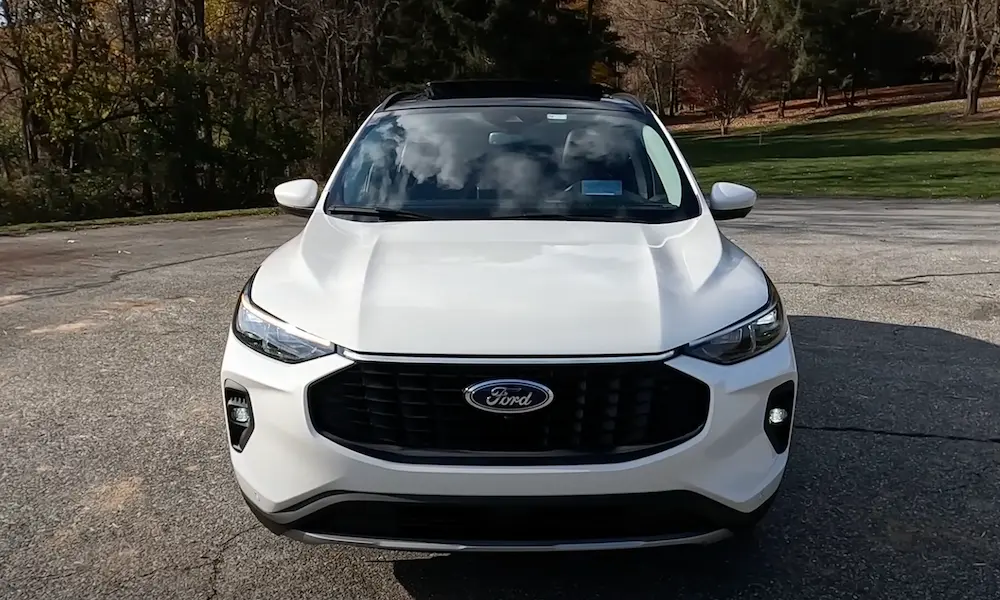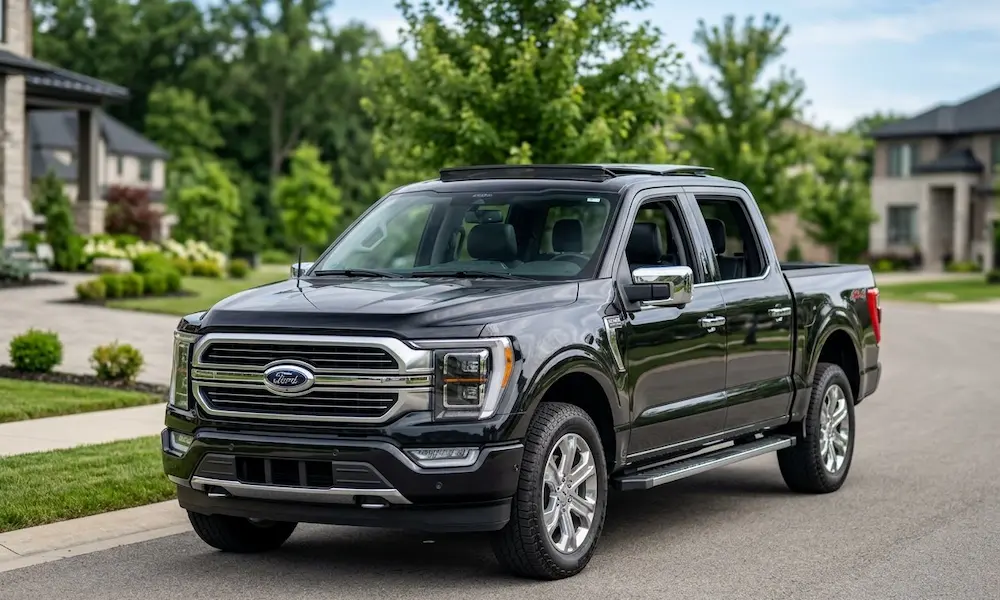
Trying to figure out how much Blue Cruise costs — and whether it’s actually worth it — can feel like reading a car lease in a foreign language. The pricing has changed dramatically over the years, and the options aren’t always explained clearly at the dealership. This post breaks down every current plan, what changed, and which option makes the most sense for how you drive.
What Is Ford BlueCruise?
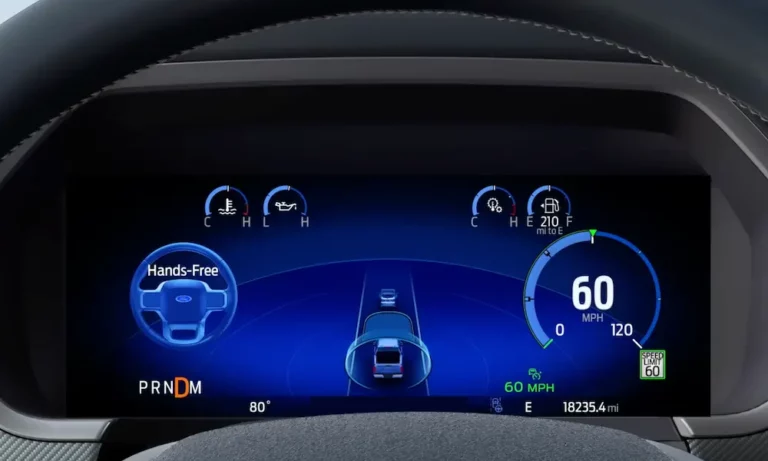
BlueCruise is Ford’s hands-free highway driving system. Once you’re on a pre-mapped divided highway, you can take your hands off the wheel and let the car steer, brake, and accelerate on its own.
It works on over 130,000 miles of mapped highways across North America, called Blue Zones. An infrared camera watches your eyes the whole time, so you still need to stay alert and facing the road.
It’s not self-driving. It’s driver assist — but a genuinely useful one on long highway trips.
How Much Does Blue Cruise Cost Right Now?
As of October 1, 2024, Ford restructured its BlueCruise pricing to make it simpler and, honestly, much more affordable. There are now three clear options.
| Plan | Current Price | Previous Price |
|---|---|---|
| Monthly | $49.99/month | $75.00/month |
| Annual | $495/year | $800/year |
| One-Time Purchase | $2,495 | $2,100 (3-year) |
Let’s break down what each plan actually means for you.
Monthly Plan: $49.99/Month
The monthly plan is pure flexibility. There’s no minimum commitment, so you can turn it on for a summer road trip and cancel when you’re back to short local drives.
At roughly fifty dollars, it sits comfortably alongside your other monthly subscriptions. It’s a smart pick if your highway driving is seasonal or you just want to test it before committing long-term.
Annual Plan: $495/Year
If you commute on the highway regularly, the annual plan saves you real money. Paying $495 upfront instead of $49.99 every month saves you about $105 over a full year.
Some 2025 model year vehicles include the annual plan as standard equipment or offer it as a dealer option at the point of sale. Worth asking about when you’re at the dealership.
One-Time Purchase: $2,495
This is the most interesting option, and it’s relatively new. You pay once, and you get a minimum of seven years of BlueCruise service — no monthly bills, no annual renewals.
Here’s the math: seven annual renewals at $495 each would cost you $3,465. The one-time purchase saves you about 28% compared to that path.
A few important details:
- The purchase ties to your car’s VIN, not your account
- You can’t transfer it to another vehicle if you sell
- The next owner of your car inherits the remaining service — which could boost your resale value
- Dealerships can roll this cost into your auto loan, so it doesn’t hit your wallet all at once
- Ford even offered $250 in bonus cash to buyers adding this option on select 2025 Explorer models
The 90-Day Free Trial
Ford installs BlueCruise hardware on most compatible vehicles straight from the factory. When you buy, you get a free 90-day trial that starts the day your warranty begins.
That’s plenty of time to use it on a real trip and decide whether it’s worth paying for. After the trial, BlueCruise locks and you’ll keep standard adaptive cruise and lane-keeping — just not hands-free driving.
Why Did Ford Cut the Price So Dramatically?
The short version: they overcharged, customers pushed back hard, and Ford corrected course.
When early adopters’ initial three-year periods expired, Ford announced renewals would cost $800 per year or $75 per month. Customers were furious. Many had paid $995–$2,100 upfront for the hardware prep package and felt they were now being charged again to use hardware they already owned.
Dealerships had also been quoting buyers around $200 per year for renewals, making the $800 price feel like a bait-and-switch.
Ford dropped the price to $495 annually and applied the reduction retroactively to anyone already paying the higher rate. They also gave 2021 Mustang Mach-E owners a special legacy deal — $200/year for an additional three-year term before moving to current pricing.
The lesson here is clear: there’s a ceiling to what car owners will pay for software subscriptions on hardware they already own.
What Vehicles Have BlueCruise?
Not every Ford or Lincoln comes with BlueCruise. Availability depends on model, year, and trim level. Here’s a quick overview:
| Vehicle | Supported Trims | Hardware Status |
|---|---|---|
| Mustang Mach-E (2021–2026) | All trims | Standard on all |
| F-150 (2021–2026) | Lariat, King Ranch, Platinum, Limited, Tremor, XLT (2024+) | Standard on premium; optional on XLT |
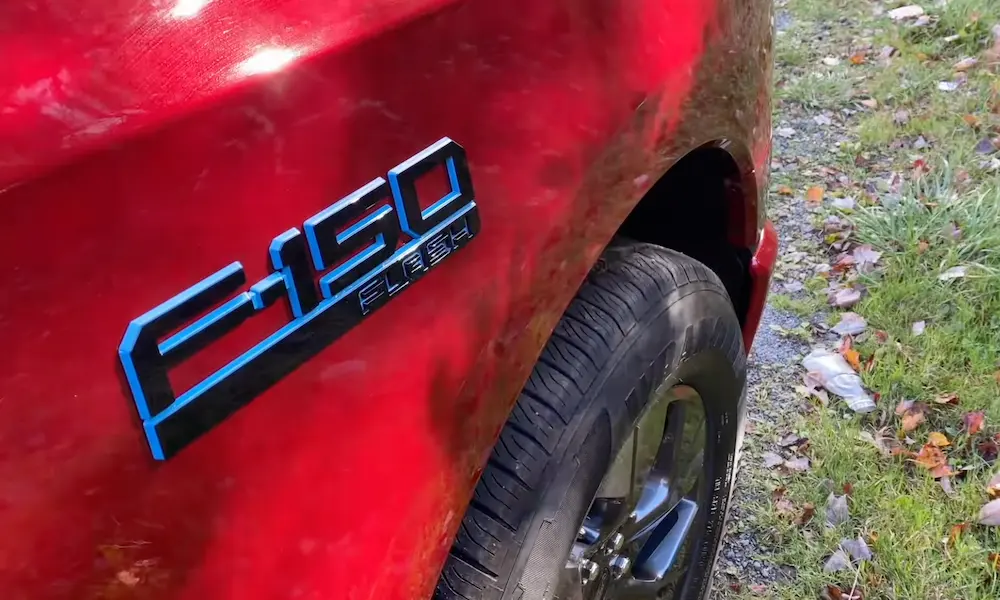
| F-150 Lightning (2022–2026) | Lariat, Platinum, Flash (2024+) | Standard on supported trims |
| Expedition (2022–2026) | Platinum, King Ranch, Active, Tremor | Standard on supported trims |
| Explorer (2025–2026) | ST-Line, ST, Platinum, Tremor (2026) | Standard on supported trims |
The Mustang Mach-E gets BlueCruise hardware across every single trim, making it the most accessible entry point. For the F-150, you’ll need at least a Lariat unless you specifically option it on an XLT.
What About Lincoln?
Lincoln offers BlueCruise under the same branding, with the same $49.99/month and $495/year renewal pricing after trials expire. But Lincoln buyers often get significantly more trial time built into the purchase price.
| Lincoln Model | Supported Trims | Typical Trial Included |
|---|---|---|
| Navigator (2022–2027) | Premiere, Reserve, Black Label | Up to 4 years |
| Aviator (2025–2026) | Premiere, Reserve, Black Label | Up to 4 years |
| Nautilus (2024–2026) | Premiere, Reserve, Black Label | Up to 4 years |
| Corsair (2023–2026) | Premiere, Reserve, Grand Touring | Up to 4 years |
Flagship Lincoln models like the Navigator and Nautilus routinely include four years of service baked into the sticker price. At that level, the subscription becomes invisible — just part of the premium ownership experience.
Which BlueCruise Version Do You Get?
The software isn’t static. Ford pushes over-the-air updates that genuinely upgrade what your car can do. Here’s how the versions stack up:
| Version | What’s New | Example Vehicles |
|---|---|---|
| 1.0 | Hands-free lane centering, adaptive cruise, driver monitoring | 2021 Mach-E, 2021 F-150 |
| 1.2 | Lane Change Assist (turn signal initiated), In-Lane Repositioning | 2024 F-150, late 2023 Mach-E |
| 1.3 / 1.4 | Better curve handling, improved weather resilience, fewer disengagements | 2024 Mach-E, 2025 F-150 |
| 1.5 | Automatic Lane Change — car decides to pass slower vehicles on its own | 2025/2026 Mach-E, 2026 Explorer |
Version 1.5 is the big one. The car watches traffic, decides when to pass a slower vehicle, executes the lane change, and moves back — all without you touching the wheel. That’s a meaningful upgrade from just maintaining your lane.
These updates arrive via over-the-air downloads, so your car can improve over time without a dealer visit.
A Few Things to Know Before You Subscribe
You need an active connected services plan. BlueCruise requires your car’s cellular modem to stay live. It uses the connection to download updated map data. If you let your connected services lapse, hands-free driving shuts off — even if the hardware is perfectly fine.
Some sunglasses can fool the camera. The infrared driver monitoring camera can struggle to read your eyes through heavily mirrored or polarized lenses. If it can’t verify you’re watching the road, it disengages. Standard optical lenses usually work fine.
It’s on the window sticker, not negotiable. If BlueCruise hardware and a trial appear on the vehicle’s MSRP, you can’t ask a dealer to remove it. The hardware is already installed. Your only option is to find a different unit without the package, or custom order.
The one-time purchase adds resale value. Because the software stays with the VIN, a used car with a fully paid BlueCruise activation is worth more on the lot than an identical car requiring the next buyer to start a subscription.
Is BlueCruise Worth the Cost?
That depends entirely on how much highway driving you actually do.
- Mostly local driving? Skip the subscription. Use the 90-day trial and let it sit.
- Frequent highway commuter? The $495 annual plan pays for itself in reduced fatigue pretty quickly.
- Keeping the car long-term? The $2,495 one-time purchase is the smartest financial move if you’re planning on owning the vehicle for seven or more years.
- Buying a Lincoln? You’re likely getting four years free anyway — so just use it and reassess later.
The pricing today is genuinely reasonable compared to where it was in 2023. Ford learned its lesson, and the current structure actually reflects what consumers will pay for a well-executed driver assist feature.