So your toddler’s legs are dangling over the edge, and you’re wondering if it’s finally time to flip that car seat around. It’s one of the most Googled questions in parenting — and honestly, one of the most misunderstood. The answer might surprise you. Stick around, because getting this wrong puts your child at serious risk.
The Short Answer: Age Isn’t the Real Rule
Here’s the thing most parents get wrong — how old for a front facing car seat isn’t really about age at all.
The American Academy of Pediatrics and NHTSA both say the same thing clearly: keep your child rear-facing for as long as possible, until they hit the maximum weight or height limit of their specific seat.
Age is just a rough guide. Your child’s size is what actually matters.
That said, here’s the baseline:
- Minimum age to go forward-facing: 2 years old
- Preferred age range for the transition: 2 to 4 years old
- Best practice: Stay rear-facing until the seat’s physical limits are maxed out
The CDC confirms children should stay rear-facing from birth until ages 2 to 4, depending on their growth.
Why Rear-Facing Is Safer for Longer
You’ve probably heard “keep them rear-facing as long as possible.” But why?
It comes down to basic physics and your child’s anatomy.
A toddler’s head is disproportionately heavy compared to their body. Their neck vertebrae are mostly soft cartilage — not solid bone. In a frontal crash (the most common and deadly type), a forward-facing child’s torso stops with the seat while their head keeps flying forward. That yanking force on a soft, developing neck can cause catastrophic spinal cord damage.
Rear-facing seats work differently. The entire crash force spreads evenly across the back of the shell. The child’s head, neck, and spine move together — dramatically cutting neck injury risk. As NHTSA explains, the rear-facing position cradles and moves with the child to reduce stress on the fragile spinal cord.
The numbers back this up. In 2024, NHTSA data showed that 39% of children killed in crashes were completely unrestrained. Meanwhile, car seats saved 325 lives in a single year for children under five.
What About the “Legs Touching the Seat” Concern?
This one comes up constantly — and it’s not actually a problem.
When rear-facing toddlers grow tall, their legs bend, cross, or press against the vehicle seatback. Many parents panic and flip the seat early because of this.
Don’t.
The AAP addresses this directly: kids are flexible. Bent knees are comfortable for them, even if it looks uncomfortable to you. More importantly, leg injuries in rear-facing seats are extremely rare in crash data. The risk of a neck injury from flipping too early is far greater than a sore knee.
When Can a Child Actually Move to a Forward Facing Car Seat?
Here’s a clear breakdown of the transition triggers:
| Transition Signal | What It Means |
|---|---|
| Child turns 2 years old | Earliest acceptable age to consider forward-facing |
| Child exceeds rear-facing weight limit | Time to transition (check your seat’s manual) |
| Child exceeds rear-facing height limit | Time to transition — even before hitting weight limit |
| Shoulders sit above top harness slots | Seat no longer fits safely rear-facing |
| Tops of ears pass top of seat shell | Child has outgrown the seat entirely |
Most convertible seats allow rear-facing up to 40 or 50 pounds. Average kids don’t hit that mark until preschool age — sometimes later. So “legs touching the seat back” is never a reason to switch.
Choosing the Right Forward Facing Car Seat
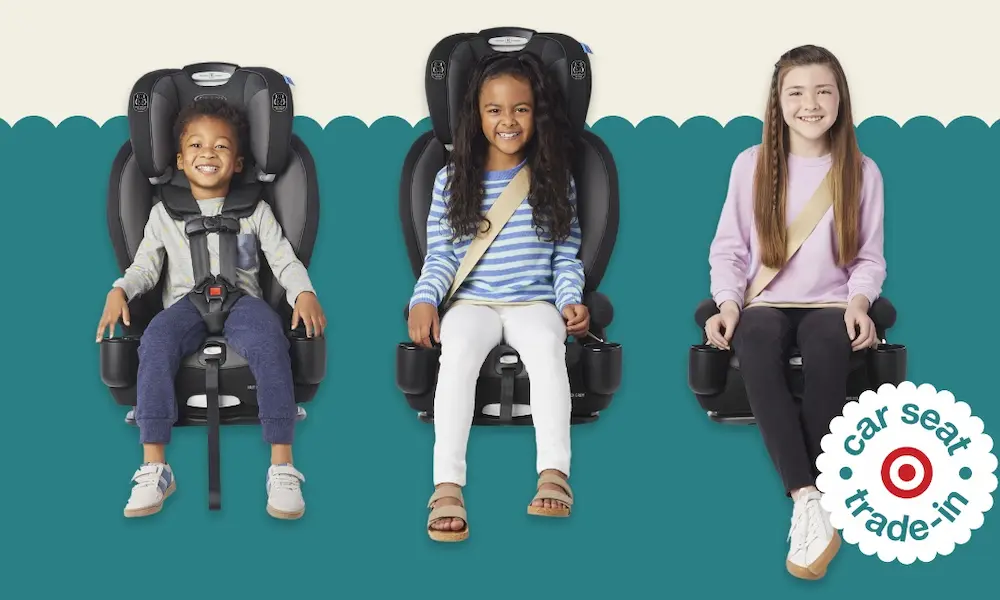
Once your child genuinely outgrows their rear-facing setup, here’s what to know about seat types:
Convertible Seats
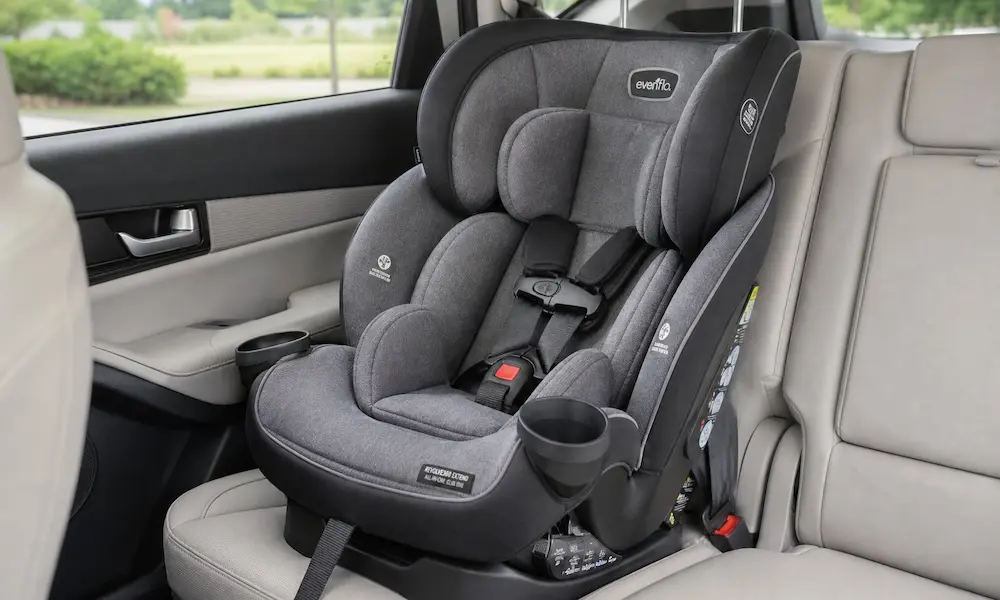
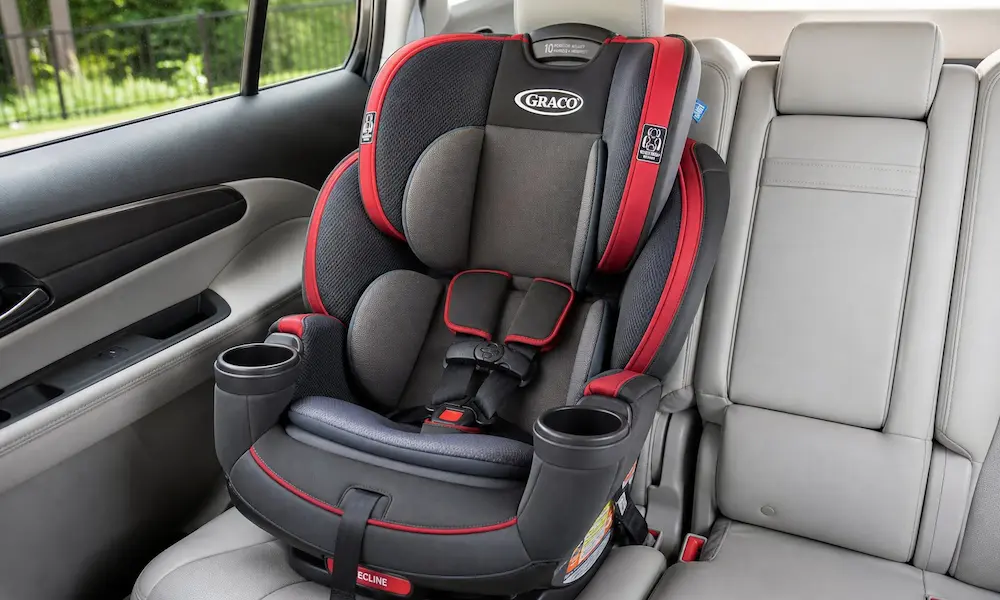
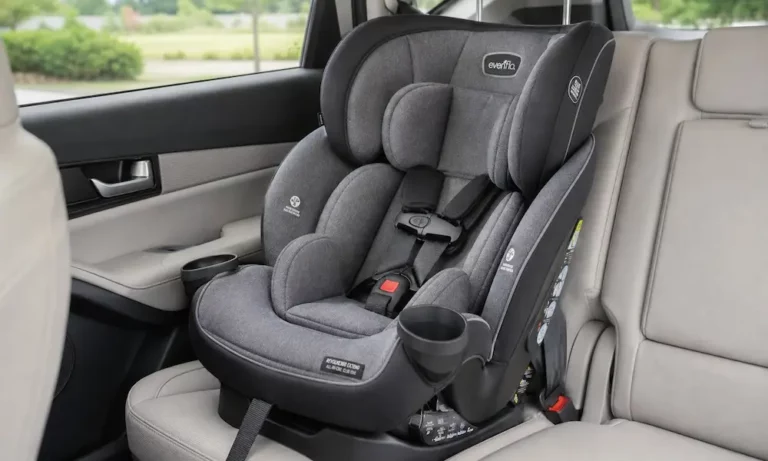
These go rear-facing first, then flip forward-facing. They stay in the car permanently. Most handle rear-facing up to 40–50 lbs, then forward-facing up to 65 lbs. This is the workhorse option for most families.
All-in-One Seats
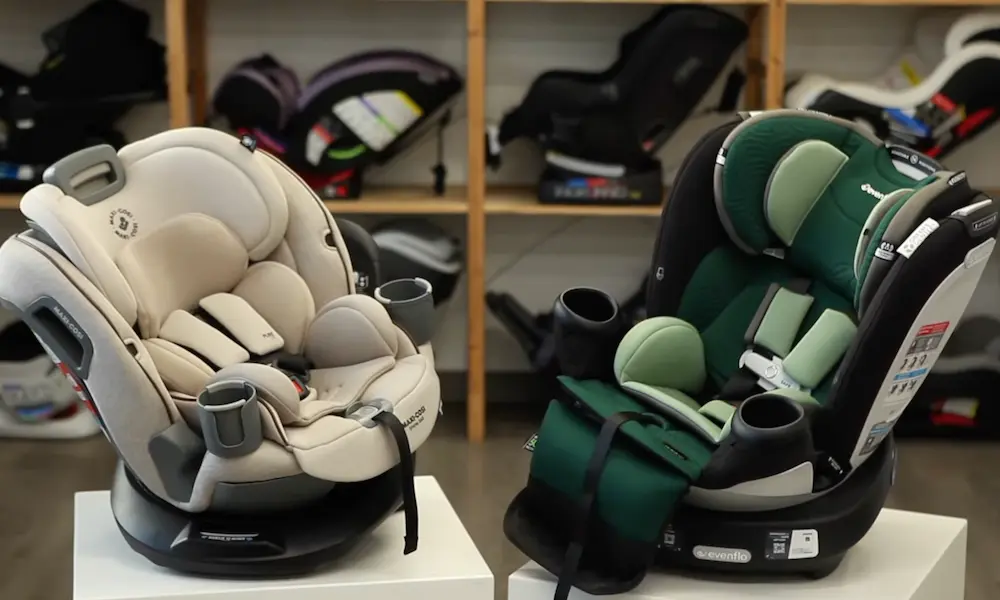
These cover all three stages — rear-facing, forward-facing, and booster. They’re bulkier, so confirm it fits your vehicle’s back seat while reclined. The AAP notes caregivers must verify fit before purchasing.
Combination Seats
Forward-facing with a harness, then converts to a belt-positioning booster. Used only after the child has outgrown rear-facing. The NHTSA Car Seat Glossary details how these work through both phases.
Quick tip: All seats sold in the US meet federal safety standards. The “best” seat is the one that fits your child, fits your car, and gets used correctly every single time. NHTSA’s Ease-of-Use Ratings help you compare how intuitive different seats are to install and use.
How to Install a Forward Facing Car Seat Correctly
Installation errors are shockingly common — and they’re deadly. Here’s what to get right:
LATCH System vs. Seat Belt
You can use either the LATCH lower anchors or the vehicle seat belt to secure the base — but not both at the same time. NHTSA is clear on this.
LATCH weight limit: The combined weight of your child plus the car seat can’t exceed 65 lbs when using lower anchors. Many seats weigh 20–30 lbs themselves, so a 40-lb child may already exceed this limit. After that, switch to the seat belt method.
The Top Tether: Non-Negotiable
Every forward-facing harness seat has a tether strap at the top. Hook it to your vehicle’s tether anchor — always. NHTSA calls this a critically important step because it limits how far your child’s head flies forward in a crash. Skip it, and you’re leaving serious protection on the table.
Tether anchors are found on the rear shelf (sedans), back of the seat (SUVs), or floor and ceiling (minivans).
The One-Inch Rule
Once installed, grab the seat at the belt path and shake it side-to-side and front-to-back. It shouldn’t move more than one inch. If it does, tighten it.
Buckling Your Child Correctly
A perfectly installed seat means nothing if the harness is wrong.
Harness strap height: For forward-facing, straps go at or just above the shoulders. Rear-facing uses the slots at or below the shoulders.
The pinch test: After buckling, pinch the strap at the collarbone. If you can grab excess webbing, it’s too loose. Tighten until you can’t pinch any slack.
Chest clip position: Clip goes at armpit level — center of the chest. Too low damages organs in a crash. Too high risks choking.
Winter coats are a trap: Bulky jackets create hidden slack in the harness. Buckle your child in their regular clothes first. Then put the coat on backward over the buckled straps, or use a blanket over the harness.
What Comes After Forward Facing? The Full Roadmap
Understanding the whole progression helps you avoid rushing any stage.
| Stage | Seat Type | When to Move On |
|---|---|---|
| Birth to 2–4 years | Rear-facing (infant or convertible) | Exceeds rear-facing weight/height limit |
| 2–4 years to ~8 years | Forward-facing with harness | Exceeds harness weight/height limit or ears top the shell |
| ~4–12 years | Belt-positioning booster | Child passes the 5-step seat belt fit test |
| ~8–12 years | Adult seat belt | Child reaches 4’9″ tall and belt fits properly |
The AAP strongly advises staying in a forward-facing harness up to 65 lbs if the seat allows it — ideally until at least age 4.
No child under 13 should ride in the front seat. Airbags deploy with force designed for adults. For small kids, that force is deadly.
The 5-Step Seat Belt Fit Test
Before ditching the booster entirely, your child must pass all five of these checks:
- ✅ Sits all the way back against the seat cushion
- ✅ Knees bend naturally over the seat edge with feet flat on the floor
- ✅ Shoulder belt crosses the center of the chest and shoulder — not the neck
- ✅ Lap belt sits across the upper thighs — not the stomach
- ✅ Stays in this position for the whole trip without slouching or tucking the belt behind their back
Fail any one of these? Keep the booster. Slouching with a tucked shoulder belt causes severe internal injuries in crashes — a pattern doctors call “seat belt syndrome.”
Get a Free Car Seat Check
Even if you’ve read everything, a certified Child Passenger Safety Technician can spot mistakes you’d never catch. They work at fire stations, police departments, and community hospitals — often for free.
NHTSA recommends every family use this resource. One inspection could make all the difference.
Frequently Asked Questions
How old does a child need to be for a front facing car seat?
The absolute minimum is 2 years old, but age alone doesn’t determine readiness. Your child must also outgrow the maximum weight or height limit of their rear-facing seat. Many kids stay rear-facing until age 3 or 4 because they don’t hit the physical limits of their convertible seat until then.
Can I turn my 1-year-old forward facing?
No. Safety organizations including the AAP and NHTSA no longer recommend transitioning at age 1. The current guidance sets 2 years old as the earliest acceptable age — and only if the child has maxed out their rear-facing seat’s physical limits.
What’s the weight limit for rear-facing car seats?
It depends on the seat. Rear-facing-only infant seats typically go up to 22–35 lbs. Convertible seats can handle rear-facing up to 40–50 lbs. Always check your specific seat’s manual for its actual limit.
Does my forward facing car seat need a tether?
Yes, always. The top tether strap dramatically reduces how far your child’s head moves forward in a crash. NHTSA identifies it as one of the most important steps in forward-facing installation. Skip it and you’re reducing your seat’s crash protection significantly.
Can I use LATCH and a seat belt together for a forward facing seat?
No. Use one or the other to secure the base — but always attach the top tether in addition to whichever base method you choose. Using both lower anchors and a seat belt simultaneously can actually stress your vehicle’s frame improperly.
What if my child’s feet touch the vehicle seat back while rear-facing?
That’s perfectly fine and not a reason to switch. Kids are flexible and find bent or crossed legs comfortable. Crash data consistently shows that leg injuries in rear-facing seats are rare. The cervical spine risk from flipping too early is far more serious.
When should my child stop using a booster seat?
When they pass all five steps of the seat belt fit test and reach a height of approximately 4 feet 9 inches — which typically happens between ages 8 and 12. Most kids shouldn’t ditch the booster before age 8.