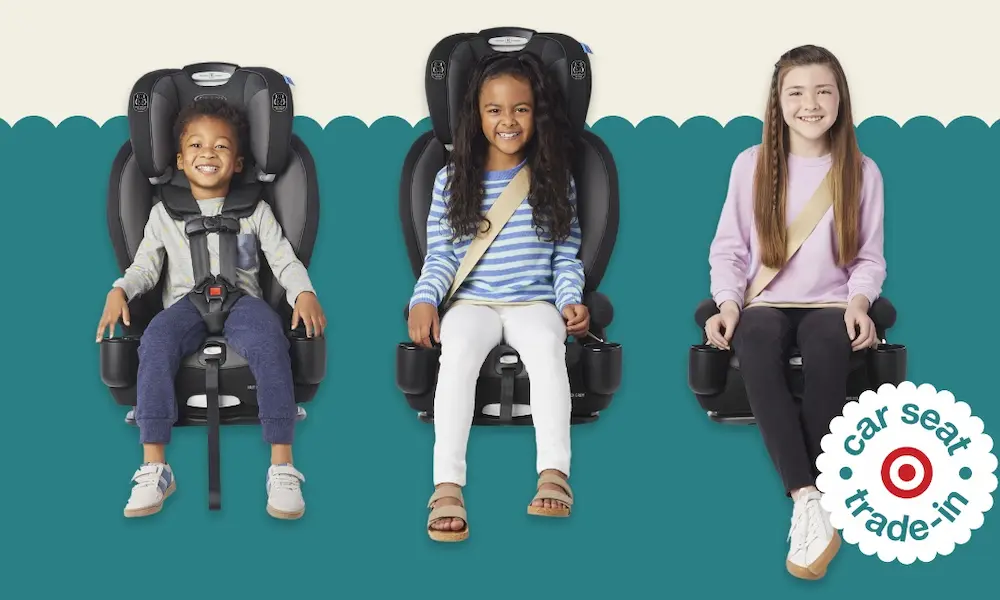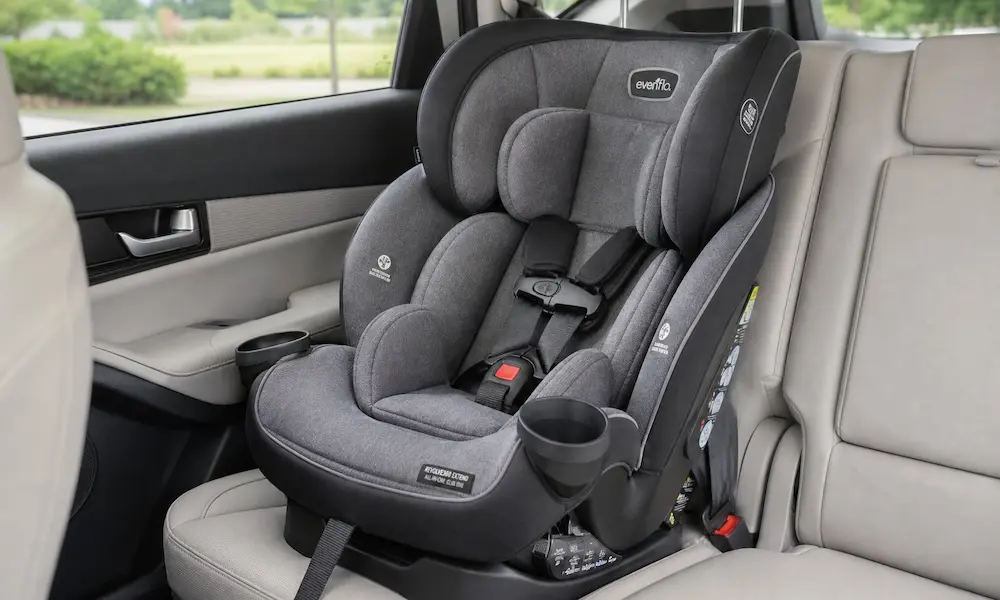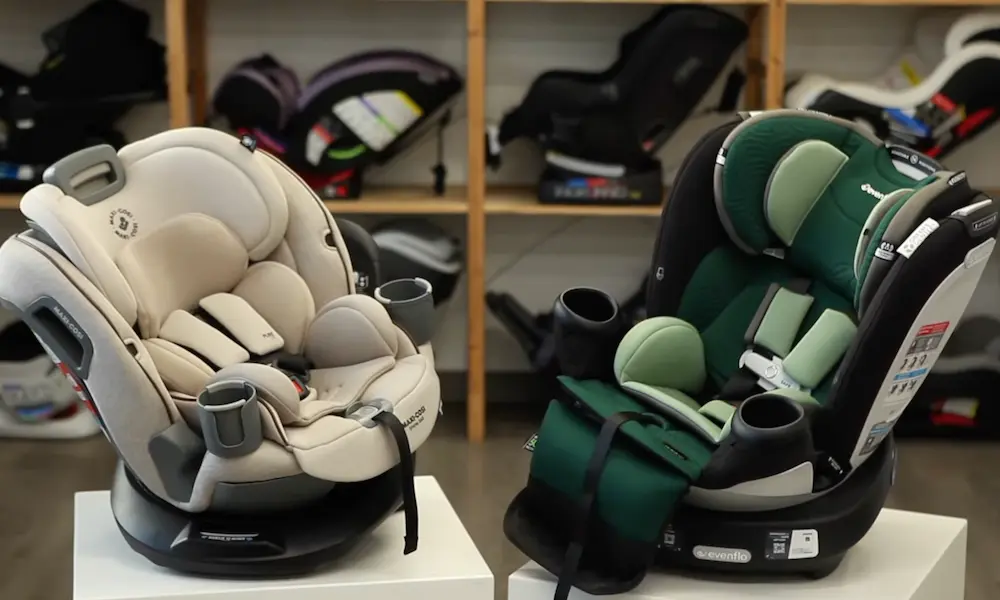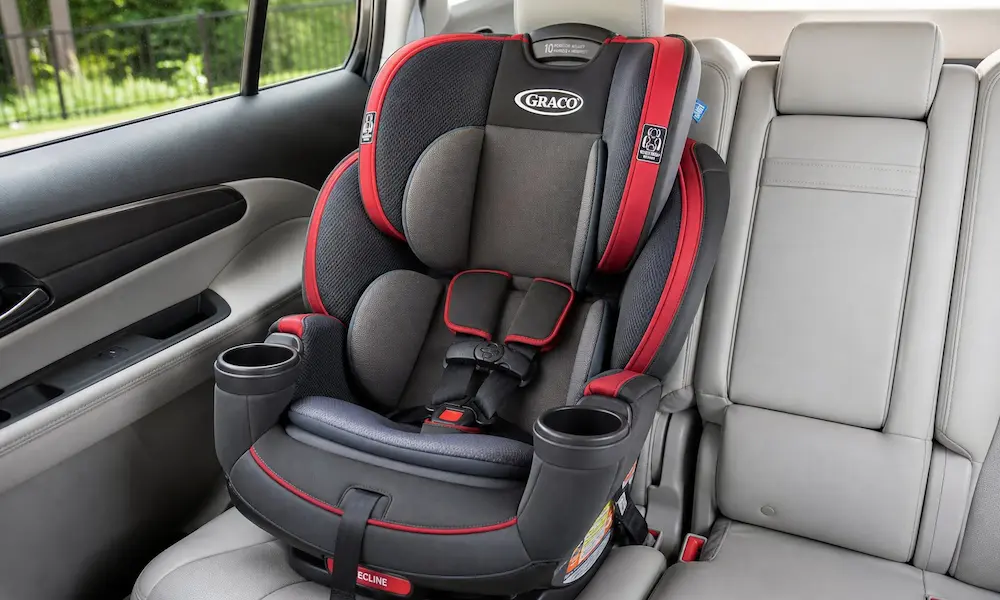
Got an old car seat taking up space? The Target car seat trade-in program turns that clunky plastic into a 20% discount on new baby gear. But the details matter — miss one step and you lose your savings. Read this to the end and you’ll know exactly how to work it.
What Is the Target Car Seat Trade-In Program?
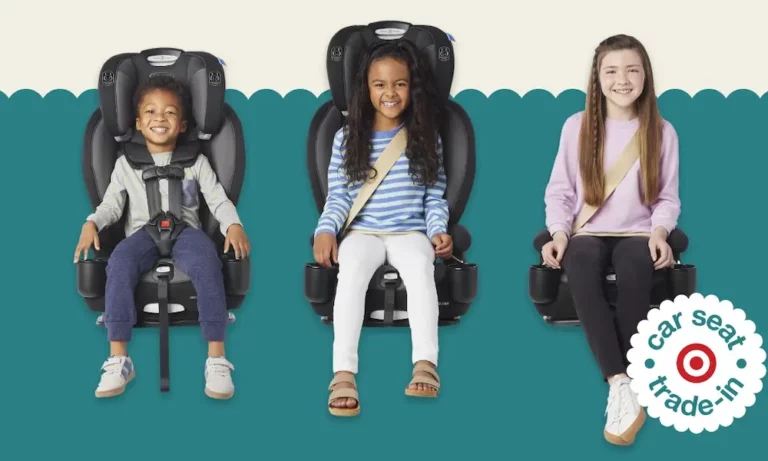
The Target car seat trade-in program is a bi-annual recycling event where you drop off an old car seat at a participating Target store. In return, you get a 20% discount coupon loaded straight into your Target Circle account.
Target launched this program in April 2016. Ten years later, it’s collected over 3.5 million car seats and diverted between 49 million and 58 million pounds of mixed material from landfills across the U.S. That’s not a rounding error — that’s real impact.
The program runs twice a year:
- Spring event: April through early May
- Fall event: Mid-September, timed with Child Passenger Safety Week
The spring 2026 event ran from April 19 to May 2, 2026, with in-store weekend events on April 25 and 26. The coupon stayed active through May 16, 2026. The fall 2026 event is projected to launch in mid-September.
Why Car Seats Can’t Just Go in the Recycling Bin
You can’t toss a car seat in your blue bin. It’s not laziness on the recycling center’s part — it’s chemistry and engineering.
Car seats are built from a mix of dense plastic polymers, metal reinforcements, woven harness webbing, and foam padding. Standard municipal recycling facilities simply aren’t set up to sort and process those mixed materials. So they reject car seats and send them straight to the landfill.
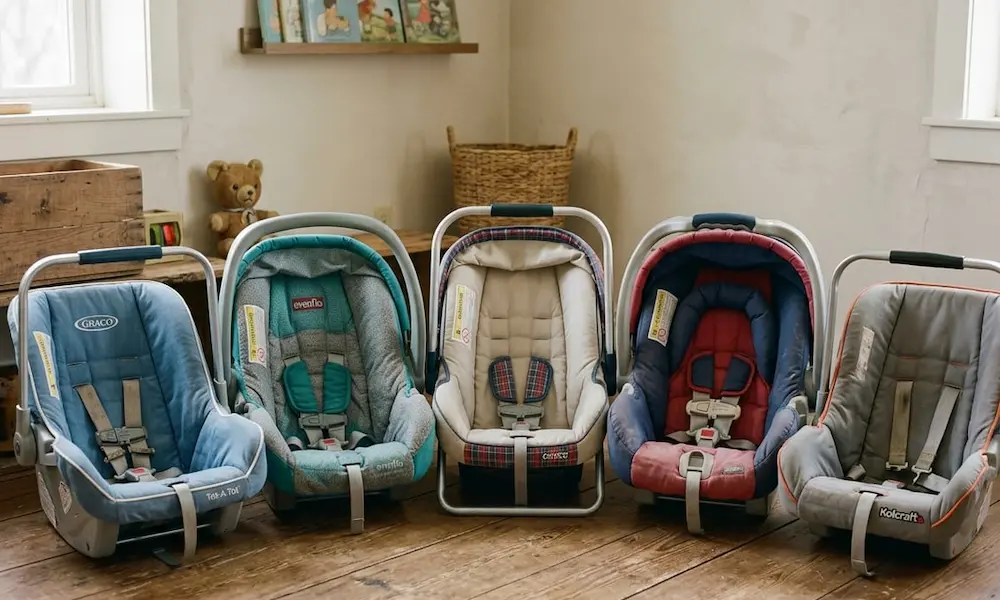
You also can’t donate or sell a used seat unless you can verify its full crash and maintenance history. Even a minor fender bender can compromise the structural integrity of the plastic shell — and car seats have expiration dates for this exact reason. Thermal stress, material degradation, and impact damage all accumulate invisibly over time.
The Target car seat trade-in program solves both problems at once: it gets the seat out of your hands safely and keeps it out of a landfill.
How the Program Stacks Up Against Other Options
Not every trade-in or recycling program is built the same. Here’s how Target compares to other options on the market:
| Program | Provider | Incentive | Status | Recycles Physically? |
|---|---|---|---|---|
| Bi-Annual Trade-In | Target | 20% discount coupon | Active (April & September) | Yes — full recycling chain |
| Mail-In Recycling | Clek | $40 store credit | Active (paid shipping required) | Yes — brand-specific |
| One-Time Buyback | Walmart | Gift card | Discontinued September 2019 | Yes — but unsustainable |
| Promotional Discount | Chicco / Graco | 25% and 20% off respectively | Seasonal | No physical collection |
Chicco and Graco run competitive discounts timed to Target’s event dates — but they don’t collect or recycle anything. They’re promo plays, not recycling programs. Target’s program is the only nationwide retail initiative that handles both the financial incentive and the physical waste problem.
How to Participate: Step-by-Step
The process is straightforward, but you need to follow each step in order. Skip one and your coupon might not load.
Step 1 — Bring your old seat to a participating Target store.
You don’t need the original box, receipt, or proof of purchase. Straps don’t need to be cut. Missing fabric covers are fine. Most full-size Target locations participate; smaller format stores sometimes don’t, so check before you drive over.
Step 2 — Drop the seat in the large recycling bin.
Bins sit near the Guest Services desk at the front of the store. Just drop it in.
Step 3 — Scan the QR code on the bin.
Use your smartphone camera. This is how you trigger the coupon. You must have an active Target Circle account registered before you scan.
Step 4 — Add the 20% offer to your Target Circle Wallet.
Tap the prompt that appears after scanning. If it doesn’t load, refresh the app, open your dashboard, and apply the offer manually. A team member at Guest Services can also help if the scan fails.
Step 5 — Use your coupon in up to two transactions.
You can shop in-store, online, or through the app. The coupon expires automatically at the campaign deadline.
The 20% Coupon: Rules, Limits, and What You Can Buy
Here’s where people get tripped up. The coupon has real boundaries — knowing them saves you frustration at checkout.
One Coupon Per Household Account
You get one 20% coupon per registered Target Circle account, no matter how many seats you drop off. But here’s the workaround: if two parents or guardians have separate Target Circle accounts, each person can drop off one seat individually and each walks away with their own 20% coupon. That’s two coupons, two separate transactions each — for a total of four shopping opportunities at 20% off.
What’s Eligible
The coupon works on a solid range of baby and children’s gear:
- Infant, convertible, rotating, and harness-to-booster car seats
- Belt-positioning boosters and standalone car seat bases
- Standard strollers, travel systems, and stroller wagons
- Playards, high chairs, swings, rockers, bouncers
- Walkers, jumpers, and active entertainment centers
What’s Excluded
- Clearance items
- Products sold through Target Plus (third-party marketplace sellers)
- Premium brands including Wonderfold and Doona
Stacking the Coupon for Maximum Savings
You can stack the 20% trade-in coupon with:
- General Target Circle sale prices
- The standard 5% discount for Target Circle Card holders
You can also combine it with a 15% baby registry completion coupon — but the math works multiplicatively, not additively. Here’s how it breaks down: Target applies the 20% trade-in discount first, then the 15% registry discount applies to the remaining balance. The result is roughly 32% off total on a qualifying item. That’s a meaningful difference on a $300 convertible car seat.
Note: Target has tightened restrictions on stacking the registry coupon with the trade-in coupon in recent events. Always check the current event FAQ before shopping to confirm what’s stackable in your event window.
What Actually Happens to Your Old Car Seat
This is where it gets genuinely interesting. Target doesn’t just haul the seats away and hope for the best.
Originally, Waste Management handled transportation and initial processing. Target has since transitioned that partnership to Ecotech, a specialist in closed-loop polymer reclamation. Collected seats travel to Ecotech’s domestic processing facilities in Fayetteville, Arkansas, and Colton and Mira Loma, California.
The recycling process runs through ten structured steps:
- Collected seats arrive at the Ecotech facility
- Each batch gets a tracking code for Recycled Claim Standard certification
- Workers strip fabric covers, foam, harness straps, and buckles from the plastic frame
- Plastic parts are washed to remove metals, silicones, rubbers, and adhesive residue
- Cleaned plastic runs through industrial shredders into uniform flakes
- Flakes melt under controlled temperatures to preserve polymer properties
- Molten plastic extrudes into long strands and cools
- Strands cut into raw resin pellets
- Pellets undergo ASTM quality testing in Ecotech’s labs
- Tested pellets feed into injection-molding lines to manufacture new products
That last step is the part that closes the loop entirely.
What Your Old Seat Actually Becomes
Rather than selling that recycled resin to a third party, Target routes it directly into its own private-label brands. Here’s what’s been made from recycled car seat material:
| Product | Brand | Price |
|---|---|---|
| Four-Tier Utility Storage Shelf (holds 70 lbs) | Brightroom | $35.00 |
| Four-Tier Corner Utility Shelving | Brightroom | $35.00 |
| Kids’ Waste Can (Navy Stripe) | Pillowfort | $20.00 |
| Round Accent Patio End Table | Room Essentials | $21.00 |
| Self-Watering Garden Planters | Room Essentials | $3.50–$10.00 |
| Recycled Resin Garden Tools | Room Essentials | $3.50 |
Your old infant seat doesn’t disappear — it shows back up as a shelf in someone’s garage or a planter on someone’s patio. That’s a genuinely closed loop, and it’s why Target’s sustainability goals for zero waste to landfills by 2030 aren’t purely aspirational.
How Target Uses the Program to Grow Baby Sales
The trade-in event isn’t purely altruistic. It’s a smart piece of retail strategy — and it works because it actually helps parents too.
Dropping off a seat requires a physical store visit. That visit puts parents directly in front of the Baby Boutique, Target’s premium curated shop-within-a-shop featuring brands like UPPAbaby ($899.99 Cruz V3 stroller), Inglesina, Lalo, Beaba, and Owlet.
At the same time, Target’s Baby Concierge service, powered by Tot Squad, offers free one-on-one appointments — in-store or online — to help parents figure out what they actually need next. When a family trades in an outgrown infant seat, a specialist can walk them through convertible car seat options and help them apply the 20% coupon to the right upgrade.
It’s a smart move. Parents who come in for a trade-in often leave with a new seat, a high chair, or a stroller — and Target captures their diapers, apparel, and grocery purchases for years after that.
Tips to Get the Most Out of the Program
- Split donations between two accounts if you and your partner both have Target Circle accounts — double the coupons, double the savings
- Check store participation before you go — small-format stores often don’t have the bins
- Shop online if your item is out of stock in-store — the coupon works on app and online orders too
- Check sale prices before the event ends — stacking the 20% with an active Circle sale can push savings past 25%
- Mark the fall event on your calendar now — mid-September 2026 is the next opportunity if you missed the spring window
The Target car seat trade-in program hits a rare trifecta: it keeps dangerous, expired seats out of use, diverts millions of pounds of plastic from landfills, and puts real savings back in your pocket. For a two-week event that asks nothing more than dropping off an old seat, that’s a pretty solid return.