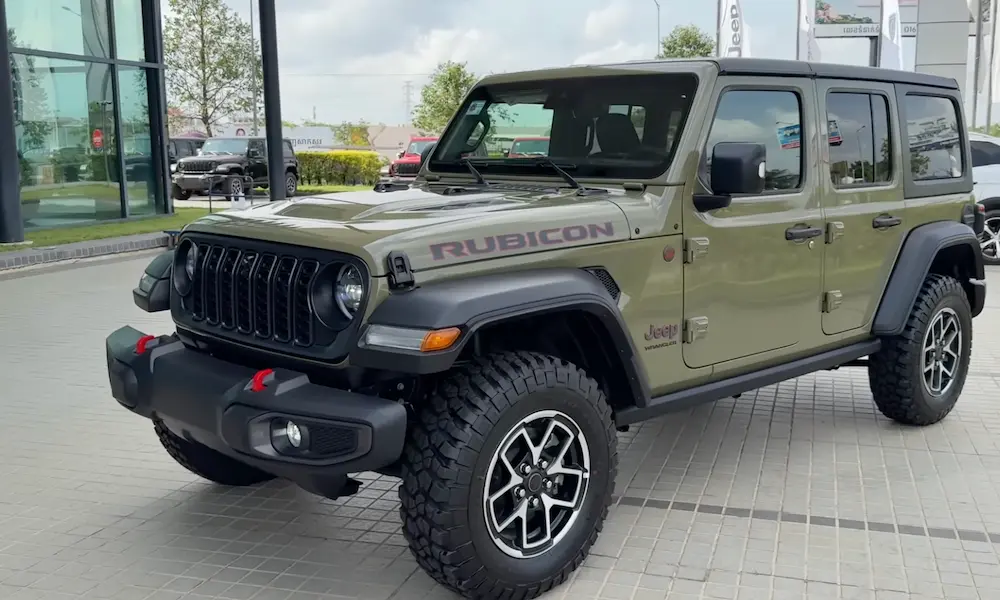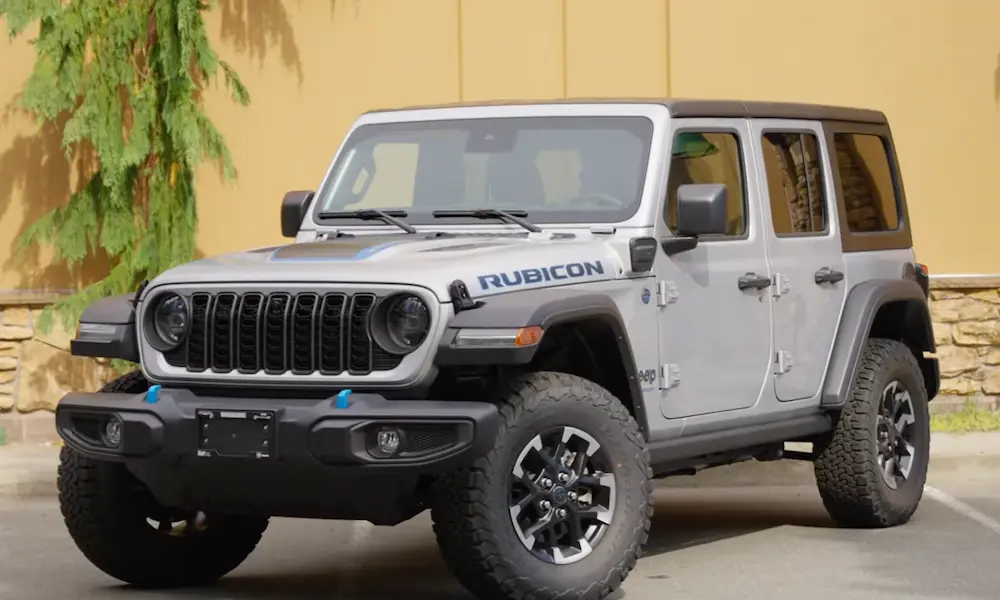
Flat towing a Jeep Wrangler behind your motorhome sounds simple until you do it wrong and destroy a transmission. The good news? Your Wrangler is built for this. But there’s a right way and a very expensive wrong way. This guide walks you through everything — gear, settings, legalities, and safety checks — so you arrive at the campsite with your Jeep intact.
Why the Jeep Wrangler Is the King of Flat Towing
Not every vehicle can be flat towed (also called dinghy towing or four-down towing). Most modern cars use automatic or all-wheel-drive systems that need the engine running for lubrication. Tow them wheels-down and you’ll cook the drivetrain.
The Wrangler is different. It has a manually operated transfer case that fully disconnects the driveshafts from the transmission. That means the wheels spin freely with zero risk to the gearbox — as long as you follow the correct procedure.
That transfer case is the whole reason Wranglers top nearly every “best dinghy tow vehicles” list published by RV magazines each year.
What Gear You Actually Need
Don’t skip the hardware. These three components form the foundation of a safe flat tow setup.
Base Plate
The base plate bolts directly to your Wrangler’s frame rails. It’s the anchor point for everything else. Because Wranglers come in different trim levels with different bumpers, base plates are model-specific.
Installing something like the Blue Ox BX1139 typically requires removing the front bumper and drilling into the frame with cobalt or titanium drill bits. Standard drill bits overheat on high-strength steel and create oversized holes that compromise the connection. All mounting bolts need to be torqued to spec with a calibrated torque wrench and secured with thread-locking compound.
Tow Bar
The tow bar connects the motorhome’s hitch receiver to the Wrangler’s base plate. For most Wranglers (which weigh between 4,000 and 5,000 lbs), a Class III tow bar rated for 5,000 to 6,500 lbs works fine. If your Wrangler has steel bumpers, 37-inch tires, and armor plating, step up to a Class IV or Class V bar rated at 10,000 lbs.
Look for a non-binding, self-aligning design. Older rigid tow bars required perfect alignment on flat ground to lock or release. Self-aligning arms let you disconnect on uneven terrain without fighting the weight of the vehicle pressing against the locking mechanism.
One critical detail: The tow bar should stay level during transit. We recommend keeping the height difference between the motorhome’s hitch receiver and the Jeep’s base plate within three inches. A tow bar angled upward causes the Jeep’s front end to dive under braking. Angled downward, it lifts the motorhome’s rear axle and destabilizes the whole rig.
Safety Cables
Safety cables are your backup if the tow bar or hitch pin fails. Cross them in an X pattern underneath the tow bar. If the bar disconnects, the cables cradle it and prevent it from digging into the pavement and causing a rollover. These cables must be rated to exceed the Jeep’s weight — no exceptions.
Transmission and Transfer Case Settings by Generation
This is where people make expensive mistakes. The correct settings depend on your specific Wrangler generation and transmission type.
| Wrangler Generation | Transmission Type | Transmission Setting | Transfer Case Setting |
|---|---|---|---|
| YJ (1987–1995) | Automatic | Park | Neutral |
| YJ (1987–1995) | Manual | 2nd or 3rd Gear | Neutral |
| TJ (1997–2006) | Automatic | Park | Neutral |
| TJ (1997–2006) | Manual | 2nd or 3rd Gear | Neutral |
| JK (2007–2018) | Automatic | Park | Neutral |
| JK (2007–2018) | Manual | Any Gear | Neutral |
| JL (2018–Present) | Automatic | Park | Neutral |
| JL (2018–Present) | Manual | In Gear | Neutral |
Why does this matter so much? An automatic transmission’s fluid pump is driven by the engine. No engine, no pump, no lubrication. If the transfer case is engaged while towing, the spinning wheels force the transmission output shaft to rotate without any fluid pressure — and it overheats fast. Putting the transfer case in neutral and the transmission in Park prevents any of that from happening.
Manual transmissions don’t have a pump, but they rely on the countershaft rotating to splash oil throughout the case. Leaving a manual in a specific gear locks the internals and prevents dry running on the output shaft bearings.
The Step-by-Step Flat Tow Setup Procedure
Follow this sequence every single time. Skipping steps can mean the transfer case doesn’t fully engage in neutral, which leads to transmission damage down the road.
- Park the Jeep on flat, level ground directly behind the motorhome.
- Start the engine and press the brake pedal.
- Shift the transmission into Neutral (N).
- Shift the transfer case lever firmly into Neutral (N). It may need a firm, steady pull — there’s no synchronizer for this position.
- Verify neutral: shift into Drive or Reverse and release the brake briefly. The Jeep shouldn’t move.
- Shift back to Park (automatic) or leave in gear (manual).
- Turn off the engine.
- Release the parking brake.
- Connect all tow bar hardware, safety cables, and electrical umbilical.
- Disconnect the negative battery terminal if your owner’s manual requires it.
When you arrive at your destination, apply the parking brake before disconnecting any hardware. Then shift the transmission to Neutral, shift the transfer case out of Neutral into 2-High, and start the engine to confirm normal operation.
Steering Column and Ignition Key: Know Your Year
The steering column must stay unlocked while towing. Locked steering means the front wheels can’t caster and follow the motorhome around turns — you’ll scrub tires and stress the hardware.
| Model Year Range | Steering Lock Present | Key Requirement |
|---|---|---|
| YJ 1987–1995 | Yes | Key in “Off-Unlocked” position |
| TJ 1997–2006 | Yes | Key in “Off-Unlocked” position |
| JK 2007–Early 2008 | Yes | Key in “Off-Unlocked” position |
| JK Late 2008–2018 | No | Key not required |
| JL 2018–Present | No | Key not required |
Jeep removed the mechanical steering lock midway through the 2008 model year specifically because of the Wrangler’s popularity as a dinghy tow vehicle. If you have a late 2008 or newer JK or any JL, your wheels turn freely without a key. If you have an older model, leave the key in “Off-Unlocked” — not “Accessory,” not fully off.
Lighting and Electrical Connections
Every state requires the towed vehicle to show functioning brake lights, turn signals, and running lights. Here’s how people handle it:
Diode Wiring Kit (Best Long-Term Option)
Diodes act as one-way electrical valves. They let the motorhome’s signals reach the Jeep’s tail light bulbs but block current from backfeeding into the Jeep’s wiring harness. Without diodes, the motorhome’s signals can trigger fault codes in the Jeep’s computer or damage the lighting control module. Once installed, you just plug in a 6-pin or 7-pin umbilical cord before every trip.
Plug-In Harnesses
Products from Curt use factory-style T-connectors that plug directly into the Jeep’s existing tail light plugs. No cutting or splicing required and diode protection is built in. This is a popular choice for JL owners who want a clean, reversible install.
Magnetic Tow Lights
Temporary magnetic lights work but they can scratch paint and shift position on rough roads. Fine for occasional use, not ideal for full-time RV life.
Battery Charge Line
Some components — like a supplemental braking system or the Jeep’s security module — keep drawing power even when the ignition is off. On long driving days, this drains the battery. A charge line runs from the motorhome’s chassis battery through the umbilical to the Jeep’s battery (protected by a 15- to 20-amp fuse), letting the motorhome’s alternator keep the Jeep’s battery topped up while you drive.
Supplemental Braking: Legal Requirement, Not Optional
A Jeep Wrangler weighs between 4,000 and 5,000 lbs. That’s significant inertia pushing against your motorhome every time you touch the brakes. Most states require supplemental braking for any towed vehicle over 3,000 lbs — and some states, including California and New York, have much lower thresholds.
| State | Max Towed Weight Without Brakes |
|---|---|
| California | 1,500 lbs |
| New York | 1,000 lbs |
| Idaho | 1,500 lbs |
| Texas | 4,500 lbs |
| Florida | 3,000 lbs |
| New Jersey | Always required |
| Michigan | 15,000 lbs |
Because the lightest Wrangler exceeds most of these limits, you need supplemental brakes for legal cross-country travel. Check the full state-by-state breakdown before hitting the road.
Three main system types:
- Portable (e.g., Blue Ox Patriot 3): Sits on the floorboard, clamps to the brake pedal, uses an accelerometer to detect deceleration. Moves between vehicles easily but requires setup every trip.
- Permanently Installed (e.g., Demco Stay-IN-Play DUO): Installs under the hood with a vacuum pump that provides power-assist braking when the engine is off. Activated by the motorhome’s brake light signal. Zero setup after installation.
- Proportional Air Systems (e.g., Demco Air Force One): Uses the motorhome’s air brake line to apply the Jeep’s brakes at exactly the same intensity as the motorhome’s. Best for precision, requires an air-brake-equipped motorhome.
Every braking system also needs a breakaway switch — a plunger-style switch on the Jeep’s bumper connected to the motorhome by a thin cable. If the Jeep fully detaches, the cable pulls the pin and locks the Jeep’s brakes immediately. This is your last line of defense against a runaway 4,500-lb Jeep.
The “No Reverse” Rule and Other Operational Limits
You cannot back up with the Jeep attached. The Wrangler’s front wheels caster freely, which means pushing the vehicle backward causes them to snap to full steering lock instantly. That breaks tow bars, snaps hitch pins, and can damage the steering box. If you need to reverse, disconnect the Jeep first.
Speed: Stay between 55 and 65 mph. Higher speeds increase heat inside the transfer case and the risk of sway.
Mileage tracking: Newer Wranglers often don’t record odometer miles while being towed. Track mileage manually so you don’t miss tire rotations and wheel bearing service intervals. Tires on a towed Jeep wear faster than normal because there’s no power-driven rotation — they’re constantly scrubbing through turns.
Watch Out for Death Wobble
Flat towing puts unique stress on the front suspension. The Wrangler relies on its caster geometry to track straight when being pulled rather than driven. If suspension components are worn, you can trigger death wobble — a violent, side-to-side front-end shaking that typically starts above 45 mph after hitting a bump.
It’s especially dangerous while towing because the motorhome driver may not feel the vibration through the tow bar right away.
Inspect these components before every long trip:
- Front track bar — The most common culprit. Bushings must be tight, bolts torqued to factory spec (often 125 ft-lbs).
- Ball joints — Even a few millimeters of play causes instability.
- Tie-rod ends and drag link — Any play here allows the wheels to shimmy independently.
- Steering stabilizer — Won’t fix the root cause, but absorbs small vibrations before they escalate.
- Caster angle — Wranglers need 4.2 to 5.7 degrees of positive caster. Lift kits can reduce this angle and make the vehicle prone to wandering.
Pre-Trip Safety Check (Do This Every Single Day)
Run through this list before leaving camp and again at every fuel stop:
- All four hitch pins present and secured with lynch pins or locks
- Safety cables crossed under the tow bar with proper slack — enough for sharp turns, not enough to drag
- Electrical umbilical seated firmly; test all lights
- Breakaway cable at correct tension — not slack, not pulled tight
- Tire pressure checked on both the motorhome and the Jeep
- Physically shake the tow bar — no movement in the mounting bolts
A quick five-minute check at every stop has saved more than a few Wranglers from parting ways with their motorhomes at highway speed.