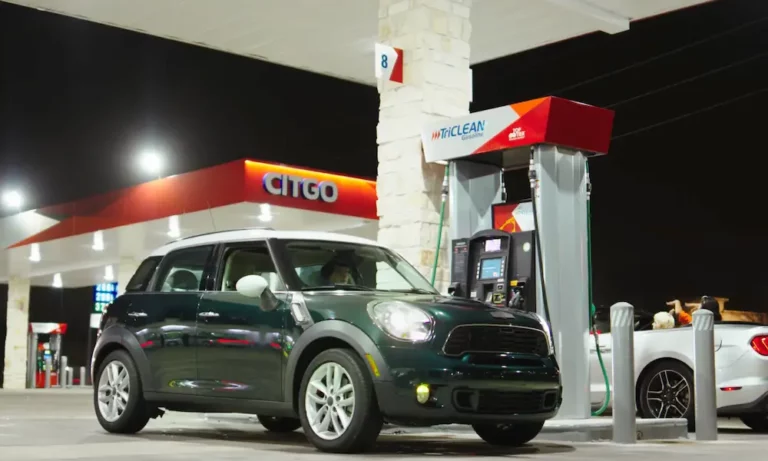
You’ve seen the red triangle at the pump and wondered if CITGO gas is worth your money. Maybe you’ve heard the rumors, read the headlines, or just want straight answers about what you’re putting in your tank. Let’s cut through the noise and look at what actually matters for your car’s performance.
What Makes Gas “Good” Anyway?
Here’s the thing most people get wrong: octane ratings don’t tell the whole story.
The real quality marker is the detergent additive package. Since 1995, the EPA has required minimum detergent levels in all gasoline. But in 2004, eight major automakers—including GM, Toyota, BMW, and Honda—decided that baseline wasn’t good enough for modern engines.
They created the TOP TIER™ standard, which requires significantly higher detergent concentrations. This isn’t marketing fluff. AAA’s independent testing showed that after just 4,000 miles, non-Top Tier gas caused 19 times more engine deposits than Top Tier brands.
Think about that: 19 times more gunky buildup on your fuel injectors and intake valves.
CITGO’s TriCLEAN Formula: The Technical Reality
So is CITGO gas good? On product quality alone, yes.
CITGO is an officially licensed TOP TIER™ retailer. That means every octane grade at every CITGO station meets the automakers’ enhanced standards, even if you don’t see a sticker on the pump.
Their proprietary additive is called TriCLEAN. It’s a nitrogen-based formula designed to:
- Keep fuel injectors and intake valves clean
- Maximize fuel efficiency
- Reduce harmful emissions
- Prevent carbon deposit buildup
The certification isn’t just about meeting EPA minimums—it’s about exceeding them. CITGO contractually commits to maintaining these higher standards across their entire network of 4,700+ stations.
The “Bad Gas” Myth You Need to Understand
You’ll find Reddit threads and forum posts claiming someone got “bad gas” from a CITGO station. Here’s what’s actually happening.
Those complaints almost always trace back to station-level maintenance issues, not the fuel itself. Water contamination, dirty filters, or neglected underground tanks can ruin any brand’s gas. Since CITGO stations are independently owned, a maintenance failure at one location reflects the owner’s negligence, not CITGO’s refinery product.
Gas quality issues break down like this:
What the refinery controls:
- Base fuel composition
- Detergent additive package
- Octane rating consistency
What the station owner controls:
- Underground tank maintenance
- Filter replacement schedules
- Water contamination prevention
- Proper fuel rotation
Choose high-traffic stations regardless of brand. They turn over inventory faster and typically maintain equipment better.
CITGO vs. Other Top Tier Brands: How Does It Stack Up?
CITGO shares the TOP TIER™ certification with Shell, Chevron, Mobil, BP, and several others. From a technical standpoint, they’re all playing in the same league.
The base fuel often comes from the same regional terminals. What differentiates brands is their proprietary additive blend. CITGO’s TriCLEAN uses nitrogen-based cleaning agents, while competitors have their own formulations.
Here’s a comparison of what you’re getting:
| Feature | CITGO | Shell | Chevron | BP |
|---|---|---|---|---|
| TOP TIER™ Certified | Yes | Yes | Yes | Yes |
| Proprietary Additives | TriCLEAN | V-Power | Techron | Invigorate |
| Station Count (US) | 4,700+ | 13,000+ | 7,800+ | 7,200+ |
| Price Point | Competitive | Premium | Premium | Mid-range |
Your engine won’t know the difference between these TOP TIER™ brands. They all clean effectively and protect your fuel system.
The Environmental Compliance Problem
Here’s where things get complicated.
While CITGO’s fuel product is good, the company’s operational record is troubling. Between 2017 and 2021 alone, Louisiana environmental regulators cited CITGO’s Lake Charles refinery for over 200 violations.
The issues included:
- A 2018 leak of 662 pounds of benzene (a known carcinogen)
- A 23-hour crude oil leak releasing hundreds of thousands of pounds of toxic compounds
- Repeated failures in emission monitoring and reporting
In 2021, CITGO paid $19.7 million to settle violations related to a massive 2006 spill that dumped millions of gallons of waste oil into the Calcasieu River.
The EPA has documented a pattern spanning decades. A comprehensive Clean Air Act settlement required CITGO to spend over $320 million on pollution controls across six refineries.
This isn’t about the gas in your tank—it’s about how that gas gets made.
The Venezuela Ownership Question (And Why It’s Outdated)
For years, people boycotted CITGO because it was owned by Venezuela’s state oil company, PDVSA. The concern? Your gas money might fund the Maduro regime.
That’s no longer accurate.
In January 2019, the U.S. government imposed sanctions on PDVSA, freezing all assets and creating a complete financial firewall. CITGO cut all ties with Venezuela. New boards were appointed that don’t report to Caracas.
Since 2019, zero revenue from CITGO flows to the Venezuelan government. The company operates as a U.S.-managed asset, completely independent from the regime critics associate it with.
But the story doesn’t end there.
CITGO’s Ownership Is About to Change Completely
Right now, CITGO is in the final stages of a court-ordered sale that will permanently end its Venezuelan ties.
A Delaware court ordered the sale of CITGO’s parent company to pay creditors owed money by Venezuela. After a competitive auction, Amber Energy Inc.—backed by Elliott Investment Management—won with a $7.3 billion bid.
The deal includes:
- Complete transfer of ownership to U.S. investors
- New leadership under Gregory Goff (former CEO of Andeavor/Tesoro)
- Commitment to keep the CITGO brand and retail network
- Focus on operational improvements and reinvestment
In November 2025, a judge denied all final legal challenges to the sale, clearing the path for closure in mid-2026.
This transition matters because new ownership typically brings operational discipline. Elliott is an activist investment fund—they’ll want to protect their $7.3 billion by fixing compliance issues that create financial liability.
What This Means for Your Wallet and Your Car
From a purely practical standpoint, CITGO gas performs well. It meets the highest industry standards for detergent additives and engine protection.
Choose CITGO if:
- You want TOP TIER™ quality at competitive prices
- There’s a well-maintained, high-traffic station convenient to you
- Price matters more than brand loyalty
Skip CITGO if:
- Environmental compliance issues are a dealbreaker for you
- You prefer brands with cleaner operational records
- Another TOP TIER™ station is equally convenient
Don’t fall for the premium octane upsell unless your owner’s manual specifically requires it. Regular 87-octane CITGO with TriCLEAN gives you the same detergent protection as their premium grade.
Spotting a Well-Maintained Station (Any Brand)
Station quality matters more than the logo out front. Here’s how to evaluate any gas station:
Good signs:
- Busy location with constant traffic
- Clean pumps and facilities
- Recent price changes (indicates fresh inventory)
- Visible maintenance and upkeep
Warning signs:
- Remote location with little traffic
- Suspiciously low prices compared to competitors
- Poorly maintained equipment
- Old-looking infrastructure
Your car can’t tell Shell from CITGO if both are TOP TIER™ certified. But it’ll definitely notice water-contaminated fuel from a sketchy station with neglected tanks.
The Bottom Line on CITGO Quality
Is CITGO gas good? Yes, the fuel itself is certified high-quality.
The company behind it has had serious environmental compliance problems, but new ownership will likely force operational reforms. The Venezuelan government connection that drove boycotts? That ended in 2019 and will be permanently severed when the sale closes.
You’re getting legitimate TOP TIER™ fuel with proven engine-cleaning additives. Whether you choose CITGO over Shell or Chevron comes down to convenience, price, and how much weight you give to corporate environmental records versus product quality.
Your engine doesn’t care about the logo. It cares about detergent additives and clean fuel. CITGO delivers on both counts—just make sure you’re buying from a well-maintained station.