You’ve probably driven past a Costco gas station and wondered if the cheaper price means cheaper quality. Spoiler: it doesn’t. This post breaks down exactly what’s in Costco gas, how it compares to Shell and Chevron, and whether your engine will thank you for using it.
What Makes Gas “Good” in the First Place?
Before judging Costco’s fuel, you need to understand what separates decent gas from bad gas. It’s not the price. It’s the detergent additive package mixed into the base fuel.
The EPA set a minimum detergent standard back in 1995 called the Lowest Additive Concentration (LAC) standard. Every gas station in the US must meet this baseline. The problem? Modern engines — especially direct injection models — need way more detergent protection than that minimum requires.
When detergent levels are too low, carbon deposits build up on:
- Fuel injectors — clogging the microscopic spray holes
- Intake valves — absorbing fuel instead of passing it into the cylinder
- Combustion chambers — disrupting the air-fuel mix
The result? Rough idling, hesitation, worse fuel economy, and higher emissions.
What Is Top Tier Gas — And Does Costco Have It?
In 2004, a group of major automakers — BMW, GM, Ford, Toyota, and others — got tired of watching engines degrade even on “name brand” fuel. So they created the Top Tier Detergent Gasoline standard, a voluntary certification requiring 2–3x more detergent than the federal minimum.
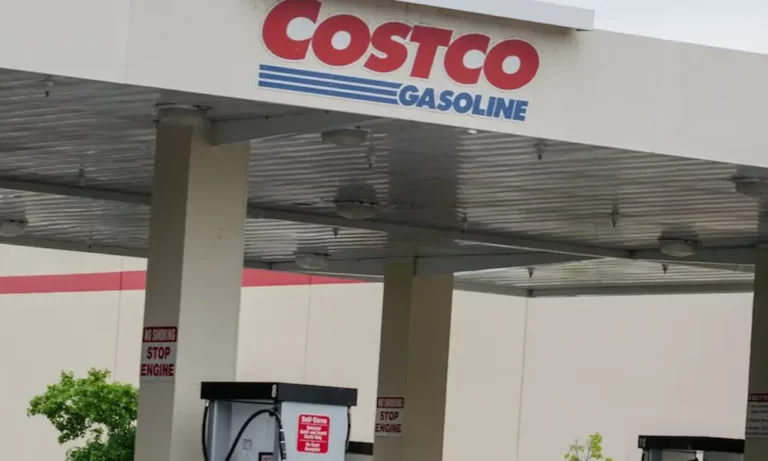
Costco’s Kirkland Signature gasoline is Top Tier certified. Not only that — it contains 5 times the EPA’s minimum detergent requirement. That’s more than most branded competitors.
Here’s how the standards stack up:
| Standard | Who Sets It | Detergent Level | Main Goal |
|---|---|---|---|
| LAC (Minimum) | EPA | Federal Baseline | Basic emissions control |
| Top Tier | Automaker Consortium | 2–3× federal minimum | Engine protection & longevity |
| Kirkland Signature | Costco Internal | 5× federal minimum | Active cleaning + deposit removal |
So yes — is Costco gas good? By every measurable standard, it’s better than what most people are pumping.
How Carbon Deposits Actually Damage Your Engine
Here’s a simple way to think about deposit damage. Imagine your fuel injector is a garden hose nozzle set to “mist.” Now imagine gunk slowly clogging the holes. Instead of a fine mist, you get a dribble. That’s what low-detergent gas does to your engine over thousands of miles.
AAA tested this directly. Vehicles running non-Top Tier fuel for just 4,000 miles accumulated 19 times more intake valve deposits than those running high-detergent fuel. That’s not a minor difference.
The real-world effects of deposit buildup include:
| Performance Area | Low-Detergent Fuel Impact | High-Detergent Fuel Benefit |
|---|---|---|
| Fuel Economy | 2–4% drop in MPG | Restores lost efficiency |
| Engine Response | Hesitation, stalling, rough idle | Smooth, prompt acceleration |
| Emissions | Higher tailpipe pollutants | Catalytic system runs cleanly |
| Component Life | Faster injector and valve wear | Longer engine life, fewer repairs |
The good news? Switching to a Top Tier fuel like Costco’s can remove between 45–72% of existing deposits within 5,000 miles of driving. So even if you’ve been running cheaper gas for years, switching to Costco can actually clean your engine up.
“Gas Is Gas” — Why That Myth Won’t Die
A lot of people assume all gasoline is identical because it comes from the same pipelines. That part is technically true — regional refineries supply most brands in a given area. But the fuel isn’t finished when it leaves the refinery.
The difference happens at the distribution terminal, when additives get injected into tanker trucks before delivery. Brands like Shell and Chevron add their proprietary packages at this stage.
Costco does something different. Their stations use an on-site additive blending system, meaning trained staff and automated equipment manage detergent concentration during actual fuel delivery at the station. According to Costco’s own fuel resources, this approach gives them tighter control over consistency — every gallon meets their stated 5× detergent standard.
The additive package itself contains:
- Detergents — bind to carbon deposits and carry them out through combustion
- Corrosion inhibitors — protect fuel lines, tanks, and pumps from moisture damage
- Friction modifiers — reduce wear between piston rings and cylinder walls
- Anti-foam agents — ensure cleaner, faster fill-ups (especially in diesel)
How Costco Keeps the Fuel Clean Before It Reaches Your Tank
The best additive package in the world won’t help if the fuel gets contaminated in storage. Water intrusion, sediment, and microbial growth can all degrade fuel quality before it even hits your car.
Costco addresses this with serious infrastructure:
- Double-walled underground storage tanks — fiberglass or coated steel construction prevents corrosion
- 24-hour electronic leak detection — alerts staff to any fluid in secondary containment
- 10-micron particle filters — that’s 7 times smaller than a human hair, removing microscopic grit that could damage injectors
- Flow-rate monitoring — if a pump nozzle drops below 8 gallons per minute, it signals a clogged filter that needs immediate replacement
Costco also benefits from something most stations don’t have: extremely high sales volume. Many locations get fresh fuel deliveries daily. Gasoline degrades over time as volatile compounds evaporate and oxidation sets in. At Costco, the fuel barely has time to sit.
Here’s how their maintenance thresholds work in practice:
| Maintenance Task | Specification | Why It Matters |
|---|---|---|
| Particle Filtration | 10-micron filter | Catches debris finer than a human hair |
| Nozzle Flow Rate | 10 gal/min maximum | Federally regulated safety cap |
| Filter Replacement Trigger | Flow drops below 8 gal/min | Indicates filter is actively trapping contaminants |
| Tank Inspection | Periodic manual sampling | Backs up electronic sensors, checks for water |
| Staff Training | “Costco University” certification | Ensures proper spill response and tank handling |
Is Costco Gas Cheaper Because It’s Lower Quality?
No — and this is the most important misconception to kill.
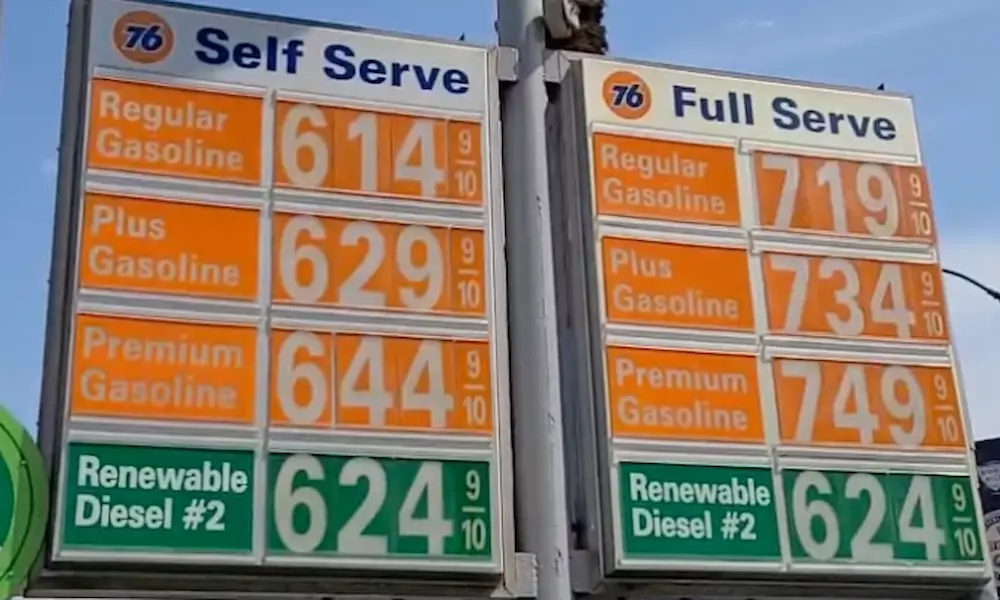
Costco sells gas cheaper because its stations function as a member retention tool, not a profit center. The goal is to give members a reason to keep renewing their membership and visiting the warehouse. Lower overhead, no convenience store markup, and massive volume allow Costco to undercut traditional retailers by 15–30 cents per gallon without touching fuel quality.
A quick comparison of typical price tiers across fuel brands:
| Brand Tier | Examples | Price vs. Market Average | Additive Tier |
|---|---|---|---|
| Premium Branded | Shell, Chevron, BP | +$0.10 to +$0.25 | Proprietary (Techron, V-Power) |
| Warehouse Club | Costco, Sam’s Club | −$0.15 to −$0.30 | Top Tier Certified |
| Budget / Off-Brand | Arco, Murphy USA | −$0.05 to −$0.15 | Varies (EPA minimum to Top Tier) |
If you drive 12,000 miles a year in a 25 MPG vehicle and use the Costco Anywhere Visa Card, you’re looking at 5% cash back on Costco gas purchases. That stacks on top of already lower pump prices — meaning you save significantly more per year than the membership fee costs.
Regular vs. Premium at Costco: Which Should You Buy?
Here’s a point most people get wrong. Premium gas isn’t “better” gas — it’s higher octane gas. Octane measures resistance to premature ignition (“knocking”) under pressure. High-performance and turbocharged engines need it. Most engines don’t.
The CARFAX guide on Top Tier gas confirms: a higher octane rating doesn’t mean more detergent or better cleaning power. However, at Costco specifically, both regular and premium are Top Tier certified with the same high detergent levels.
Here’s the simple decision guide:
| Engine Requirement | What to Pump | Does Premium Help? |
|---|---|---|
| Manufacturer requires premium | 91 or 93 octane | Yes — prevents knocking and engine damage |
| Manufacturer recommends premium | Premium preferred | Slight power and efficiency benefit |
| Manufacturer says regular is fine | 87 octane | No — premium is wasted money |
One bonus: Costco’s premium spread (the price gap between regular and premium) is often narrower than branded stations. If your car needs premium, Costco is typically the cheapest place to buy it.
What’s Next: The Top Tier+ Standard Coming in 2025–2027
Engine technology keeps moving, and fuel standards need to keep up. The growing use of Gasoline Direct Injection (GDI) engines creates new challenges. In GDI systems, fuel sprays directly into the combustion chamber — exposing injector tips to extreme heat with every cycle. That accelerates carbon buildup in ways traditional port injection doesn’t.
To address this, a new Top Tier+ standard is rolling out between 2025 and 2027. It goes beyond “keep clean” performance and requires fuels to demonstrate clean-up capability on already-fouled direct injectors. Key new requirements include:
- Injector cleanliness tests — 60-hour engine tests measuring how much a fouled injector’s flow gets restored
- Particulate emission controls — ensuring high-detergent additives don’t create fine-particle tailpipe pollution
- Stochastic pre-ignition (SPI) prevention — protecting turbocharged engines from the dangerous premature ignition that can cause catastrophic damage
Costco is expected to transition Kirkland Signature Gasoline to meet Top Tier+ requirements as the standard rolls out — keeping it at the front of the pack as engine technology evolves.
What Actual Car Owners Say About Costco Gas
BMW forums, Toyota subreddits, Golf GTI communities — car enthusiasts love debating fuel brands. A decade ago, some high-performance vehicle owners avoided warehouse gas out of concern for injector health. That attitude has largely shifted.
On r/Toyota, r/BMW, and Bimmerpost, the current consensus is clear: Costco gas is legitimate, high-quality fuel. Owners who’ve done borescope inspections on engines running exclusively Costco gas report remarkably clean intake valves and injectors.
Some drivers claim they “feel” a difference switching from Costco to Shell V-Power. Most experts attribute that to a combination of placebo effect and the octane adaptation built into modern engine computers — not a real difference in detergency or cleanliness.
The bottom line: if the fuel carries Top Tier certification and contains five times the EPA’s minimum detergent requirement, it’s giving your engine everything it needs.
The Verdict on Is Costco Gas Good
Costco gas isn’t just decent — it’s among the best fuel you can buy at any price point. It exceeds federal standards by a wide margin, meets the automotive industry’s highest voluntary certification, uses tightly controlled on-site blending, and gets stored in rigorously maintained infrastructure.
The lower price isn’t a trade-off. It’s a business strategy that happens to benefit your wallet and your engine at the same time. If you have a Costco near you, there’s no technical reason to pay more at a branded station.