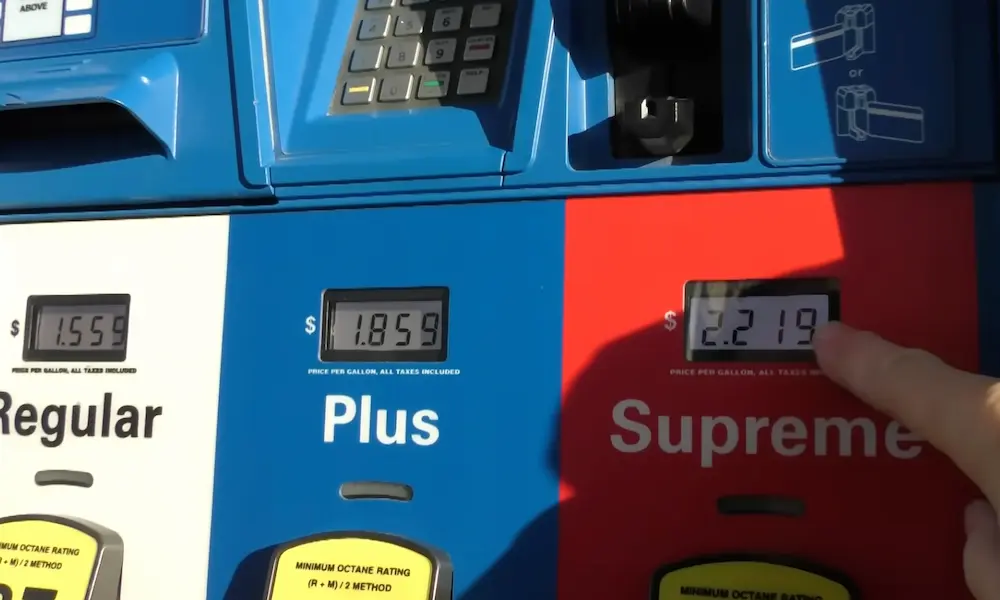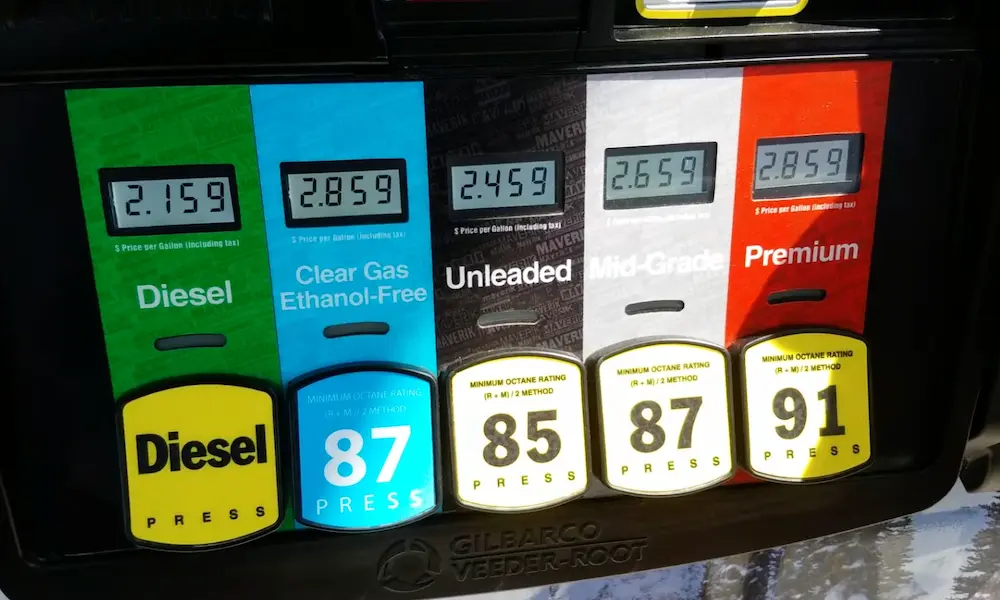
You’ve probably pulled up to a Sam’s Club pump, seen the price, and thought — is this too good to be true? The short answer is: it depends on what you’re driving and how long you plan to keep it. This post breaks down the real difference between cheap gas and quality gas, so you can make a smarter call at the pump.
What “Good Gas” Actually Means
Before judging Sam’s Club fuel, you need to understand what separates good gas from bad gas. It’s not the octane rating. It’s not the brand name on the sign. It’s the detergent additive package mixed into the fuel before it reaches your tank.
The EPA has required all gasoline sold in the US to contain a minimum level of detergent additives since 1996. These detergents prevent carbon buildup on fuel injectors and intake valves. Sam’s Club meets this federal minimum — so by law, it’s perfectly legal and safe to use.
But “meets the minimum” and “best for your engine” aren’t the same thing.
The Top Tier Standard: Why It Matters
In 2004, a coalition of automakers — BMW, GM, Toyota, Honda, Volkswagen, Mercedes-Benz, and Audi — got tired of seeing warranty claims pile up from engine deposits. So they created the Top Tier Detergent Gasoline program, a voluntary certification that requires fuel to carry two to five times the EPA’s minimum detergent level.
Top Tier also bans metallic additives like manganese, which can damage oxygen sensors and catalytic converters.
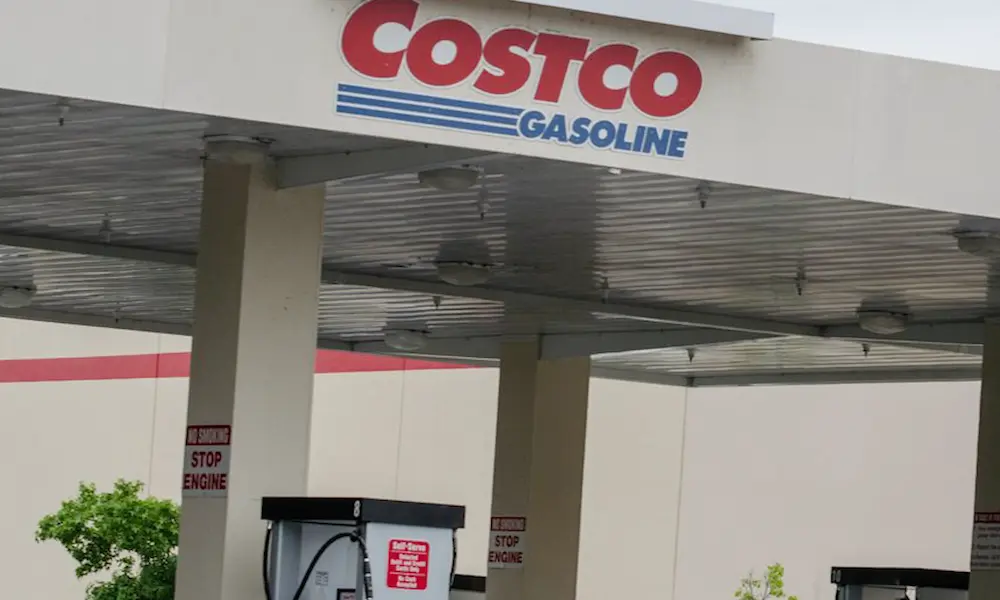
Sam’s Club is not Top Tier certified. That’s a deliberate business decision — lower additive costs mean lower pump prices. Costco, by contrast, is a licensed Top Tier brand and adds its own Kirkland Signature additive blend on-site.
| Specification | EPA Minimum | Top Tier Certified |
|---|---|---|
| Detergent Concentration | Baseline | 2–5x EPA minimum |
| Metallic Additives | Not prohibited | Explicitly banned |
| Who Sets It | Federal mandate | Automaker coalition |
| Octane Grades Covered | Varies | All grades must comply |
What Happens Inside Your Engine
Here’s where the chemistry gets real. Carbon deposits form when fuel doesn’t burn completely. Over time, that “gunk” coats your intake valves, injectors, and combustion chamber walls.
Modern Engines Are More Vulnerable
Older engines with port fuel injection sprayed fuel onto the back of intake valves, which naturally washed them clean. Modern Gasoline Direct Injection (GDI) engines skip that step — fuel goes straight into the combustion chamber at pressures over 2,000 psi. The intake valves never get washed. Carbon builds up fast.
A clogged injector nozzle (sometimes as narrow as a human hair) disrupts the fuel spray pattern, leading to rough idling, hesitation under acceleration, and a gradual power loss you might not even notice until it’s significant.
The Numbers Don’t Lie
The AAA commissioned an independent lab study that ran engines through a simulated 4,000-mile cycle using Top Tier and non-Top Tier fuels. Then they cracked the engines open and measured the deposits.
| Metric | Top Tier Fuel | Non-Top Tier (Sam’s Club Category) |
|---|---|---|
| Valve Deposits (mg) | 34 | 660 |
| Relative Cleanliness | 19x cleaner | Baseline |
| Fuel Economy Impact | Maintains efficiency | 2–4% loss |
| Drivability Issues | Minimized | Higher risk |
That’s not a small gap. Engines running on baseline fuel accumulated 19 times more intake valve deposits than those running on Top Tier gas.
The Supply Chain Reality
Here’s something most people don’t know: Sam’s Club gas and Shell gas probably came from the same pipeline terminal. Most fuel retailers in a given region pull from the same “rack” — a shared storage facility fed by regional pipelines.
The difference happens when the tanker truck loads up. A computer injects the additive package into the fuel stream as it fills. Top Tier brands inject a premium additive package; Sam’s Club injects a standard package that meets the EPA floor.
So Sam’s Club gas isn’t “dirty” or “unrefined.” It’s the same base fuel — just with a lighter seasoning.
Is Sam’s Club Gas Good for Your Specific Car?
The answer changes depending on what you drive.
For most everyday vehicles — a standard sedan, minivan, or light truck with port fuel injection — Sam’s Club gas is fine. You’ll save money, the fuel meets all legal standards, and your engine won’t suffer noticeably if you keep up with basic maintenance.
For modern GDI engines, turbocharged cars, or luxury vehicles, the calculus shifts. Many premium brands like BMW, Mercedes-Benz, and Porsche explicitly recommend Top Tier fuel in their owner’s manuals. Some Camaro ZL1 owners have even reported detecting engine knock during data-logging sessions when using Sam’s Club 93 octane — not because of the octane rating, but because of deposit-related combustion issues.
One critical point: octane grade and fuel quality are not the same thing. Sam’s Club 93 premium still carries the same lower detergent levels as their regular 87. Higher octane doesn’t mean cleaner fuel.
The Real Cost of Cheap Gas
Sam’s Club consistently prices fuel about $0.25 below the local average. For a driver filling a 15-gallon tank 41 times a year, that’s roughly $123 in annual savings — enough to cover a basic membership.
But factor in the 2–4% fuel economy loss from deposit buildup, and that gap shrinks. A car averaging 25 mpg that loses 3% efficiency burns an extra 18 gallons over 15,000 miles. At $3.50/gallon, that’s $63 back out of your pocket.
And if you ever need a professional intake valve cleaning — a “walnut blasting” service common on European GDI engines — expect to pay $400 to $800. Suddenly the pump savings look a lot smaller.
The Smart Middle Ground: Fuel Additives
You don’t have to choose between cheap gas and clean engines. Sam’s Club actually sells the solution in its own automotive aisle: Techron Complete Fuel System Cleaner and VP Racing Madditive.
The key ingredient to look for is polyetheramine (PEA) — the same active compound used in Top Tier additive packages. Unlike simpler detergents, PEA survives combustion temperatures long enough to clean injectors, intake valves, piston crowns, and combustion chamber walls.
Add a bottle every 3,000 to 5,000 miles (or at every oil change) and you close most of the quality gap between Sam’s Club and a Top Tier brand.
| Additive | Primary Function | Recommended Use |
|---|---|---|
| Techron Complete | Cleans full fuel system and sensors | Every 3,000 miles |
| VP Racing Madditive | Restores performance and mileage | Every 5,000 miles |
| Techron Fuel Injector Cleaner | Targets injector spray pattern | Every 1,000 miles |
How Sam’s Club Stacks Up Against Competitors
| Retailer | Top Tier Certified | Avg. Price vs. Local | Est. Annual Savings |
|---|---|---|---|
| Costco | Yes | -$0.24 | $118 |
| Sam’s Club | No | -$0.25 | $123 |
| BJ’s Wholesale | No | -$0.26 | $128 |
| Shell / ExxonMobil | Yes | Baseline | $0 |
Costco is the only warehouse club that’s Top Tier certified. If quality is your top priority and you have access to both, Costco edges out Sam’s Club — even though the price difference between them is just a penny or two per gallon.
What About Tank Quality and Contamination?
Sam’s Club uses Veeder-Root automated tank gauging systems that monitor fuel levels, temperature, and water presence in real time. If water seeps into the tank — which can cause ethanol-blended fuel to phase-separate and damage your engine — the system triggers an alert before contaminated fuel reaches the pumps.
High sales volume also works in your favor. Sam’s Club stations turn over their underground tank inventory several times a week, which means the fuel is consistently fresh and sediment has less time to accumulate compared to a low-volume neighborhood station.
That said, incidents do happen. In July 2025, a Sam’s Club in the Ohio Valley Plaza had a contamination event where customers reported vehicles misfiring or failing to start after filling up. These events are rare, but they’re a reminder that no fuel retailer is immune to delivery errors or infrastructure failures.
The Bottom Line on Sam’s Club Gas
Sam’s Club gas is legal, safe, and sourced from the same regional supply as name-brand fuels. For most drivers of standard vehicles, it’s a smart, money-saving choice — especially when you pair it with a periodic fuel system cleaner.
If you drive a turbocharged GDI engine, a luxury car, or anything where the manufacturer specifically calls for Top Tier fuel, you’ll want to think twice about making Sam’s Club your only stop. The deposit risk is real, and the long-term repair costs can quietly erase everything you saved at the pump.
The smartest play? Use Sam’s Club gas regularly, add a PEA-based cleaner every few thousand miles, and save the Top Tier fill-up for your high-performance or European vehicle. You get the savings without gambling on your engine’s long-term health.