If you’ve ever wondered whether Mobil gas is worth the extra cash or just fancy marketing, you’re asking the right question. The short answer: yes, Mobil gas is legitimately good—but not for the reasons you might think. We’ll break down the actual science, cut through the marketing noise, and show you what really matters when you’re filling up your tank.
What “Good Gas” Actually Means (Hint: It’s Not About the Logo)
The EPA Standard Isn’t Enough Anymore
Here’s something most people don’t know: all gas sold in the U.S. must meet a minimum EPA detergent standard. Sounds reassuring, right? Problem is, that standard was set back in 1996. Your car’s engine? It’s way more advanced than that.
Modern engines use gasoline direct injection (GDI) and turbocharging. These technologies are incredibly susceptible to carbon buildup on intake valves and fuel injectors. The EPA minimum just doesn’t cut it anymore for keeping these sophisticated engines clean.
Enter TOP TIER: The Standard That Actually Matters
Major automakers—BMW, GM, Ford, Toyota, Honda—got tired of seeing warranty claims from gunked-up engines. So they created their own standard: TOP TIER Detergent Gasoline.
This isn’t marketing fluff. It’s an engineering requirement that demands significantly higher detergent concentrations in fuel. The critical part? If you’re a TOP TIER retailer, all your octane grades must meet this standard—regular, midgrade, and premium.
The AAA Study That Settled the Debate
In 2016, AAA commissioned independent labs to settle this once and for all. They ran engine tests simulating 4,000 miles of driving with different fuels.
The results were staggering:
- Non-TOP TIER fuels caused 19 times more engine deposits than TOP TIER brands
- Non-TOP TIER fuels left an average of 660.6 mg of deposits per intake valve
- TOP TIER fuels? Just 34.1 mg per valve
Over time, this difference translates to 2-4% worse fuel economy, drivability issues, and increased emissions. AAA’s conclusion was blunt: “Automakers got it right—TOP TIER gasoline performs best.”
Is Mobil Gas Good? The Certification You Need to Know
Here’s the most important fact in this entire post: Mobil is a licensed TOP TIER retailer. Full stop.
This isn’t something Mobil just claims. It’s a business-to-business engineering decision that means Mobil commits to meeting the automaker-backed standard. Even if you don’t see a TOP TIER sticker on the pump, the brand’s license is your guarantee.
So yes, when measured against the most important independent standard in the industry, Mobil gas is unequivocally good.
What’s Actually in Mobil’s “Synergy” Formula
Beyond the Basic Standard
While TOP TIER is the minimum for quality fuel, “Synergy” is Mobil’s proprietary additive package. It’s designed to exceed that baseline with some sophisticated chemical engineering.
The Secret Sauce: Eight Key Ingredients
Mobil’s technical specs reveal that Synergy isn’t just one magic ingredient—it’s a multi-component system:
What’s in Your Tank: Mobil Synergy Components
| Ingredient | What It Does | Who Gets It |
|---|---|---|
| Three Types of Detergents | Keeps port fuel injection and direct injection engines clean | All grades |
| Anti-Adhesion Compound | Prevents detergents from forming sticky films on valves (stops cold-start problems) | All grades |
| Corrosion Inhibitor | Prevents rust in your tank and engine parts | All grades |
| Demulsifier | Separates water from gas so it can be removed from your tank | All grades |
| Solvent Fluid | Keeps all ingredients mixed and flowing, even in cold temps | All grades |
| Marker Molecules | Chemical signature ensuring correct additive amounts | All grades |
| Friction Modifier | Reduces engine wear by 30% | Premium only |
The Premium vs. Regular Reality Check
Here’s where things get interesting. Mobil’s marketing creates what you might call a “halo effect.” The company’s most impressive claims apply exclusively to its premium Synergy Supreme+ fuel.
The friction modifier that reduces wear by 30%? Premium only. The claim that Supreme+ keeps engines “3X cleaner”? That’s compared to Mobil’s own regular gas.
If you’re buying 87-octane Mobil regular, you’re still getting excellent TOP TIER fuel. But you’re not getting those specific, quantified benefits. You’re getting the detergents, corrosion protection, and water management—which is still a robust, well-engineered product.
Mobil vs. Shell vs. Chevron: The Truth About “Additive Wars”
How the Competition Stacks Up
Every major brand has its proprietary formula:
- Mobil Synergy Supreme+: 30% wear reduction, 3X cleaner engines (vs. its own regular)
- Shell V-Power NiTRO+: Claims to reduce “gunk, corrosion, wear, and friction”
- BP with Invigorate: “10X better protection” (but that’s vs. EPA minimum, not other TOP TIER brands)
- Chevron with Techron: Uses polyether amine (PEA), the same detergent family most TOP TIER fuels use
The Missing Piece: No Independent Head-to-Head Tests
Here’s what’s frustrating: there’s zero publicly available, independent testing comparing these premium formulas against each other.
The AAA study proved the massive gap between TOP TIER and non-TOP TIER. But comparing Synergy to V-Power to Techron? The data doesn’t exist. The competing claims use different baselines, making apples-to-apples comparisons impossible.
Online forums are predictably mixed and inconclusive. Some swear by Chevron, others by Shell, still others by Mobil. It’s mostly regional loyalty and confirmation bias.
What This Means for Your Wallet
The choice between Mobil, Shell, and Chevron should come down to three things: price, convenience, and rewards programs.
The 19-fold difference in deposits between TOP TIER and non-TOP TIER is massive and proven. No evidence suggests a similarly significant gap exists between TOP TIER brands. Pick whichever certified brand is cheapest and most convenient.
Why Mobil Has a Bad Reputation (Despite Good Gas)
The Satisfaction Paradox
Here’s something weird: Mobil consistently ranks near the bottom in GasBuddy’s satisfaction reports for major chains.
How can a TOP TIER fuel get such low marks? Easy: people aren’t rating the gas. They’re rating the experience.
What’s Actually Driving Complaints
Dig into the actual complaints, and you’ll find:
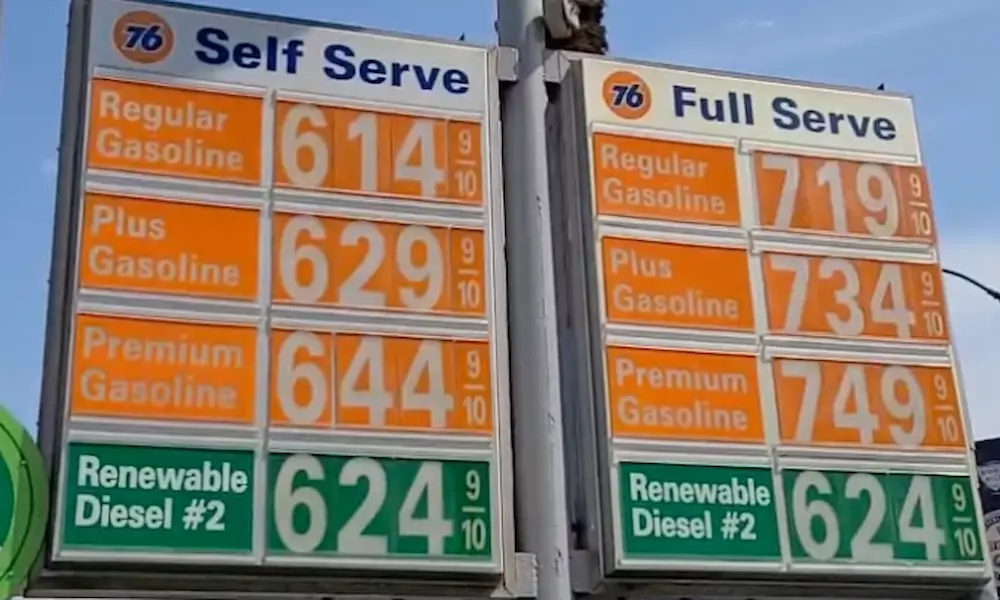
Price: Mobil stations are often $0.40-$0.70 more expensive per gallon than competitors. That’s $10 extra per fill-up. People notice.
Coffee: Seriously. Mobil ranked #5 for coffee quality in satisfaction surveys. Apparently, mediocre coffee tanks your overall rating.
Operational Issues: Better Business Bureau complaints focus on rewards apps that don’t work, pump charging errors, and poor customer service—not engine damage.
Interestingly, Mobil ranked #2 (behind Chevron) for cleanliness and restrooms. So it’s not all bad.
The “Bad Gas” Incidents: Product vs. Operations
When you hear horror stories about Mobil, they’re almost always operational failures, not formula problems:
The 2013 Louisiana Incident: Over 5 million gallons of contaminated fuel potentially damaged 250,000 vehicles. This was absolutely “bad gas”—but it was a localized contamination event during refining, not a flaw in the Synergy formula itself.
The 2020 Australian Lawsuit: Six stations were allegedly selling unadditized fuel while advertising it as Synergy. This is franchise compliance fraud, not a product quality issue.
Isolated Station Problems: Any station can get water in its underground tanks. This happens to all brands. With over 11,000 Mobil stations, some incidents are statistically inevitable.
The formula is solid. The operational risks exist everywhere.
Your Best Strategy for Buying Gas
What Actually Matters
After reviewing the science, lawsuits, and consumer data, here’s what you need to know:
- TOP TIER certification is the only distinction that matters for your engine’s health
- Mobil is definitively TOP TIER, making it an excellent choice
- The difference between TOP TIER brands is negligible compared to the difference between TOP TIER and non-TOP TIER
- Premium Mobil gives you benefits regular Mobil doesn’t—but only if you’re actually buying premium
How to Choose Your Station
Don’t base your decision on fear of inferior quality. Instead:
- Compare prices: If Mobil is 50 cents more than Shell or Chevron, save your money
- Check convenience: The closest TOP TIER station is the best TOP TIER station
- Factor in rewards: Credit card rewards or station loyalty programs can offset price differences
The single most important action you can take? Consistently use any TOP TIER brand. That 19-fold difference in deposit formation between TOP TIER and non-TOP TIER fuels is the massive gap that actually affects your engine.
The Bottom Line on Mobil
Is Mobil gas good? Absolutely. It’s scientifically verified, automaker-approved, and independently tested as superior to non-TOP TIER alternatives.
But is it better than other TOP TIER brands like Shell, Chevron, or Costco? There’s no credible evidence proving meaningful differences between them. The “additive wars” are mostly marketing theater.
Use Mobil with confidence. But don’t pay a premium for it unless you’re getting premium-grade fuel with the friction modifier and enhanced cleaning power. And definitely don’t skip a cheaper TOP TIER station just because it’s not Mobil.
Your engine doesn’t care about the logo on the pump. It cares about the detergent concentration in the fuel. As long as you’re filling up at a TOP TIER station—whether that’s Mobil, Shell, Chevron, BP, or even Costco—you’re doing right by your vehicle.