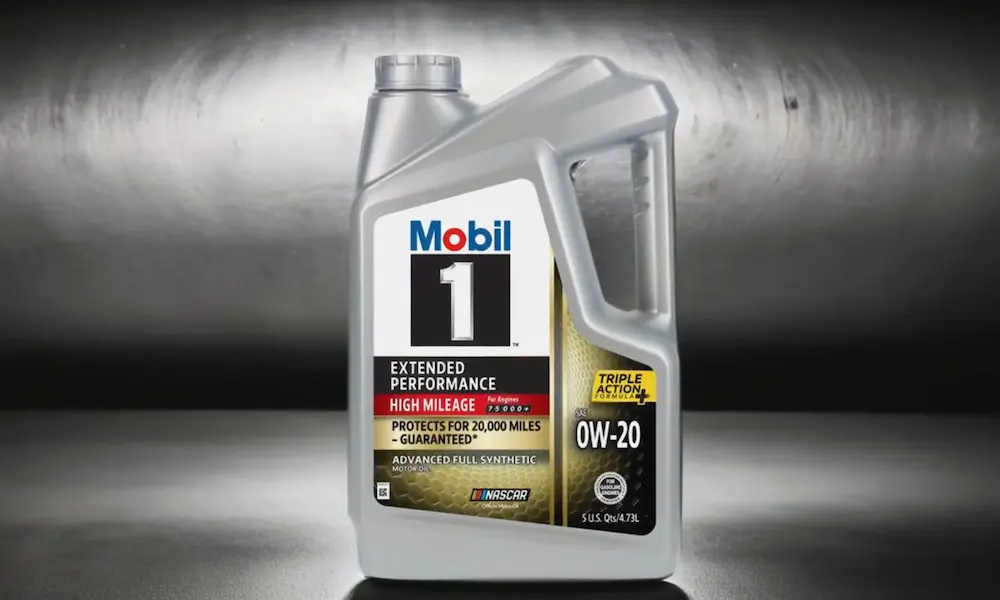
You’re staring at your mower’s dipstick, wondering if you’ve been using the wrong oil all along. Here’s the deal: the kawasaki fr691v oil type isn’t just about grabbing whatever’s on sale at the auto parts store. Get it wrong, and you’re looking at premature engine wear—or worse. Let’s clear up the confusion.
What Oil Type Does the Kawasaki FR691V Actually Need?
The FR691V requires oil meeting API Service Classification SF, SG, SH, SJ, or SL. For most conditions, you’ll want SAE 10W-40. If you’re running this engine when it’s screaming hot outside (above 104°F), switch to SAE 20W-50.
Here’s what trips people up: these API classifications sound ancient because they are. We’re talking standards from the 1980s and 1990s. But there’s a reason Kawasaki specifies them.
Modern passenger car oils have stripped out most of their zinc dialkyldithiophosphate (ZDDP)—that’s the anti-wear additive your FR691V desperately needs. Car manufacturers reduced ZDDP to protect catalytic converters. Your mower doesn’t have a catalytic converter. It needs that zinc to protect high-pressure contact points like the camshaft and valve tappets.
Why Your FR691V Isn’t Like Your Car’s Engine
This is an air-cooled V-twin that runs hot and hard. It doesn’t have a radiator or coolant system to manage heat. Everything depends on airflow and oil.
When you use a modern “Energy Conserving” car oil—even if it’s the right viscosity—you’re starving critical engine parts of protection. The official Kawasaki documentation doesn’t spell this out in plain English, but the older API ratings are your clue.
Think of it this way: your car’s engine is built for modern low-ZDDP oils. Your FR691V was designed when high-ZDDP formulations were standard. Don’t mix and match eras.
The Temperature Chart They Don’t Want You to Ignore
Different weather demands different viscosity. Here’s the breakdown straight from Kawasaki’s technical guidance:
| SAE Viscosity Grade | Temperature Range | Best Use Case |
|---|---|---|
| SAE 5W-20 | -4°F to 86°F | Cold climates only |
| SAE 10W-30 | -4°F to 104°F | Moderate all-season option |
| SAE 10W-40 | -4°F to 104°F | Recommended for most users |
| SAE 30 | 32°F to 104°F | Single-grade traditional choice |
| SAE 20W-50 | Above 104°F | Critical for hot environments |
Most owner’s manuals stop at 104°F. That’s a problem if you’re mowing in Arizona, Texas, or Florida during summer. The engine doesn’t magically cool down just because the chart ends.
When ambient temps push past 104°F, 10W-40 starts thinning out. You’ll notice increased oil consumption—not because your engine’s broken, but because the oil can’t maintain its film strength. Switching to 20W-50 solves this. One Florida dealer confirms they recommend 20W-50 for Kawasaki engines in high-heat, high-humidity conditions.
Conventional vs. Synthetic: What Actually Works
The official specs don’t mention whether you need conventional or synthetic oil. But Kawasaki’s own KTECH oil gives you the answer: it’s a synthetic blend.
Here’s the performance ladder:
Conventional (Mineral) Oil: Meets the baseline requirements. Budget-friendly but offers the least protection under extreme heat.
Synthetic Blend: The sweet spot for most users. You get enhanced thermal stability and better shear resistance without breaking the bank. This is what Kawasaki formulates KTECH as.
Full Synthetic: The premium choice for severe-duty operation. If you’re running commercial equipment or mowing in brutally hot conditions, full synthetic provides maximum resistance to thermal breakdown and the lowest evaporation rate.
Don’t overthink this. For normal residential use, a quality synthetic blend does the job. For commercial operators or extreme climates, full synthetic is worth the extra cost.
The Zinc Additive You Can’t Skip
Here’s where things get technical, but stick with me—it’s important.
Kawasaki explicitly markets KTECH oil as containing a “zinc additive that helps prevent excess wear on engine parts.” That’s not marketing fluff. It’s a technical requirement.
Your FR691V’s valvetrain relies on ZDDP to survive. When metal parts slide against each other under high pressure and heat, ZDDP creates a protective film that prevents metal-to-metal contact.
What to avoid:
- Any oil labeled “Energy Conserving” or “Resource Conserving”
- Modern passenger car oils (API SN, SP) without high-ZDDP formulation
- Generic multi-purpose oils that don’t specify small engine use
What to seek:
- Kawasaki KTECH oil (the safest bet)
- Oils specifically labeled for 4-stroke small engines or air-cooled engines
- High-performance motorcycle oils (JASO MA/MA2 rated)
- Heavy-duty diesel engine oils (these typically maintain higher ZDDP levels)
Some folks swear by motorcycle or diesel oils for this exact reason. They’re formulated for high-stress applications and haven’t had their ZDDP gutted.
How Much Oil Does This Thing Hold?
The official capacity depends on whether you’re changing the filter:
- With filter change: 2.1 liters (2.2 US quarts)
- Without filter change: 1.8 liters (1.9 US quarts)
Always assume you’re changing the filter. It’s cheap insurance.
Here’s the maintenance schedule that actually matters:
- First 8 hours: Initial oil change (new engine break-in)
- Every 100 hours: Change engine oil
- Every 200 hours: Change oil filter
But here’s the catch: those intervals assume you’re checking oil daily. The manual states that using multi-grade oils like 10W-40 will increase oil consumption. That’s not a maybe—it’s guaranteed.
One dealer estimates about 0.25 ounces per hour. Over 100 hours, that’s nearly 0.8 quarts—over one-third of your total capacity. Skip your daily checks, and you’re running dangerously low.
The Two Oil Profiles That Cover Every Situation
Forget one-size-fits-all recommendations. Your climate and usage determine your oil strategy.
Standard Operation (Below 104°F)
You’re in temperate climates, residential use, normal mowing conditions.
- Viscosity: SAE 10W-40
- Type: Synthetic blend minimum
- Must have: High-ZDDP formulation
- Top picks: Kawasaki KTECH 10W-40, quality 4-stroke small engine oil, or HD diesel oil meeting API SL
Maintenance: Change oil every 100 hours, filter every 200 hours, and check the level before each use. Don’t negotiate on daily checks.
Severe-Duty Operation (Above 104°F)
You’re in the Southwest, running commercial equipment, or mowing in extreme heat.
- Viscosity: SAE 20W-50
- Type: Full synthetic strongly recommended
- Must have: High-ZDDP formulation
- Top picks: Kawasaki KTECH 20W-50 or premium full-synthetic 20W-50 for air-cooled engines
Maintenance: Same 100-hour oil changes and 200-hour filter changes, but consider more frequent changes in dusty or brutal conditions. Daily oil checks aren’t optional—they’re survival.
The switch to 20W-50 in high temps isn’t about being picky. It’s about controlling oil consumption and maintaining film strength when your engine’s running at its thermal limit.
Where People Get Tripped Up
The service manual doesn’t list oil specs. It explicitly tells you to check the owner’s manual instead. This confuses technicians who assume the service manual has everything.
Kawasaki separates this information deliberately. Mechanical procedures stay in the service manual. Fluid specs live in owner’s manuals because they change faster due to evolving industry standards and regulations.
Another mistake: thinking newer is always better. Modern API SP oils are engineered for modern cars with emissions equipment. Your FR691V doesn’t need or want that formulation. Stick with the specified API classifications or choose oils designed for small engines.
The Bottom Line on Kawasaki FR691V Oil Type
Use SAE 10W-40 synthetic blend with high ZDDP for normal conditions. Switch to SAE 20W-50 full synthetic when temps exceed 104°F. Check your oil daily—not weekly, not when you remember—daily.
The FR691V is a workhorse, but it demands the right fuel for its fire. Feed it modern low-ZDDP car oil, and you’re on borrowed time. Give it the zinc-rich protection it was designed for, and it’ll run for thousands of hours.
Your owner’s manual buried the important details. Now you know what actually matters.