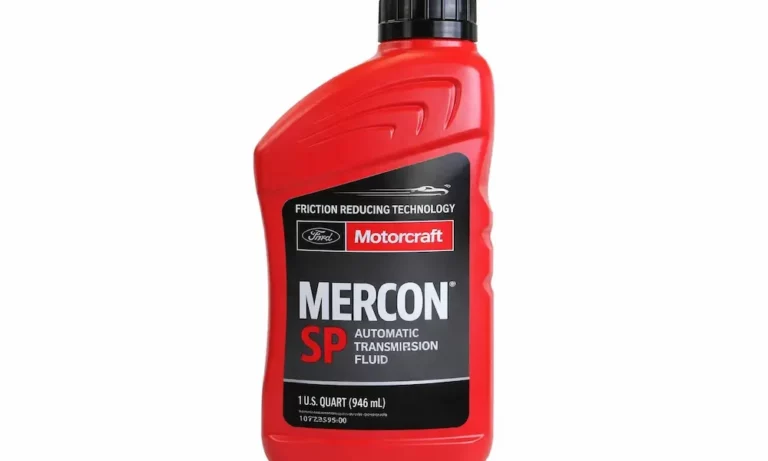
If your Ford or Lincoln needs a transmission fluid top-off and you’re staring at an empty shelf where Mercon SP used to be, you’re not imagining things. Mercon SP is gone. Ford pulled it from production in 2023, and Mercon LV is now the official replacement. But can you just swap them? Mix them? Ignore the whole thing? Keep reading — this covers everything you need.
What’s the Difference Between Mercon SP and Mercon LV?
Both fluids come from Ford’s Mercon family of automatic transmission fluids. Each one targets different transmission designs, but they share more DNA than most people realize.
Mercon SP launched in August 2001 under Ford specification M2C919-D. It was built specifically for high-torque transmissions like the ZF 6HP26 (used in Lincoln Navigators) and the Ford 5R110W TorqShift — the heavy-duty unit paired with the 6.0L PowerStroke diesel engine. According to the Motorcraft product page, it used premium hydro-processed base oils with excellent thermal and oxidation resistance.
Mercon LV — the “LV” stands for Low Viscosity — came later as fuel economy regulations tightened. It targets newer electronically controlled transmissions like the 6R80, which uses high-speed solenoids and adaptive learning algorithms. Motorcraft’s Mercon LV page describes it as formulated specifically to guard against shudder and resist shear breakdown over time.
Side-by-Side: Mercon SP vs Mercon LV Technical Data
Here’s how the two fluids compare using official Motorcraft data sheets:
| Property | Mercon SP | Mercon LV |
|---|---|---|
| Viscosity @ 100°C (mm²/sec) | 5.7 | 6.0 |
| Viscosity @ 40°C (mm²/sec) | 27.3 | 29.6 |
| Viscosity Index | 155 | 155 |
| Flash Point | 218°C (424°F) | 216°C (421°F) |
| Pour Point | Below -45°C (-49°F) | Below -48°C (-54°F) |
| Specific Gravity @ 60°F | 0.849 | 0.842 |
Here’s what catches most people off guard: Mercon LV is technically slightly thicker than Mercon SP at operating temperature. The “low viscosity” label means it’s thinner compared to the older Mercon V standard — not compared to SP. In practical terms, both fluids fall into the low-viscosity category for modern transmission use.
Is Mercon LV a Direct Replacement for Mercon SP?
Yes. Fully, officially, and unambiguously.
Ford issued Special Service Message SSM 51909 — the definitive word on this subject — confirming that Mercon LV replaces all versions of Mercon SP for service use. This applies to the entire 6R/TorqShift transmission family, including the 6HP26, 6R60, 6R75, and 5R110W units.
Key points from SSM 51909:
- Mercon SP production ended June 30, 2023. Any remaining stock is just dealer and distributor inventory burning down.
- Mercon LV is the designated replacement for all fluid changes and top-offs that previously required Mercon SP.
- Mixing the two fluids is officially safe. Ford conducted testing to confirm mixing these formulations won’t hurt your transmission’s function or durability.
Why Did Ford Switch? (And Why It Actually Matters)
The short answer: better performance and tougher fuel economy rules.
The longer answer involves shear stability. Transmission fluid gets “sheared” — physically broken down — as it passes through tight gaps in planetary gear sets and valve bodies at high speed. Older fluids, including Mercon SP, gradually lose their viscosity through this process. According to Sonnax’s technical analysis of 6R80 and 6R140 shift issues, timing-related shift problems often trace back to fluid that’s lost its hydraulic integrity.
Mercon LV was engineered with improved shear stability from the start. It holds its viscosity longer, keeps solenoids working accurately, and contributes to better fuel economy by reducing internal drag. For heavy-duty applications like towing — where transmission temps climb fast — that stability matters a lot.
What Happens if You Use the Wrong Fluid?
Using an incompatible fluid causes real problems, not just theoretical ones.
If the viscosity is off, the transmission control module (TCM) detects incorrect shift timing and throws fault codes. Here’s what poor fluid choice can trigger:
| DTC Code | Description | Fluid-Related Cause |
|---|---|---|
| P0750 | Shift Solenoid ‘A’ Malfunction | Clogged solenoid or incorrect viscosity |
| P0755 | Shift Solenoid ‘B’ Malfunction | Fluid pressure regulation failure |
| P0771 | Solenoid ‘E’ Performance | Stuck valve or hydraulic circuit leak |
| P0730 | Incorrect Gear Ratio | Clutch slipping from friction breakdown |
ANCEL’s solenoid diagnostic guide notes that these codes often point to fluid issues before any mechanical failure exists. Catch it early and a fluid exchange fixes it. Wait too long and you’re into solenoid replacement or worse.
A common result of fluid incompatibility is transmission shudder — that irritating vibration that feels like driving over rumble strips. It happens when friction modifiers deplete and the torque converter clutch can’t lock up smoothly. Both Mercon SP and Mercon LV include anti-shudder additives, but LV maintains those properties longer due to its improved chemical stability.
Should You Do a Full Flush or Just a Drain and Fill?
If you’re switching from Mercon SP to Mercon LV, a full fluid exchange is the better move.
A drain and fill only replaces about one-third of the total fluid volume. A large portion stays trapped in the torque converter and cooling lines. Ford technicians confirm that a full exchange — done with a specialized machine — ensures you’re running on 100% fresh Mercon LV and gets the full benefit of its improved formulation.
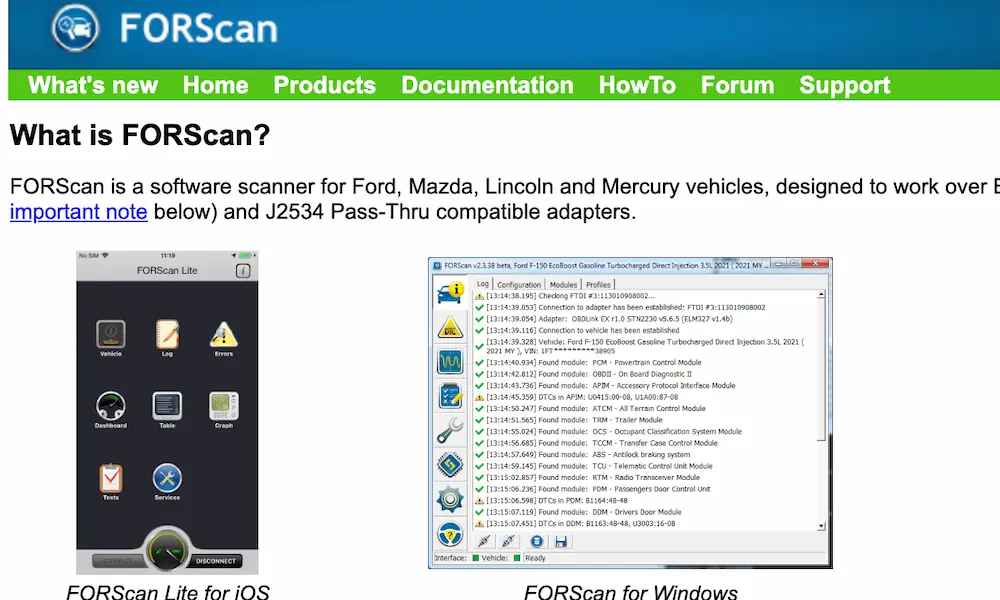
After the exchange, run an adaptive learn procedure through your scan tool. The TCM recalibrates its shift timing based on the new fluid’s characteristics. Skipping this step can leave you with slightly off-feeling shifts for a while.
The “Lifetime Fluid” Myth
Ford marketed Mercon LV with “lifetime” language. Technically, it can last 150,000 miles under ideal conditions. But ideal conditions don’t exist for most American drivers.
Severe duty driving — which includes any of the following — shortens that interval significantly:
- Towing or hauling heavy loads
- Frequent stop-and-go traffic
- Operating in temperatures above 90°F regularly
- Police, taxi, or fleet use
Professional technicians recommend a fluid exchange every 30,000 to 60,000 miles for severe-duty vehicles. That’s a wide range, so err toward 30,000 if you tow regularly or live somewhere hot.
Choosing the Right Mercon LV Product
Motorcraft is the OEM option, but licensed aftermarket products are legitimate alternatives. The key word is licensed.
A licensed fluid — like National Mercon LV/Dexron VI ATF or Valvoline MaxLife Multi-Vehicle ATF — has gone through Ford’s testing protocol and carries a license number. Mercon LV license numbers follow the format MLV######, like MLV070701 on the official data sheet.
Avoid generic “multi-vehicle” fluids that claim to meet multiple incompatible specs. The Australian Lubricant Association flagged a product claiming to meet both Mercon SP and Mercon ULV simultaneously. That’s physically impossible — Mercon SP requires around 5.7 mm²/sec at 100°C while Mercon ULV needs roughly 4.5 mm²/sec. No single formulation satisfies both. If a bottle claims everything, trust it for nothing.
The Bottom Line on Mercon SP vs Mercon LV
Here’s the plain-English summary:
- Mercon SP is discontinued. You won’t find new stock, and dealer inventory is running out.
- Mercon LV is the official Ford-approved replacement, confirmed by SSM 51909.
- Mixing them is safe. Ford tested this specifically.
- Mercon LV performs better in shear stability and long-term friction consistency.
- Don’t skip maintenance. Severe-duty use still needs a fluid exchange every 30,000 to 60,000 miles.
- Only use licensed products. Check for the MLV license number on the bottle.
If your Ford’s transmission currently has Mercon SP in it, you don’t need to rush to do anything — but your next service should be Mercon LV, ideally as a full exchange.