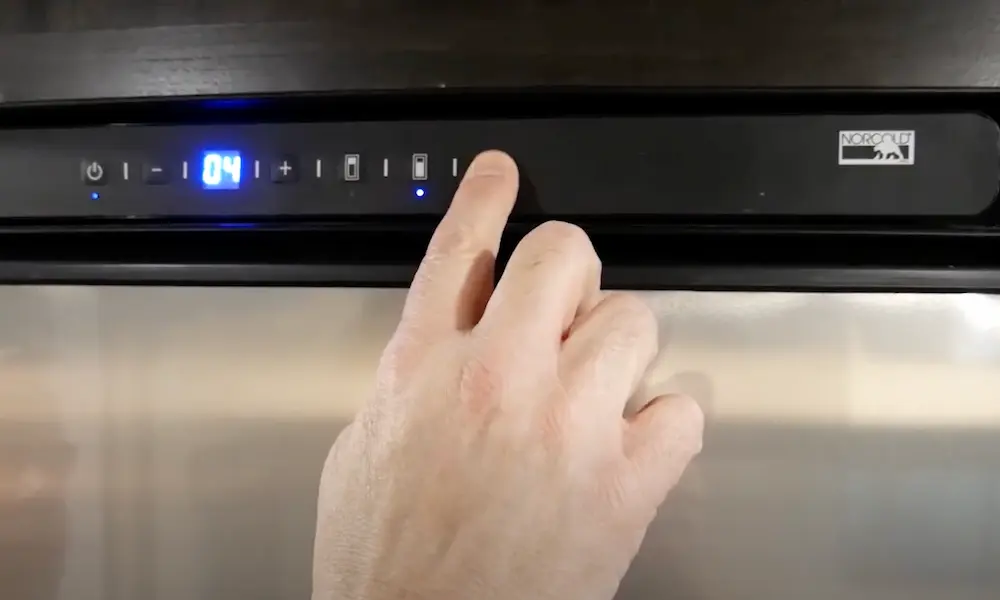
Is your Norcold refrigerator failing to keep your food cold during your RV adventure? A non-cooling fridge can quickly turn a relaxing trip into a stressful situation. The good news is that many cooling issues can be diagnosed and fixed without professional help. Let’s dive into why your Norcold RV refrigerator isn’t cooling and what you can do about it.
How Norcold RV Refrigerators Work
Unlike your home refrigerator, your Norcold RV fridge uses absorption refrigeration principles instead of a compressor. The system uses heat (from either propane or electricity) to circulate a solution of ammonia, water, and hydrogen through a sealed system of tubes and chambers.
Here’s a simplified breakdown of how it works:
- A heating element boils an ammonia-water solution
- The ammonia gas moves to the condenser where it cools and becomes liquid
- The liquid ammonia enters the evaporator where it mixes with hydrogen
- This mixture absorbs heat from inside your fridge (the cooling effect)
- The ammonia returns to the absorber and the cycle repeats
When any part of this process fails, your fridge stops cooling properly.
Common Causes of Cooling Failure
1. Uneven Leveling
One of the most common reasons for cooling failure is not having your RV properly leveled.
How to fix it: Your refrigerator needs to be level within 3 degrees for the cooling system to function correctly. Use a small bubble level placed on the refrigerator shelf to check. If it’s not level, adjust your RV’s position or use leveling blocks.
2. Control Board Lockouts and Fault Codes
Your Norcold refrigerator has a control system that monitors operation and can trigger a “lockout” if it detects a problem.
How to identify it: Check if your fridge displays a blinking LED code. A 5-blink code typically signals a cooling failure.
How to fix it:
- Unplug the refrigerator and remove the control board cover
- Find the reset pins (older models have a recessed pin labeled “P7” or “TEST”)
- Press and hold the reset pin for 5-10 seconds
- Restore power and test if the refrigerator starts cooling
A video guide to resetting Norcold control boards can be helpful if you’re unsure about the process.
3. Poor Ventilation
Your refrigerator needs proper airflow to reject heat efficiently.
How to fix it:
- Clear all obstructions from the upper and lower exterior vents
- Check that food items aren’t blocking interior air circulation vents
- Consider installing a cooling fan to improve airflow, especially in hot weather
- Ensure the baffle is properly installed to direct heat away from the cooling unit
4. Gas Mode Failures
If your refrigerator works on electric but not on propane, you may have ignition problems.
How to identify it: Listen for clicking sounds that indicate ignition attempts. A 2-blink code typically indicates gas mode issues.
How to fix it:
- Turn off the refrigerator and locate the burner assembly (usually accessible from the external lower vent)
- Clean the burner and orifice with steel wool and compressed air
- Check that the electrode is positioned 3-5mm from the burner
- Test if the gas valve has the correct resistance (should be 74-92 ohms)
5. Thermistor Problems
The thermistor is a temperature-sensing device that tells the control board when to cycle the cooling system.
How to test it:
- Disconnect the thermistor from the control board
- Use a multimeter to check resistance:
- At 32°F (ice water): approximately 12,000 ohms
- At room temperature (80°F): approximately 3,500 ohms
A reading of 0 ohms indicates a shorted thermistor, while infinite resistance means an open circuit. Replacement thermistors cost $20-$50.
6. Power Supply Issues
Unstable voltage can cause refrigerator failure.
What to check:
- Verify your shore power connection is stable
- Check the 5-amp fuse (F3) if operating on AC power
- Ensure your 12V supply is providing adequate voltage when running on DC
7. Cooling Unit Failure
The cooling unit is the sealed system containing the ammonia solution. When it fails, it usually needs replacement.
Warning signs:
- Yellow residue (sodium chromate) underneath the refrigerator
- Ammonia smell near the unit
- No cooling despite normal operation sounds
Diagnosing Your Specific Issue
Use this troubleshooting flowchart to identify your problem:
| Symptom | Likely Causes | Check First |
|---|---|---|
| No cooling on any power source | Cooling unit failure, control board lockout, leveling issue | Leveling, reset control board |
| Cools on electric but not gas | Gas valve, burner issues, orifice blockage | Clean burner assembly, check igniter |
| Intermittent cooling | Thermistor, ventilation issues, leveling | Ventilation, thermistor resistance |
| Displays error code | See specific code meaning | Norcold fault code guide |
Step-by-Step Cooling Unit Replacement (If Necessary)
If you’ve determined your cooling unit has failed, replacing it is a major but doable project:
- Prepare: Disconnect all power sources and propane
- Remove refrigerator: Carefully extract the entire refrigerator from its cabinet
- Separate cooling unit: Remove the cooling unit from the refrigerator box
- Transfer components: Move the baffle and heating element to the new cooling unit
- Install: Reverse the process to reinstall
A replacement cooling unit costs $1,200-$2,200 plus labor, though aftermarket units may offer better value and durability.
Preventative Maintenance Tips
To avoid future cooling issues:
- Always ensure your RV is level when the refrigerator is operating
- Turn off the refrigerator when refueling or during extended uphill drives
- Clean the burner assembly seasonally
- Improve ventilation with auxiliary fans in hot weather
- Let the refrigerator cool down completely before loading food (usually 8-12 hours)
- Don’t overcrowd the refrigerator; leave room for air circulation
Common Models and Specific Issues
Different Norcold models have specific quirks:
- N6XX/N8XX series: Prone to cooling unit failures; subject to class action lawsuits due to design issues
- Polar series: Less prone to cooling unit failures but more sensitive to leveling
- Newer models (1210/1211): Improved cooling units but more complex electronics
When a Replacement Might Be Better
If you’ve had recurring issues or your unit is older, consider:
- Installing a new cooling unit from alternative manufacturers like JC Refrigeration
- Converting to a residential-style compressor refrigerator (requires more battery power but more reliable cooling)
- Upgrading to a newer model with improved design
Advanced Troubleshooting For Persistent Problems
Cooling Performance Test
- Set your refrigerator to the coldest setting
- Place thermometers in the freezer and fresh food sections
- Check temperatures after 8 hours of operation
- Freezer should be below 0°F (-18°C)
- Fresh food section should be 34-40°F (1-4°C)
Checking For Blockages
The cooling unit may develop internal blockages that reduce efficiency:
- Run the refrigerator for an hour
- Feel the cooling unit’s pipes at the back
- You should feel a temperature gradient—hot near the boiler, cool near the condenser
If the entire unit feels the same temperature, you likely have a blockage in the cooling system.
By following this comprehensive guide, you should be able to diagnose and potentially fix your Norcold RV refrigerator’s cooling issues. Remember that safety comes first—if you smell ammonia or see yellow residue, ventilate the area and consider professional help for cooling unit replacement.