Picking between a Powerstroke and a Duramax is one of the most debated decisions in the truck world. Both engines are genuinely impressive, and both have loyal fans who’ll argue their case all day. This guide cuts through the noise and gives you a straight, honest breakdown — so read on before you spend six figures on the wrong truck.
A Quick Look at Where These Engines Came From
These two diesel platforms didn’t arrive at the same place the same way.
Ford’s Powerstroke started as a partnership with Navistar International. The 7.3-liter Powerstroke, introduced in mid-1994, became legendary for its simplicity and bulletproof reliability. Then came the troubled 6.0L and 6.4L eras — both introduced more complexity, and both had well-documented issues with head bolts, EGR systems, and fuel consumption. Ford had enough. In 2011, they launched the 6.7L Powerstroke — their first fully in-house diesel engine.
GM went a different route. They teamed up with Isuzu in 2001 and launched the 6.6-liter Duramax. Instead of radical redesigns, GM chose incremental refinement across multiple generations — the LB7, LLY, LBZ, LMM, LML, and the current L5P. It’s been the same displacement for over two decades. That’s not a lack of innovation — that’s confidence in a proven formula.
Diesel Platform Generation Timeline
| Era | Ford Powerstroke | GM Duramax | Key Milestone |
|---|---|---|---|
| 1994–2003 | 7.3L (Navistar) | 6.6L LB7 | Common Rail Injection Arrives |
| 2003–2007 | 6.0L (Navistar) | 6.6L LLY/LBZ | Variable Geometry Turbos |
| 2008–2010 | 6.4L (Navistar) | 6.6L LMM | Diesel Particulate Filters |
| 2011–2016 | 6.7L Gen 1 (In-House) | 6.6L LML | SCR & DEF Systems |
| 2017–2022 | 6.7L Gen 2/3 | 6.6L L5P | The 1,000 lb-ft Benchmark |
| 2023–Present | 6.7L High Output | 6.6L L5P Refined | 1,200 lb-ft & Peak Tech |
What These Engines Are Actually Built From
Ford 6.7L Powerstroke: The Compacted Graphite Iron Block
Ford uses a compacted graphite iron (CGI) block for the 6.7L Powerstroke. CGI is stronger and stiffer than traditional gray cast iron, while being noticeably lighter. That matters when you’re trying to contain the pressure needed to make 1,200 lb-ft of torque without cracking your engine in half.
The cylinder heads are aluminum and, here’s the interesting part — they’re reverse-flow heads. Instead of the exhaust exiting to the outside of the V8, Ford flips it. The exhaust manifolds and turbocharger sit in the valley between the cylinder banks. This setup shrinks the distance between the valves and the turbo, kills turbo lag, and keeps heat where it’s actually useful. Each cylinder gets six head bolts — a direct response to the head gasket disasters of the 6.0L era.
GM 6.6L Duramax L5P: Cast Iron With Aluminum Heads
The L5P uses a deep-skirt cast iron block paired with cast aluminum cylinder heads. Cast iron is heavier, but it dampens vibration beautifully and handles consistent, sustained heavy loads without complaint. The block features induction-hardened cylinder bores and four-bolt main bearings — serious bottom-end strength.
The aluminum heads dissipate heat up to 40% faster than cast iron, which keeps hot spots from forming in a turbocharged engine that’s working hard. A multi-layer steel head gasket bridges the gap between the aluminum heads and the iron block, handling the different expansion rates as everything heats up.
Engine Specs Side by Side
| Feature | Ford 6.7L Powerstroke | GM 6.6L Duramax L5P |
|---|---|---|
| Block Material | Compacted Graphite Iron | Cast Iron |
| Cylinder Head | Aluminum (Reverse-Flow) | Cast Aluminum (Conventional) |
| Compression Ratio | 15.8:1 – 16.2:1 | 16.0:1 |
| Valves Per Cylinder | 4 | 4 |
| Firing Order | 1-3-7-2-6-5-4-8 | 1-2-7-8-4-5-6-3 |
The Torque War: Raw Numbers and Real-World Feel
Ford’s Peak Power Advantage
Ford offers two versions of the 6.7L Powerstroke. The standard output makes 475 horsepower and 1,050 lb-ft of torque. The High Output version hits 500 horsepower and 1,200 lb-ft — the highest figures in the segment. Ford gets there with a water-jacketed turbocharger and a fuel system that operates at an extraordinary 36,000 PSI, allowing for tighter fuel atomization and denser combustion.
In practical terms, the Ford F-450 with the High Output engine can tow up to 40,000 pounds in a gooseneck configuration. That’s the number that makes commercial hot-shot haulers and heavy agricultural operators choose the blue oval.
GM’s Smooth Power Delivery
The L5P Duramax produces 470 horsepower and 975 lb-ft of torque. Lower numbers than Ford, but GM’s engineers tuned the Duramax for a flat torque curve — 90% of peak torque is available at just 1,550 RPM. The truck launches smoothly, pulls steadily, and never feels like it’s hunting for power. The Chevrolet Silverado 3500 HD tops out at 36,000 pounds of gooseneck capacity.
For anyone towing under 20,000 pounds — which covers the vast majority of RV owners, horse trailer operators, and contractors — both engines give you capability you’ll never fully use.
Performance Numbers at a Glance
| Spec | Ford 6.7L HO Powerstroke | GM 6.6L Duramax L5P |
|---|---|---|
| Peak Horsepower | 500 HP @ 2,600 RPM | 470 HP @ 2,800 RPM |
| Peak Torque | 1,200 lb-ft @ 1,600 RPM | 975 lb-ft @ 1,600 RPM |
| Injection Pressure | 36,000 PSI | 29,000 PSI |
| Turbocharger | Variable Geometry (Water-Cooled) | Variable Geometry |
| Max Gooseneck Tow | 40,000 lbs | 36,000 lbs |
Transmissions: More Different Than You’d Think
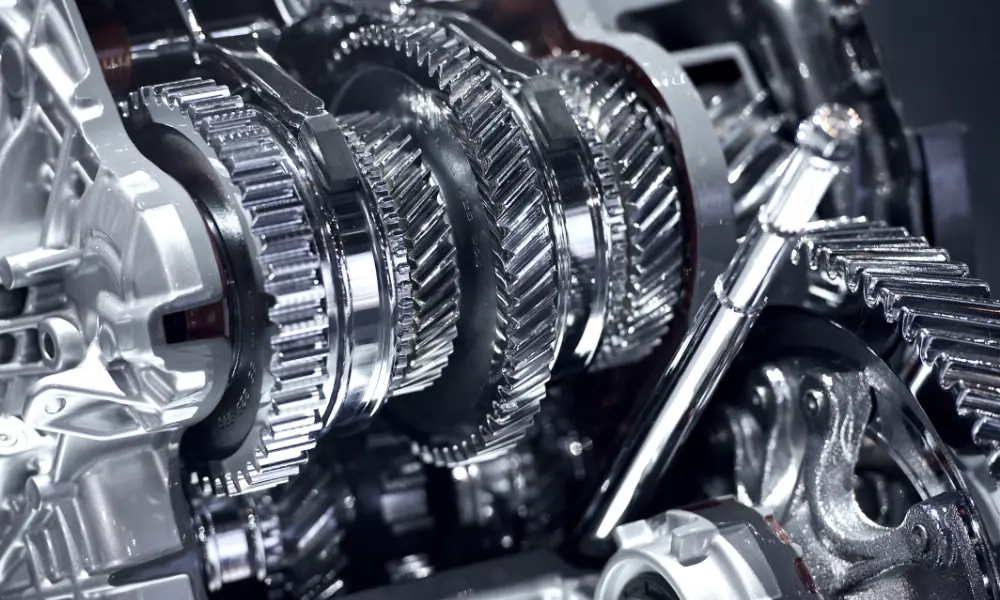
Both trucks run 10-speed automatic transmissions developed from a joint Ford-GM engineering project. But the final products are very different animals.
Ford TorqShift 10R140: Built to Take a Beating
The Ford TorqShift holds 17 quarts of fluid versus the GM’s 13.4 quarts. More fluid means more heat capacity during long mountain descents with a heavy trailer. Ford also uses an anodized main drum for improved wear resistance and a larger transmission pump gear that maintains hydraulic pressure under extreme loads. Teardowns show beefier clutch components and a larger filtration system — hardware that makes sense when you’re feeding it 1,200 lb-ft.
GM Allison 10L1000: Smooth and Refined
The GM unit carries the Allison badge but is manufactured by General Motors in Toledo, Ohio. It handles the stock Duramax output effortlessly and delivers the smoothest shift feel in the class. The trade-off? It lacks the anodized drum and some of the heavy-duty internals in the Ford unit, which can be a concern if you’re adding aftermarket power.
Transmission Comparison
| Feature | Ford TorqShift 10R140 | GM Allison 10L1000 |
|---|---|---|
| Fluid Capacity | 17 Quarts | 13.4 Quarts |
| Main Drum Finish | Anodized | Non-Anodized |
| Pump Gear | Double Capacity | Standard |
| First Gear Ratio | 4.615:1 | 4.54:1 |
| Tenth Gear Ratio | 0.632:1 | 0.63:1 |
Fuel System Reliability: A Story About One Pump
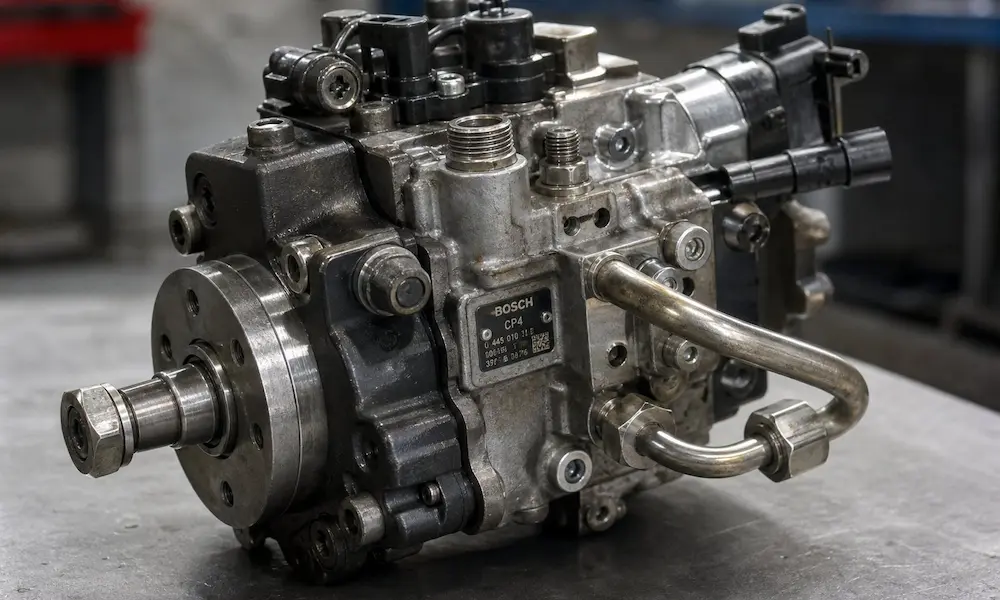
For several years, both manufacturers used the Bosch CP4.2 high-pressure fuel pump. This pump became infamous for catastrophic internal failures when exposed to low-lubricity diesel fuel — the kind that’s common in American fuel standards. When it failed, it sent metal debris through the entire fuel system. Repair bills regularly exceeded $10,000.
GM switched to a Denso fuel system for the L5P in 2017, and the catastrophic failure reports dropped significantly. Ford held onto the Bosch system longer but introduced a more durable DCR injection pump for 2023 that’s better suited to American fuel quality.
The Powerstroke’s High Output injection system runs at 36,000 PSI using piezoelectric injectors capable of up to eight injection events per combustion stroke. That produces a quiet idle and extremely precise combustion. The Duramax system operates at 29,000 PSI — slightly lower pressure, but known for consistent performance across all operating conditions.
Fuel Economy: Duramax Wins at the Pump
The EPA doesn’t rate heavy-duty trucks for fuel economy, but real-world owner data tells a clear story.
The L5P Duramax regularly returns 18–21 MPG on the highway when running empty. The 6.7L Powerstroke typically manages 16–19 MPG in the same conditions. Hook up a trailer over 15,000 pounds, and that gap narrows fast — both trucks drop into the 10–12 MPG range under load.
The Duramax’s edge comes from refined fuel mapping and the weight savings of its iron-aluminum architecture. If you use your truck as a daily driver more than a dedicated work tool, those extra MPGs add up fast over a year.
Real-World Fuel Economy Data
| Condition | Ford 6.7L Powerstroke | GM 6.6L Duramax L5P |
|---|---|---|
| Unloaded Highway | 16–19 MPG | 18–21 MPG |
| Unloaded City | 13–15 MPG | 14–16 MPG |
| Towing (15,000 lb) | 10–12 MPG | 9–11 MPG |
| DEF Consumption | ~1,000 miles/gallon | ~1,000 miles/gallon |
Maintenance: What It Costs to Keep These Running
Both engines need 13–15 quarts of oil per change and specialized filters designed for high soot output. Neither engine tolerates neglect — especially the emissions systems.
Routine Maintenance Intervals
| Task | Ford 6.7L Powerstroke | GM 6.6L Duramax L5P |
|---|---|---|
| Oil & Filter Change | 7,500 miles / 12 months | 7,500–10,000 miles |
| Fuel Filter | 15,000–22,500 miles | 15,000–22,500 miles |
| Air Filter Inspection | Every oil change | 45,000 miles |
| Coolant Flush | 50,000–100,000 miles | 150,000 miles / 5 years |
| Transmission Fluid | 100,000 miles | 45,000–60,000 miles |
The “Cab-Off” Issue With the Powerstroke
Here’s something Ford dealers don’t always bring up. Because the 6.7L’s turbocharger lives in the valley of the engine — and because the engine bay is densely packed — many major repairs require pulling the cab off the frame. That includes work on the turbocharger, head gaskets, and the upper oil pan. Professional technicians can handle it, but it means higher labor bills and zero chance of DIY major repairs.
The Duramax is more traditional in layout, though the engine bay is still dense. Changing the fuel filter on newer Duramax models requires some patience due to frame rail placement, and older models needed the inner fender liner removed for access. Neither truck is a backyard mechanic’s dream, but the Duramax is friendlier overall.
Emissions Systems: The Part Nobody Loves
Both engines run a full suite of exhaust gas recirculation, diesel particulate filters, and selective catalytic reduction using diesel exhaust fluid. These systems are essential for meeting federal air quality standards, but they do add complexity.
The diesel particulate filter burns accumulated soot during regeneration cycles — a process that needs sustained highway speeds to work properly. Short-trip city driving can clog the filter and trigger a limp mode that kills your power until the filter clears. If your truck mostly does short errands, plan occasional longer highway runs to keep the system healthy.
Ford had a specific issue with crankcase ventilation filter clogging on older 6.7L engines, which caused oil leaks and seal failures from excessive internal pressure. The 2017+ models added a serviceable filter that largely fixed the problem.
Ride Quality and Driver Tech: Two Different Philosophies
Suspension
GM uses an independent front suspension on its heavy-duty trucks. The ride quality is noticeably smoother — the front wheels absorb bumps independently instead of the whole axle moving together. It makes the Silverado and Sierra HD feel much more refined as daily drivers.
Ford sticks with a solid front axle on the Super Duty. It’s stiffer on rough roads, but it’s also simpler, stronger off-road, and easier to lift with an aftermarket kit. Snow plowers, off-road users, and commercial fleet operators tend to prefer it.
Trailering Technology
Both trucks pack impressive camera and sensor suites for towing. GM’s standout feature is Transparent Trailer View — it stitches camera feeds together to make the trailer look invisible on the screen, so you can see traffic behind you as if you’re not towing anything at all.
Ford counters with Pro Trailer Hitch Assist, which takes control of steering, braking, and throttle to automatically back the truck up to a trailer and align the hitch ball. Ford also offers Onboard Scales that measure payload in real time and display it through the tailgate LEDs or infotainment screen — a genuinely useful safety tool for anyone near their payload limit.
Powerstroke vs Duramax: Which One Should You Actually Buy?
Here’s the honest answer: it depends entirely on what you do with the truck.
Choose the Ford 6.7L Powerstroke High Output if:
- You regularly tow at or near the maximum capacity
- You’re a commercial hot-shot hauler or heavy agricultural operator
- You want the highest raw power numbers in the segment
- You need Pro Power Onboard for job site electricity
- The cab-off service possibility doesn’t bother you
Choose the GM 6.6L Duramax L5P if:
- You want better fuel economy for daily driving and commuting
- Ride quality and refinement matter to you
- You prefer a more conventional engine layout for serviceability
- The Allison-branded transmission’s shift quality appeals to you
- You tow regularly but not at the extreme end of the capacity chart
Both engines regularly reach 300,000 miles with proper maintenance. The Powerstroke hauls more. The Duramax drives smoother and sips less fuel. Pick the one that matches your actual life, not the one with the bigger spec sheet number.